
Long Day vs Short Day Onions: Choosing Day Length Types by US Latitude
The short answer
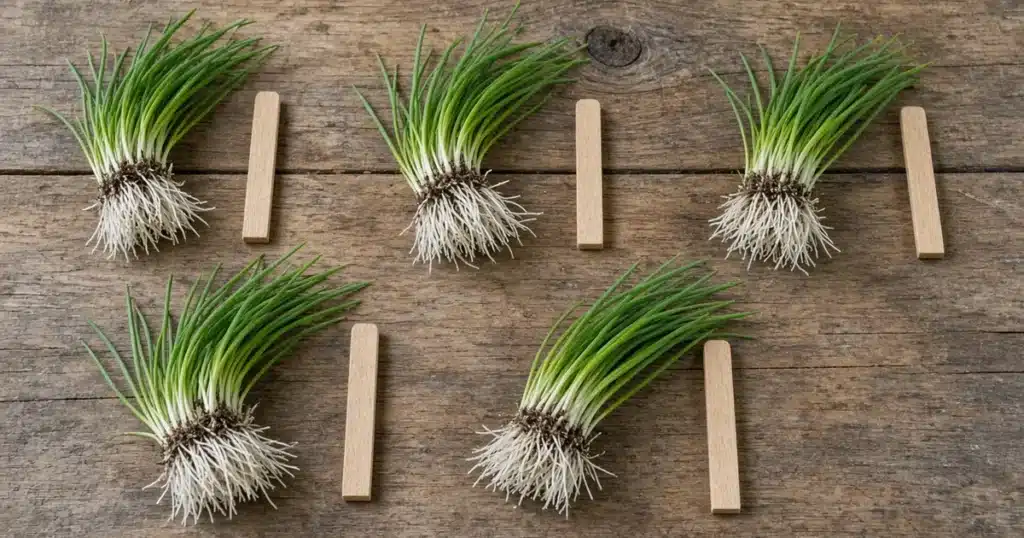
Onion types by latitude follow summer day length. Long day onions bulb with 14 to 16 hours of daylight and suit northern states. Short day onions bulb with 10 to 12 hours and suit the South. Intermediate types fit the middle band, so check your latitude before you buy seed, sets or transplants.
Onions are one of the few crops where location decides the variety. The same onion that grows huge in Minnesota may stay small in Texas. Match the type to your summer day length first.
What do long day and short day mean?
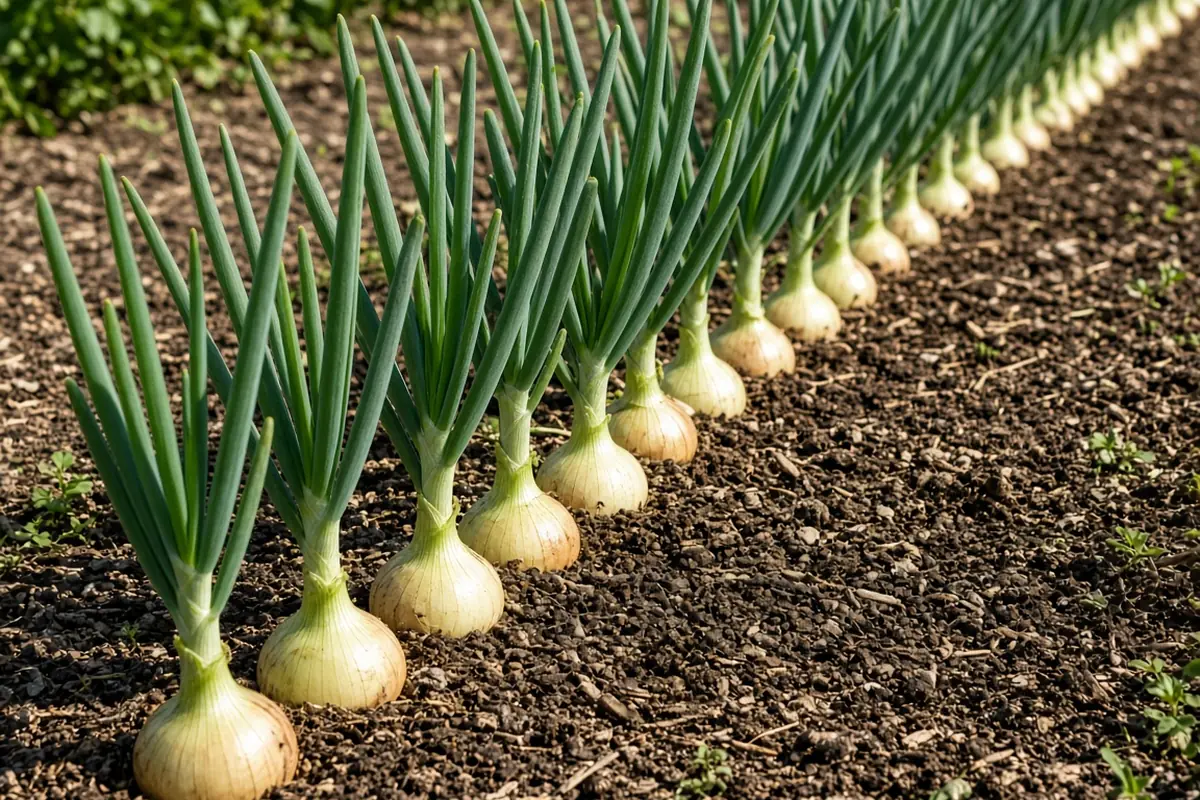
Onions begin forming bulbs once daylight reaches a set length. Until then, they grow green leaves.
The Iowa State University answer on long day onion varieties explains that long day onions need about 14 to 16 hours of daylight to bulb. Short day onions bulb at about 10 to 12 hours.
Intermediate day onions, also called day neutral by some sellers, bulb at about 12 to 14 hours.
Each leaf the plant grows before bulbing becomes one ring of the bulb. More leaves mean a bigger onion. That is why timing matters so much.
Our post on the light cycle explains how plants sense day length.
Which type suits your US latitude?
Latitude sets how long your summer days get. Northern states have much longer days in June than southern states.
| Onion type | Daylight to bulb | Approximate US latitude | Typical planting |
|---|---|---|---|
| Long day | 14 to 16 hours | North of about 37 to 38 degrees | Early spring |
| Intermediate | 12 to 14 hours | About 32 to 40 degrees | Late winter or spring |
| Short day | 10 to 12 hours | South of about 35 degrees | Fall or winter |
Sources: Iowa State University, NC State Extension.
As a rough guide, a line from southern Virginia west through Kansas and northern California marks the shift. Long day onions grow north of it. Short day onions grow south of it.
The NC State Extension bulb onion guide notes that much of North Carolina sits in a zone where short day and intermediate types both work.
Our post on picking the right seeds for your climate explains how to match varieties to your region.
What happens with the wrong type?
In the far South, a long day onion never gets enough daylight. It goes on making leaves and forms little or no bulb.
A short day onion planted in the North bulbs early in spring. The plant is still small, so the bulb stays small too.
Intermediate types are forgiving and grow well across a wide middle band.
If bulbs already stalled, see onions not bulbing.
How to: step by step
- Find your garden’s latitude.
- Pick a day length type that fits your latitude.
- Choose long day for northern regions.
- Choose short day for southern regions.
- Consider intermediate types for the middle band.
- Plant at the time local guides suggest.
When should you plant each type?
Southern gardeners usually plant short day onions in fall or early winter. Plants grow leaves through the cool months and bulb in spring.
Northern gardeners plant long day onions as early in spring as the soil can be worked. Plants race to build leaves before mid June, when days peak.
The Iowa State University guide to onions recommends early spring planting so plants have as many leaves as possible before bulbing starts.
Our post on planning an outdoor garden layout helps you set aside onion beds for early planting.
Are sets, transplants or seed better?
Sets are small dry bulbs. They are easy, but variety choice is limited and large sets may flower.
Transplants are young plants sold in bundles. Many growers say they give the biggest bulbs.
Seed gives the widest choice of varieties. It needs the longest lead time, often started indoors eight to ten weeks ahead.
Whatever you buy, match the day length type to your latitude.
Which varieties are common?
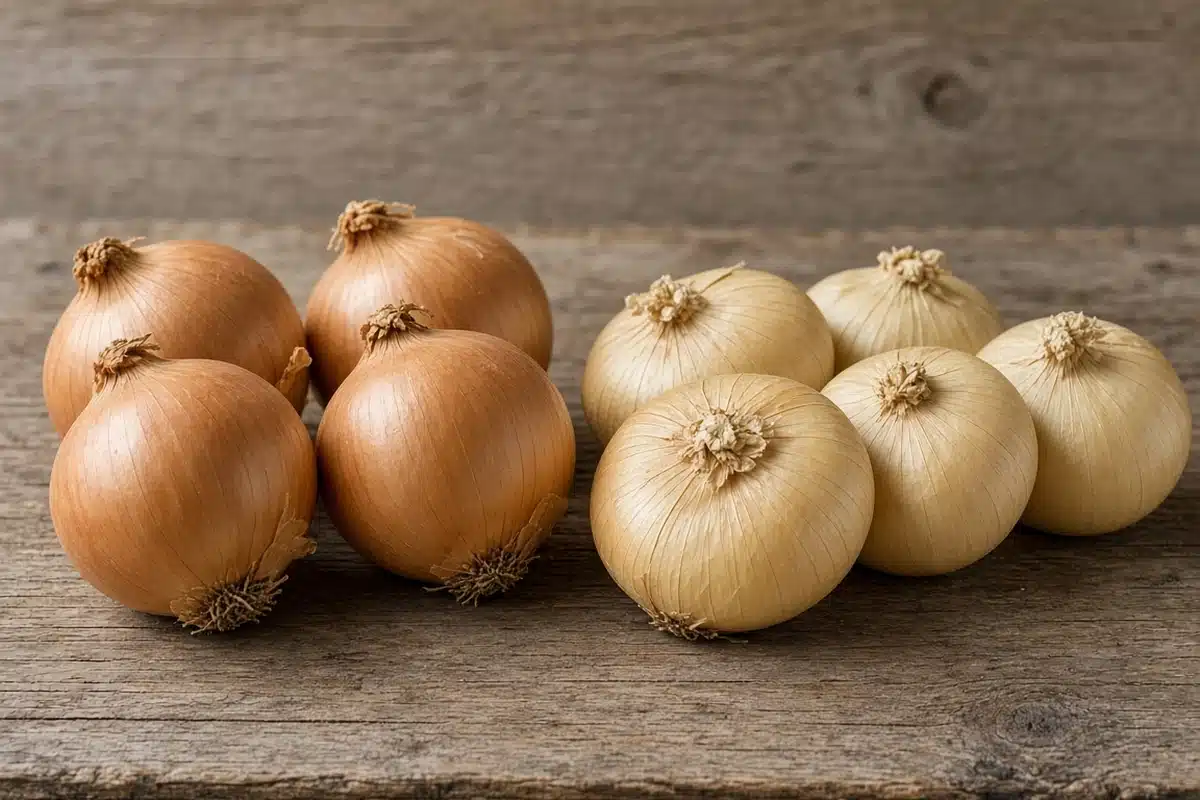
Popular long day types include Walla Walla, Copra and Yellow Sweet Spanish.
Popular short day types include Texas Grano, Granex and Red Creole.
Popular intermediate types include Candy and Superstar.
Troubleshooting
Big tops, no bulbs. The type likely needs longer days than your area gives.
Small bulbs early in spring. A short day type was planted too far north.
Bulbs small for the type. Plants had too few leaves when bulbing started. Plant earlier.
Plants flowered. Cold or large sets triggered flower stalks. Use those onions first.
Unsure of your type. Check the seed company page or ask your local Extension office.
The right day length type is the key to big bulbs. Kind Seed Co shares more garden ideas in outdoor growing.
Sources
- What is a long day type onion variety?, Iowa State University Extension, Yard and Garden, What is a long day type onion variety?
- Bulb onions, NC State Extension, Bulb onions
- All about onions, Iowa State University Extension, Yard and Garden, All about onions
FAQ
What is an intermediate onion?
It bulbs at about 12 to 14 hours of daylight and suits the middle band.
Can long day onions grow in the South?
They grow leaves but rarely form good bulbs there.
Are sets or transplants better?
Transplants often give larger bulbs. Sets are easier but may flower.
Does day length affect green onions?
No. Green onions are harvested for leaves before bulbing matters.
How do I find my latitude?
Map apps and many weather sites show it for your address.



