
Why Cabbage Splits: Water Swings and How to Prevent Cabbage Splitting
The short answer
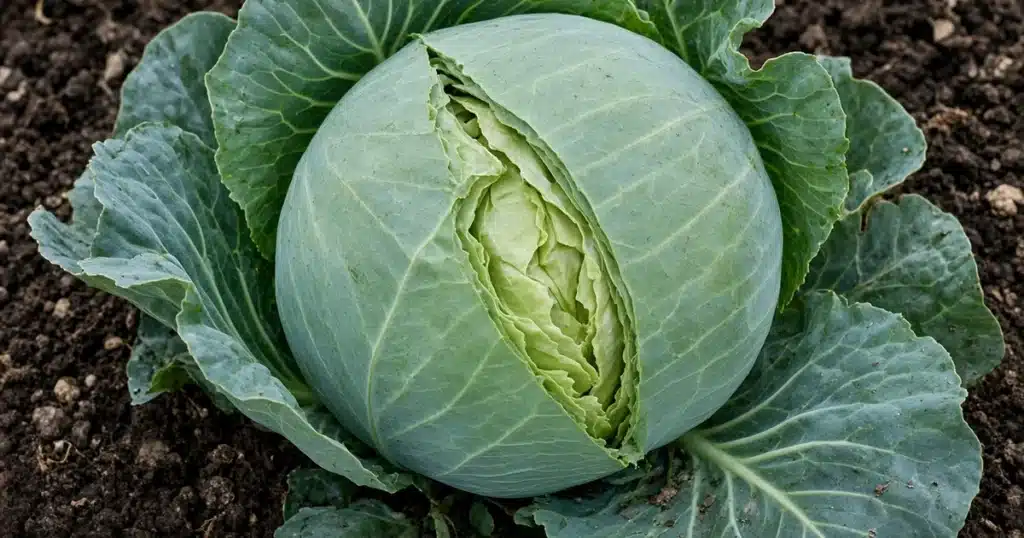
Cabbage splitting happens when heads take up a sudden rush of water, often after dry weather followed by heavy rain. Iowa State and Illinois Extension say mature heads are most at risk. Water evenly, mulch the bed and harvest firm heads promptly to stop cracks from opening across the top of the head.
A split cabbage can look fine one evening and cracked open the next morning. Steady moisture and timely harvest can reduce the risk.

Why do cabbage heads split?
A cabbage head is a tight ball of leaves wrapped around a short stem. As the head matures, the outer leaves stop stretching.
The inner leaves go on growing. When the plant takes in plenty of water quickly, the inside expands faster than the outer layers can stretch. The head bursts along a seam.
The Iowa State University guide to weather related problems in the vegetable garden links splitting to heavy rain or irrigation after a dry spell. Mature heads left in the garden face the highest risk.
The University of Illinois Extension cabbage page adds that heads left past maturity split more often. Fast growth late in the season makes the problem worse.
How does watering affect splitting?
Splitting is mostly a water story. Steady moisture holds growth even. Big swings between dry and wet cause sudden surges.
Aim for about an inch of water a week from rain and irrigation together. Deep, regular watering is better than a heavy soak after weeks of drought.
Check moisture before you water. Our post on checking soil moisture by feel shows how to judge the top few inches by hand.
Drip lines deliver water slowly at the root zone. Our post on drip irrigation covers layout and timing.
Mulch holds moisture and evens out swings. Straw, shredded leaves or grass clippings two to three inches deep work well. Our post on mulch compares common types.
| Condition | Splitting risk | What to do |
|---|---|---|
| Even moisture all season | Low | Hold the schedule steady |
| Dry spell then heavy rain | High | Water during dry spells |
| Mature head left in bed | High | Harvest promptly |
| Heavy late nitrogen | Moderate | Feed early, not at maturity |
| Mulched bed | Lower | Lay mulch two to three inches deep |
Sources: Iowa State University, University of Illinois, Utah State University.
How can you slow growth at maturity?
Sometimes heads mature before you’re ready to use them. A rainy forecast can add risk.
Many gardeners give a firm head a quarter turn by hand. The twist breaks some of the roots. Fewer roots mean slower water uptake, so the head holds longer.
Another option is to slice into the soil on one side with a spade. This cuts part of the root system with the same effect.
The Utah State University Extension cabbage guide notes that heads should be harvested once they’re firm. Holding them too long invites splitting in any climate.
Root pruning buys time, not weeks. Plan to harvest within a short window after heads firm up.
How to: step by step
- Water evenly through the season.
- Mulch to hold steady soil moisture.
- Check heads often as they firm up.
- Harvest firm heads promptly.
- Give mature heads a twist to break some roots before heavy rain.
- Use split heads soon since they do not store well.
When should you harvest cabbage?
Squeeze the head gently. A ready head feels firm and solid all the way through.
Size depends on the variety. Early types may be ready at softball size. Storage types grow much larger and later.
Cut the stem below the head with a sharp knife. Leave a few wrapper leaves for protection.
If you leave the stump and roots in place, many plants form a few small heads from the stem. These side heads make a bonus harvest.
Do some varieties resist splitting?
Yes. Seed catalogs often mark varieties with good field holding or split resistance.
Early varieties tend to split faster once mature, and many late and storage types hold longer in the garden.
Staggered plantings help too. Sow a few plants every two to three weeks so heads mature in small groups.
Troubleshooting
Splits after a storm. The head took in water fast. Harvest firm heads before heavy rain.
Splits during dry weather. Irrigation may be uneven. Water on a steady schedule.
Many heads split at once. They likely matured together. Stagger plantings next year.
Loose heads that don’t split. Heat or low fertility may be the cause. Feed earlier and cool the soil with mulch.
Split heads rot faster. Cut and use them right away.
Even watering and timely harvest save most heads from splitting. Kind Seed Co shares more garden ideas in outdoor growing.
Sources
- Weather related problems in the vegetable garden, Iowa State University Extension, Yard and Garden, Weather related problems in the vegetable garden
- Cabbage, home vegetable gardening, University of Illinois Extension, Cabbage
- How to grow cabbage in your garden, Utah State University Extension, How to grow cabbage in your garden
FAQ
Can you eat split cabbage?
Yes. Use it soon and trim any damaged or dirty leaves.
Do some varieties resist splitting?
Yes. Look for catalog notes on split resistance or long field holding.
Should you stop watering cabbage at maturity?
No. Water steadily and harvest firm heads soon.
Does fertilizer cause splitting?
Heavy late nitrogen speeds growth and can add risk. Feed earlier in the season.
Why twist a cabbage head?
The twist breaks some roots, which slows water uptake and delays splitting.



