
Planting a Pizza Garden: A Round Bed of Tomatoes, Peppers and Herbs
The short answer
Mark a circle with a stake and a string about three and a half feet long, then divide it into six equal wedges. Nebraska Extension suggests three vegetables and three herbs: tomato, peppers, onions, oregano, parsley and basil. Plant in full sun, water regularly and pull weeds.
A pizza garden is a round bed divided into wedge shaped slices, each planted with a pizza ingredient such as tomatoes, peppers, onions, basil or oregano. Extension guides suggest a spot with at least six hours of direct sun and planning around your frost dates. Place tall plants so they will not shade smaller ones.
What is a pizza garden?
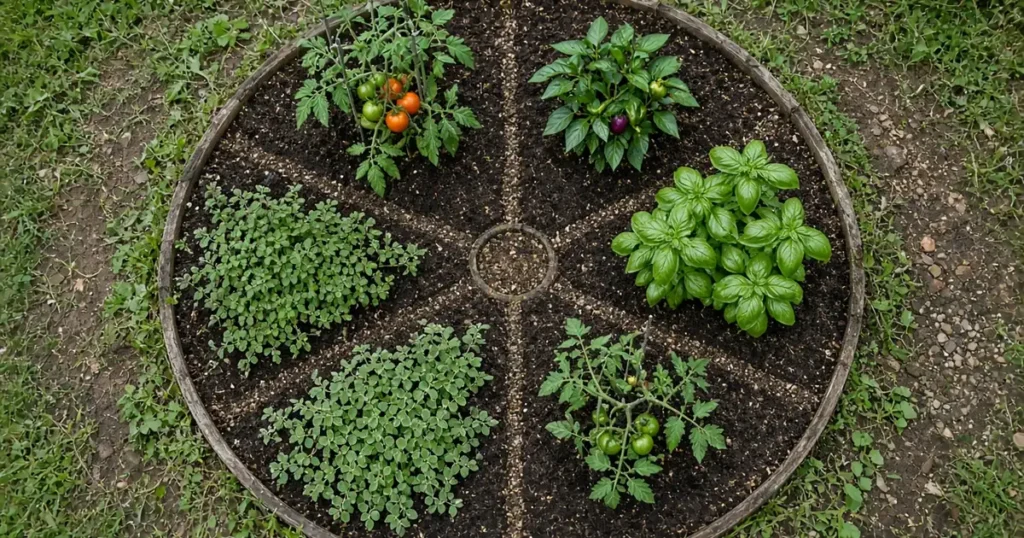
It’s a theme garden shaped like the food it grows. Nebraska Extension describes a round bed split into six equal wedges, with one ingredient in each slice. It makes a fun family project since every plant ends up in the same meal. Kids can see the whole pizza from seed to slice.
Theme gardens follow the same rules as any vegetable bed. University of Vermont Extension advises finding a site with full sun. This means at least six hours of direct sunlight a day. Bear in mind that sunlight hours change through the season. For more on placing beds, read planning an outdoor cannabis garden layout.
How do you lay out the slices?
Put a stake upright in the middle of the bed and tie on a string three and a half feet long. Holding the string tight, walk around the stake and mark the border. That makes a circle about seven feet across. Divide it into six equal wedges, like slicing a pie.
Think about height as you assign slices. University of Vermont Extension suggests placing larger plants so they do not shade smaller ones later in the season. In a pizza garden, the tomato and peppers are the ones to watch.
What should you plant in a pizza garden?
Nebraska Extension lists six slices.
| Slice | Plants | Notes |
|---|---|---|
| Tomato | 1 paste tomato such as Roma | Small, oblong fruit with thick, meaty flesh |
| Peppers | 1 or 2 green bell types | Add a hot pepper if you like spicy pizza |
| Onions | Up to 30 sets | Red, white or yellow, from seeds or sets |
| Oregano | 2 or 3 plants | Perennial herb, used fresh or dried |
| Parsley | 2 or 3 plants | Biennial that reseeds itself |
| Basil | 2 or 3 plants | Annual, sweet basil recommended |
Source: Nebraska Extension.
University of Vermont Extension suggests adding compost or organic fertilizer to help plants grow well. Our post on fertilizer and compost for growing outdoors explains how to prepare a bed.
How to: step by step
- Pick a spot with full sun.
- Mark a circle and divide it into slices.
- Add compost to the soil.
- Plant tomatoes and peppers after frost.
- Fill smaller slices with onions and herbs.
- Water at the base and mulch the bed.
University of Vermont Extension recommends knowing the first and last frost dates for your area and planning around them. Water regularly. To decide when the bed needs it, try checking soil moisture by feel.
Troubleshooting
Tomatoes crowd other slices: too much plant in one wedge. Stick to one tomato as Nebraska Extension suggests and place it where it will not shade smaller plants.
Leggy herbs: too much shade. Move them to the sunny side next season.
Slow peppers: cool soil. Wait for warm weather.
Dinner from one round bed
A pizza garden is small enough to manage and full enough to cook from. The Kind Seed Co blog has more garden projects in the garden layout and care section.
Sources
- Pizza garden, Nebraska Extension in Lancaster County
- Growing a themed garden, University of Vermont Extension
FAQ
How big should a pizza garden be?
Nebraska Extension suggests marking the border with a string three and a half feet long tied to a center stake. That makes a circle about seven feet across, with room for six wedges. University of Vermont Extension notes that one or two raised beds of four by four feet also suit beginners.
Can a pizza garden grow in pots?
Yes, with one pot per ingredient. University of Vermont Extension says a five gallon bucket is a great size for a tomato plant. Group the pots in a circle to match the pizza theme. Give them at least six hours of direct sun and water them regularly.
Which tomatoes suit a pizza garden?
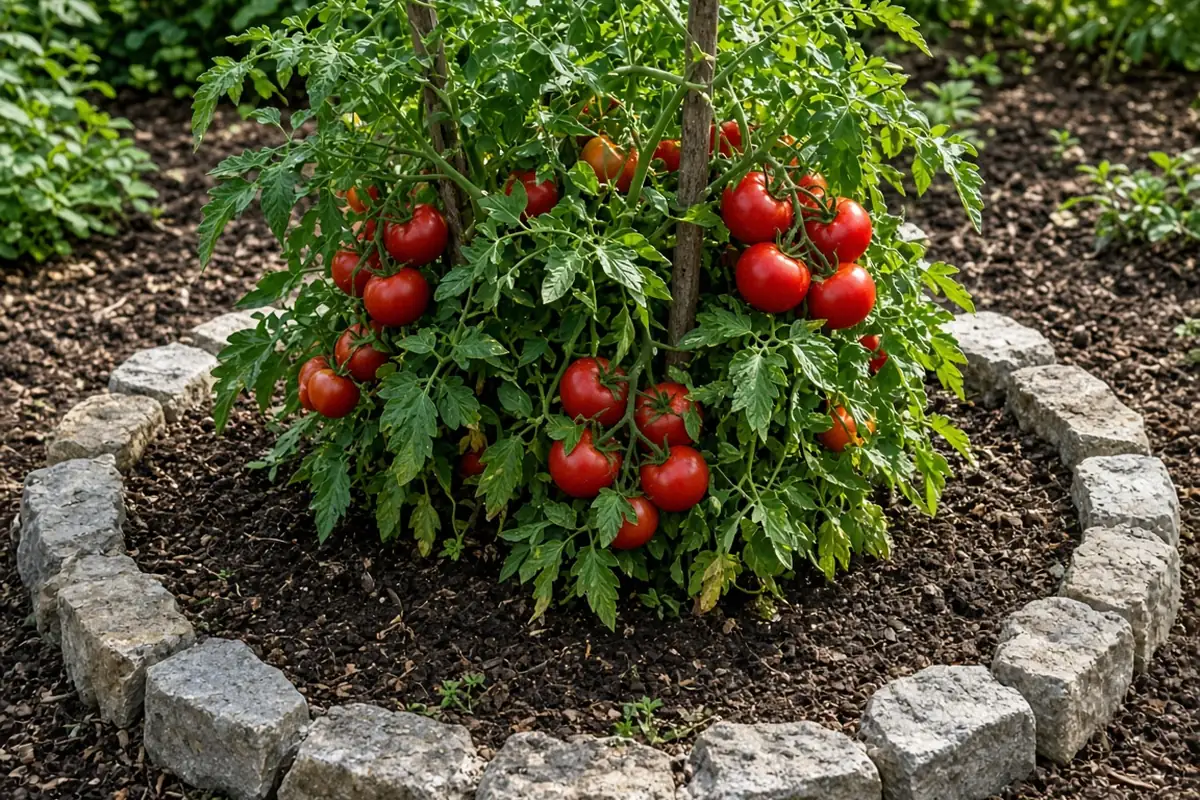
Nebraska Extension recommends a paste tomato such as Roma. Roma has small, oblong fruit with thick, meaty flesh. One plant fills its wedge, so there's still room for peppers, onions and herbs in the rest of the circle.
Do herbs come back each year?
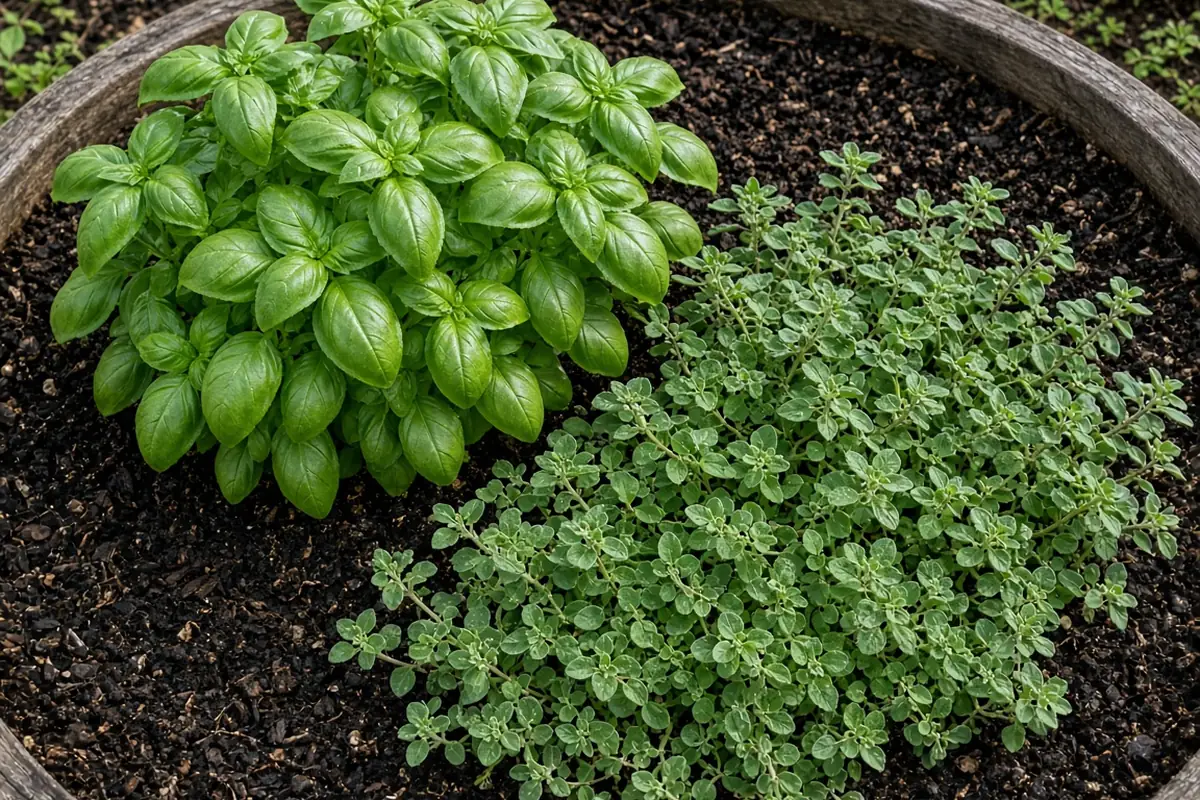
Some do. Nebraska Extension notes that oregano is a perennial herb, so it returns. Parsley is a biennial that reseeds itself. Basil is an annual, so you replant it each year. Sweet basil is the variety Nebraska Extension recommends for a pizza garden.
How much sun does a pizza garden need?
University of Vermont Extension advises full sun, meaning at least six hours of direct sunlight a day. Bear in mind that sunlight hours change through the season.


