
Building a Bean Teepee: Poles, Twine and Pole Beans
The short answer
Gather bamboo poles or long branches, push them into a circle, tie the tops together and add twine for grip. Sow two to four pole bean seeds at the base of each pole once the soil has warmed. University of Minnesota Extension notes that pole beans go on flowering and bearing until frost, so one sowing covers the season.
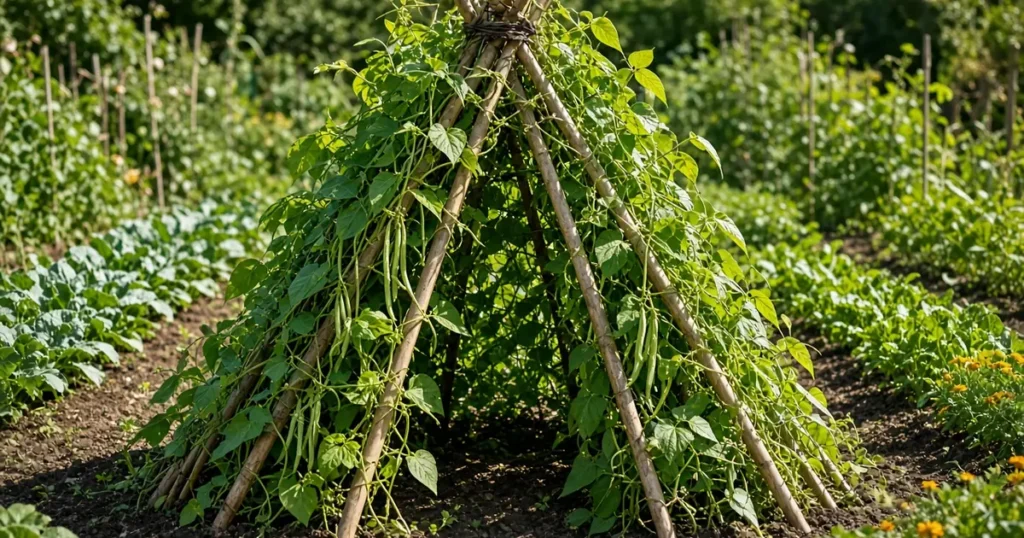
A bean teepee is a cone of tall poles tied together at the top and planted with pole beans around the base. As the vines climb, they cover the frame in leaves and pods. Extension guides note that pole beans need warm soil and a support put in place at planting time. Leave one gap open as a doorway.

What do you need to build a bean teepee?
Rutgers Cooperative Extension describes a bean teepee as a framework of sticks or bamboo with pole beans trained to grow up them. That’s all it takes. University of Minnesota Extension suggests a simple trellis of six foot stakes and twine or a teepee of bamboo poles or long branches.
| Item | Job | Notes |
|---|---|---|
| Bamboo poles or long branches | Main frame | Pole beans are twining vines up to six feet and sometimes taller (UMN) |
| Twine | Extra grip between poles | UMN pairs six foot stakes with twine for a simple trellis |
| Pole bean seed | Living walls | Two to four seeds at the base of each pole (UMN) |
| Open space inside | Play area | Rutgers lists playing inside a bean teepee as a garden activity for kids |
Sources: University of Minnesota Extension, Rutgers Cooperative Extension.
A teepee fits neatly into a mixed bed. If you are mapping out where tall crops go, planning an outdoor cannabis garden layout walks through sun, spacing and paths.
How do you set up the poles and twine?
Set the frame before you sow. University of Minnesota Extension advises installing pole bean supports at planting time so you do not disturb roots later. Mark a circle on the ground, leave a gap wide enough to walk through and push the poles in around the edge. Gather the tops and tie them together firmly.
Twine around the frame gives tendrils more to grab. Run it in loops from pole to pole, starting low so young vines find it quickly. Mulch around the base helps hold weeds down while the beans get going, and mulch for cannabis covers materials that work in any bed.
Which beans grow well on a teepee?
Choose pole beans. University of Minnesota Extension describes them as twining vines up to six feet and sometimes taller that need a trellis or similar support. Pole beans flower and produce new pods through the season and take up less ground than bush beans for a similar harvest.
Scarlet runner beans are another climbing option. UMN notes their vines reach up to ten feet and require a trellis. Bush beans grow about two feet tall and stand on their own, so they won’t cover a teepee. Good soil helps any bean, and fertilizer and compost for growing outdoors explains how to prepare a bed.
How to: step by step
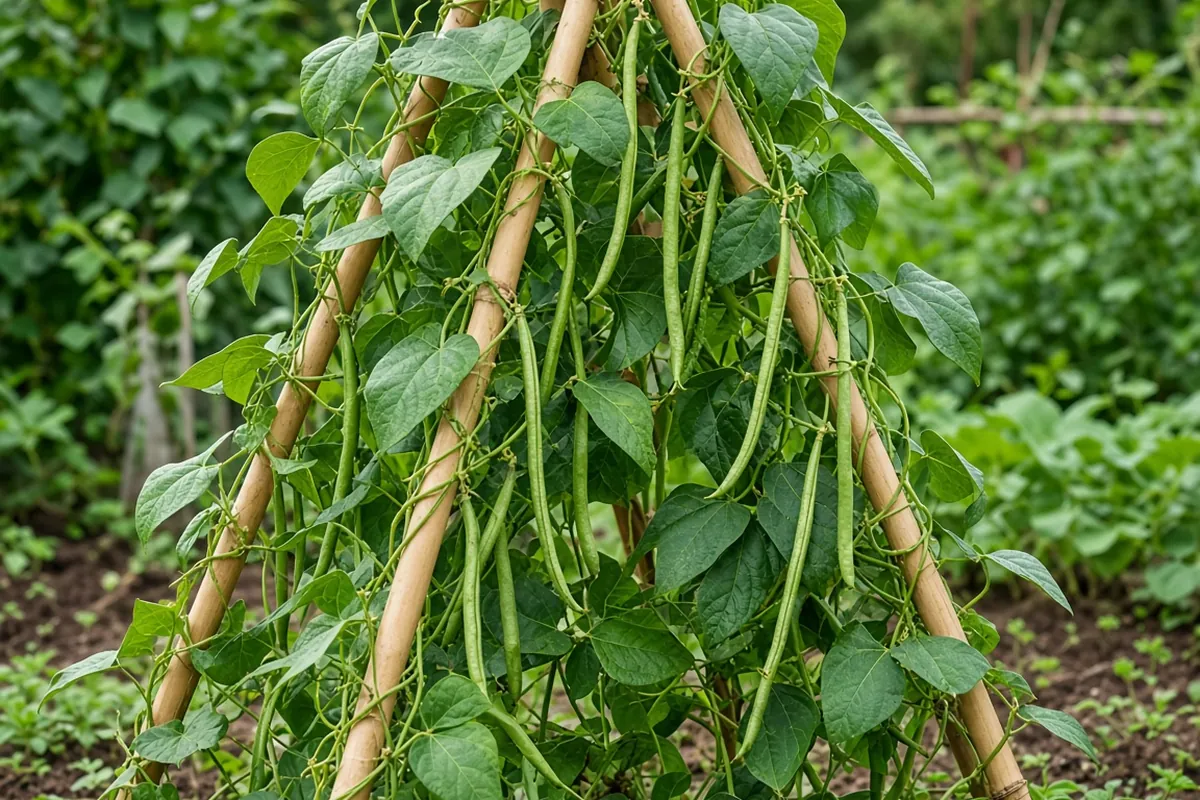
- Pick a sunny, level spot.
- Mark a circle and leave a doorway gap.
- Push poles into the soil around the circle.
- Tie the tops together firmly.
- Wrap twine around the frame for extra grip.
- Sow pole beans at the base after the soil warms.
Troubleshooting
Vines won’t climb: there’s nothing to grip. Add twine and guide the tendrils onto the poles by hand.
Few pods: too much shade. Choose a sunnier site next season. UMN also notes that very hot weather during flowering can cause plants to set few pods for a short time before they resume.
Frame leans: the poles are too shallow. Push them deeper into the soil and retie the tops firmly.
A summer hideout that feeds you
A bean teepee gives kids a shady room and the kitchen a steady supply of pods. Washington State University King County Extension even includes instructions for making a bean teepee in its youth gardening kits. The Kind Seed Co blog has more garden projects in the garden layout and care section.
Sources
- Growing beans in the home garden, University of Minnesota Extension
- Gardening with children (FS003), Rutgers Cooperative Extension
- Youth gardening, Washington State University King County Extension
FAQ
How tall should bean teepee poles be?
Poles should be tall enough for the vines you plan to grow. University of Minnesota Extension describes pole beans as twining vines up to six feet and sometimes taller and suggests six foot stakes for a simple trellis. Scarlet runner beans can reach ten feet, so they need taller supports.
Can you use bush beans?
Bush beans won't cover a teepee. University of Minnesota Extension describes them as upright plants about two feet tall that do not need support. They are handy for a large harvest at one time, but for leafy walls you need pole beans or another climbing type such as scarlet runner beans.
When do you plant pole beans?
Plant once the soil warms. University of Minnesota Extension warns that bean seed planted in cold soil may rot rather than germinate and that plants grow slowly in cool weather. Put the poles in place first, then sow two to four seeds at the base of each pole.
Can other vines grow on a teepee?
Yes, as long as they climb. University of Minnesota Extension notes that scarlet runner beans produce vines up to ten feet long and require a trellis. Yard long beans also grow long vines that need support, though they need very warm weather to produce pods well.
Why set the poles before sowing?
University of Minnesota Extension advises installing pole bean supports at planting time so you do not disturb roots later.


