
Pokeweed in Cannabis Gardens: Toxic Weed to Dig Out Early
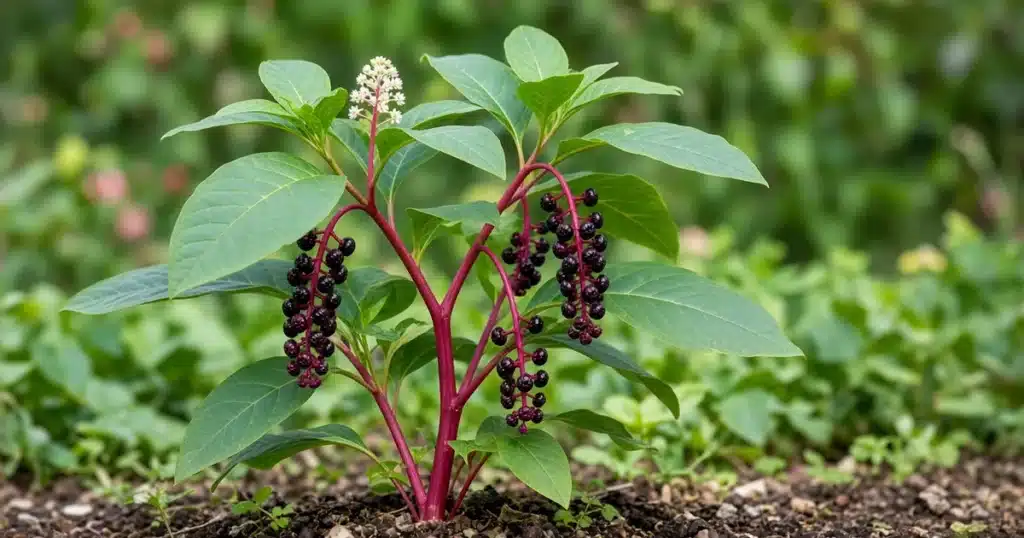
Quick answer: Pokeweed is a tall perennial with red or purple stems, large bright green leaves and drooping clusters of purple black berries. NC State says all parts are poisonous to humans and pets. Wear gloves, dig out young plants with their taproots before they flower, and remove seedlings that birds plant along fences and edges.
What Is Pokeweed?
A large native perennial that dies back each winter. The University of California Statewide IPM Program (UC IPM) says common pokeweed is native to the eastern United States. Its aboveground growth dies after the first frost, and new growth comes from storage roots in spring.
NC State Extension says pokeweed is native to most of North America and grows in pastures, recently cleared areas, woodland openings, fencerows and wastelands. It calls the plant aggressive and says it self seeds easily and can become weedy. Our overview of weed control in outdoor cannabis covers the general plan.
How Do You Identify Pokeweed?
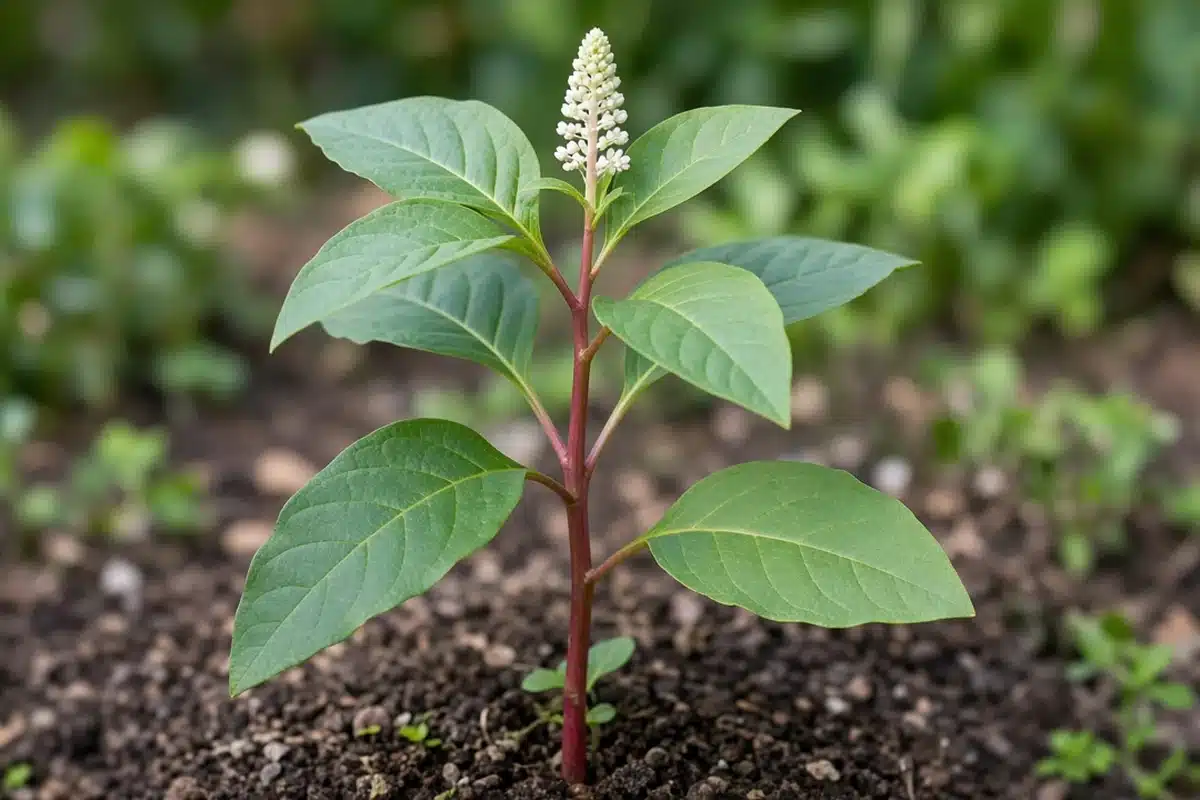
Look for color. UC IPM says the stems of mature plants are red or purple, as are the leaf stalks and lower veins. Other features from UC IPM, NC State and the University of Maryland Extension:
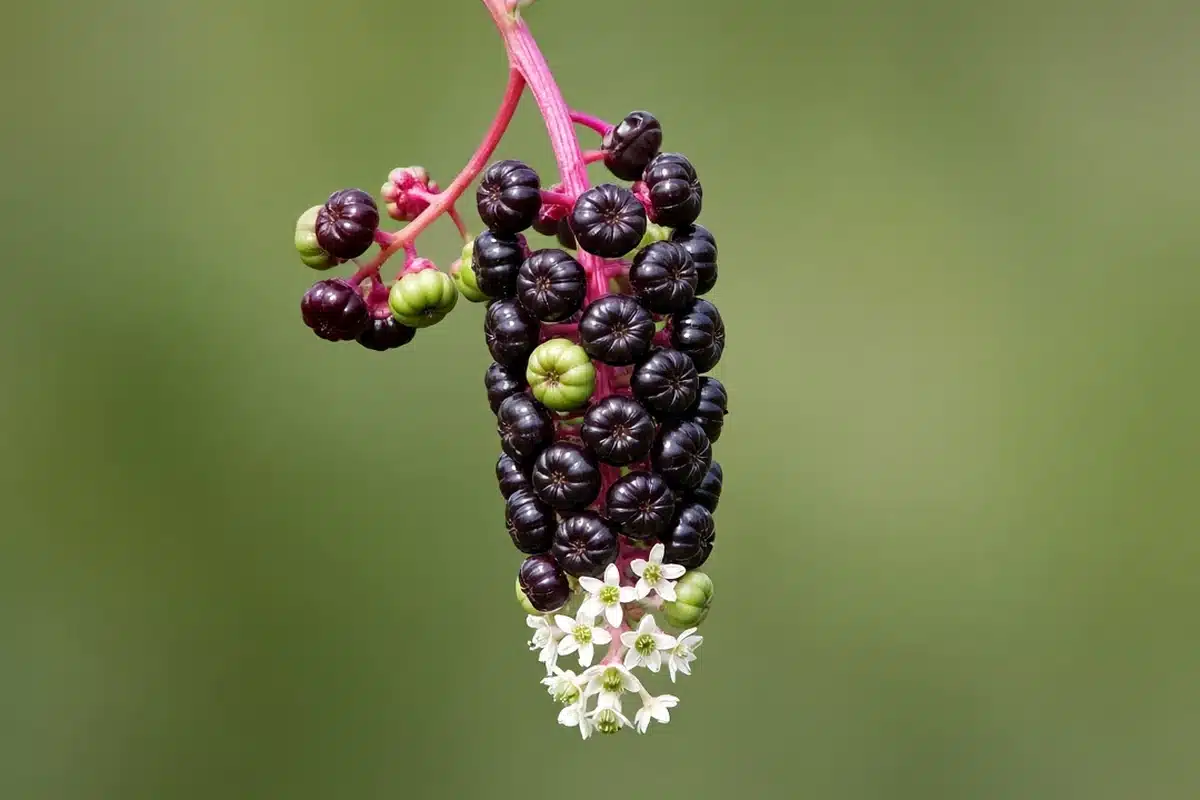
- Height. UC IPM and NC State give 4 to 10 feet. Maryland says 3 to 8 feet, resembling a small tree.
- Leaves. Bright green, hairless and elliptical, about 3 to 12 inches long, with an unpleasant scent when crushed.
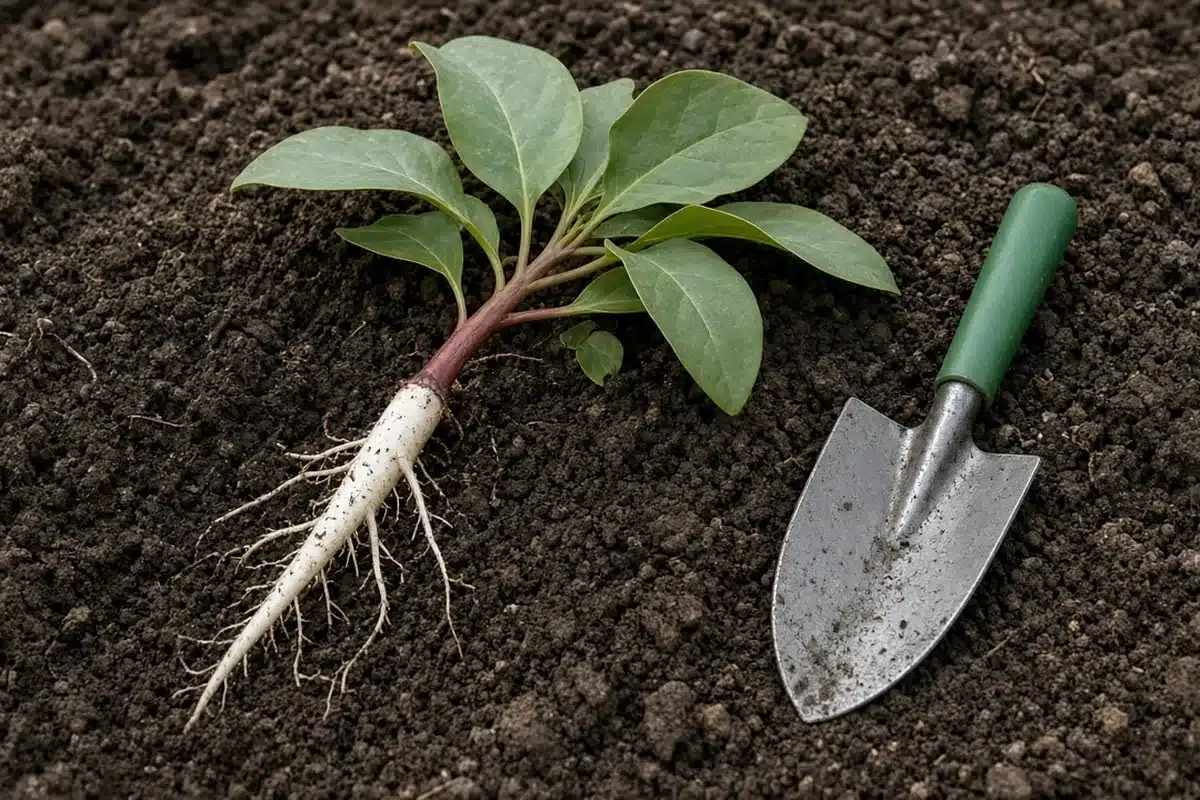
- Root. NC State describes a thick fleshy taproot up to 12 inches long and 4 inches thick.
- Flowers. Small white to magenta flowers along stalks 2 to 8 inches long.
- Berries. Glossy and purple black at maturity. Maryland says they leave a purple red stain.
UC IPM says seedlings have hairless seed leaves, and the stem below them is succulent and often tinged magenta.
Is Pokeweed Poisonous?
Yes. UC IPM says all parts of the plant, especially the roots, are toxic to humans and livestock when eaten. NC State says all parts are poisonous to humans and pets, and Maryland lists the berries as poisonous.
NC State also recommends wearing gloves when handling the plant, because some of its substances can be absorbed through scrapes in the skin. Keep children and pets away from the berries. Our guide to keeping cats and dogs out of your cannabis garden has ideas for fencing off beds.
Why Does Pokeweed Show Up Near Cannabis?
Birds do most of the planting. UC IPM says birds eat the fruits and are usually how the seed spreads along fence rows, under utility lines and in wooded areas. Maryland says pokeweed grows anywhere birds drop seeds, including fields, roadsides and fence rows.
That means new plants often appear under a fence, a perch or a tree at the edge of your garden. Maryland adds that it thrives in deep, rich, gravelly soils. Pull seedlings while they are small, before the taproot has a chance to thicken.
When Does Pokeweed Grow?
From spring to frost. UC IPM says new growth emerges from storage roots each spring and the top dies after the first frost. UC IPM says it blooms from August through October, and NC State gives a bloom window of July through September.
NC State says the berries mature from late summer to fall. Check edges in spring for seedlings and new shoots, and remove any mature plant well before berries ripen. Our guide to fall garden cleanup after cannabis harvest is a good time to mark crowns for digging.
Why Is Pokeweed Hard to Remove Later?
It comes down to the taproot. NC State describes a thick fleshy taproot up to 12 inches long and 4 inches thick, and Maryland says the plant reproduces from that large, red tinged taproot as well as by seed. Cutting the top leaves the root alive to sprout again.
Maryland says to manually remove plants prior to flower formation and seed production. Wear gloves, loosen the soil around the crown with a spade or fork and pry out as much root as you can. UC IPM’s landscape guide says to dig up all roots and underground parts of perennial weeds.
How to Control Pokeweed in a Cannabis Garden
- Put on gloves. NC State recommends gloves when handling pokeweed.
- Learn the stems and leaves. UC IPM describes red or purple stems and large, smooth leaves.
- Pull seedlings early. UC IPM says birds spread seed along fence rows, so check edges in spring.
- Dig before flowering. Maryland says to remove plants prior to flower formation and seed production.
- Take the taproot. NC State describes a thick fleshy taproot up to 12 inches long.
- Bag plants with berries. Remove them from the garden so birds and pets cannot reach the fruit.
- Mulch the cleared area. UC IPM recommends a medium mulch kept 3 to 4 inches deep. Our guide to mulch for cannabis compares materials.
Pokeweed at a Glance
| Subject | Extension finding | Attribution |
|---|---|---|
| Life cycle | Perennial, top dies back at frost | UC IPM, NC State |
| Height | 4 to 10 feet | UC IPM, NC State |
| Stems | Red or purple | UC IPM, Maryland |
| Root | Thick fleshy taproot | NC State, Maryland |
| Toxicity | All parts poisonous | UC IPM, NC State |
| Spread | Seed carried by birds | UC IPM, Maryland |
Should You Use Herbicides Near Cannabis?
No. Pull, hoe shallowly and mulch. Remember that EPA has not registered any herbicide for use on marijuana, and state rules vary, so check with your state agriculture department. UC IPM says home gardeners who hand weed and mulch should not need herbicides. Before you plant cannabis outdoors, check your state’s home grow law.
Troubleshooting Pokeweed
It regrew after cutting. NC State and Maryland describe a large taproot. Dig it out instead of cutting.
Seedlings keep appearing under the fence. UC IPM says birds spread the seed along fence rows. Check there each spring.
Purple stains on hands or tools. Maryland says the berries leave a purple red stain. Wear gloves and bag the fruit.
A plant got too big to pull. Loosen the soil around the crown with a fork and pry out as much root as you can.
Pets are near the patch. NC State says all parts are poisonous to humans and pets. Remove plants promptly.
At Kind Seed Co, we pull every pokeweed seedling we find along the fence before it has a chance to fruit.
Frequently Asked Questions
Is pokeweed poisonous?
Yes. UC IPM says all parts of the plant, especially the roots, are toxic to humans and livestock when eaten. NC State says all parts are poisonous to humans and pets and recommends wearing gloves when handling it. Maryland lists the berries as poisonous. Keep children and pets away and remove plants from garden beds promptly.
How do I get rid of pokeweed?
Dig it out while it is young. Maryland says to manually remove plants before flowers form and seed is produced. NC State describes a thick taproot up to 12 inches long, so loosen the soil and lift as much root as you can. Wear gloves, bag the plant and check the spot again for regrowth.
Why does pokeweed keep appearing in my garden?
Birds spread it. UC IPM says birds eat the berries and are usually how the seed spreads along fence rows, under utility lines and in wooded areas. Maryland says pokeweed grows anywhere birds drop seeds. Check fences, perches and garden edges each spring and pull seedlings while they are small.
How tall does pokeweed get?
UC IPM and NC State say pokeweed grows 4 to 10 feet tall, and Maryland describes it as 3 to 8 feet, resembling a small tree. NC State adds that it can spread 3 to 5 feet wide. Remove plants while they are young and before they flower, as Maryland advises.
When does pokeweed bloom and fruit?
UC IPM says common pokeweed blooms from August through October, and NC State gives July through September. NC State says the berries mature from late summer to fall. Remove plants well before the drooping clusters of purple black berries ripen, since birds carry the seed to new spots.
Sources
- UC Statewide IPM Program, Common Pokeweed, Weed Gallery: https://ipm.ucanr.edu/weeds-identification-gallery/common-pokeweed/
- NC State Extension Gardener Plant Toolbox, Phytolacca americana: https://plants.ces.ncsu.edu/plants/phytolacca-americana/
- University of Maryland Extension, Pokeweed: https://extension.umd.edu/resource/pokeweed
- UC Statewide IPM Program, Weed Management in Landscapes: https://ipm.ucanr.edu/home-and-landscape/weed-management-in-landscapes/


