
Split Potatoes: Why Potato Tubers Crack and How to Prevent It
The short answer
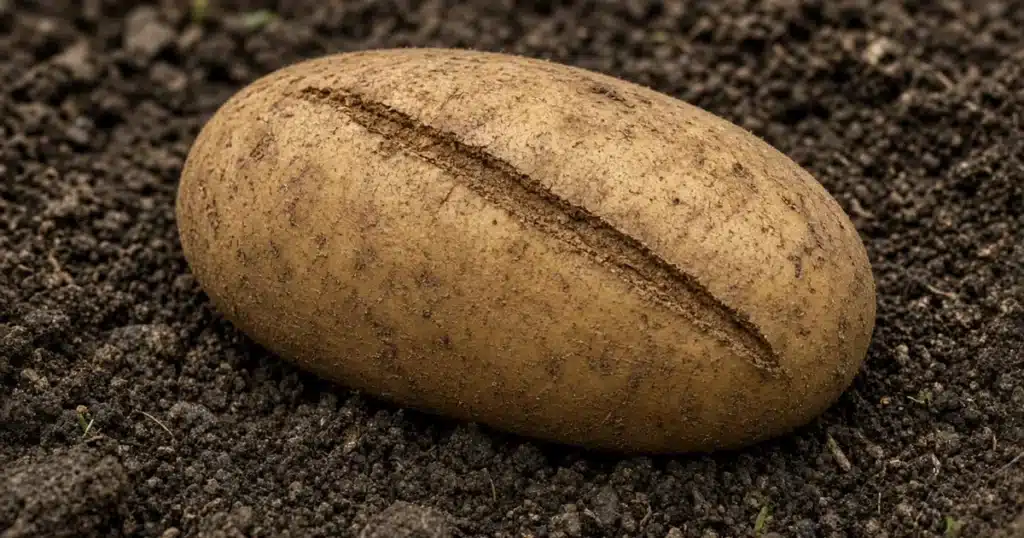
Split potatoes have growth cracks that form when tubers speed up growth after dry spells, often with heavy watering or rain. Florida Extension and North Dakota State describe the cracks as a quality issue, not a disease. Even watering, mulch, moderate nitrogen and good hilling help potato skins stay smooth and whole.
Digging potatoes is one of the high points of the season, and deep splits in the tubers take some of the fun out of it. Growth cracks are common, and most come down to water.
What causes potato growth cracks?
A potato tuber grows from the inside out, so when soil turns dry, growth slows and the skin firms up.
If heavy rain or deep watering follows, the inside of the tuber swells fast. The firm outer layer cannot stretch enough, so it splits.
The UF/IFAS Extension publication on potato growth cracks explains that cracks can start early as small splits and widen as the tuber grows. Over time the crack closes over with corky skin.
The NDSU Extension article on potato tuber cracking lists uneven moisture, high nitrogen and wide spacing as factors that speed growth spurts.
| Factor | How it leads to cracks | What helps |
|---|---|---|
| Dry spell then heavy water | Inside swells faster than the skin | Even watering |
| High nitrogen late in season | Pushes rapid tuber growth | Moderate feeding |
| Wide plant spacing | Fewer tubers grow larger and faster | Standard spacing |
| Bare soil | Moisture swings widely | Mulch |
| Some varieties | Thinner skins split more readily | Choose steady varieties |
Sources: UF/IFAS Extension, NDSU Extension, Oregon State University Extension.
How do they differ from other damage?
Growth cracks are usually long and run along the length or across the tuber. The edges are smooth and covered in new skin.
The Oregon State University Extension guide to potato tuber problems shows photos of growth cracks alongside other tuber issues.
Fresh cuts from a fork or shovel have raw, wet edges, while insect holes are small and round. Hollow heart is a cavity inside the tuber, often with no outer sign.
Knobby or bumpy tubers come from the same uneven growth that causes cracks.
How can you prevent them?
Water evenly, about one to two inches per week including rain. Deep, regular watering beats a flood after a dry spell. Our post on checking soil moisture by feel shows how to judge when to water.
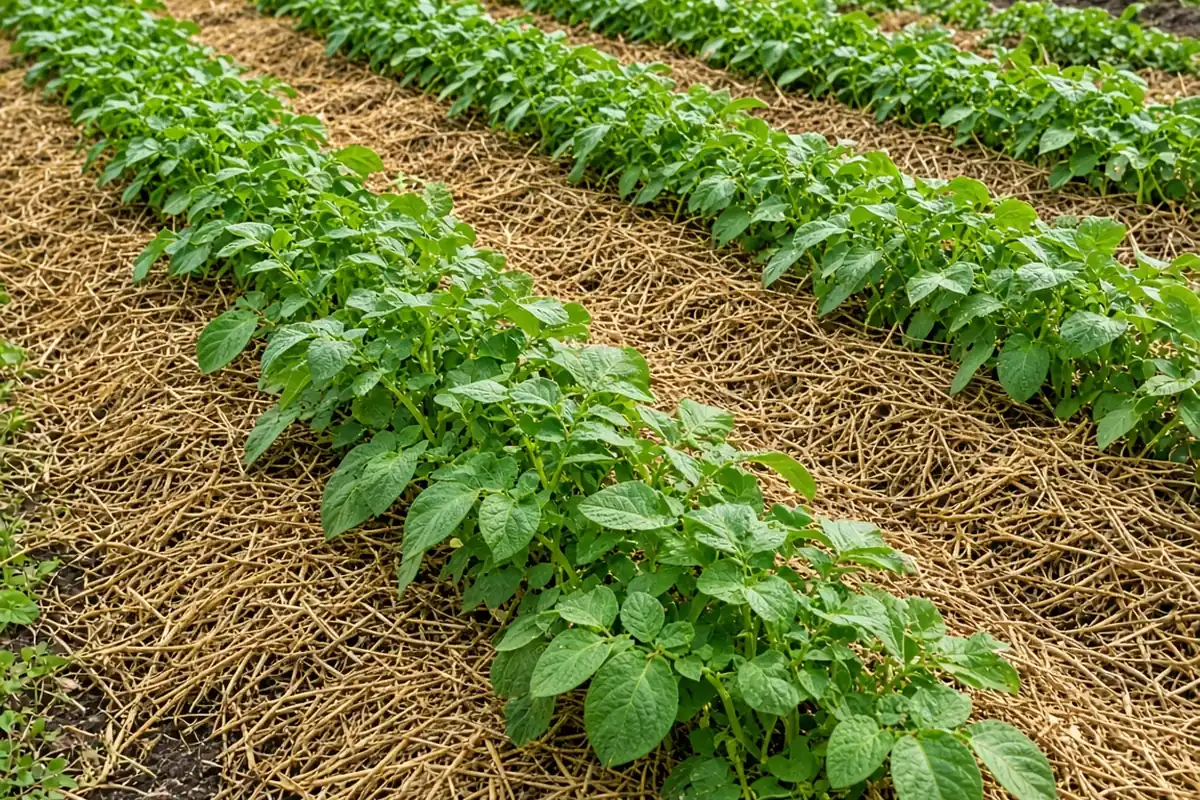
Mulch. Straw or shredded leaves hold soil moisture steady. Our post on mulch compares common types.
Feed moderately, since too much nitrogen speeds growth spurts. Our post on nitrogen excess explains signs of overfeeding.
Hill well, mounding soil over the row as plants grow to cover tubers and hold moisture even.
Space evenly. Plant seed pieces about 10 to 12 inches apart in rows.
How to: step by step
- Water evenly through the season.
- Mulch to hold moisture steady.
- Avoid heavy late nitrogen.
- Hill soil over tubers.
- Check tubers at harvest for cracks.
- Use cracked tubers first.
Do some varieties crack more?
Yes. Large baking types often crack more than small waxy types.
Note which varieties crack in your garden and choose steady types next season.
Can cracked potatoes be stored?
Tubers with closed cracks can be stored, though they may not store as long as whole ones. Use them first.
Use tubers with fresh, open cracks or harvest cuts soon, since open wounds let in rot.
Toughen skins by holding potatoes in a dark, humid spot around 50 to 60 degrees for one to two weeks before storing.
Does hilling help?
Yes. Hilling shields tubers from light and helps hold even moisture around them. Add soil once plants are about eight inches tall, and again a few weeks later.
How should you water near harvest?
Taper watering as vines start to yellow. This helps skins set before digging.
Avoid heavy watering in the last two weeks before harvest.
Troubleshooting
Deep cracks on most tubers. Watering swung between dry and wet. Even it out.
Cracks on only the biggest tubers. Plants were spaced widely or fed heavily.
Raw, wet splits at digging. Harvest damage. Dig further from the plant.
Knobby, cracked tubers. Uneven growth. Mulch and water steadily.
Cracked tubers rotting in storage. Use them first and let all tubers set their skins in a dark, humid spot before storing.
Even moisture through the season is the main path to smooth potatoes. Kind Seed Co shares more garden ideas in outdoor growing.
Sources
- Potato physiological disorders: growth cracks (HS182), UF/IFAS Extension, Potato physiological disorders
- What is wrong with my potato tubers? (EM 8948), Oregon State University Extension, What is wrong with my potato tubers? (EM 8948)
- Potato tuber cracking, NDSU Extension, Potato tuber cracking
FAQ
Can you still cook cracked potatoes?
Yes. Trim away the corky crack and cook as usual.
Do some varieties crack more?
Yes. Large baking types often crack more than waxy types.
Can cracked potatoes be stored?
Tubers with closed cracks can, but use them first.
Does hilling help?
Yes. It makes soil moisture around tubers more even.
Is a growth crack a disease?
No. It is a growth disorder from uneven moisture.



