Pothos vs Philodendron: Leaves plus Stems plus Care
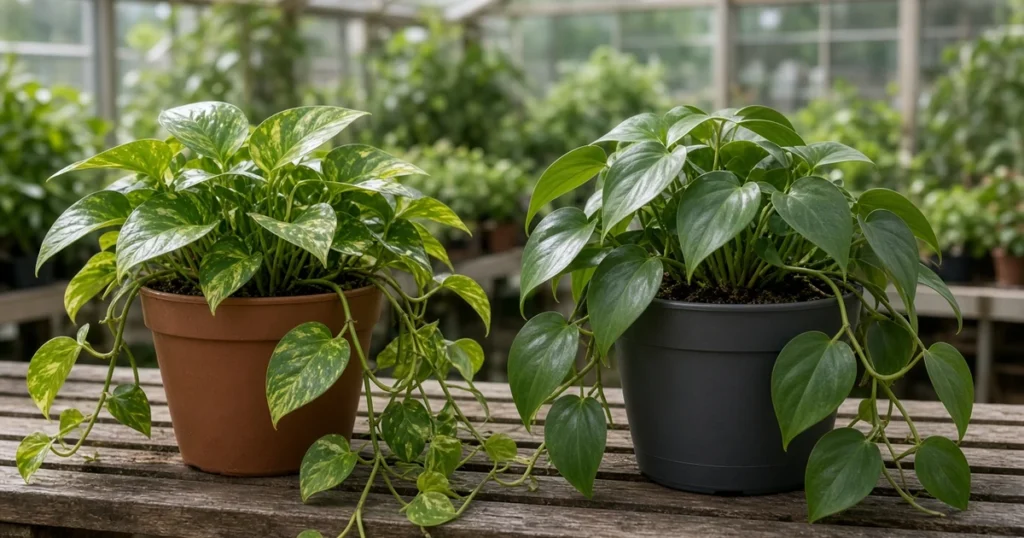
Pothos vs philodendron is a common houseplant mix up. Both are trailing plants with heart shaped leaves that suit pots plus hanging baskets. Pothos is Epipremnum, with thick, waxy leaves plus ridged stems. Philodendron is a separate genus of over 600 species with many leaf forms.
The short answer
Pothos looks like a smooth stemmed philodendron, but its stems are ridged, per University of Illinois Extension. Its leaves are thick plus waxy. Heartleaf philodendron has solid dark green leaves on a climbing vine. Both grow in bright, indirect light plus warm rooms with soil that dries slightly.
How do pothos and philodendron leaves differ?
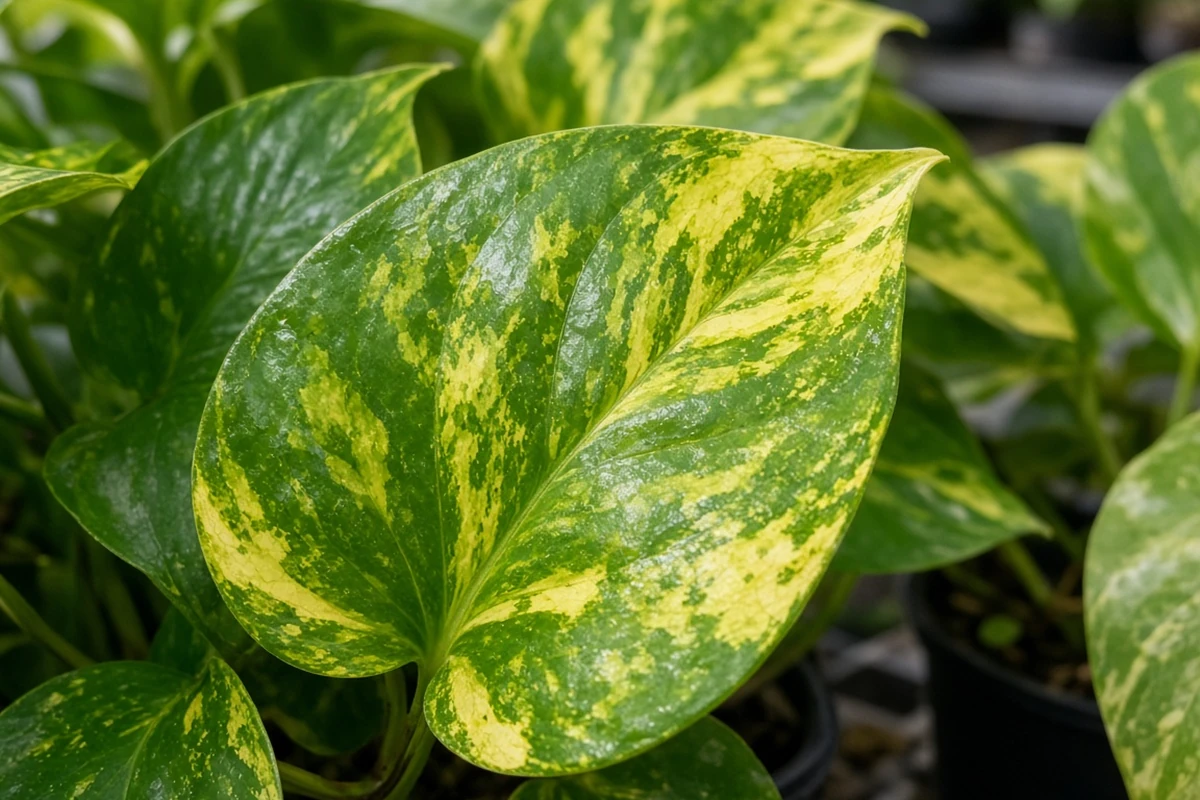
South Dakota State University Extension describes pothos leaves as large, thick, waxy, heart shaped plus bright green. Variegated types show yellow, white or cream blotches. Leaf color tends to fade in low light, per University of Illinois Extension.
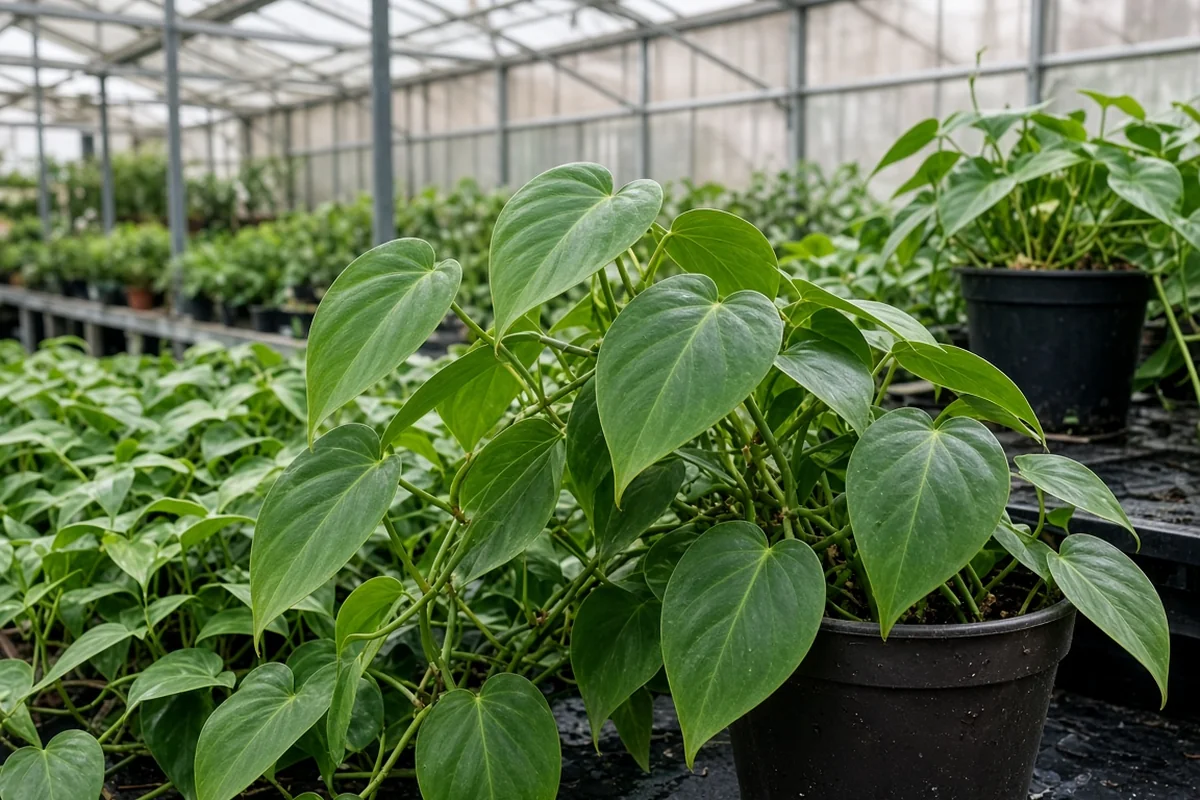
Philodendron leaves differ widely. NC State Extension notes the genus has climbing plus upright types. Philodendron hederaceum, the heartleaf philodendron, is the most common houseplant type with solid dark green leaves. Upright types such as Birkin hold large leaves in a rosette on very short stems.
| Trait | Pothos | Philodendron |
|---|---|---|
| Genus | Epipremnum | Philodendron |
| Stems | Ridged | Smooth |
| Leaves | Thick, waxy, heart shaped | Varies, heartleaf type solid dark green |
| Growth forms | Trailing vine | Climbing or upright |
| Watering | Let soil dry between waterings | Soil minimally moist at all times |
| Light | Bright, indirect | Bright, indirect |
Source: University of Illinois Extension plus NC State Extension.
How do the stems differ?
The stem gives the easiest clue. University of Illinois Extension notes pothos can be distinguished from philodendron by its ridged stems. Pothos is a vigorous climber. South Dakota State University Extension notes it can grow 12 to 18 inches in a month.
Climbing philodendrons have aerial roots that attach to surfaces such as a pole or trellis, per NC State Extension. Non climbing types grow upright with very short stems. Plant size ranges from 3 to 30 feet tall depending on the species.
Is their care the same?
Mostly. Both prefer bright, indirect light plus warm temperatures, per University of Illinois Extension. Let pothos dry moderately between waterings. Philodendron soil should stay minimally moist at all times. NC State Extension notes the ideal range for philodendron is 65 to 85°F. It is very sensitive to cold drafts.
Overwatering rots the roots of both. South Dakota State University Extension notes constant damp soil promotes rotting roots in pothos.
How to: step by step
- Place the plant in bright, indirect light.
- Use a well drained potting soil.
- Water pothos once the soil dries.
- Water philodendron lightly so the soil stays just moist.
- Hold rooms at 65 to 85°F plus away from drafts.
- Root stem cuttings cut just below a node.
Troubleshooting
Black spots on pothos leaves: soil too wet. Let the soil dry out between waterings.
Dry brown leaf edges: soil too dry for too long. Water before the leaves droop or shrivel.
Variegated leaves turn green: too little light. Move the plant to a brighter spot.
For related reading see cannabis leaf anatomy, the guide to overwatering and cannabis growth plus grow lights for cannabis. Kind Seed Co also stocks cannabis seeds.
Sources
- Pothos, houseplants, University of Illinois Extension
- Philodendron, houseplants, University of Illinois Extension
- Pothos house plant how to, South Dakota State University Extension
- Philodendron, NC State Extension Gardener Plant Toolbox
FAQ
Which grows faster?
Pothos is the quicker vine. South Dakota State University Extension notes pothos grows quickly, as much as 12 to 18 inches in length in a month. University of Illinois Extension calls it a vigorous climber. Philodendron growth varies by species, since the genus includes both climbing vines plus upright types with very short stems.
Can both grow in water?
Cuttings can root in water. South Dakota State University Extension advises cutting a pothos stem just below a node plus setting it in water until roots form. Once roots are well established, move the cutting into a pot of potting soil. NC State Extension notes philodendron is propagated by layering or stem cuttings.
Which tolerates low light better?
Pothos handles it well. South Dakota State University Extension notes low light areas plus offices with fluorescent light work fine for pothos. Variegated types may revert to green leaves without enough light. University of Illinois Extension notes philodendrons grow better than most houseplants under the adverse conditions of most homes.
How often should they be watered?
Water by soil feel, not a schedule. South Dakota State University Extension advises watering pothos thoroughly, then letting the soil dry out between waterings. Drooping leaves signal it needs water. University of Illinois Extension advises soil that is minimally moist at all times for philodendron. Overwatering can cause root rot in philodendron, per NC State Extension.
Do they need high humidity?
They prefer it but adapt. NC State Extension notes philodendrons prefer high humidity but usually adapt to an average home. In very dry rooms, set the plant on a tray of pebbles filled with water. South Dakota State University Extension notes pothos prefers high humidity, so a bathroom can suit it well.