Annual Bluegrass in Cannabis Beds: Cool Season Grass Guide
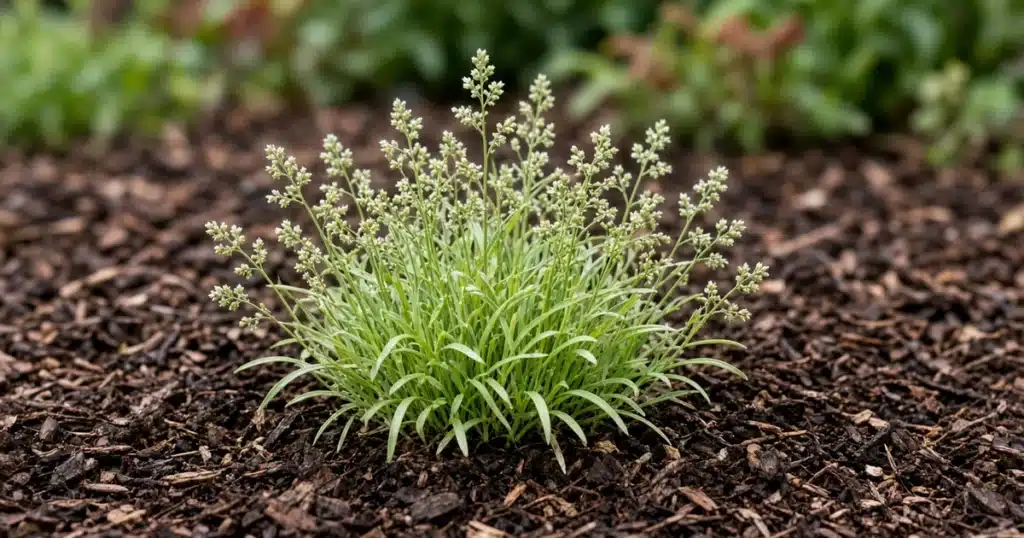
Quick answer: Annual bluegrass is a short, clumping cool season grass with a boat shaped leaf tip and pale seed heads. UC IPM says it can have many generations in a season. Pull clumps from moist soil in fall and spring, before they seed, and keep bare ground mulched. NC State says it prefers moist, shady areas, so watch damp spots.
What Is Annual Bluegrass?
A small grass, but a busy one. The University of California Statewide IPM Program (UC IPM) calls annual bluegrass a short cool season annual, biennial or perennial grass that is highly variable and one of the most common weeds in California. It grows in turf, gardens, landscapes, fields, roadsides and vegetable crops.
NC State Extension calls it a winter annual, clump forming grass with a yellow green color. It emerges from fall through spring, flowers, and then dies with the onset of warm weather. Our overview of weed control in outdoor cannabis shows how cool season weeds fit into a yearly plan.
How Do You Identify Annual Bluegrass?
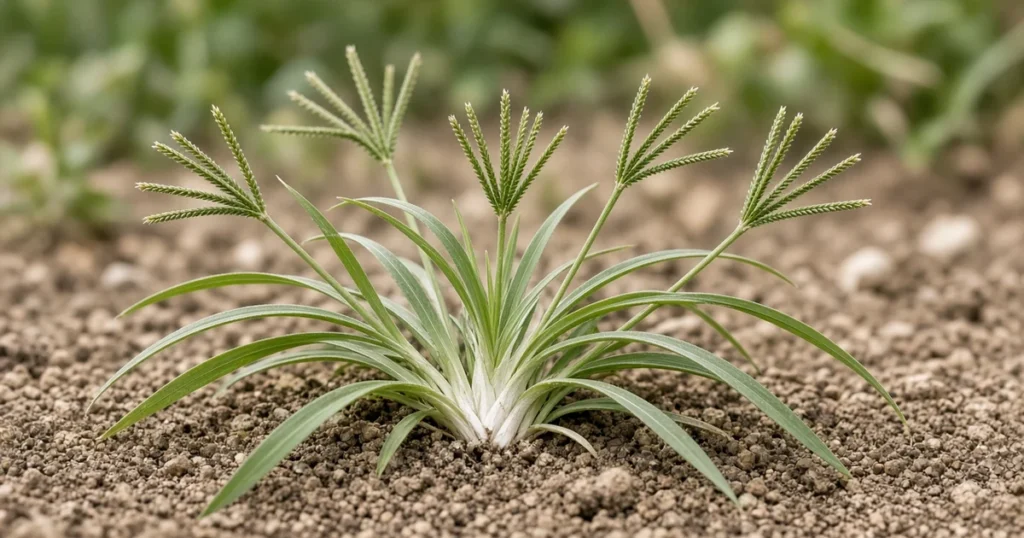
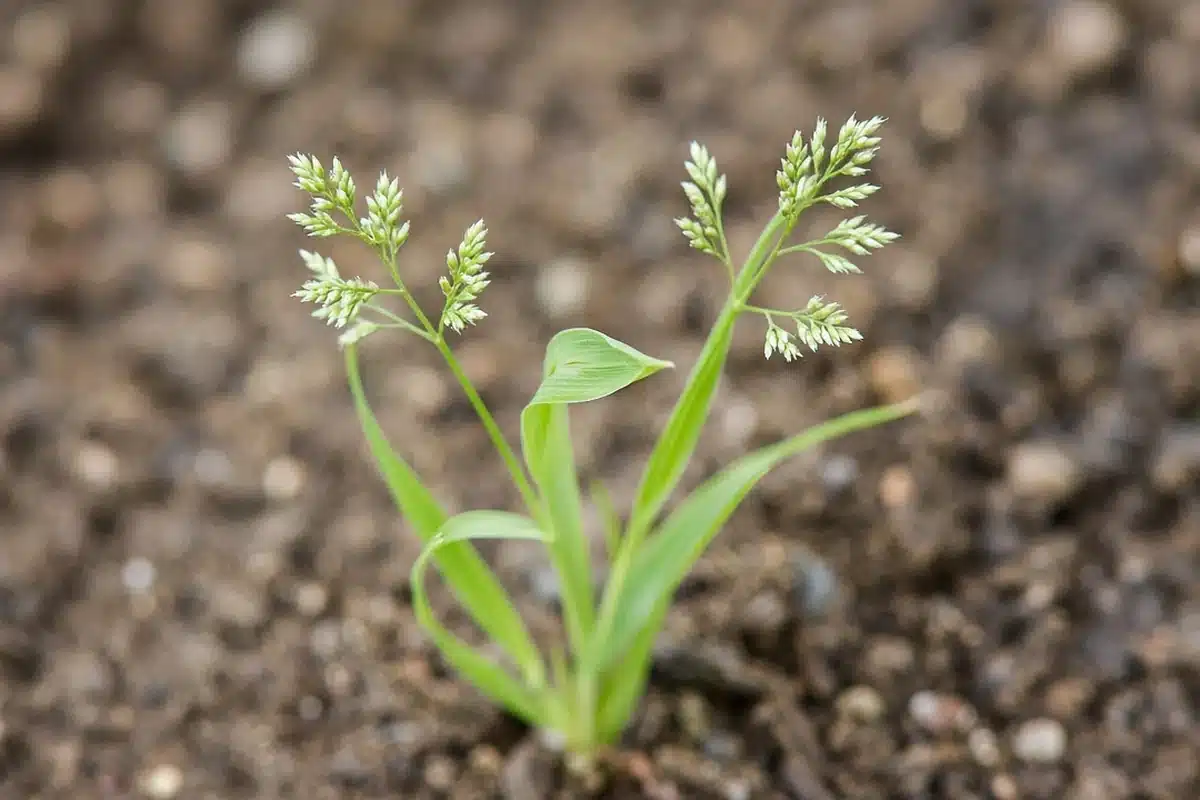
Check the leaf tip. UC IPM says it is easy to tell from other grasses by its leaf tip, which is shaped like the bow of a boat. Other features:
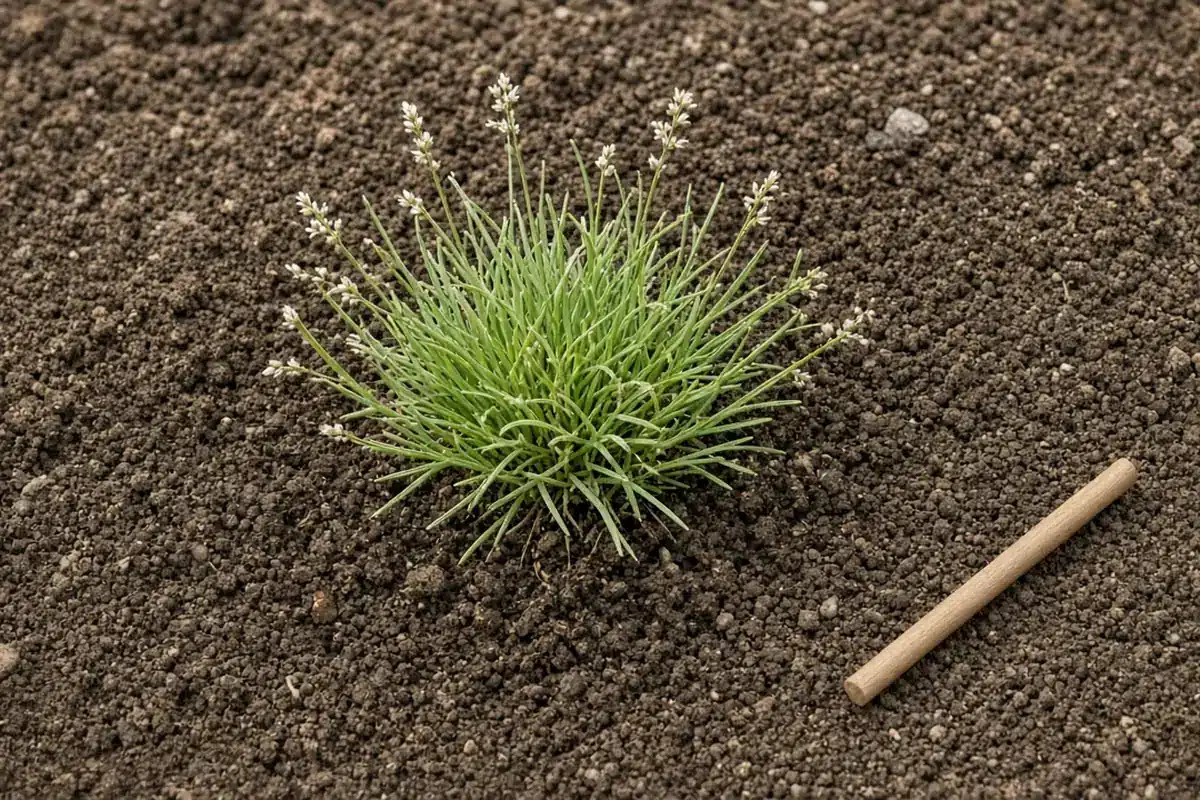
- Size. UC IPM says it forms dense, low clumps 3 to 12 inches tall.
- Leaves. Hairless, often yellowish green, and often crinkled at the middle. NC State says the leaves are often wrinkled crosswise.
- Ligule. A rounded, membranous ligule with a slightly pointed, jagged tip, per UC IPM.
- Seed head. NC State describes a distinctive whitish flower head. UC IPM says it is triangular to egg shaped and branches more than once.
- Roots. Fibrous, and plants often root at lower stem joints.
UC IPM says that in California, flowers are visible mostly December through July, and timing varies by region.
Why Does Annual Bluegrass Matter Before Planting?
It fills beds in the off season. NC State says it emerges from fall through spring, which is exactly when outdoor cannabis beds sit empty. By planting time, dense clumps can cover the surface and drop seed into the soil you are about to plant.
It also seeds heavily. NC State says each plant produces several hundred seeds in a season that can lie dormant for years before sprouting. UC IPM adds that it can have many generations in a season.
What Conditions Favor Annual Bluegrass?
Moist, shady and trampled ground. NC State says it prefers moist, shady areas and tolerates trampling, mowing and frozen conditions, which is why it shows up where people walk.
Bed edges and paths that stay damp and packed are prime spots. Our guide to soil compaction in cannabis beds explains how to loosen hard ground. Since NC State says it prefers moist, shady areas, drier and less trampled soil may make beds less friendly to it.
Does Annual Bluegrass Die on Its Own?
Often it does, in summer. NC State says it dies with the onset of warm weather after it flowers. That can make it look like a problem that solves itself, but by then the seed is already in the soil, ready to sprout again in fall.
The goal is to remove plants before they seed, not to wait for heat to kill them. A clump pulled in early spring takes hundreds of future seeds with it. Mark the spots where it grew thickest this year, because those patches tend to come back first when the fall rains return and the soil cools. A quick weekly walk along paths and bed edges from fall through spring catches most new clumps while they are still small and easy to lift.
Can Annual Bluegrass Come In With Soil or Seed?
It can travel quite easily. NC State says it is a frequent weed in areas heavily used by people or livestock, and UC IPM notes it is one of the most common weeds found throughout California. UC IPM’s landscape guide advises making sure new soil comes from a reputable source and does not contain weed seeds.
Our guide to buying topsoil for cannabis beds covers what to ask a supplier. Checking new soil and transplant pots keeps fresh weed seed out of clean beds.
How to Control Annual Bluegrass in a Cannabis Bed

- Scout in fall and early spring. NC State says it emerges from fall through spring.
- Confirm the boat shaped tip. UC IPM says the leaf tip shaped like a boat’s bow sets it apart.
- Pull whole clumps from moist soil. Grip at the base and lift the fibrous roots with the clump.
- Remove plants before seed heads open. NC State says each plant can make several hundred seeds.
- Loosen compacted areas. NC State says it tolerates trampling. Reduce traffic on wet soil.
- Avoid overwatering. NC State says it prefers moist, shady areas.
- Mulch bare soil. UC IPM recommends a medium mulch kept 3 to 4 inches deep. Our guide to mulch for cannabis compares wood chips, straw and other materials for winter beds.
Annual Bluegrass at a Glance
| Subject | Extension finding | Attribution |
|---|---|---|
| Life cycle | Mostly winter annual, variable | NC State, UC IPM |
| Height | Low clumps 3 to 12 inches | UC IPM |
| Key trait | Boat shaped leaf tip | UC IPM, NC State |
| Season | Emerges fall through spring, dies with heat | NC State |
| Seed output | Several hundred seeds per plant | NC State |
| Favored site | Moist, shady, trampled ground | NC State |
Should You Use Herbicides Near Cannabis?
No. Pull, hoe shallowly and mulch. If herbicides ever come up for other parts of your property, follow the label exactly. Remember that EPA has not registered any herbicide for use on marijuana, and state rules vary, so check with your state agriculture department. UC IPM says home gardeners who hand weed and mulch should not need herbicides. Before you plant cannabis outdoors, check your state’s home grow law.
Troubleshooting Annual Bluegrass
Beds turn green over winter. NC State says it emerges fall through spring. Pull clumps in fall and again in early spring.
Clumps break when pulled. Pull when soil is moist and grip at the base.
Paths are full of it. NC State says it tolerates trampling. Loosen soil and keep traffic off wet ground.
It vanished in summer, then returned. NC State says it dies with warm weather after seeding. Remove plants before they flower.
New beds came with grass. UC IPM advises checking that new soil is free of weed seed.
At Kind Seed Co, we clear cool season grasses before beds warm up for planting.
Frequently Asked Questions
How can I identify annual bluegrass?
UC IPM says annual bluegrass is easy to tell from other grasses by its leaf tip, which is shaped like the bow of a boat. It forms low clumps 3 to 12 inches tall with yellowish green, often crinkled leaves. NC State adds that it has a distinctive whitish flower head in spring.
When does annual bluegrass grow?
NC State says it emerges from fall through spring, flowers, and then dies with the onset of warm weather. UC IPM says it flowers mostly from December through July in California. In a cannabis garden, that means it grows while beds are empty and seeds before planting, so fall and spring weeding matters most.
How many seeds does annual bluegrass make?
NC State says each plant produces several hundred seeds in a season, and those seeds can lie dormant for years before sprouting. UC IPM says it can have many generations in a season. Pulling plants before the seed heads ripen is the best way to shrink the seed supply in your beds.
Why does annual bluegrass grow in my beds?
NC State says it prefers moist, shady areas and tolerates trampling and mowing. Damp, packed soil along paths and bed edges suits it well. Pull clumps before they seed, watch damp and shady spots, and keep bare ground covered with mulch so fewer seeds can sprout.
Does mulch help with annual bluegrass?
Yes. UC IPM’s landscape guide says mulches prevent weed seed germination by blocking sunlight and suggests a medium mulch kept 3 to 4 inches deep. UC IPM also says annual bluegrass reproduces by seed, so covering bare soil between plants cuts down new seedlings. Replenish organic mulch as it breaks down.
Sources
- UC Statewide IPM Program, Annual Bluegrass, Weed Gallery: https://ipm.ucanr.edu/weeds-identification-gallery/annual-bluegrass/
- NC State Extension Gardener Plant Toolbox, Poa annua: https://plants.ces.ncsu.edu/plants/poa-annua/
- UC Statewide IPM Program, Weed Management in Landscapes: https://ipm.ucanr.edu/home-and-landscape/weed-management-in-landscapes/