
Puncturevine in Cannabis Gardens: Goatheads, Burrs and Removal
Quick answer: Puncturevine is a low growing summer annual weed whose seedpods break into sharp, spiny burrs often called goatheads. UC IPM and the University of Nevada, Reno say the key is to remove plants before they flower and set seed, then collect any burrs left on the ground. Hand pulling or hoeing at the taproot, shallow cultivation, thick mulch and keeping burrs off shoes and wheels keep it out of garden paths and beds.
What Is Puncturevine?
A summer annual named for its spiny seedpods. The UC puncturevine guide says puncturevine is native to southern Europe and thrives in hot, dry conditions where other plants struggle. It is also called caltrop, goathead and tackweed. Washington State notes that it grows along roads and railroads, in cultivated ground and in waste places.
The plant itself is not the main problem. The UC puncturevine guide explains that the hard, spiny seed cases can injure people, pets and livestock underfoot and can even flatten a bike tire.
What Does Puncturevine Look Like?
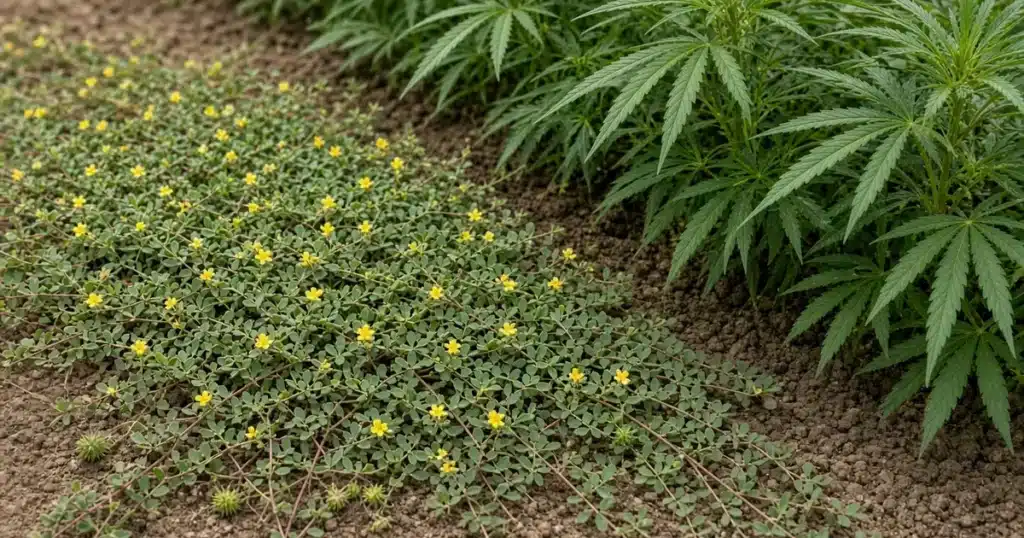
It forms a flat, hairy mat with yellow flowers. The UC puncturevine guide says the plant forms dense mats 2 to 5 feet across, with stems radiating from a central taproot. The stems do not root where they touch the soil.
Key traits to check:
- Opposite, hairy leaves divided into four to eight pairs of small leaflets, as the UC puncturevine guide and Washington State describe
- Leaflets 1/4 to 1/2 inch long and oval, according to Washington State
- Yellow flowers with five petals growing where leaves meet the stem
- Stems that are green to reddish brown, as Nevada notes
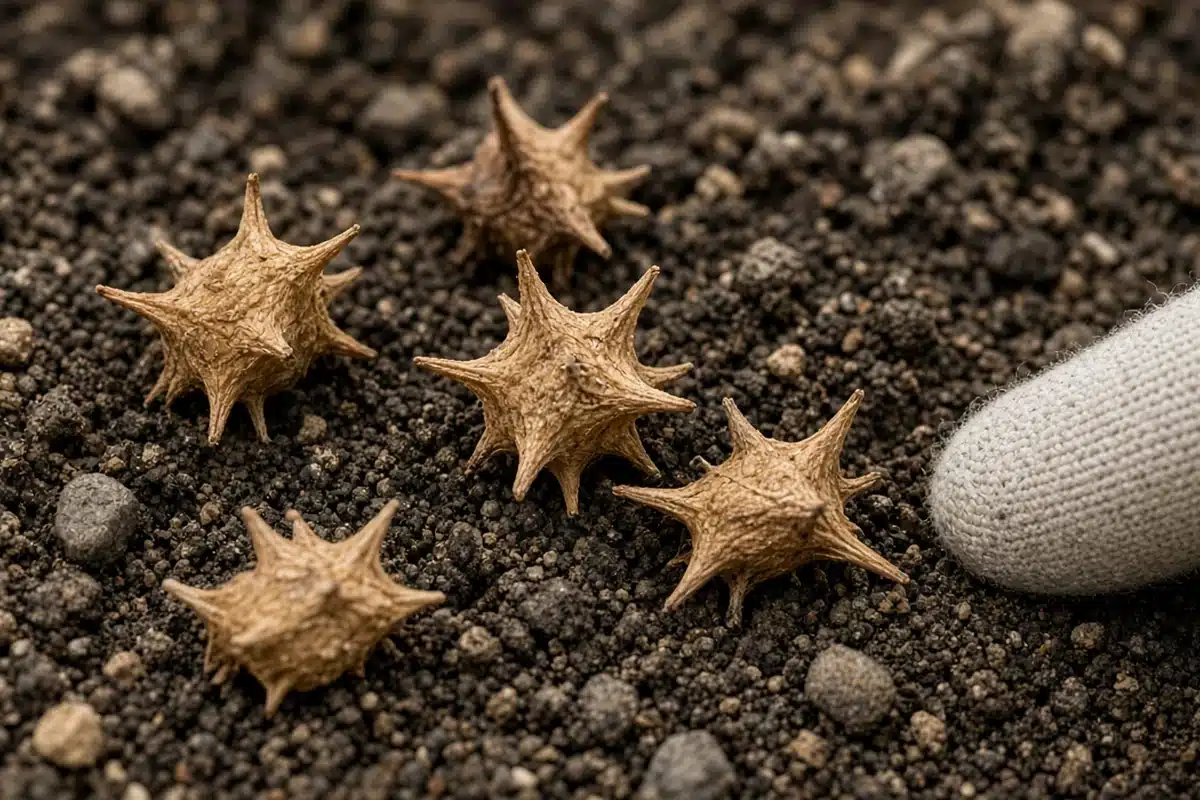
- A seedpod of five flat, spiny burrs that turns gray or tan when ripe
Washington State adds that the spines are arranged so that at least one always points up.
Why Is Puncturevine a Problem in Gardens?
Its burrs injure and spread. The UC puncturevine guide says the burrs stick to tires, shoes, clothing and animal fur and feet, which is how the plant travels. When it grows unchecked, the mat hides the burrs, so paths and bed edges can become painful to walk.
Its deep taproot, the UC guide adds, lets it compete hard for water and nutrients. Nevada notes that the foliage can be toxic to livestock. Washington State says both Washington and Oregon list it as a Class B noxious weed, and your county may legally require you to control it.
Is Puncturevine Dangerous to Pets?
The burrs are. The UC puncturevine guide says the sharp spines can injure the mouths, digestive tracts and feet of animals, and it does not recommend grazing livestock where puncturevine grows. It adds that the plant can be especially toxic to sheep and may play a part in nitrate poisoning of cattle and sheep.
For a home garden, the practical risk is burrs in paws and shoes. Washington State says the spines are hard enough to pierce skin, leather and tires. Clear burrs from paths where dogs and people walk.
Where Does Puncturevine Grow?
In many open sites, especially hot and dry ones. Washington State says it grows in compacted soil, sandy soil and moist, rich soil, and can be a problem in low maintenance turf. The UC puncturevine guide notes it does well where conditions are hot and dry, though seeds need good moisture and warmth to sprout. Nevada adds that its slender, deep taproot can partner with nitrogen fixing bacteria.
How Fast Does It Grow and Seed?
Quickly. The UC puncturevine guide says seeds sprout in spring and summer when soil is warm and moist, and the plant can flower within 3 weeks. Flowering continues through the summer. A single plant makes 200 to 5,000 seeds in a season, depending on moisture.
The UC puncturevine guide explains that most seeds stay dormant in their first season and may sprout the next spring, and that seed can survive in soil up to five years. Plants cannot tolerate freezing, so frost ends each season’s growth.
How to Remove Puncturevine From a Cannabis Garden
- Start early in the season. The UC puncturevine guide recommends monitoring and removing plants from late spring into summer.
- Remove plants before they flower. The UC puncturevine guide says hand removal, hoeing or cultivation should start before flowering and seed production.
- Cut at the taproot. The UC puncturevine guide says hand removal or hoeing that cuts the plant off at its taproot works best.
- Wear gloves. Washington State notes that the spines can injure people.
- Collect fallen burrs. The UC puncturevine guide suggests sweeping or raking the ground, and even patting it with a piece of carpet to pick up burrs.
- Till shallowly, if at all. The UC puncturevine guide says tilling seedlings about 1 inch deep can work in larger areas, but deeper tilling buries seeds that can sprout for years.
- Mulch thickly. The UC puncturevine guide says organic mulch should be at least 3 inches thick to block light. Our overview of mulch types for cannabis covers options.
- Keep burrs off shoes and wheels. The UC puncturevine guide advises against carrying puncturevine into clean areas on shoes or mower and cart wheels.

Puncturevine Removal Options
| Method | When to use it | Note from sources |
|---|---|---|
| Hand pulling or hoeing | Before flowering | Cut at the taproot |
| Shallow tilling | Seedlings in larger areas | About 1 inch deep |
| Organic mulch | Beds and paths | At least 3 inches thick |
| Sweeping or raking | After removal | Picks up dropped burrs |
| Mowing | Not recommended | Plant grows too low |

Does Mulch Stop Puncturevine?
Yes, if it blocks all light. The UC puncturevine guide says mulch works in gardens and vegetable crops when it screens out light, with organic layers 3 inches deep or more. Light blocking synthetic covers that form a barrier also work well.
It helps, but burrs can root on top. The UC puncturevine guide warns that burrs dropping onto the mulch surface can still take root there, because the plant quickly sends down a deep taproot. Keep picking up burrs and pulling seedlings that appear on top of mulch.
Can Healthy Plantings Crowd It Out?
Yes, to a degree. Washington State says a healthy planting or turf area gives competition that reduces new puncturevine. The UC puncturevine guide adds that aerating compacted sites and growing strong desirable plants makes conditions better for those plants and leaves fewer resources for the weed. Our post on soil compaction in cannabis beds explains how to loosen hard ground.
Are There Biological Controls?
Yes, two weevils. The UC puncturevine guide says a seed weevil and a stem weevil were brought into the United States in 1961 to feed on puncturevine. The seed weevil larvae destroy seeds inside the burr, and the stem weevil larvae tunnel in stems and crowns. Nevada also lists two insect biocontrol agents.
The UC puncturevine guide notes that the weevils are very effective but that puncturevine can rebound every few years as weevil numbers fall along with the weed. It also says buying and releasing weevils is not generally recommended.
Troubleshooting Puncturevine Problems
Burrs keep showing up after pulling. The UC puncturevine guide says to collect dropped burrs. Sweep, rake or pat the ground with carpet.
New plants appear every year in the same path. The UC puncturevine guide says seed lasts up to five years. Remove plants before flowering every season.
Tilling made it worse. The UC puncturevine guide warns that deep tilling buries seed that sprouts for years. Keep cultivation about 1 inch deep.
Seedlings sprout on top of mulch. The UC puncturevine guide says burrs can take root on mulch. Pull them while small.
Mowing did nothing. The UC puncturevine guide says the plant grows too low for mowing to help. Hoe or pull it instead.
Sources
- UC Statewide IPM Program, University of California, Pest Notes: Puncturevine: https://ipm.ucanr.edu/home-and-landscape/puncturevine/
- Washington State University Extension, Hortsense, Weeds: Puncturevine: https://hortsense.cahnrs.wsu.edu/fact-sheet/weeds-puncturevine-tackweed-goathead-tribulus-terrestris/
- University of Nevada, Reno Extension, Nevada Noxious Weed Field Guide: Puncturevine: https://extension.unr.edu/publication.aspx?PubID=4475
FAQ
Why is it called goathead?
Because of its burrs. The UC puncturevine guide and Washington State list goathead among its common names for the spiny seedpods.
How many seeds does one plant make?
200 to 5,000 in a season, the UC puncturevine guide says.
How long do puncturevine seeds last?
Up to five years in soil, the UC puncturevine guide says.
Does puncturevine survive frost?
No. The UC puncturevine guide says it cannot tolerate freezing temperatures.
Is puncturevine a noxious weed?
In some states. Washington State says both Washington and Oregon list it as a Class B noxious weed.


