
Quarter Acre Homestead Layout: Zones for Food, Animals and Paths
The short answer
A quarter acre homestead works well when you map sun, water and slopes first, then place zones by how often you visit them. NC State and Mississippi State Extension suggest starting small with beds, fruit and compost. Herbs and salad crops go near the house, with fruit trees and larger beds further out.
A quarter acre is about 10,890 square feet. After a house, driveway and yard, many lots leave a few thousand square feet for growing. That is plenty for a productive garden if every part has a clear purpose.
How do you plan a quarter acre homestead?
Begin with a map. Sketch your lot to scale on graph paper or a free planning app.
Mark the house, driveway, fences, trees and buildings. Then mark sun, slope and soil.
Sun. Watch the lot through a full day. Note which areas get six or more hours of direct sun.
Water. Mark spigots, downspouts and low spots where water collects.
Slope. Note which way the ground drains. Steep spots may need terraces or perennials.
Wind. Look for exposed corners that dry out fast.
The NC State Extension homesteading page suggests starting with a clear plan and growing your skills over several seasons.
Our post on planning an outdoor garden layout walks through mapping beds and paths before you dig.
How do zones work?
Zoning sorts the homestead by how often you visit each part. Spots you visit most sit closest to the door.
The NC State Extension Gardener Handbook appendix on permaculture design describes zones numbered outward from the house.
| Zone | What goes there | How often you visit |
|---|---|---|
| Zone 0 | The house itself | Always |
| Zone 1 | Herbs, salad greens, seedlings | Daily |
| Zone 2 | Main vegetable beds, compost, small livestock | Every day or two |
| Zone 3 | Fruit trees, berries, bigger crops | Weekly |
| Zone 4 | Wild edges, woodpile, native plants | Now and then |
Sources: NC State Extension, Mississippi State University Extension.
On a quarter acre, zones 1 through 3 usually cover most of the space. A small wild edge can still serve as zone 4.
What fits on a small lot?
More fits than most people expect. Here is one sample split for the growing area.
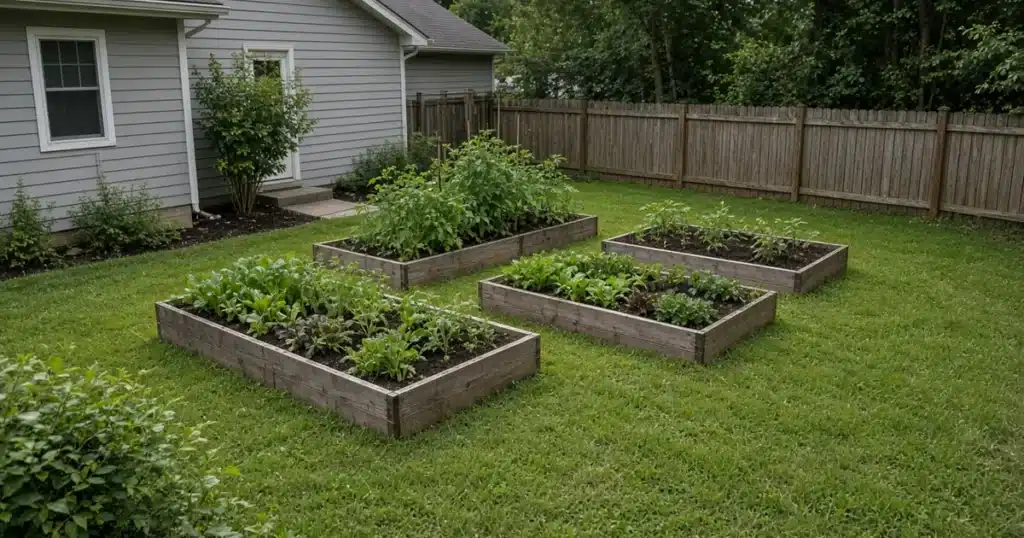
Kitchen beds. Four to six raised beds near the back door for herbs, greens and tomatoes. Our post on raised beds covers sizing and soil.
Main garden. A larger block of beds for squash, beans, potatoes and corn.
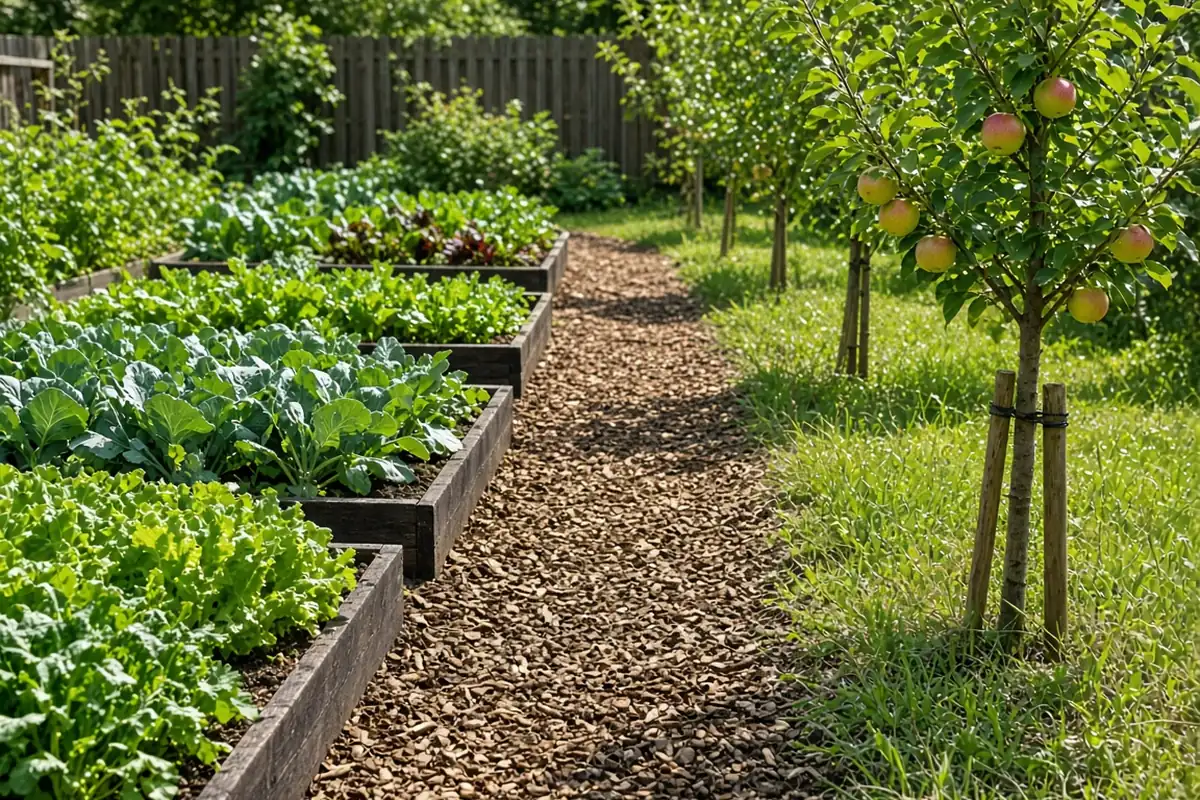
Fruit. Three to six dwarf fruit trees along a sunny fence line. Berry bushes fill gaps.
Compost. Two or three bins near the main garden. Our post on composting garden waste explains a simple bin system.
Small animals. Many towns allow a few hens. A small coop fits in zone 2.
Storage. A shed or tool rack near the garden saves steps.
The Mississippi State University Extension post on homesteading at home suggests beginning with a few crops you enjoy and adding more each year.

How do paths and water fit in?
Paths link every zone. Make main paths at least three feet wide for a wheelbarrow.
Set bed widths at about four feet so you can reach the center from each side.
Place rain barrels at downspouts near the gardens they will water. Run drip lines from a spigot to the main beds.
Set the compost between kitchen and garden, so you pass it on every trip.
How to: step by step
- Map sun, shade, slope and water on your lot.
- Mark spots for animals and structures.
- Place daily use beds and herbs near the house.
- Put fruit and larger beds further out.
- Plan paths, storage and compost access.
- Start small and expand each season.
How do you grow over time?
Don’t build everything in year one. Start with a few beds and a compost bin.
Plant fruit trees early, since they take several years to bear. Add beds as you learn which crops you use most.
Start a garden journal. Note planting dates, yields and problems. Plan next season from them.
Troubleshooting
Beds shaded by the house. Move sun crops to the south side. Use shade for greens.
Long walks to water. Add a rain barrel or spigot closer to the beds.
Too much work at once. Scale back to the beds you can manage.
No room for animals yet. Start with beds, fruit and compost, and add hens later.
Paths turn muddy. Add wood chips or gravel to main routes.
A small lot can feed you well when crops fit the site. Kind Seed Co shares more garden ideas in outdoor growing.
Sources
- Homesteading, local food, NC State Extension, Homesteading
- Homesteading: growing vegetables and fruit at home, Mississippi State University Extension, Homesteading
- Extension Gardener Handbook, appendix G: permaculture design, NC State Extension, Extension Gardener Handbook
FAQ
Can you raise chickens on a quarter acre?
Often yes. A few hens fit in a small coop.
How much food can a quarter acre grow?
It depends on your climate and effort. Many families grow much of their summer produce.
What is permaculture zoning?
It groups garden parts by how often you visit, starting at the house.
Should I start with fruit trees?
Yes. Trees take years to bear, so plant them early.
How wide should garden paths be?
Main paths of about three feet fit a wheelbarrow.



