
Hellstrip Garden: Planting the Strip Between Sidewalk and Street
The short answer
A hellstrip garden plants the narrow strip between the sidewalk and street, a spot often hot, dry, salty and walked on. Nebraska Extension suggests low, tough plants and paths where people step out of parked cars. Loosen and improve the soil first and pick drought and salt tolerant plants that stay short.
The strip by the curb is often the hardest patch of ground on a lot. It bakes in summer, gets road salt in winter and takes foot traffic year round. With the right plants, it can become one of the nicest looking parts of the yard.

What is a hellstrip garden?
The hellstrip goes by many names. Curb strip, parkway, tree lawn and verge all describe the same space.
Most strips hold lawn by default, and that grass often struggles with heat, dry soil and salt.
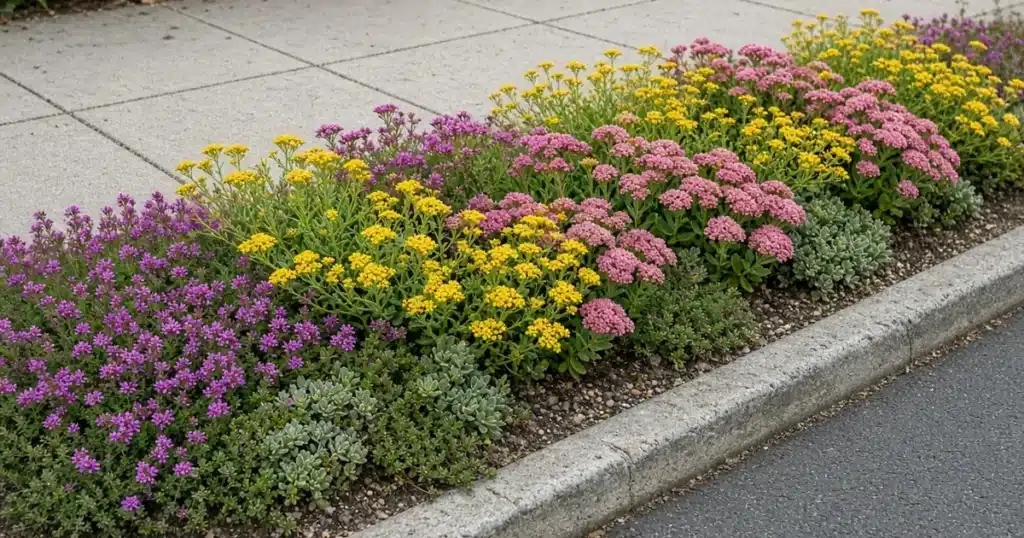
A hellstrip garden swaps that lawn for low, tough perennials, grasses and groundcovers. Many gardeners use it to add color and pollinator food.
The University of Nebraska Lincoln guide to curb strip gardens explains how to plan a strip that handles heat and traffic and needs little water.
What challenges does the strip face?
Heat. Pavement on both sides soaks up sun and radiates heat into the soil.
Dry soil. Strips often sit outside sprinkler reach and dry out quickly.
Salt. Winter road salt splashes and drains into the soil.
Compaction. Foot traffic, car doors and snow piles press the soil hard.
Height. Plants over knee high block views from parked cars.
| Challenge | What it causes | Plant or fix |
|---|---|---|
| Reflected heat | Scorched leaves | Heat loving perennials |
| Dry soil | Wilting in summer | Drought tolerant plants and mulch |
| Road salt | Leaf burn and stunting | Salt tolerant grasses and perennials |
| Compaction | Poor root growth | Loosen soil and add compost |
| Foot traffic | Trampled plants | Stepping stones and paths |
Sources: University of Nebraska Lincoln, National Wildlife Federation.
Our post on salt buildup in soil explains how salt harms roots and how to flush it out.
Which plants suit a hellstrip?
Pick plants that stay under two to three feet. Low growth leaves sight lines clear for drivers and walkers.
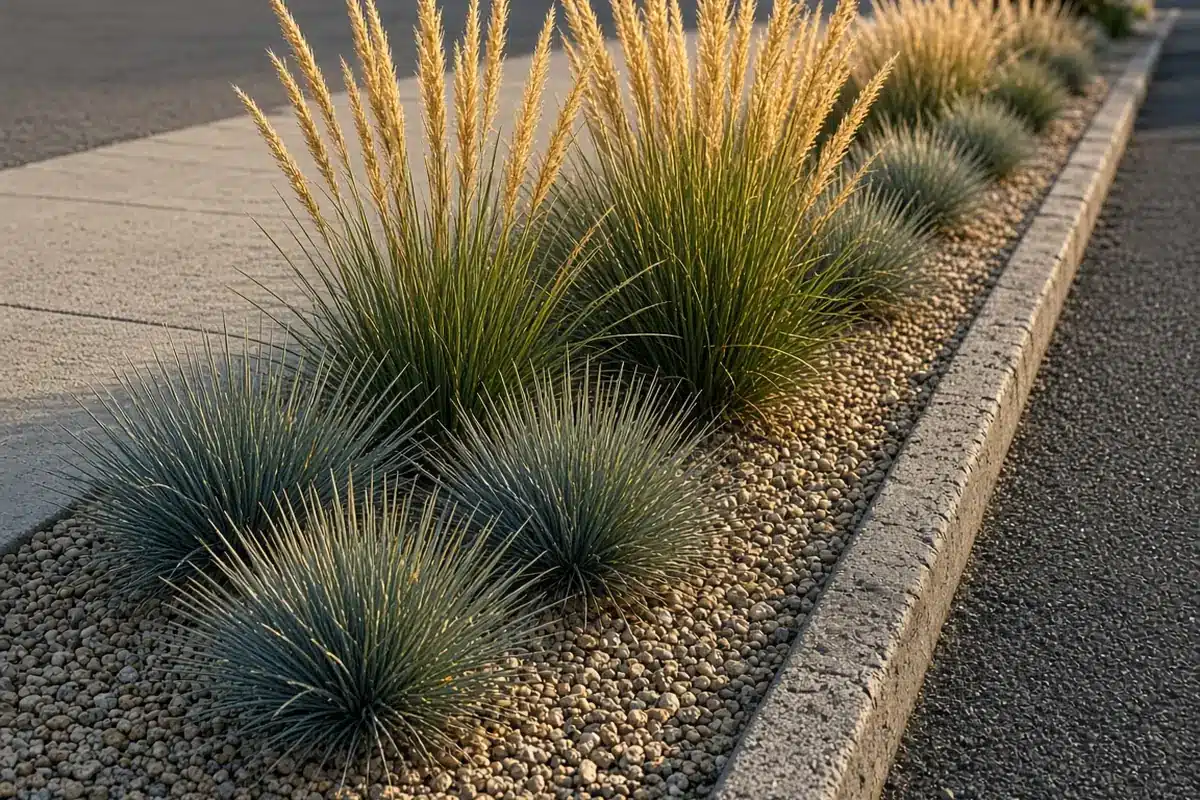
Good choices include native grasses, sedums, creeping thyme, catmint, yarrow and coneflowers. Many prairie plants handle heat and dry soil well.
The National Wildlife Federation article on turning hellstrips into habitat suggests native plants that feed bees and butterflies. Even a small strip adds food for pollinators.
Mix plants with staggered bloom times so something flowers from spring through fall.
Skip plants with thorns near paths. Avoid tall plants near corners and driveways.
How to prepare the soil
Most strips have hard, compacted soil. Loosen it with a digging fork before planting.
Mix in a few inches of compost to improve drainage and water holding. Our post on soil compaction covers ways to loosen hard ground.
If your strip slopes toward the street, plant in small terraces or use groundcovers to hold soil. The Iowa State University guide to gardening on slopes explains how plants and mulch reduce runoff.
Dig by hand and go slow. Strips often hide roots and old gravel.
How to: step by step
- Measure the strip and note sun hours.
- Loosen packed soil first.
- Improve compacted soil where needed.
- Leave stepping paths near parking.
- Choose low, drought and salt tolerant plants.
- Mulch and water until plants establish.
How do you plan paths?
People need to cross the strip to reach parked cars and the sidewalk. Plan for it.
Set flat stepping stones every few feet along the curb. Add a wider path near driveways and mailboxes.
A narrow gravel or mulch edge along the curb gives car doors room. It sets plants back from splash and salt too.
How do you care for a hellstrip?
Mulch two to three inches deep after planting. Our post on mulch compares types that suit dry spots.
Water weekly through the first season while roots settle in. After that, most tough plants need little water.
Cut back dead stems in late winter or early spring. Leave seed heads through fall to feed birds.
Troubleshooting
Plants burn along the curb. Salt or heat is the cause. Move salt tolerant plants to the edge.
Bare patches after winter. Snow piles crushed plants. Use tough groundcovers there.
Plants flop over paths. They are too tall. Swap in shorter types.
Weeds take over. Mulch was too thin. Add more and pull weeds early.
Plants too tall. Trim or replace them with shorter kinds.
A tough strip can become a bright welcome to your home. Kind Seed Co shares more garden ideas in outdoor growing.
Sources
- Boost landscape appeal with a curb strip garden, University of Nebraska-Lincoln Water, Boost landscape appeal with a curb strip garden
- From hell strip to habitat, National Wildlife Federation, From hell strip to habitat
- Gardening on slopes and hillsides, Iowa State University Extension and Outreach, Gardening on slopes and hillsides
FAQ
What width suits a hellstrip?
Any width works. Narrow strips suit low ground covers.
Can you grow vegetables in a hellstrip?
Some people do, but road salt and runoff make flowers a better fit.
How tall can hellstrip plants be?
Limit most plants to two or three feet so drivers and walkers can see clearly.
Do hellstrips help pollinators?
Yes. Native flowers in the strip feed bees and butterflies.
What groundcovers handle foot traffic?
Creeping thyme and some sedums handle light steps well.



