
Rain Gauge for Garden Beds: Track Water for Cannabis
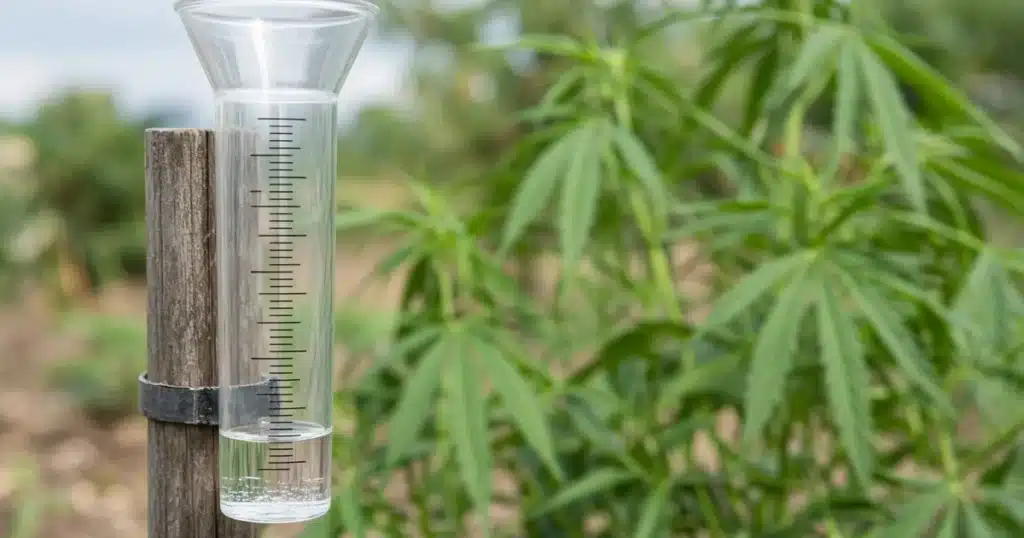
Rain is free water, but it is hard to judge by eye. A heavy shower can look like plenty and still leave the soil dry a few inches down, while a steady drizzle can add up to more than you expect. A rain gauge takes the guessing out of it. University of Florida IFAS Extension notes that watering the garden is only needed when rainfall is not enough, so it is always a good idea to keep track of how much rain your yard actually gets. Coming up: why rainfall varies from place to place, how to choose and place a gauge, how to read it and how to make up the difference with a hose when the rain falls short.
Why your own rainfall matters
Weather reports give a single number for a whole area, but rain rarely falls evenly. One side of town can get a downpour while the other stays dry. Trees, buildings and hills also change how much rain reaches the ground in a given spot. University of Illinois Extension suggests that gardeners track how much rain falls each time it rains, using a rain gauge or local weather station records. A gauge in your own yard tells you what your plants actually received, which is what matters when deciding whether to water.
Choosing a rain gauge
University of Florida IFAS Extension describes two main kinds of rain gauge:
- Manual gauges collect water in a tube so you can see at a glance how much rain fell during the last storm.
- Automatic weather stations track daily, weekly and monthly rainfall history, and some also record humidity, temperature and other weather details.
The same source describes a few other designs used for more precise work. A standard gauge uses a funnel that empties into a marked cylinder. A tipping bucket gauge channels rain into a small seesaw container that tips and records each set amount. Weighing gauges record the weight of what falls and can measure rain, hail and snow, but they cost more and need more upkeep.
For most home gardens, a simple manual gauge is enough. If you like data, an automatic gauge that reports indoors and empties itself saves a trip outside after every storm.
Where to put a rain gauge
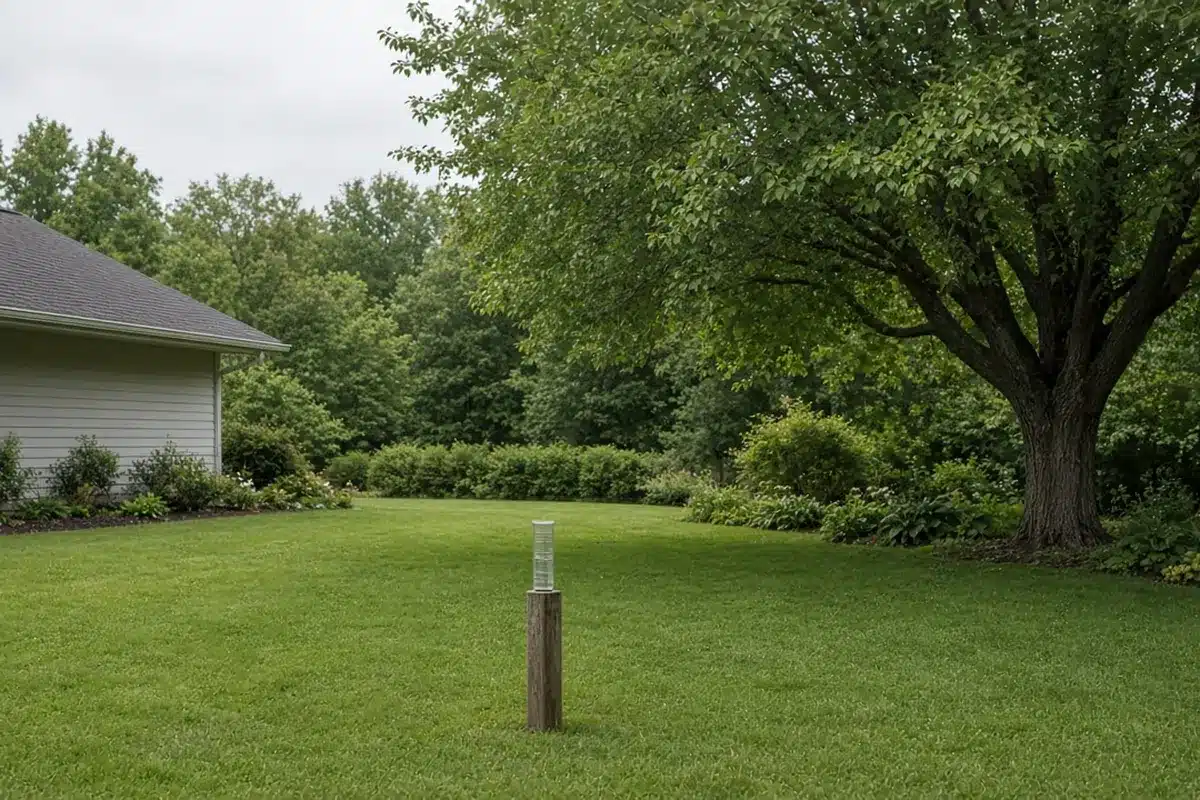
Placement makes a big difference to accuracy. University of Florida IFAS Extension recommends placing a rain gauge away from trees, the house and irrigation systems. Each of these can throw off the reading:
- Trees catch rain on their leaves, so a gauge under a canopy reads low.
- Roofs shelter the ground near a wall and can also drip or splash extra water into a gauge.
- Sprinklers and hoses add water that did not come from rain.
Put the gauge in an open spot near your plants, mounted level on a post or stake so it does not tip. Keep it at the same spot all season so your readings are comparable from week to week.
How to read and empty a rain gauge
Reading a manual gauge is simple. Look at the water level against the marks on the tube at eye level, and write the number down. University of Florida IFAS Extension notes that rainfall is reported in inches or centimeters, depending on the gauge.
The most important habit is emptying the gauge. UF IFAS says to empty it after it rains so you get an accurate reading each time. If you forget, the next storm adds to the last one and your numbers become meaningless.
A simple notebook or phone note with the date and amount is all you need. Add up the readings each week to see how much rain the garden received.
The weekly water target
Once you know how much rain fell, you can decide whether to water. University of Illinois Extension says that ideally a garden receives about one inch of rain per week. If rain provides that, you do not need to water. If it rains but the total stays below an inch and the soil is dry, it says to make up the difference.
University of Florida IFAS Extension adds that plant water needs vary by season and landscape, but many plants need at least some water every week during warm months.
Treat the one-inch figure as a starting point for cannabis, not a fixed rule. Large plants in hot, windy weather use more water than small plants in mild weather. Always check the soil as well. A soil moisture meter or a simple finger test a few inches down tells you whether the rain reached the roots.
Do not wait if plants need water
A forecast of rain is not a reason to let thirsty plants suffer. University of Illinois Extension advises that even if rain is forecast in the coming days, you should not wait if plants are drought stressed. If your plants are wilting and the gauge shows little rain, water them. The warning signs are described in underwatering cannabis.
How to make up a rainfall shortfall, step by step
University of Illinois Extension gives a simple way to work out how long to run a hose to make up a shortfall:
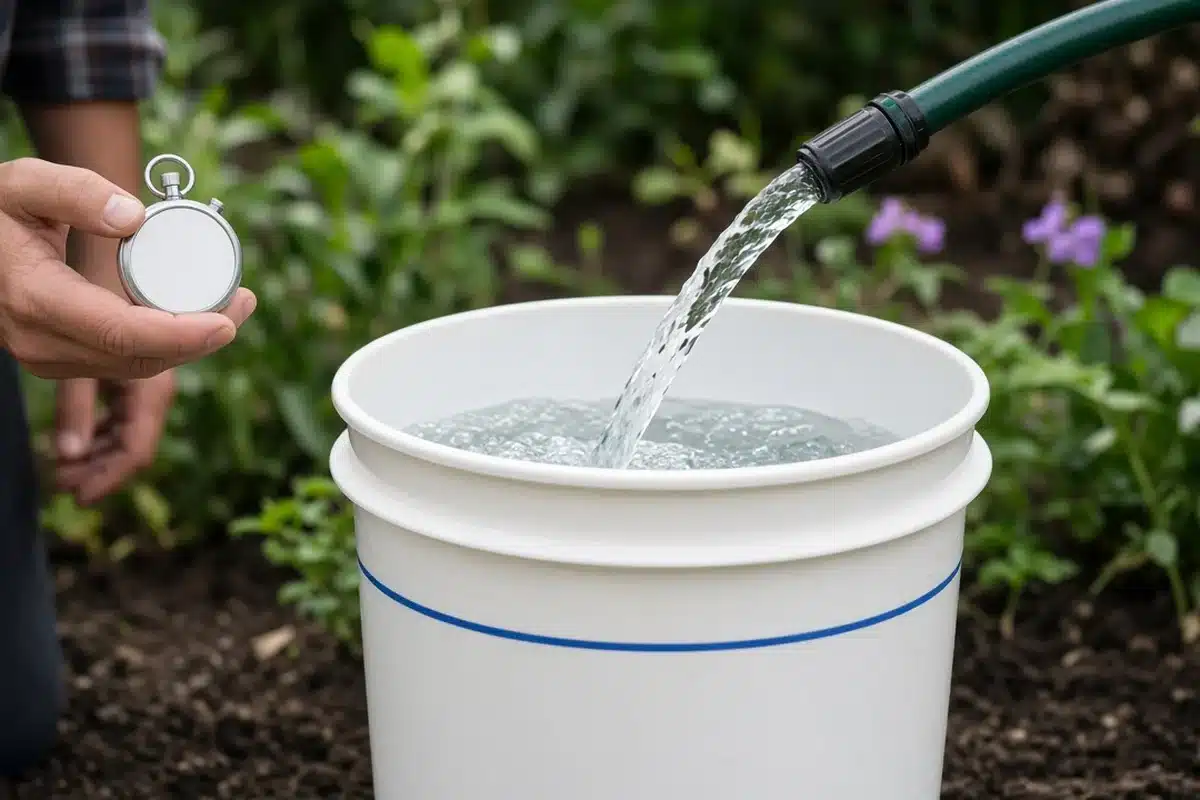
- Mark the five-gallon line on a bucket, as Illinois Extension recommends, since buckets are not always filled exactly to the top.
- Time how long your hose and nozzle take to fill the bucket to that line.
- Multiply that time by twelve. Illinois Extension explains that one inch of rain over 100 square feet equals about 62 gallons of water, so twelve buckets is close to one inch over that area.
- Measure your bed in square feet, then multiply the twelve-bucket time by the bed area divided by 100. A 50 square foot bed needs about half that time, and a 200 square foot bed about double.
- Subtract the week’s rainfall. If the gauge showed half an inch, water for about half the time.
- Water slowly so the soil can absorb it.
Illinois Extension also recommends checking a sprinkler’s rate by timing how long it takes to fill a rain gauge to one inch. It notes a standard tuna can also works because it is about one inch deep.
Soil type and slow watering
University of Illinois Extension explains that sandy soils drain quickly, while clay soils hold water and drain slowly. Raised bed soils are often very well drained, similar to sandy soil. Illinois adds that very well-drained soils may need watering two or more times a week in hot summer weather, while clay soils may need it only about once a week.
Heavy clay can also shed water as runoff if you apply it too fast. Illinois Extension suggests slowing the rate with soaker hoses or drip lines in that case. Mulch helps too. University of Illinois Extension notes that organic mulches such as straw or coarse wood chips insulate the soil and help conserve water. More mulch ideas are in mulch for cannabis. For a slow ground-level option, try the Kind Seed Co post on soaker hoses for cannabis.
Too much rain
A rain gauge also tells you when plants have had too much. University of Illinois Extension warns that too much water can be as much of a problem as too little, because roots need air and saturated soil has little oxygen. When the gauge shows a very wet week, skip watering and let the soil dry. Illinois Extension notes raised beds can help in waterlogged or flood-prone spots.
Troubleshooting
The gauge reads much lower than the forecast. It may sit under a tree or near a wall. Move it to an open spot.
The gauge reads higher than expected. A sprinkler or roof drip may be adding water. Move it away from irrigation and buildings.
Readings keep climbing week after week. The gauge is not being emptied. Empty it after each rain.
The gauge shows an inch but the soil is dry. Heavy rain may have run off. Check soil a few inches down and water slowly if needed.
Plants wilt after a rainy week. Too much water can harm roots. Let the soil dry out and check drainage.
You cannot tell how long to water. Time a hose filling a marked five-gallon bucket and use the twelve-bucket rule.
Sources
- University of Florida IFAS Extension, Gardening Solutions. Rain Gauges and Rain Sensors. https://gardeningsolutions.ifas.ufl.edu/care/irrigation/rain-sensors-and-gauges/
- University of Illinois Extension. Starting a Garden: Irrigation. https://extension.illinois.edu/blogs/good-growing/2020-04-16-starting-garden-irrigation
FAQ
Where should I put a rain gauge in my garden?
University of Florida IFAS Extension recommends placing it away from trees, the house and irrigation systems for an accurate reading. Trees catch rain, roofs shelter or drip into the gauge and sprinklers add water. Set it level in an open spot near your plants and keep it there all season.
How much water does a garden need per week?
About one inch per week, from rain and watering combined. University of Illinois Extension gives one inch as the ideal weekly amount. If rain falls short and the soil is dry, make up the difference. For cannabis, treat that figure as a starting point, since large plants in hot weather may use more. Always check the soil too.
How often should I empty a rain gauge?
Empty it after each rain. University of Florida IFAS Extension notes this is the only way to get an accurate reading each time. If you leave water in the tube, the next storm adds to it. Write down the amount before emptying, then add up the week's readings.
How do I make up for low rainfall with a hose?
Time how long your hose takes to fill a marked five-gallon bucket, then multiply by twelve. University of Illinois Extension explains that one inch of water over 100 square feet is about 62 gallons. Scale the time to your bed size and subtract the week's rainfall.


