
Rose Leaves Turning Yellow: Black Spot plus Water
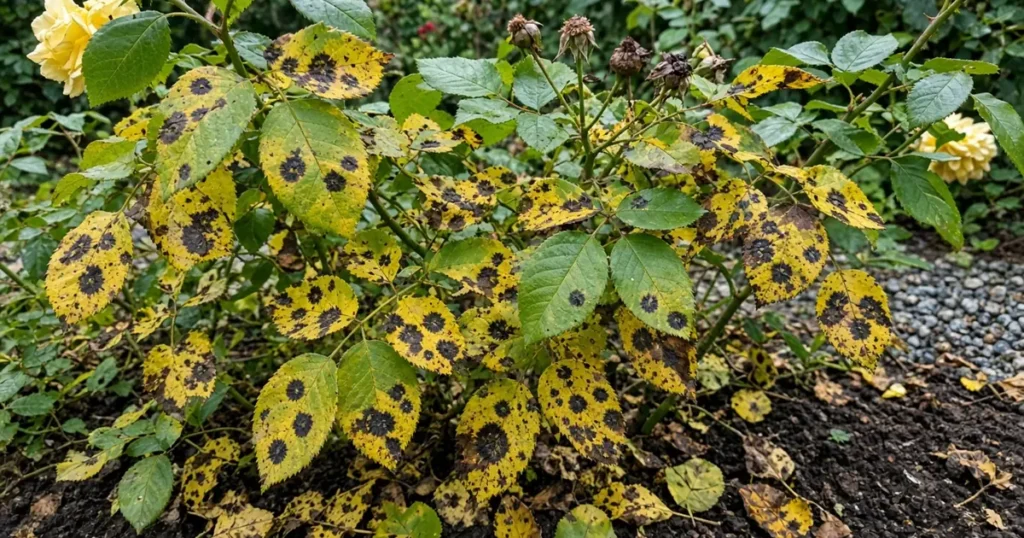
Rose leaves turning yellow are most often a sign of black spot. Clemson Cooperative Extension notes black spot forms circular dark spots up to 1/2 inch across that become surrounded by a yellow area. University of Florida IFAS notes the disease can strip leaves from susceptible roses after long wet periods.
The short answer
Rose leaves turning yellow with dark spots usually mean black spot. Clemson Cooperative Extension notes yellow rings form around the spots. University of Florida IFAS notes spores spread by rain or overhead watering. Water at the base early in the morning, rake up fallen leaves plus choose resistant cultivars.
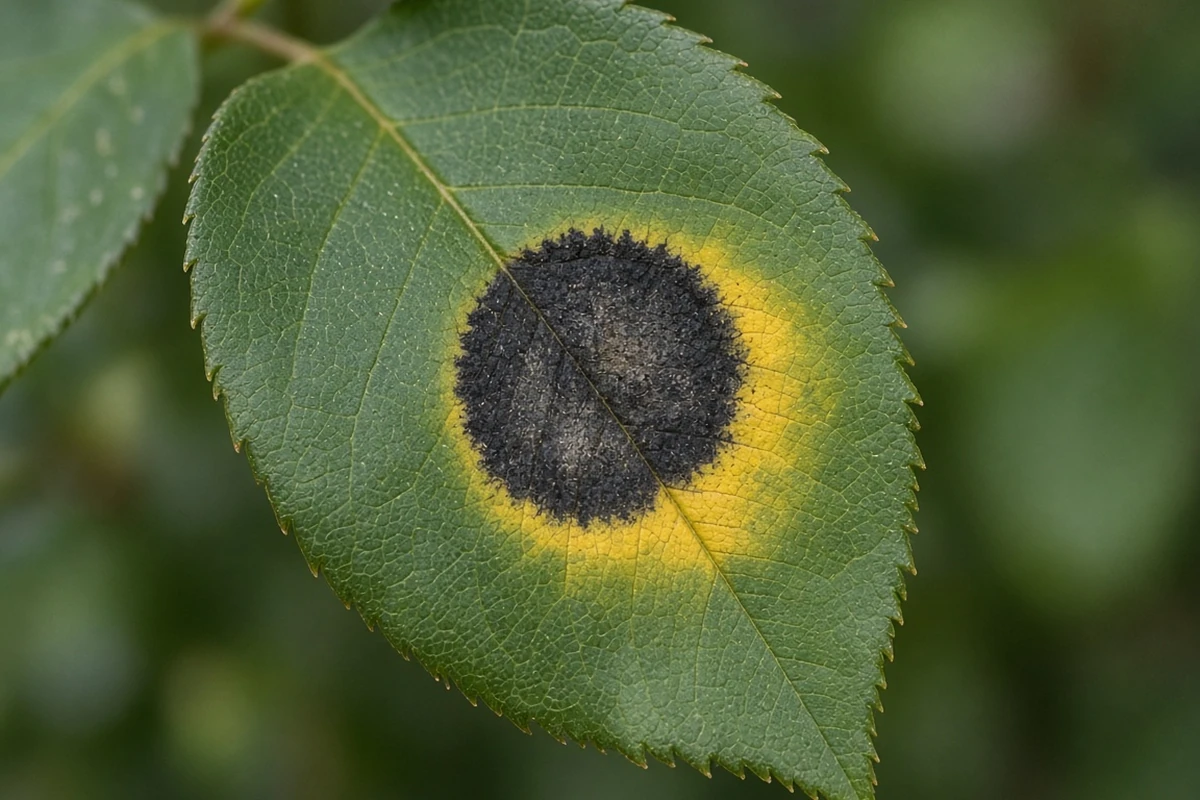
What does black spot look like on roses?
University of Florida IFAS notes spots of 2 to 12 mm with feathery borders on the upper leaf surface. Clemson Cooperative Extension notes yellowing forms around them.
| Sign | Black spot | Cercospora leaf spot |
|---|---|---|
| Spot | Dark with feathery border | Often confused with black spot |
| Yellowing | Around the spots | Leaf loss on heavy cases |
| Spread | Rain or overhead watering | Fungal spores |
Source: University of Florida IFAS plus Clemson Cooperative Extension.
Does the warm season play a part?
University of Florida IFAS notes poor rose performance can come from water shortage during the warm season. It notes black spot develops from 59 to 81 degrees F, with 64 degrees F optimal. Clemson Cooperative Extension notes it is worst after long, wet, warm spells in spring.
How do watering and feeding affect leaf color?
University of Florida IFAS notes leaves must stay wet for several hours to be infected. Water early in the morning so leaves dry, it advises. NC State Extension notes roses need full sun plus rich, well drained soil. Let a soil sample guide feeding.
How to: step by step
- Look for dark spots with yellow rings.
- Pick off badly spotted leaves.
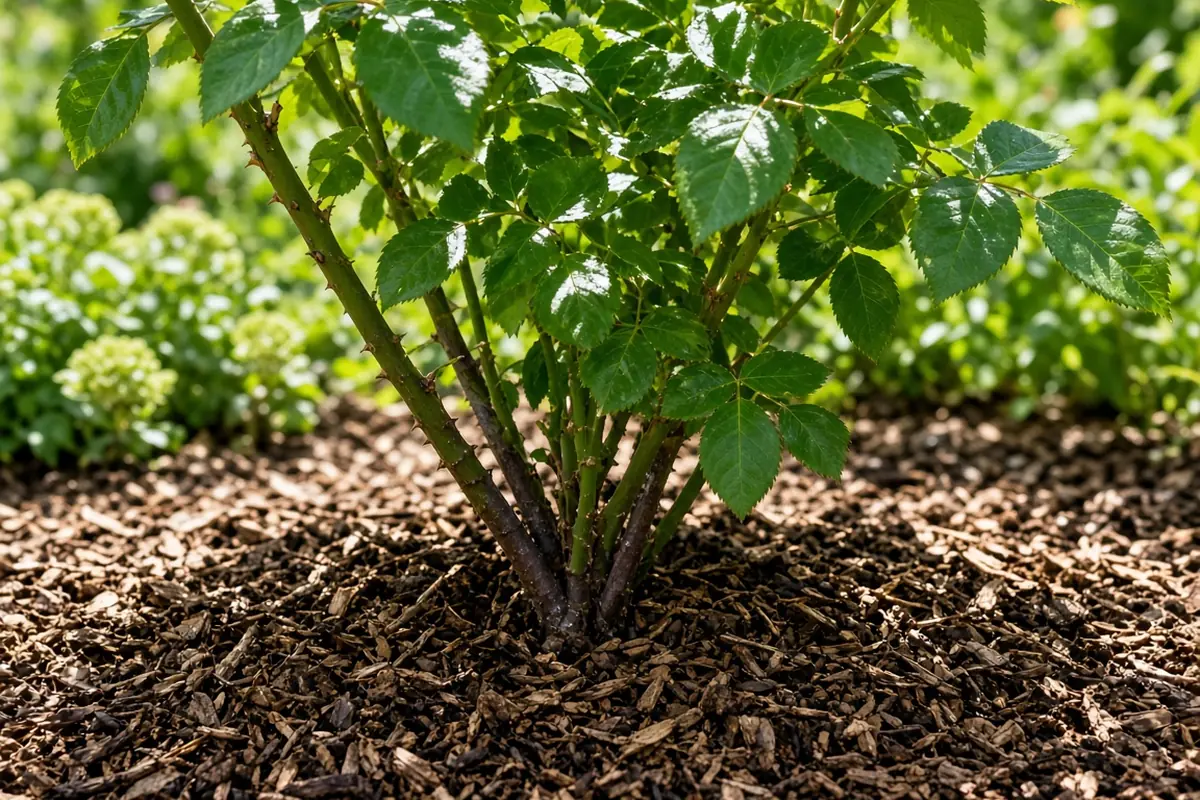
- Rake up fallen leaves plus old mulch.
- Water at the base early in the morning.
- Give plants room for air flow.
- Send a soil sample before feeding.
Troubleshooting
Yellow rings around dark spots: this is black spot. Clear spotted leaves plus fallen debris.
Leaves dropping in wet weather: rain spreads the spores. University of Florida IFAS advises limiting overhead watering.
Pale leaves with no spots: water or nutrients may be short. Water deeply in warm weather plus send a soil sample.
For related reading see septoria leaf spot on cannabis, cannabis heat stress plus mulch for cannabis. Kind Seed Co also stocks cannabis seeds.
Sources
- Rose diseases, Clemson Cooperative Extension HGIC
- Black spot vs Cercospora leaf spot on roses, UF/IFAS Gardening Solutions
- Black spot of rose (PP268), UF/IFAS Extension EDIS
- Rosa (rose), NC State Extension Gardener Plant Toolbox
FAQ
Are some roses resistant to black spot?
Yes. University of Florida IFAS names Knock Out plus HomeRun as resistant to black spot, though both are susceptible to Cercospora leaf spot. Clemson Cooperative Extension lists Pride N Joy, Sexy Rexy plus Prima Donna as resistant. Resistant cultivars cut down on yellowing leaves.
Should yellow leaves be picked off?
Clemson Cooperative Extension advises removing diseased leaves plus canes during the season. In fall or winter it advises clearing old leaves from the ground along with any mulch where infected leaves fell. Replace the mulch with a fresh layer before new growth begins in spring.
Does overhead watering spread disease?
Yes. University of Florida IFAS notes black spot spores spread by rain or overhead irrigation. Clemson Cooperative Extension advises avoiding overhead watering, especially late in the afternoon or early evening. When overhead watering cannot be avoided, water early in the morning so leaves dry quickly.
When should roses be fed?
Base feeding on a soil sample from your local extension lab. University of Florida IFAS notes poor performance can come from inadequate feeding plus water shortage in the warm season. NC State Extension notes roses grow in rich, well drained, acidic to neutral soil. The soil results show what it lacks.
Why clear up fallen rose leaves?
University of Florida IFAS notes the infection cycle starts from leaves plus canes infected the previous season. Clemson Cooperative Extension advises removing old leaves plus mulch in fall or winter. University of Florida IFAS advises mulch as a barrier between the plant plus spores on the ground.



