
Shallots Small Bulbs: Spacing plus Planting Time
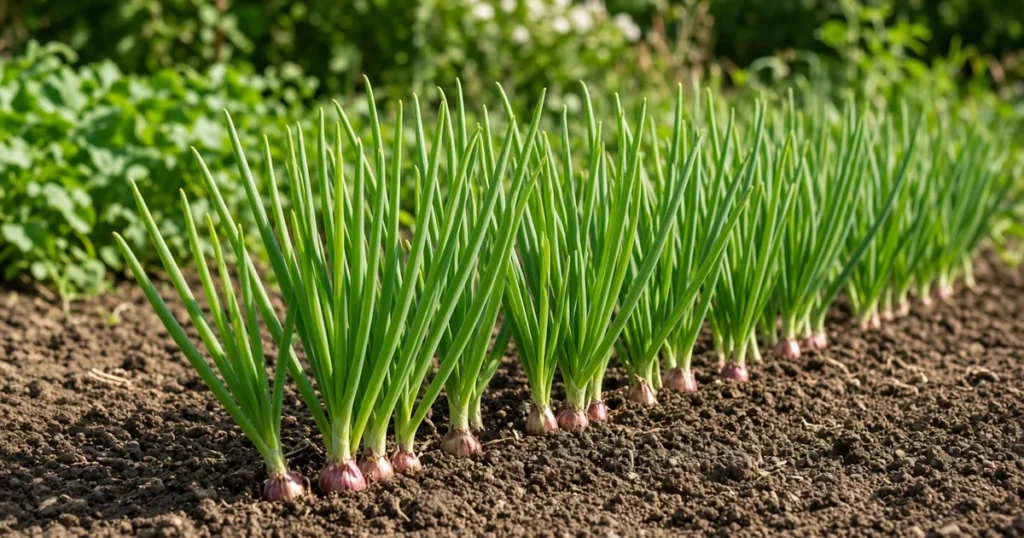
Shallots small bulbs often come from close spacing, weeds or dry soil while the bulbs swell. Utah State University Extension notes dense planting gives smaller single bulbs, plus drought stress lowers yield plus bulb weight.
The short answer
Utah State advises planting shallot sets 3 to 6 inches apart in rows 12 to 18 inches apart, since dense planting yields smaller single bulbs. Plant in early spring as soon as the soil can be worked, water regularly plus weed often during the first two months of growth.
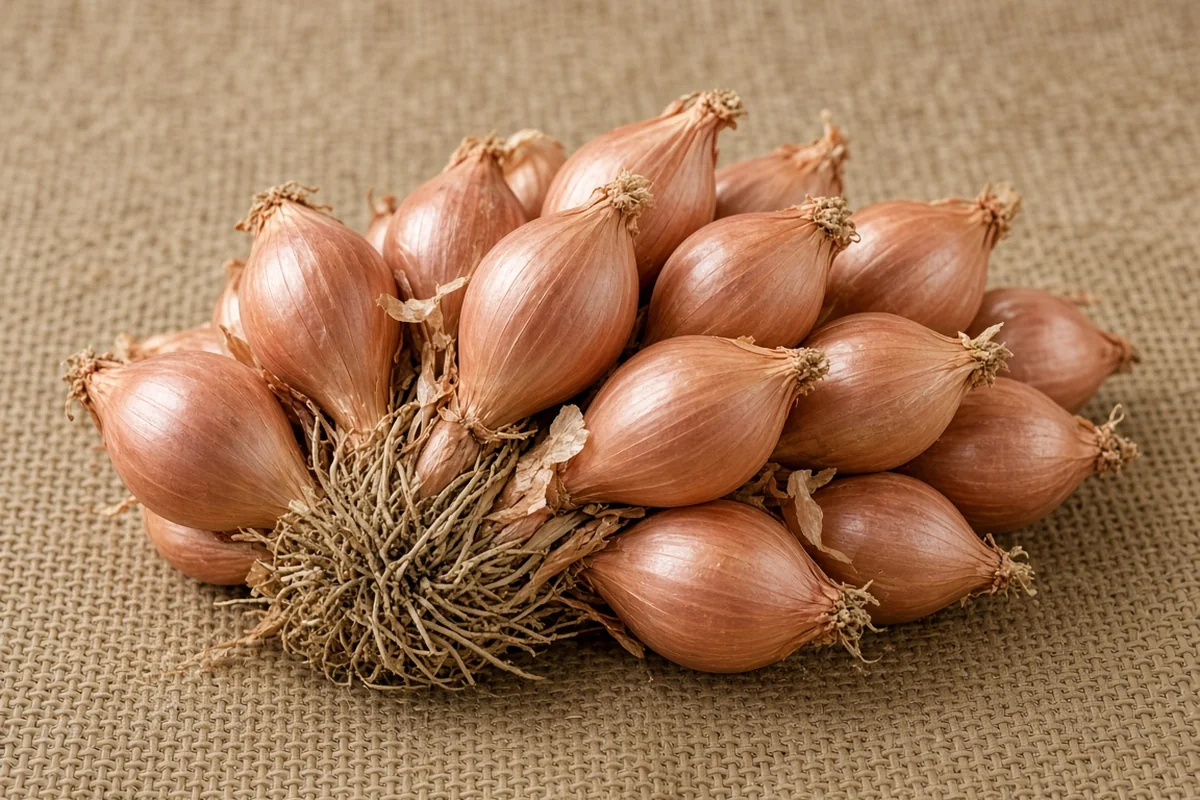
Why are my shallot bulbs small?
Utah State notes close spacing, early weeds plus drought stress all reduce bulb size. It also advises stopping nitrogen by mid July.
| Cause | Sign | Fix | Source |
|---|---|---|---|
| Close spacing | Small single bulbs | Space sets 3 to 6 inches apart | Utah State |
| Drought stress | Lower yield plus weight | Water regularly | Utah State |
| Early weeds | Slow growth | Weed in the first two months | Utah State |
| Late nitrogen | Leafy tops | No nitrogen after mid July | Utah State |
How far apart should shallots be planted?
Utah State advises 3 to 6 inches between sets. Wide spacing gives larger clusters, while dense planting yields small single bulbs.
How does day length affect bulbs?
University of Minnesota Extension notes long day onions need 14 or more hours of daylight to bulb, plus short day onions grown in Minnesota form small bulbs. Cool, cloudy weather can delay bulbing. The sources do not list day length classes for shallots.
How to: step by step
- Plant sets in early spring as soon as the soil can be worked.
- Space sets 3 to 6 inches apart.
- Weed often during the first two months.
- Water often as bulbs grow.
- Stop nitrogen by mid July.
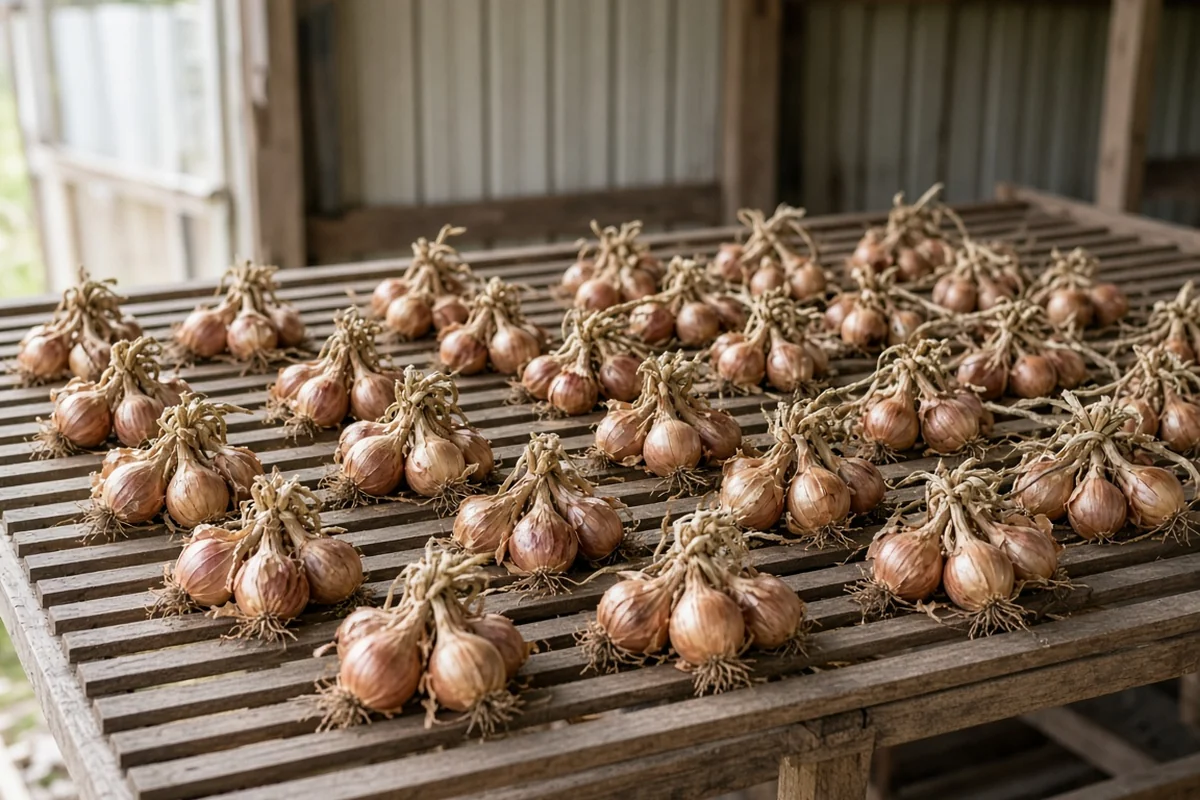
- Lift bulbs once tops fall over plus dry them for 1 to 2 weeks.
Troubleshooting
Small single bulbs: crowding. Give sets more room.
Small bulbs after a weedy season: weeds compete early, per Utah State. Weed during the first two months.
Low yield in a dry year: Utah State notes drought stress lowers yield. Water regularly.
Leafy tops over poor bulbs: late nitrogen. Stop feeding by mid July.
For plant stress see the effects of environmental stresses on weed plants, underwatering cannabis plus mulch for cannabis. Kind Seed Co also stocks cannabis seeds.
Sources
- How to grow shallots in your garden, Utah State University Extension
- Growing onions in home gardens, University of Minnesota Extension
- Onions and shallots, UF/IFAS Gardening Solutions
- Allium cepa (onion and shallot), NC State Extension Gardener Plant Toolbox
FAQ
Can shallots be planted in fall?
Utah State notes shallots can be planted in autumn after the first frost, but cold winters can reduce yield. For fall bulbs in zones 4 or 5, it suggests a frost cloth cover or mulch to limit winter damage. Otherwise plant in spring as soon as the soil can be worked.
Do shallots need fertilizer?
Utah State advises adding nitrogen about 30 plus 60 days after planting, then stopping by mid July. Extra nitrogen after that stimulates late season leaf growth plus reduces how well bulbs store. It also advises working organic matter plus a complete fertilizer into the soil before planting.
When are shallots harvested?
Utah State advises harvesting dry bulbs after the tops fall over. Lift the clusters, separate the bulbs plus leave them in the garden to dry for 1 to 2 weeks until the skins turn papery. Tops can be cut for green onions about 50 to 60 days after planting.
How are shallots stored?
Utah State advises storing dry shallots in mesh bags in a cool, dry place at 32°F to 40°F. Cut leaves about 2 inches above the bulb or braid them. Stored bulbs can be replanted the next spring to start a new crop from your own sets.
Do shallots grow from seed?
Yes, though Utah State notes shallots are usually grown from bulb sets. Sow seed ½ inch deep in early spring, then thin seedlings to 2 to 4 inches apart. Utah State notes each seed yields a single bulb rather than a cluster, so plan more plants for the same harvest.



