
Spinach Seedlings Dying: Common Causes and Fixes
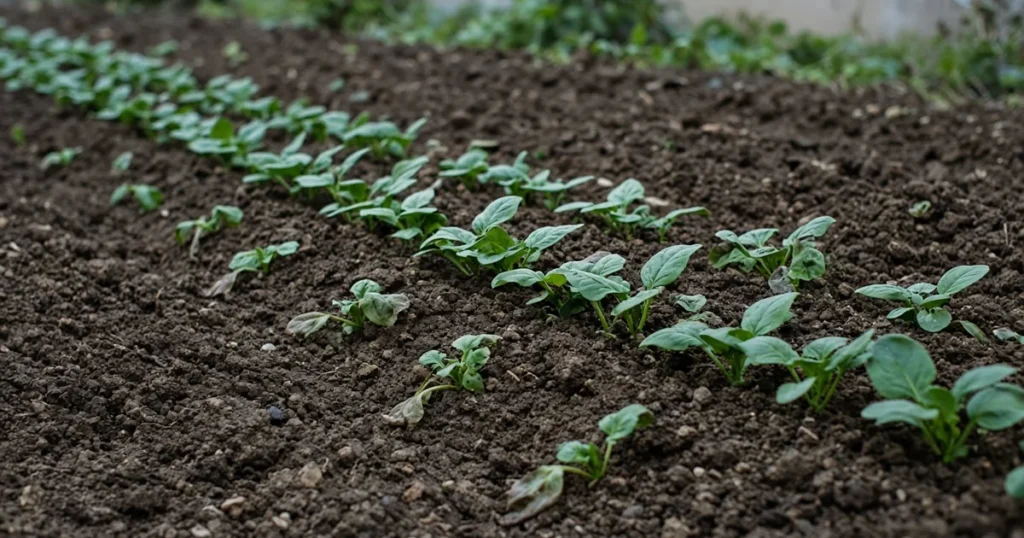
Spinach seedlings dying soon after they come up is a common problem. NC State Extension lists seedling damping off among the diseases that can harm spinach. Heat is the other factor. Utah State University Extension says temperatures above 80°F reduce spinach seed germination, so timing matters as much as care.
The short answer
Spinach is a cool season crop. Utah State Extension says seed germinates well at 55 to 65°F and plants grow well up to about 75°F. Seedlings that fail in warm weather may face heat or damping off. Sow again in cooler weather and thin crowded seedlings.
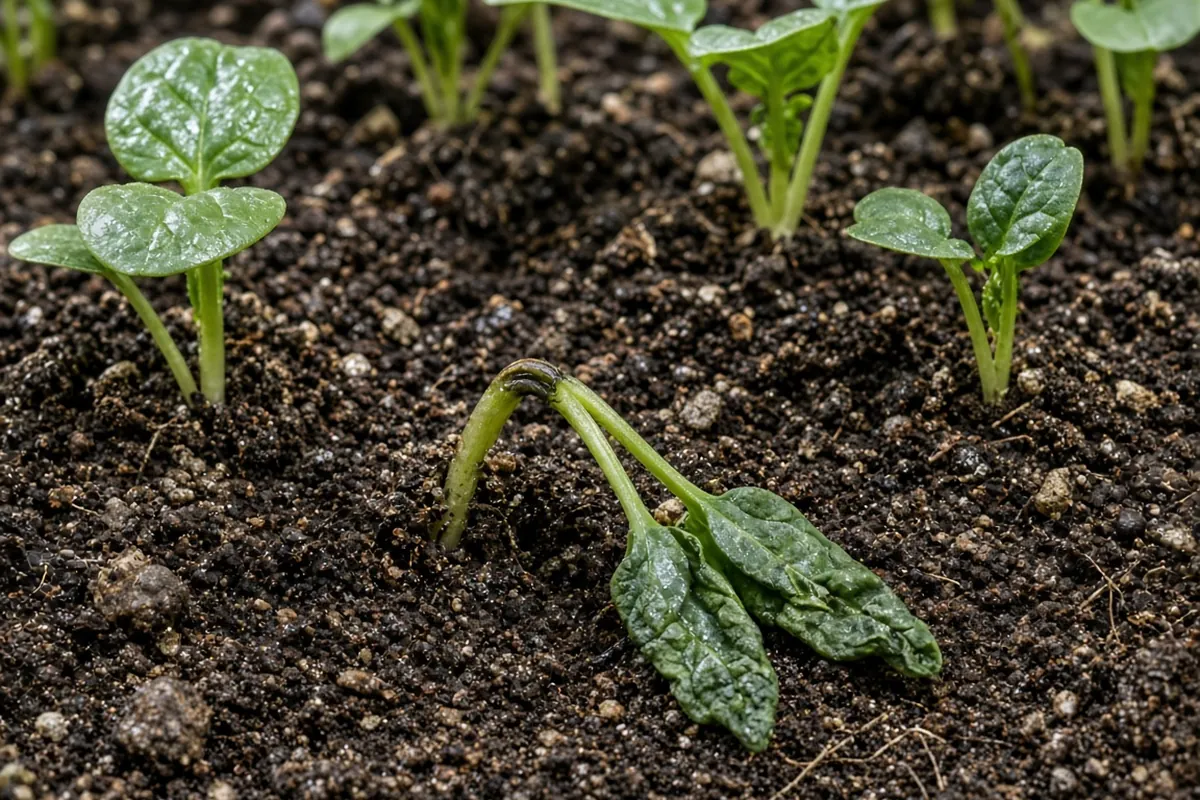
Why do spinach seedlings collapse?
NC State Extension names seedling damping off as one of the diseases of spinach. Utah State Extension advises thinning stands when plants have three to four true leaves and spacing plants about three inches apart. More on stress signs is in environmental stresses on weed plants.
Water matters too. Utah State suggests one to two inches of water a week and notes that mulch helps hold soil moisture. Check the soil before you water with checking soil moisture by feel. Signs of too much water are in overwatering and cannabis growth.
How does temperature affect spinach seedlings?
Utah State Extension says spinach seed can be sown once soil reaches 40°F and germinates well at 55 to 65°F. The University of Georgia Extension gives 65 to 70°F as the optimal range for germination and 60 to 77°F for growth. Both say heat hurts spinach. NC State notes that summer heat and longer days make plants bolt and send up flower stalks.
| Condition | Effect on spinach | What helps |
|---|---|---|
| Soil below 40°F | Too cold to sow | Wait to sow |
| 55 to 65°F | Good germination | Sow now |
| Above 80°F | Poor germination | Sow in fall instead |
| Crowded rows | Weak seedlings | Thin at three to four true leaves |
Sources: Utah State University Extension, University of Georgia Extension, NC State Extension.
How do you help the next sowing?
Sow in early spring or late summer, when it is cool. Utah State Extension says to plant seeds half an inch deep two to three weeks before the last spring frost. NC State says some shade can help in hot weather. Minnesota Extension notes that raised bed soil warms faster in spring, which can help an early start. See underwatering cannabis for signs of dry soil.
How to: step by step
- Check soil temperature before sowing.
- Sow seeds a quarter to half an inch deep.
- Water one to two inches a week.
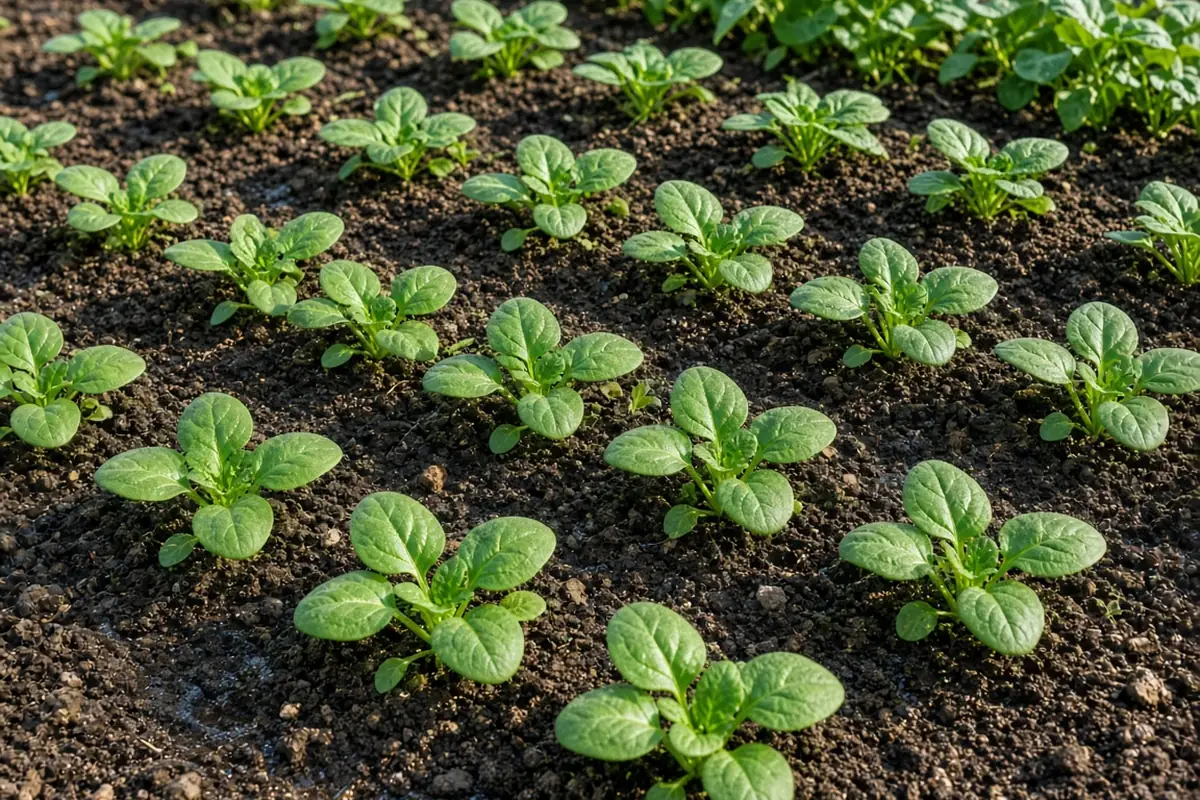
- Thin at three to four true leaves.
- Mulch to hold soil moisture.
- Resow in cooler weather if plants fail.
Troubleshooting
Seedlings die soon after they emerge: possible damping off. Resow in cooler weather.
Few seeds come up in summer: heat above 80°F cuts germination.
Plants flower early: heat and long days cause bolting.
Kind Seed Co shares these garden notes for growers of all kinds.
Sources
- Spinach in the garden, Utah State University Extension
- Spinacia oleracea (spinach), NC State Extension Gardener Plant Toolbox
- How to grow greenhouse spinach during Georgia summers using hydroponics (C 1304), University of Georgia Extension
- Raised bed gardens, University of Minnesota Extension
FAQ
Can spinach grow in summer?
It is hard. Utah State Extension says spinach grows well up to about 75°F and germination drops above 80°F. The University of Georgia Extension says summer heat leads to bolting.
How deep should spinach be sown?
Utah State Extension says half an inch deep. NC State Extension gives a quarter to half an inch.
Why is my spinach bolting?
NC State Extension says spinach is sensitive to the longer days and heat of summer, which cause plants to bolt and send up flower stalks.
Should spinach be thinned?
Yes. Utah State Extension says to thin stands when plants have three to four true leaves. Thinned plants can be eaten or moved.
What temperature does spinach seed need?
Utah State Extension says 55 to 65°F is ideal. The University of Georgia Extension gives 65 to 70°F.



