Arugula Holes: Flea Beetles and Row Cover
The short answer
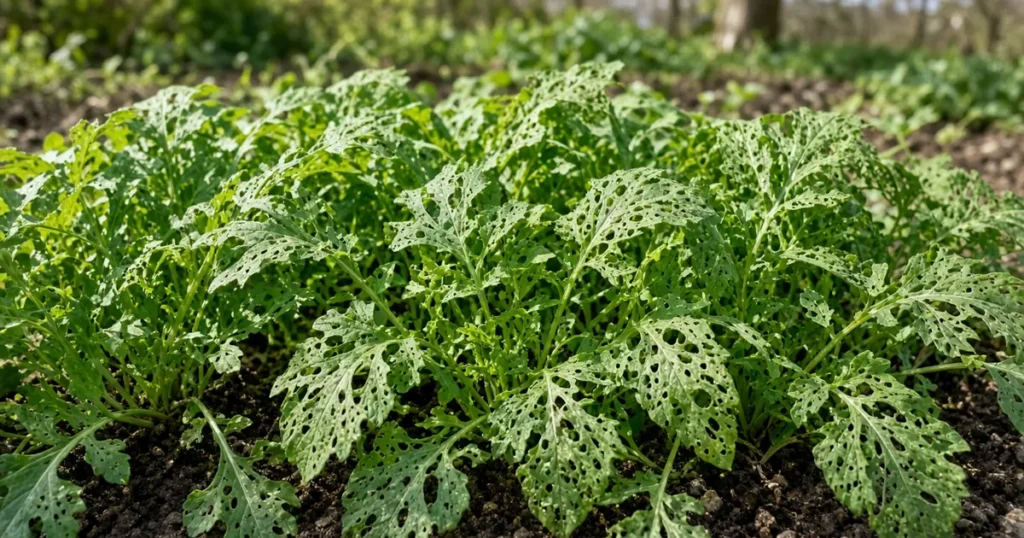
Arugula holes that look like tiny pits are usually flea beetle damage. University of Minnesota Extension calls this shothole damage, with holes under 1/8 inch, and says the beetles are most damaging in spring. Cover seedlings after sowing and time plantings to miss peak beetle weeks.
What makes small holes in arugula?
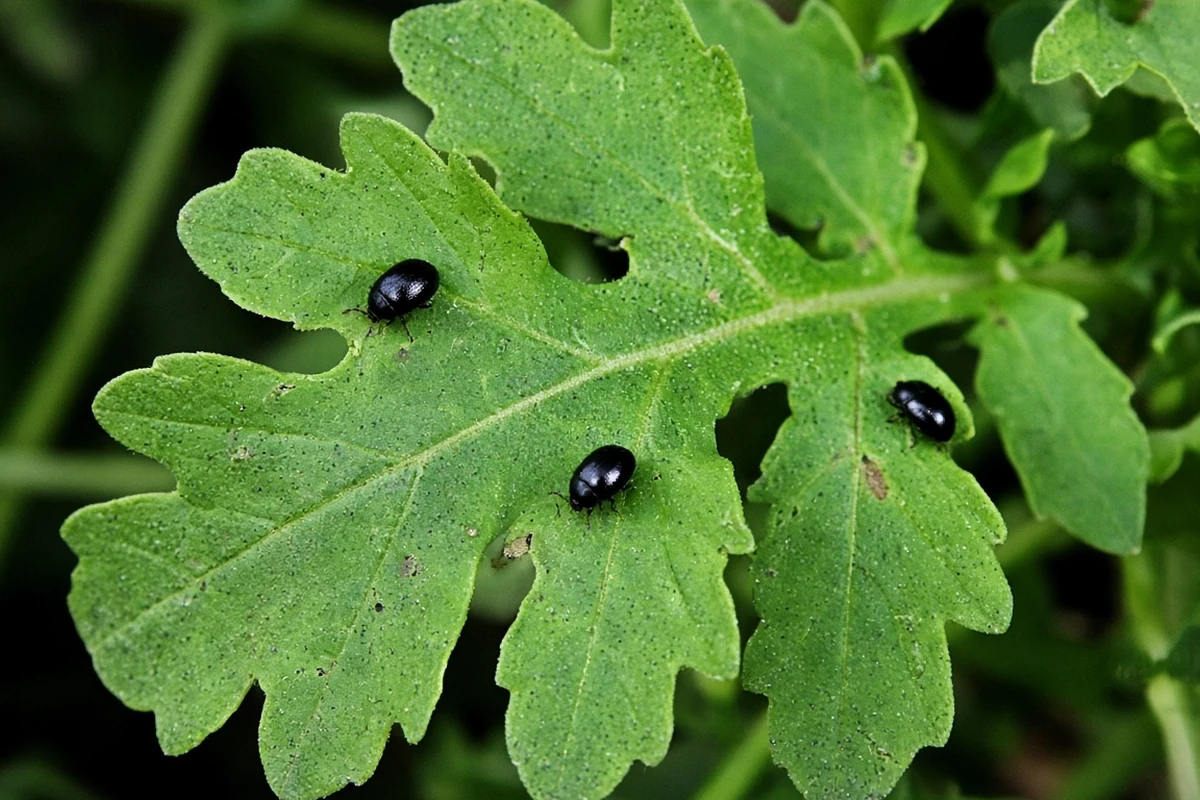
Flea beetles chew small holes under 1/8 inch across, per University of Minnesota Extension. NC State Extension notes chewing insects leave holes, while caterpillar injury shows as tears and ragged holes. Severe damage can leave plants wilted or stunted. See the effects of environmental stresses on weed plants.
How do you spot flea beetles?
University of Minnesota Extension describes adults as 1/16 to 1/8 inch long with large back legs for jumping. They hop when disturbed. Yellow sticky cards help detect them. More pest checks are in ways to shield marijuana plants from pests.
How does row cover help arugula?
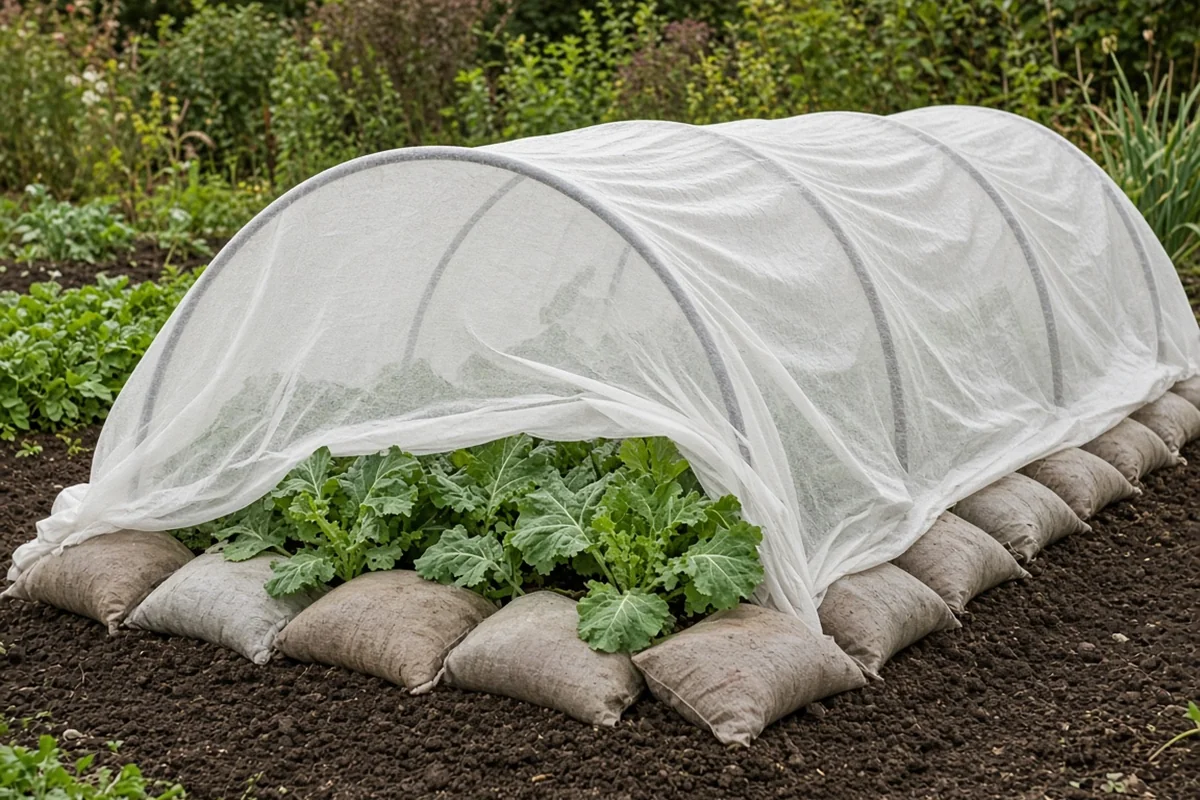
University of Minnesota Extension says row covers exclude flea beetles as long as crops are rotated, since adults overwinter nearby. Beetles can slip under the cover when it’s lifted, so lift it briefly. Learn about insect screens in greenhouse insect screening.
Arugula basics
| Factor | Guide | Source |
|---|---|---|
| Season | Cool spring and fall | NC State |
| Harvest | About 6 weeks, 8 to 10 inches tall | UF IFAS |
| Sowing | Every 2 to 3 weeks fall to spring | UF IFAS |
| Flea beetle size | 1/16 to 1/8 inch | UMN |
| Peak damage | Spring | UMN |
Sources: University of Minnesota Extension, UF IFAS Gardening Solutions, NC State Extension.
How to: step by step
- Look for tiny jumping beetles on leaves.
- Note the shothole pattern.
- Cover new sowings with row cover at once.
- Rotate beds so beetles are not trapped under covers.
- Check under covers and lift them only briefly.
- Shift sowing later in the window or to fall if spring damage is heavy.
Troubleshooting
Shotholes: flea beetles. Use row cover.
Holes under cover: trapped beetles. Rotate beds.
Ragged holes: caterpillars, per NC State. Check leaves closely.
Arugula grows fast once beetles ease. Kind Seed Co shares more leafy green notes on the blog.
Sources
- Flea beetles, University of Minnesota Extension
- Arugula, UF IFAS Gardening Solutions
- Eruca vesicaria (arugula), NC State Extension Gardener Plant Toolbox
- Extension Gardener Handbook, chapter 4: Insects, NC State Extension
FAQ
Can you eat arugula with holes?
The sources do not address eating damaged leaves. University of Minnesota Extension describes flea beetle injury as small holes, and severe damage can wilt or stunt plants. Leaves with a few holes are still arugula, so rinse well and judge by look and texture.
When are flea beetles worst?
University of Minnesota Extension says flea beetles are most damaging in spring. Adults overwinter in leaf litter and become active in early spring. By summer, crops at the 4 or 5 leaf stage can withstand feeding and adult numbers drop.
Does row cover need removing?
For arugula grown for leaves, covers can stay on. University of Minnesota Extension advises removing covers before flowering on crops that need pollinators. It also notes beetles may get under the cover when it is lifted.
Do flea beetles hurt other crops?
Yes. University of Minnesota Extension notes flea beetles feed on many vegetables and suggests trap crops such as radish. NC State Extension lists aphids and flea beetles as possible problems on arugula.
What is a trap crop for flea beetles?
University of Minnesota Extension suggests trap crops such as radish, which draw beetles away from the main crop. It also advises controlling weeds and removing plant debris where adults overwinter.