Summer Squash vs Winter Squash: Species Plus Storage
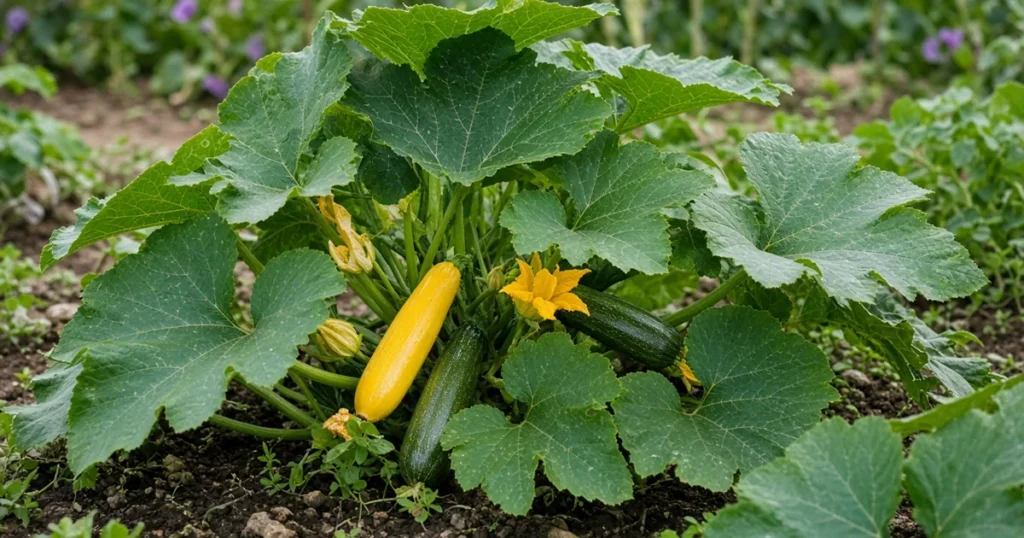
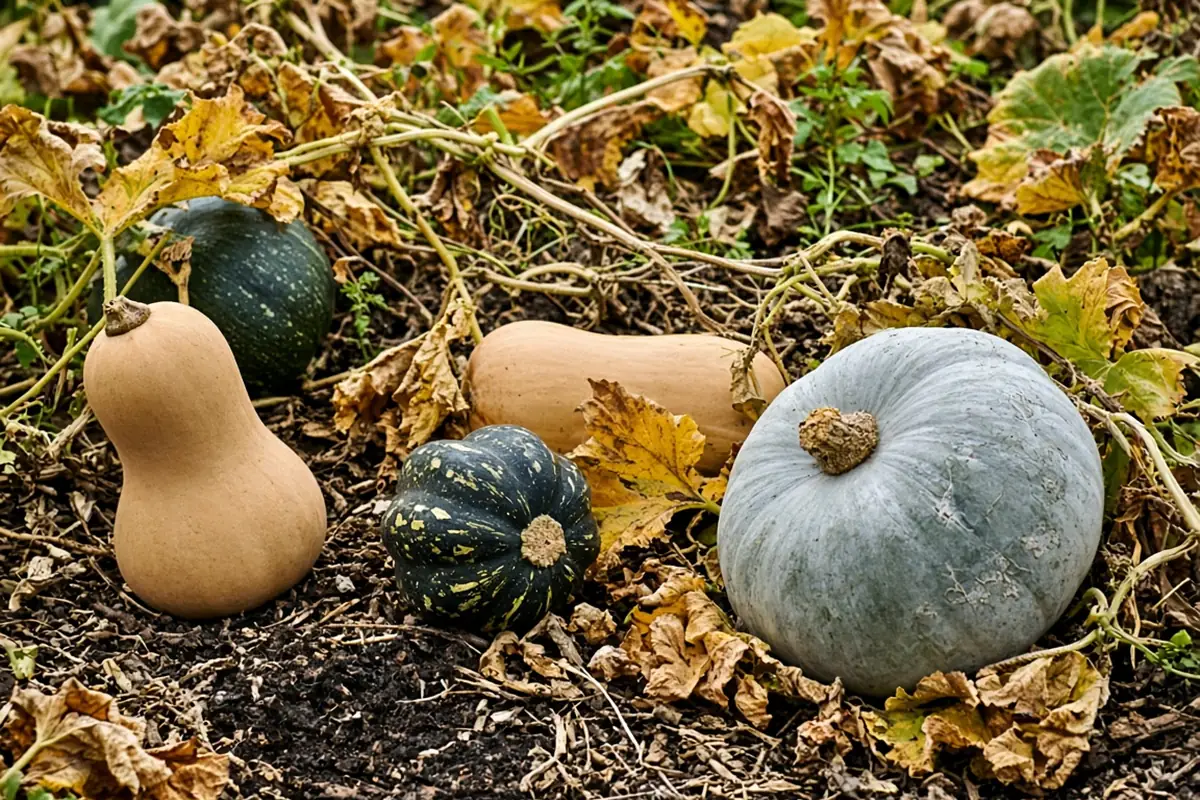
The summer squash vs winter squash question is partly about species. NC State Extension lists summer squash plus zucchini under Cucurbita pepo. Clemson Extension notes that winter squash spans three species: buttercup is Cucurbita maxima, butternut is Cucurbita moschata plus acorn types are Cucurbita pepo.
The short answer
Summer squash belongs to Cucurbita pepo. Winter squash includes types from Cucurbita maxima, Cucurbita moschata plus Cucurbita pepo. Both are warm season vines that need frost free soil. Winter squash is picked fully mature with a hard skin. After curing it can be stored for weeks or months.
How are they grown?
Clemson Extension notes that all squash is highly susceptible to frost. Seed after all danger of frost has passed plus the soil 4 inches down is above 60°F. NC State Extension describes both species as vines that prefer moderately moist soil plus full sun.
Clemson Extension advises spacing bush or short vined varieties 2 to 3 feet apart in rows 3 to 5 feet apart. Large vined varieties need 3 to 5 feet in rows 6 to 8 feet apart.
How do you know winter squash is mature?
Iowa State University Extension notes that mature winter squash have very hard skins that cannot be punctured with a thumbnail. They also have dull looking surfaces. Cut the fruit from the vine with pruning shears plus leave a 1 inch stem.
| Trait | Summer squash | Winter squash |
|---|---|---|
| Species | Cucurbita pepo | Cucurbita maxima, Cucurbita moschata plus Cucurbita pepo |
| Frost | Highly susceptible | Highly susceptible |
| Storage | Not cured | Cured, then stored at 50 to 55°F |
Source: NC State Extension plus Iowa State University Extension.
How is winter squash stored?
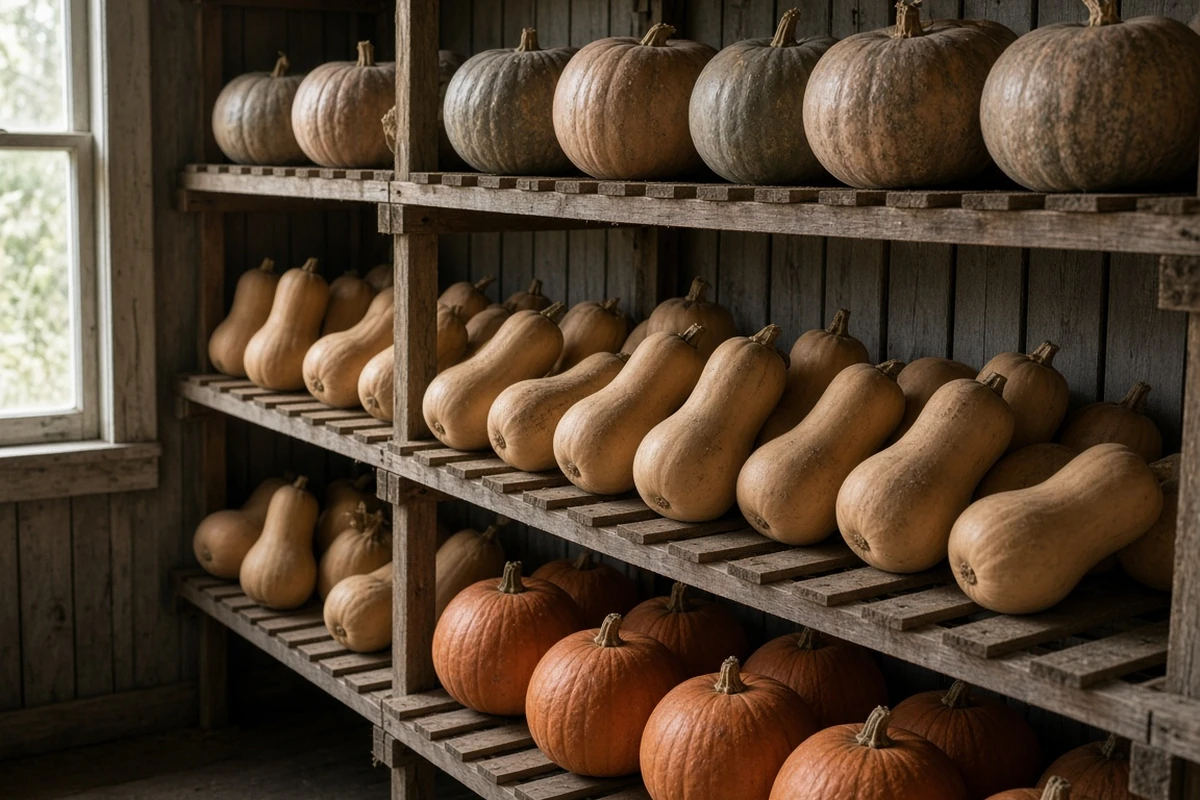
Iowa State University Extension advises curing winter squash at 80 to 85°F plus 80 to 85 percent relative humidity. Acorn squash should not be cured. After curing, store squash in a cool, dry, well ventilated spot at 50 to 55°F.
How to: step by step
- Wait for soil 4 inches down to pass 60°F.
- Sow seed in hills once frost danger has passed.
- Set spacing by vine size.
- Gather winter squash when the skin resists a thumbnail.
- Cure all winter types except acorn.
- Hold at 50 to 55°F away from ripening fruit.
Troubleshooting
Stored squash spoils early: cuts or bruises at picking. Handle fruit with care.
Storage life is short: ethylene from apples or pears nearby. Store squash away from ripening fruit.
Spring crop declines fast: Clemson Extension notes that spring planted squash loses quality faster than fall grown squash.
For related reading see bees in outdoor gardens, harvest timing plus planning a garden layout. Kind Seed Co also stocks cannabis seeds.
Sources
- What is the proper way to harvest plus store winter squash, Iowa State University Extension
- Cucurbita pepo, NC State Extension Gardener Plant Toolbox
- Cucurbita maxima, NC State Extension Gardener Plant Toolbox
- Pumpkins plus winter squash, Clemson Cooperative Extension HGIC
FAQ
How long does winter squash store?
Iowa State University Extension notes that properly cured plus stored acorn squash lasts about 5 to 8 weeks. Butternut lasts about 2 to 3 months, while hubbard lasts about 5 to 6 months. Store squash at 50 to 55°F in a cool, dry, well ventilated location away from ripening fruit.
Why should acorn squash not be cured?
Iowa State University Extension notes that the high temperature plus relative humidity used for curing reduce the quality plus storage life of acorn squash. Other winter squash benefit from curing at 80 to 85°F, which hardens the skins plus mends cuts. Store acorn squash directly in a cool, dry spot.
Are pumpkins a type of winter squash?
Clemson Extension notes that winter squash plus pumpkins are closely related. Jack o lantern plus acorn types are Cucurbita pepo, while giant pumpkins such as Big Max are Cucurbita maxima. NC State Extension lists pumpkin among the common names for both Cucurbita pepo plus Cucurbita maxima.
When should winter squash be planted?
Clemson Extension notes that winter squash plus pumpkins can be planted either in late spring or in midsummer. Spring plantings should be used several weeks after picking because their quality declines faster. Earlier plantings are less subject to insect plus disease attack, according to the same source.
Where should squash not be planted?
Clemson Extension advises avoiding poorly aerated soils, soils with nematode problems plus fields where other cucurbits have grown in the last three years. Squash plus pumpkins are usually planted in hills. Be careful when working near the main stem, since vines are brittle plus break easily once fruit forms.