
Tomato Zippering: What Causes Zipper Scars and How to Prevent Them

The short answer
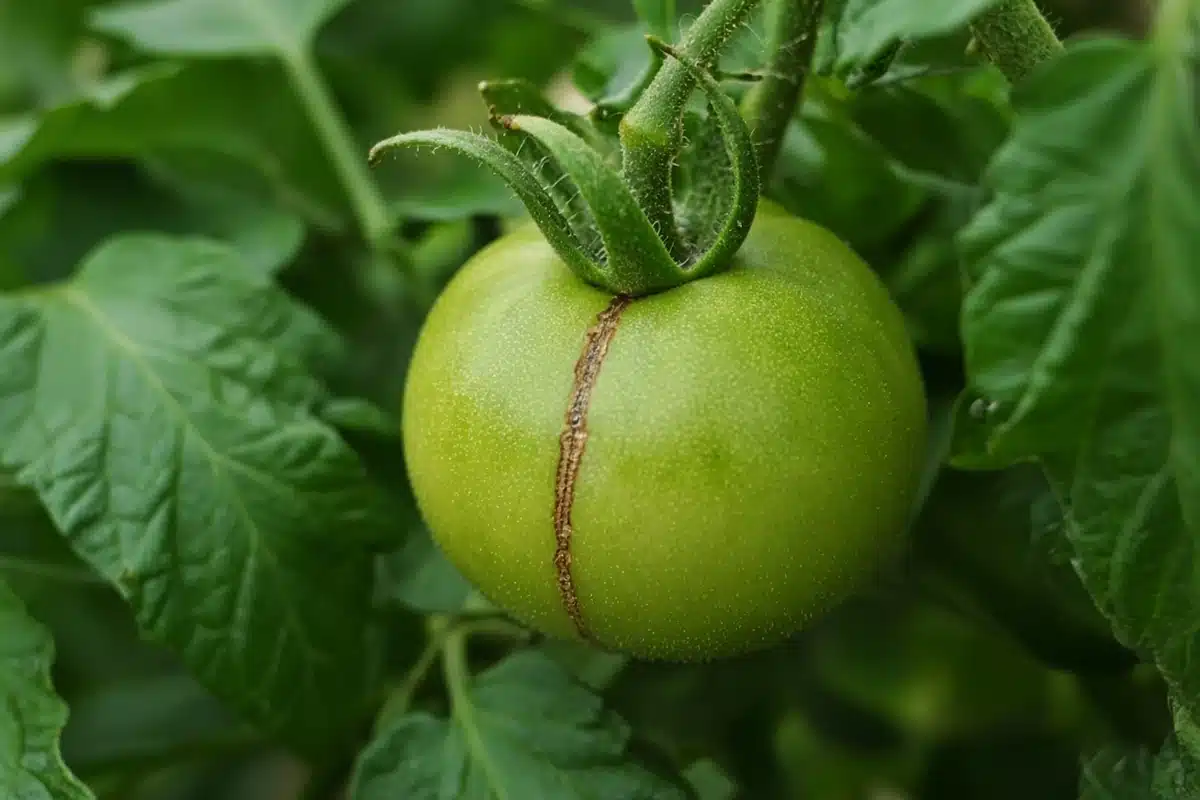
Tomato zippering leaves a thin brown scar running down the side of the fruit, often with small cross marks like a zipper. Kentucky and Purdue specialists explain it starts when flower parts stick to young fruit, often in cool weather during bloom. The fruit is still usable, and some varieties are more prone than others.
Zipper scars look odd, but they are a cosmetic flaw. Knowing when they form helps you prevent them next season.

What causes tomato zippering?
Zippering starts at flowering. Each tomato flower has a ring of stamens around the young fruit. As the flower fades, these parts normally fall away cleanly.
Sometimes the anther, the pollen bearing tip of the stamen, sticks to the side of the tiny fruit. Anthers attached to newly forming fruit can leave a narrow scar as the fruit develops.
The University of Kentucky vegetable scouting guide on zippering describes the scar as a narrow brown line from the stem end toward the blossom end. Short cross lines along the scar give it the look of a zipper. Sometimes the scar ends in an open hole.
The Purdue Vegetable Crops Hotline article on tomato zippering links the problem to cool weather during bloom. It notes that anthers stuck to young fruit are believed to cause the scar.
How does it differ from catfacing?
Both scars form during flowering, but they look different.
Catfacing causes puckered, misshapen fruit with rough scars at the blossom end. It tends to follow cool weather at bloom.
Zippering is a narrow line down the side. Fruit shape is usually normal apart from the scar.
The UMass Amherst Extension fact sheet on tomato stitching uses another name for the same scar. Stitching and zippering describe the same pattern of a line with cross marks.
| Disorder | What it looks like | When it starts |
|---|---|---|
| Zippering | Thin scar down the side with cross marks | Flowering, often in cool weather |
| Stitching | Same scar, another name | Flowering |
| Catfacing | Puckered, misshapen blossom end | Flowering, often in cool weather |
Sources: University of Kentucky, Purdue Vegetable Crops Hotline, UMass Amherst Extension.
Why does weather at bloom matter?
The first flower clusters often open soon after transplanting. In many areas, nights are still cool at that time.
Purdue notes zippering is more noticeable after cool weather, and that tomato fruit sets well when nights stay between 60 and 75°F.
That’s why early fruit often shows the most zippering. Later fruit that forms in warm weather usually looks clean.
Our post on the effects of environmental stresses on plants explains how cold and heat change plant growth.
How can you reduce it?
Wait for warm weather to set plants out. Planting too early exposes the first flowers to cool nights.
Protect plants on cool nights. Row covers and cold frames hold warmth around young plants. Our post on cold frames for seedlings shows how to build and use them.
Have a plan for sudden cold snaps. Our post on protecting seeds, seedlings and young plants from sudden temperature drops covers covers, mulch and timing.
Note which varieties scar most, and large fruited types often show more zippering. Take notes and choose less prone varieties next season.
How to: step by step
- Look for a thin scar from stem end toward the blossom end.
- Note the weather during early bloom.
- Avoid setting plants out too early in cool weather.
- Use row covers or cold frames during cool nights.
- Note which varieties scar most.
- Choose less prone varieties next season.
Can you still use zippered fruit?
Yes. The scar is skin deep in most cases. The fruit inside is normal.
Cut around the scar if you like. Use the fruit fresh, in sauces or in salsa.
If the scar opened into a hole, use that fruit soon. Openings can let in rot over time.
Is there anything to do once you see it?
Not for the fruit already scarred. The damage happened weeks earlier at bloom.
Use it as a signal. Look back at your planting date and weather. Adjust next year.
Later fruit on the same plant may grow clean if the weather has warmed.
Troubleshooting
Scars on first fruit only. Bloom happened in cool weather. Plant later or protect early flowers.
Scars on one variety. That variety is prone. Try a different type.
Open hole at the end of the scar. The scar split. Use the fruit soon.
Puckered blossom end. That is catfacing. Follow the same cool weather steps.
Scars every year. Planting is too early for your climate. Shift the date later.
Warm nights at bloom go a long way toward smooth fruit. Kind Seed Co shares more garden ideas in outdoor growing.
Sources
- Zippering, scouting guides for problems of vegetables, University of Kentucky, Zippering
- Tomato zippering, Purdue University Vegetable Crops Hotline, Tomato zippering
- Tomato, stitching, UMass Amherst Extension Vegetable Program, Tomato
FAQ
Can you eat zippered tomatoes?
Yes. The scar is mostly cosmetic. Cut it away if you like and use the rest.
Is zippering a disease?
No. It is a disorder that starts when flower parts stick to young fruit.
Do large tomatoes zipper more?
Large fruited varieties often show more zippering than small types.
Can pruning prevent zippering?
No. Pruning does not affect how flower parts drop. Weather and variety matter more.
Is stitching the same as zippering?
Yes. Both names describe the same narrow scar with cross marks.



