
What Is a Tunic on a Bulb? Papery Skins on Onions and Tulips
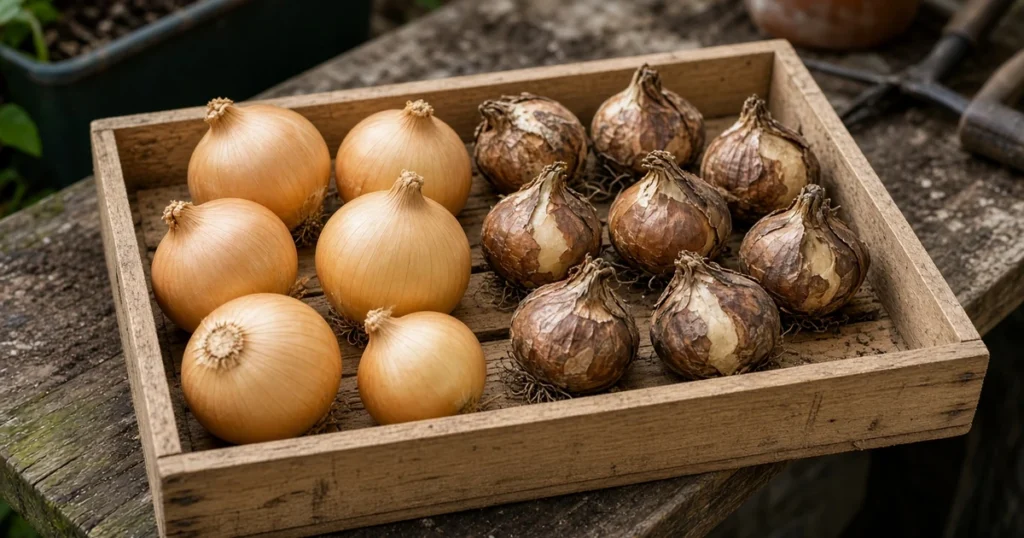
A tunic on a bulb is the thin, dry, papery outer layer that wraps the fleshy scales of bulbs such as onion, garlic, tulip and daffodil. UF IFAS Gardening Solutions calls these tunicate bulbs and says the papery scale helps stop the bulb from drying out.
The short answer
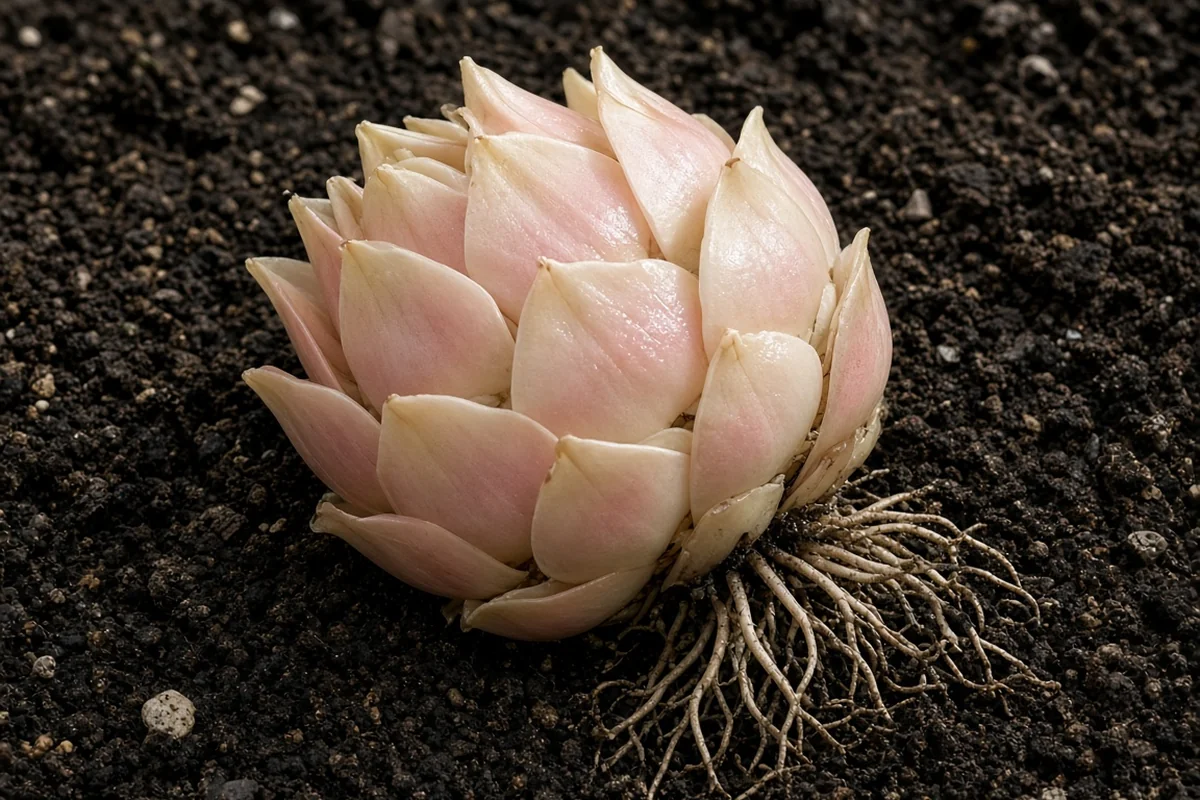
A tunic is the papery outer skin of a true bulb. Illinois Extension says it shields the fleshy scales inside from drying and from bumps and scrapes. Onions, garlic, tulips, daffodils, hyacinths and alliums all carry one. Lilies don’t, so their scaly bulbs dry out faster in storage.
What is a bulb tunic made of?
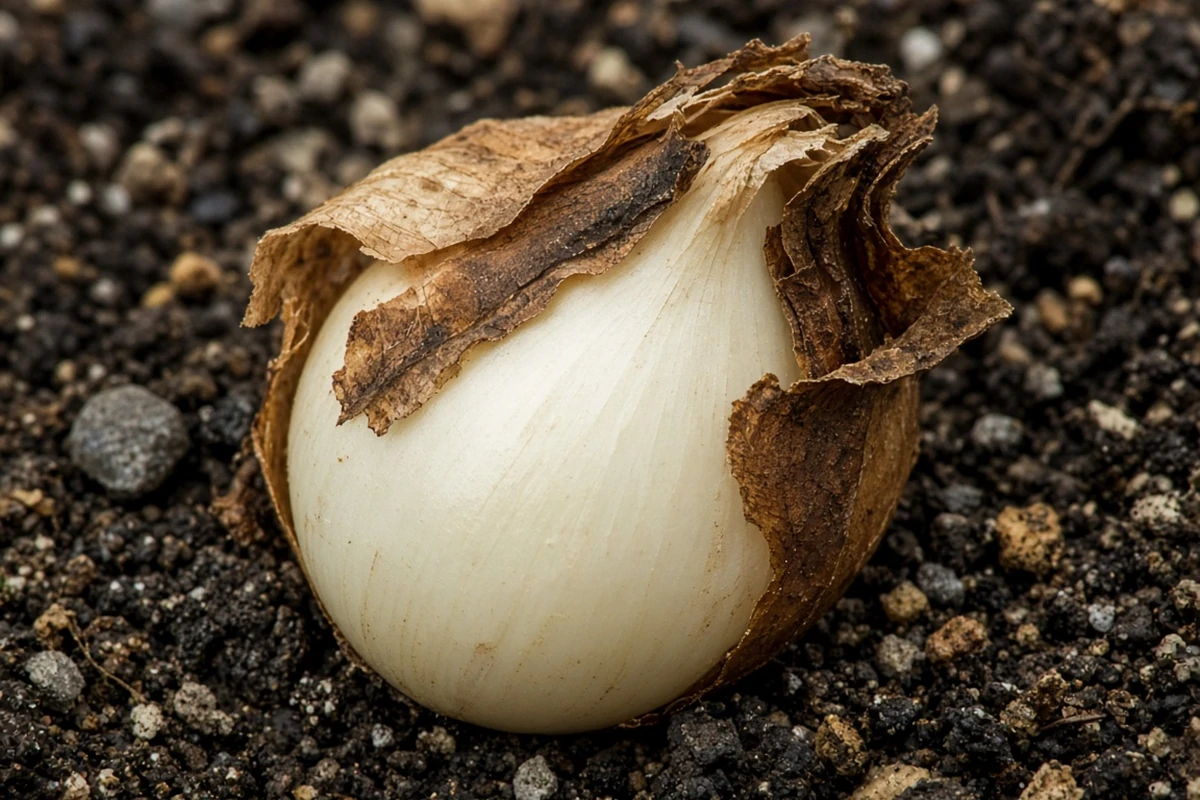
A true bulb is a short stem wrapped in fleshy scale leaves that store food. In tunicate bulbs the outer scales dry into a papery sheet. UF IFAS propagation notes call tunicate bulbs laminate bulbs, because the fleshy scales sit in tight concentric layers like an onion cut in half. The tunic is the dry outer ring. For a look at how leaves are built in general, see cannabis leaf anatomy.
Which bulbs have a tunic?
| Bulb type | Outer layer | Examples | Source |
|---|---|---|---|
| Tunicate | Dry papery tunic | Onion, garlic, tulip, daffodil, amaryllis | UF IFAS, Illinois Extension |
| Non tunicate (scaly) | No tunic, loose fleshy scales | Lily | UF IFAS, Illinois Extension |
Illinois Extension adds hyacinths, muscari and alliums to the tunicate list. NC State places the onion in the amaryllis family, which also holds daffodils and amaryllis.
Why does the tunic matter?
Illinois Extension says the tunic shields the scales from drying and from bumps. UF IFAS notes that scaly bulbs without one bruise easily. Illinois says imbricate bulbs such as lilies must stay constantly moist before planting. Tunicate bulbs handle dry storage far better, which is why onions can dry in the open and tulips can sit in a paper bag until fall planting. Dry, airy storage also matters for seeds, covered in common cannabis seed storage mistakes.
Do corms and tubers have tunics?
Some do. Illinois says a corm such as crocus or gladiolus has a thin tunic over a solid stem, while tubers such as potato have no tunic at all. UC Master Gardeners describe corms as solid swollen stems, unlike the layered scales of a true bulb. Water moves through all these storage organs by the same tissues described in cannabis xylem and phloem.
Tunics on onions
NC State says onions are ready to harvest when about two thirds of the tops have died down, then dry for two to three weeks. As they dry, the outer scales become the tunic. The Kind Seed Co blog covers seed parts that do a similar job in cannabis seed anatomy.
Sources
- Is this a bulb?, UF IFAS Gardening Solutions
- Bulbs, University of Illinois Extension
- Bulbs, Plant Propagation, UF IFAS
- Bulbs, corms, rhizomes, and tubers, UC Master Gardeners
- Allium cepa (onion), NC State Extension Gardener Plant Toolbox
FAQ
What is the papery skin on a tulip bulb called?
It is called the tunic. Illinois Extension describes it as the papery layer that covers tunicate bulbs such as tulips, daffodils and hyacinths.
Do lily bulbs have a tunic?
No. UF IFAS describes lilies as non tunicate or scaly bulbs with loose fleshy scales and no papery outer layer.
What does a bulb tunic do?
Illinois Extension says the tunic shields the fleshy scales from drying and mechanical damage. UF IFAS says it helps stop the bulb from drying out.
Is an onion a tunicate bulb?
Yes. UF IFAS lists onion and garlic as tunicate bulbs, and NC State places the onion in the amaryllis family.
Does a corm have a tunic?
Often yes. Illinois Extension says corms such as crocus and gladiolus carry a thin tunic, while tubers such as potato have none.



