
What Is a Coleoptile? The Sheath on Grass and Corn Seedlings
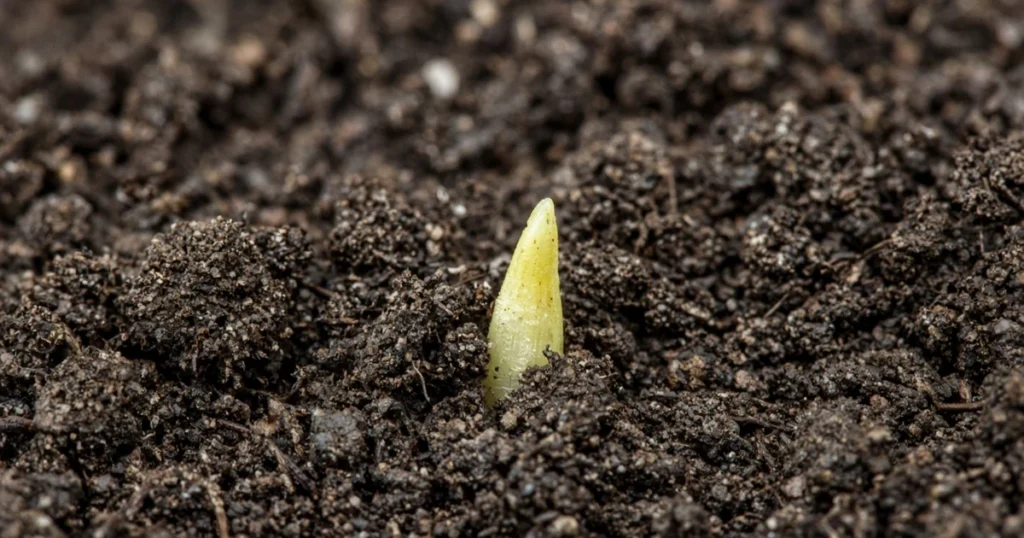
A coleoptile is the stiff sheath that wraps the first leaves of a corn or grass seedling as it pushes up through soil. Purdue University describes it as a rigid tissue that encloses the plumule, the first leaves, while the mesocotyl below drives it to the surface.
The short answer
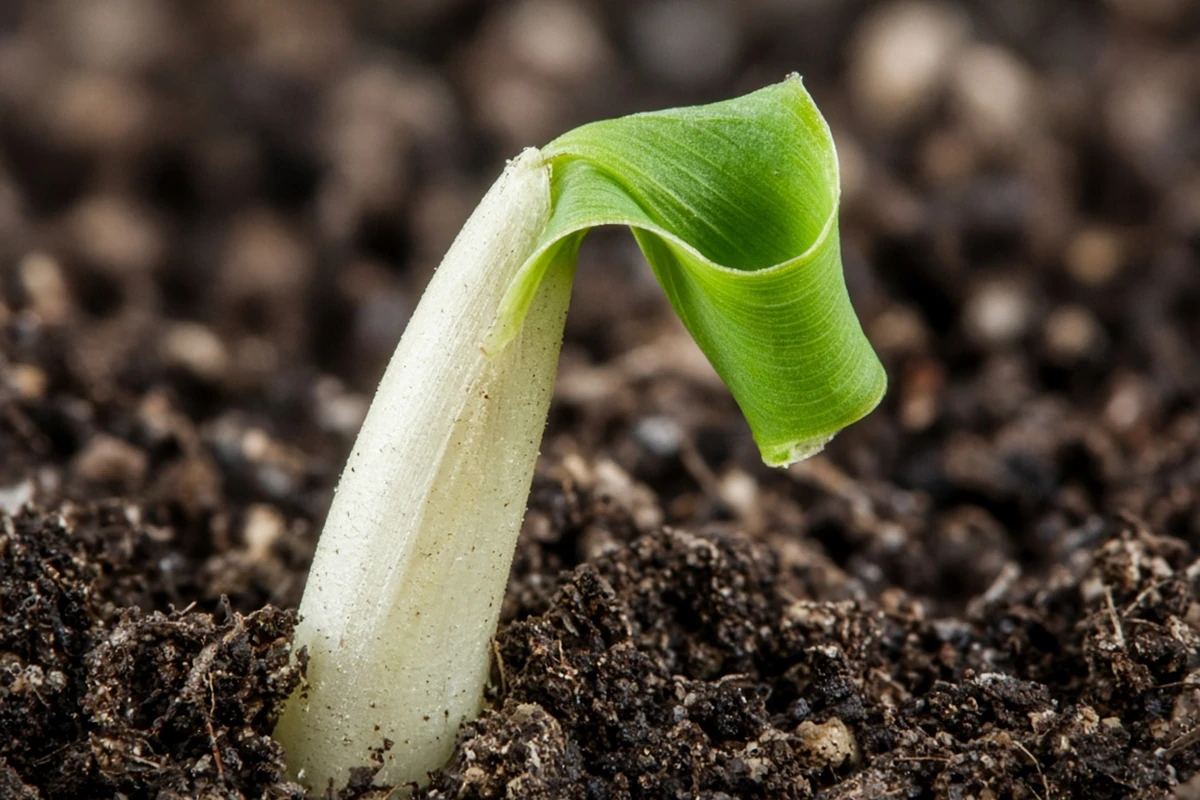
The coleoptile is a pointed sheath over a monocot seedling’s first leaves. It lets the shoot spear up through soil without tearing them. Purdue says once it reaches light, elongation stops and the tip softens, then the first true leaf breaks out through the top. Corn, wheat and lawn grasses each make one.
Where does the coleoptile come from?
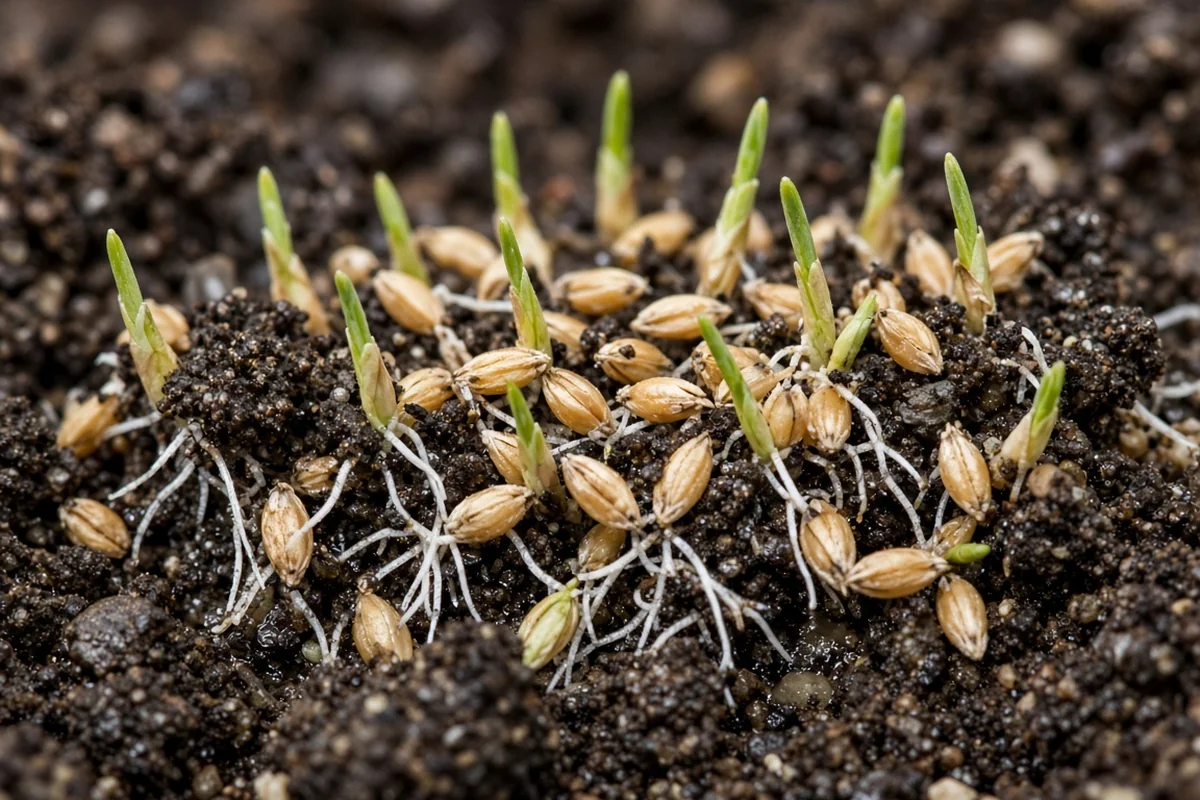
The Missouri Botanical Garden glossary defines the coleoptile as a tubular structure surrounding the plumule of a monocot embryo or seedling. A matching sheath called the coleorhiza wraps the root end. NC State notes the radicle, or first root, usually shows first. Colorado State GardenNotes lists these monocot seed parts. Compare them with cannabis seed anatomy.
How does a coleoptile push through soil?
| Stage | What happens | Source |
|---|---|---|
| Germination | Radicle emerges first | NC State |
| Elongation | Mesocotyl lengthens and lifts the coleoptile | Purdue, K State |
| Surface | Light halts elongation, tip softens | Purdue |
| Leaf out | First true leaf emerges through the tip | Purdue |
Purdue notes the base of the coleoptile in corn ends up about ¾ inch below the surface, which sets the crown depth. K State describes the same emergence steps in its corn development pages. Sowing time shapes how fast this goes, as when to plant cannabis seeds outdoors covers.
What goes wrong with coleoptiles?
Purdue describes a corkscrew coleoptile, a twisted sheath that stalls underground. Soil crusting is one of several causes, since it stops the tip breaking out, and leaves may then unfurl below ground.
How can I watch a coleoptile grow?
University of Maine 4 H offers a simple setup: a wet coffee filter inside a clear CD case, seeds lined across the middle and the case stood in a tray of water. Use corn or wheat seed and check daily. The pale sheath rises first, then a green leaf slips out its top. Leaf structure after that point is covered on the Kind Seed Co blog in cannabis leaf anatomy.
Coleoptile vs cutting
Coleoptiles form only from seed. Cuttings skip the seed stage entirely and start from stem tissue, as make cannabis clones shows.
Sources
- Coleoptile appearance during emergence, Purdue University Corny News Network
- The process of emergence in corn, Purdue University Department of Agronomy
- Corn growth and development, Kansas State University Agronomy
- Glossary A to H, Angiosperm Phylogeny Website, Missouri Botanical Garden
- Extension Gardener Handbook, chapter 3: botany, NC State Extension
- Botany (CMG GardenNotes 120), Colorado State University Extension
- 4 H learn from home activity: seed germination, University of Maine Cooperative Extension 4 H
FAQ
What is a coleoptile?
The Missouri Botanical Garden glossary defines it as a tubular structure surrounding the plumule of a monocot embryo or seedling.
Do dicots have a coleoptile?
No. The coleoptile is described for monocot seedlings such as corn and grasses.
What stops coleoptile growth?
Purdue says light at the soil surface stops elongation and the tip softens so the first leaf can emerge.
What causes a corkscrew coleoptile?
Purdue lists soil crusting as one of several causes, since a crust stops the tip from breaking out.
How deep is the coleoptile base in corn?
Purdue says the base of the coleoptile sits about ¾ inch below the soil surface.



