
What Is a Gemma Cup? Splash Cups That Spread Tiny Plants
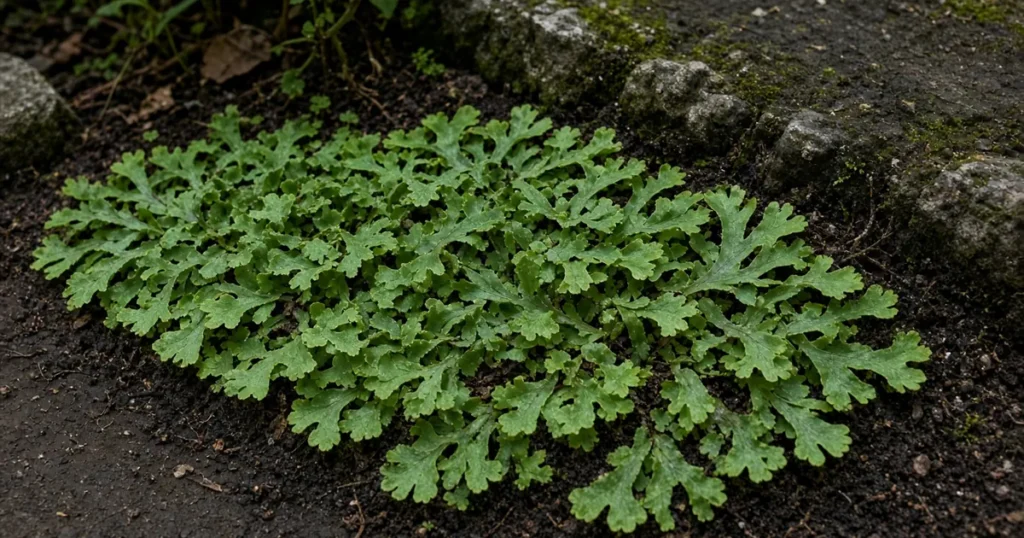
A gemma cup is a small cup like structure on the surface of a liverwort that holds tiny pieces called gemmae. NC State Extension notes the common liverwort spreads more often by these gemmae than by its wind dispersed spores.
The short answer
A gemma cup is a splash cup. NC State Extension notes gemmae are produced in cup like structures on the liverwort plus are splashed out by rain or irrigation. Each one can grow into a new plant. UConn notes some mosses form similar cups of upper leaves that hold gemmae.
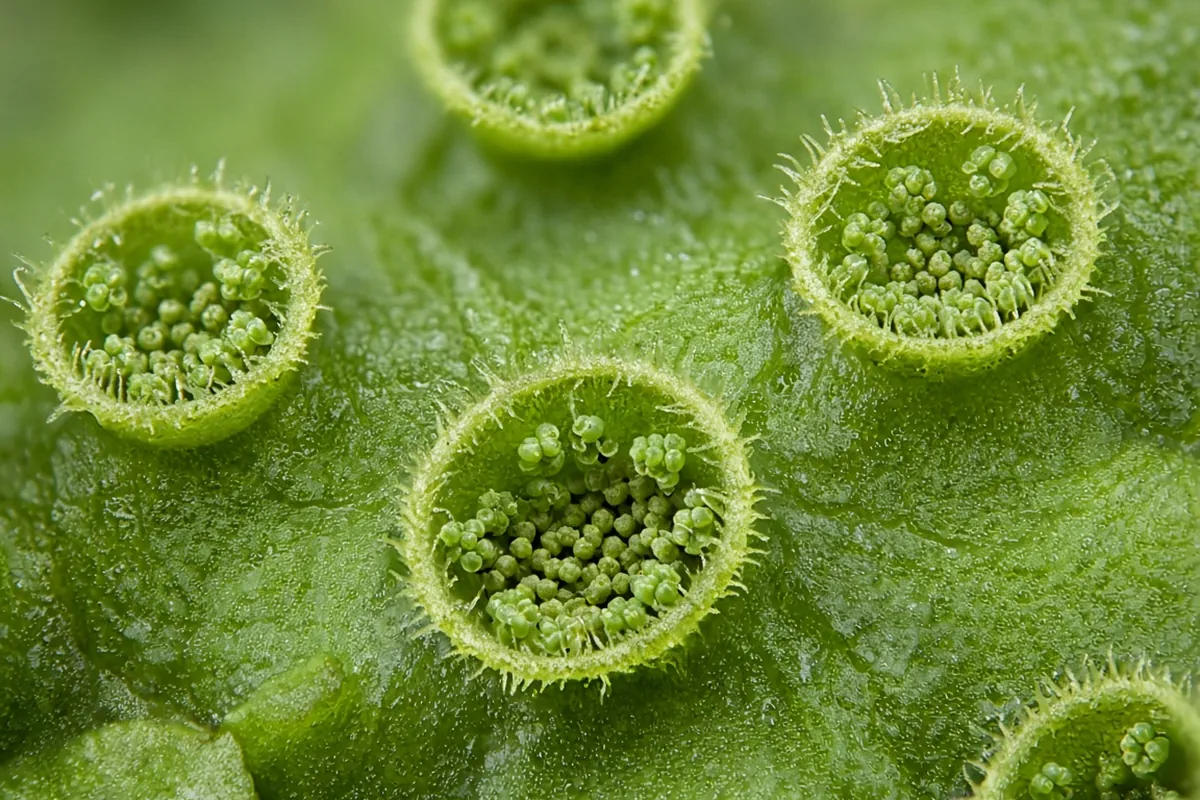
What is inside a gemma cup?
UConn Bryology describes gemmae as small multicellular discs. They sit loose until water hits them. NC State notes the liverwort body is a flat thallus that is not split into stems, roots plus leaves, so the cups sit right on top of that flat green surface.
How do gemma cups spread liverworts?
NC State notes common liverwort reproduces by wind dispersed spores plus, more commonly, by gemmae. Rain or irrigation drops land in the cups plus splash the gemmae onto nearby moist soil, where they grow.
| Part | What it is | Source |
|---|---|---|
| Thallus | Flat green body of the liverwort | NC State |
| Gemma cup | Cup like structure on the thallus | NC State |
| Gemmae | Small multicellular discs | UConn |
| Rhizoids | Threads that attach the thallus | NC State |
| Spores | Wind dispersed | NC State |
Source: NC State Extension plus UConn Bryology.
Where do gardeners see gemma cups?
NC State notes liverworts prefer moist, cool conditions found mainly in crops with frequent irrigation, such as propagation areas. Iowa State University Extension notes shade, low fertility, poor drainage plus compaction favor moss, so look for these small plants on damp pot surfaces plus shaded ground.

How to: step by step
- Look on damp, shaded pot surfaces.
- Find a flat green liverwort thallus.
- Scan the top for small cups.
- Use a hand lens to see the gemmae.
- Note nearby pots for new patches.
- Watch where irrigation drops splash.
Troubleshooting
No cups seen: it may be a moss. UConn notes only some mosses form gemmae cups.
Patches spread fast: frequent irrigation. NC State notes gemmae are splashed out by water.
Plant lifts easily: shallow rhizoids. NC State notes rhizoids attach the thallus.
For plant parts see cannabis leaf anatomy plus companion plants when growing marijuana. Read pond water for cannabis plus growing cannabis near trees. Kind Seed Co also stocks cannabis seeds.
Sources
- Marchantia polymorpha (common liverwort), NC State Extension Gardener Plant Toolbox
- A visit to the miniature forest (mosses), University of Connecticut Bryology
- Extension Gardener Handbook, chapter 3: botany, NC State Extension
- How to manage moss in the lawn and garden, Iowa State University Extension
FAQ
Are gemma cups seeds?
No. UConn Bryology notes gemmae are small multicellular discs. NC State Extension notes liverworts spread by spores plus gemmae, not seeds.
Do mosses have gemma cups?
Some do. UConn Bryology notes some mosses, such as Tetraphis, form cup shaped upper leaves that hold gemmae.
Why do liverworts grow in nursery pots?
NC State Extension notes liverworts prefer moist, cool conditions found mainly in crops with frequent irrigation, such as propagation areas.
What light do liverworts like?
NC State Extension lists common liverwort for deep to partial shade.
What holds a liverwort in place?
NC State Extension notes the thallus is attached by rhizoids rather than true roots.



