What Is a Micropyle? The Tiny Pore Water Enters a Seed Through
The short answer
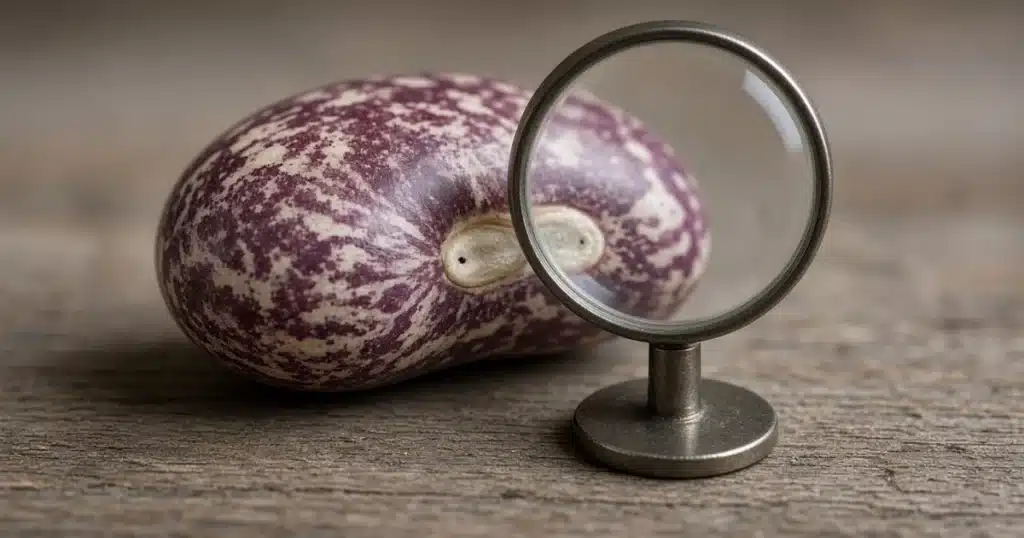
A micropyle is a tiny opening in the seed coat, right beside the hilum. LibreTexts Botany says it marks where the pollen tube entered the ovule. In beans, Michigan State researchers found that seeds with an open micropyle took up water faster. A UC Davis Arboretum lesson calls it the weak spot the root pushes through.
What is a micropyle?
Seeds form from ovules. The open botany textbook from LibreTexts describes the micropyle as a small round structure next to the hilum where the pollen tube entered. Once the seed matures, that entry point remains as a tiny pore in the seed coat.
A more visible landmark sits beside it. LibreTexts describes the hilum as the scar on the outside of the seed where it was attached inside the fruit. Find the hilum on a bean, and the micropyle is right next to it.
The surrounding seed coat matters too. North Carolina State Extension says the seed coat surrounds the embryo and guards it from insects and moisture until it is time for germination. For how these parts look on cannabis, see cannabis seed anatomy.
How does water enter a seed?
North Carolina State Extension notes that germination begins when the right temperature, moisture, oxygen and light conditions are met, and water is drawn in through the seed coat.
An open micropyle can speed that up. A study published in Food Structure by Michigan State University researchers compared three dry bean lines under a scanning electron microscope after soaking them for 90 minutes. The Sanilac navy bean, which had an open, heart shaped micropyle and prominent seed coat pores, hydrated the fastest and absorbed the most water. The San Fernando line, with a closed micropyle and no seed coat pores, absorbed water at the slowest rate. A third line, with a partly open micropyle, fell in between.
| Feature | Role | Notes |
|---|---|---|
| Micropyle | Pore where the pollen tube entered | Sits next to the hilum |
| Open micropyle | Linked to faster water uptake | Seen in Sanilac navy beans |
| Closed micropyle | Linked to slower water uptake | Seen in San Fernando beans |
| Seed coat | Surrounds the embryo | Water is drawn in through it |
Sources: LibreTexts Botany, Food Structure, North Carolina State Extension.
Where does the root come out of a seed?
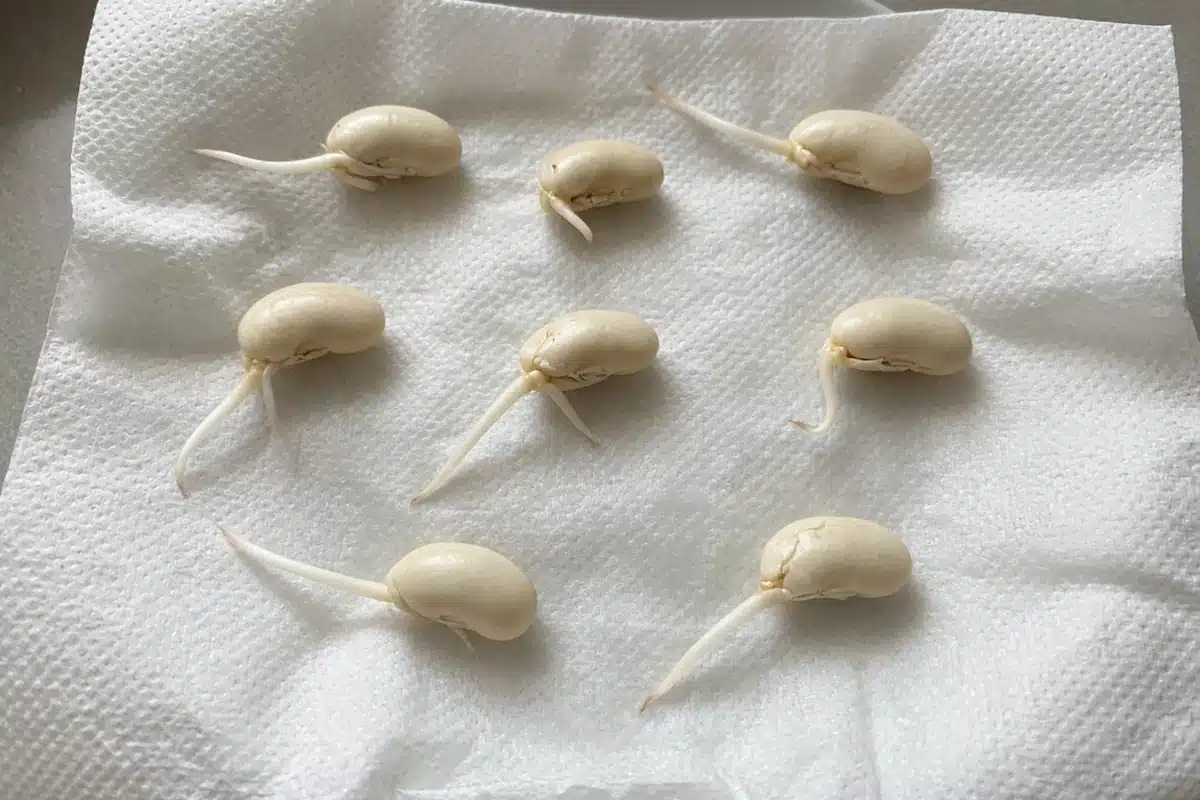
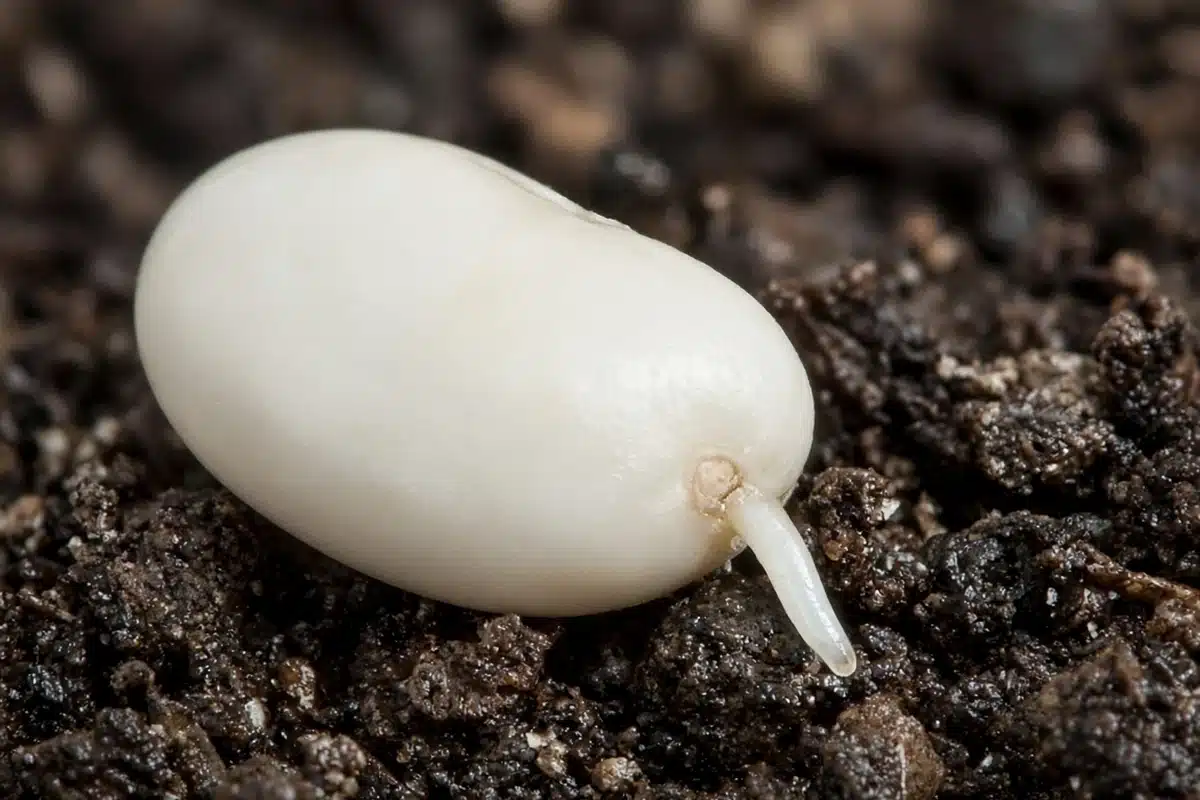
The UC Davis Arboretum lesson on bean seeds calls the micropyle the escape hatch, the weak spot of the seed coat that allows the root to push through. North Carolina State Extension adds that the radicle is the first part of the seed to appear and develops into the primary root.
Some seeds have extra structures near the micropyle. Southern Illinois University plant anatomy notes describe the caruncle, a growth near the micropyle in some seeds that may aid in water absorbance or dispersal.
How to: step by step
- Choose a large seed such as a bean.
- Find the hilum, the scar where the seed joined the pod.
- Look beside the hilum for a tiny pore, using a hand lens.
- Soak a few beans for a few hours and watch them swell.
- Germinate a few seeds on a damp paper towel.
- Note where the first root appears.
For germination steps, see how to germinate cannabis seeds.
Troubleshooting
Cannot see the pore: it’s tiny. Use a hand lens and look right beside the hilum.
Some beans swell slowly: seed coat traits differ. The Food Structure study found slower water uptake in a bean line with a closed micropyle and no seed coat pores.
Seed coat hard to remove: dry seed. The UC Davis lesson suggests soaking beans for a few hours first.
Cannot tell root from shoot: watch which part appears first. North Carolina State Extension says the radicle emerges first.
Why a tiny pore matters
The micropyle shows where a seed began, and in some beans it shapes how quickly water gets in. Some growers nick hard seed coats so water gets in. See scarifying cannabis seeds. The Kind Seed Co blog has more seed basics.
Sources
- Mature embryos and seed structure, LibreTexts Botany
- Seed microstructure and water uptake in dry beans, Food Structure, Utah State University Digital Commons
- A coat for a seed, UC Davis Arboretum
- Extension Gardener Handbook botany, North Carolina State Extension
- Lecture 25 seeds, Southern Illinois University plant anatomy
FAQ
Can you see a micropyle without a microscope?
It's very small, so use a hand lens on a large bean. Find the hilum, the scar where the seed joined the pod, and look right beside it. LibreTexts Botany describes the micropyle as a small round structure next to the hilum.
Is the micropyle the same as the hilum?
No. LibreTexts Botany describes the hilum as the scar where the seed was attached inside the fruit and the micropyle as the small structure next to it where the pollen tube entered the ovule. They sit side by side, which makes the hilum a handy landmark.
Does the micropyle affect how fast seeds soak up water?
In some beans, yes. Michigan State researchers found that a navy bean with an open micropyle and seed coat pores hydrated fastest during a 90 minute soak. A bean line with a closed micropyle and no pores absorbed water at the slowest rate.
Why is the micropyle called an escape hatch?
A UC Davis Arboretum lesson on bean seeds uses that name because the micropyle is the weak spot in the seed coat that lets the root push through. North Carolina State Extension says the radicle, which becomes the primary root, is the first part to appear.
What is a caruncle?
Southern Illinois University plant anatomy notes describe a caruncle as a growth from the seed coat near the micropyle in some seeds. It may aid in water absorbance or possibly dispersal. Not all seeds have one.