What Is a Caudex? Swollen Stems on Caudiciform Plants
The short answer
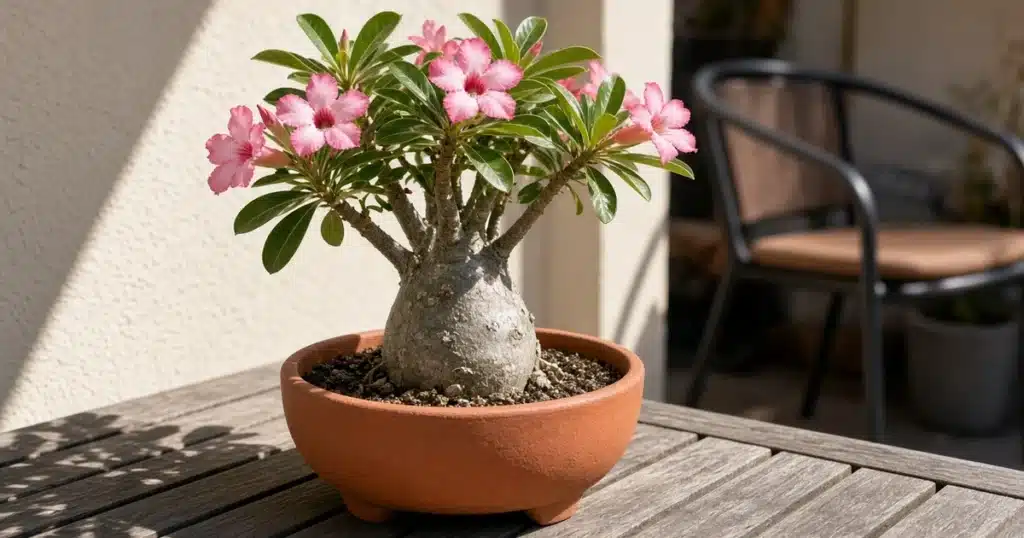
A caudex is a fat, short, swollen stem that stores water so a plant can survive drought. University of Arkansas Extension says plants with this growth habit are called caudiciform. Desert rose and ponytail palm are common examples. They need sharp drainage, a snug pot and very little water while dormant in winter.
What is a caudex?
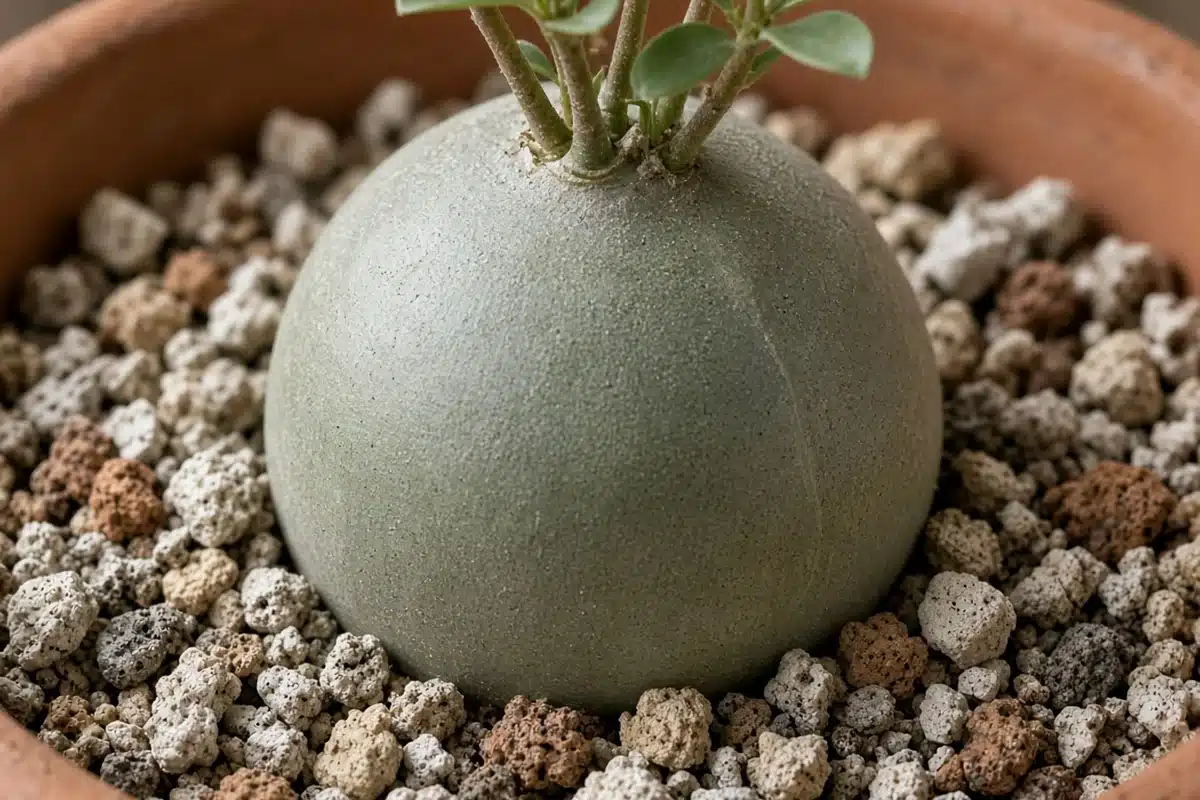
University of Arkansas Extension horticulturist Gerald Klingaman explains that botanists call a fat, short, swollen stem a caudex. Plants that grow this way are called caudiciform plants. They are almost all desert dwellers that use their swollen stems for water storage between periods of drought.
Not every fat stem qualifies. Barrel cacti have short, swollen stems too, but the Arkansas article says they are excluded because their stems do most of the photosynthesis.
North Carolina State Extension says the caudex of desert rose acts as a water storage organ and helps it survive long periods of drought. To learn how water and sugars move through stems in general, see cannabis xylem and phloem.
Which plants have a caudex?
Caudiciform plants come from many families. The Arkansas article lists the passion vine, grape, euphorbia, dogbane and baobab families. Some grow huge in nature. Baobab trees of Africa and Madagascar can have swollen trunks more than 50 feet in diameter.
| Plant | Caudex type | Care note |
|---|---|---|
| Desert rose (Adenium) | Swollen caudex that stores water | Sandy or gravelly mix, less water in winter |
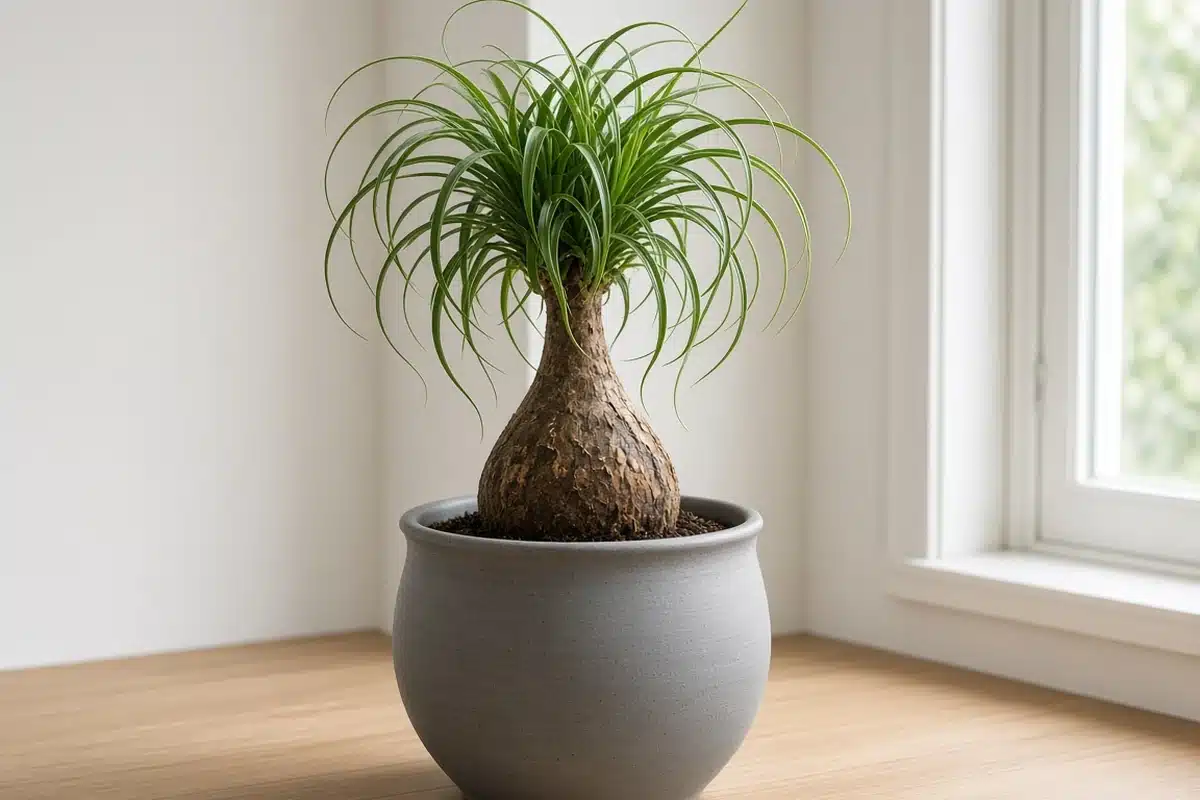
| Ponytail palm (Beaucarnea recurvata) | Thick swollen stem that stores water | Water deeply in summer, much less in winter |
| Baobab (Adansonia) | Swollen trunk, very large in the wild | Frost tender like most caudiciform plants |
Sources: North Carolina State Extension, University of Arkansas Extension.
Desert rose is among the most common. North Carolina State Extension says it is native to dry parts of sub Saharan Africa and the Arabian Peninsula, and its caudices can reach 20 to 30 inches wide. Their odd shapes make them popular as bonsai and specimen plants.
Ponytail palm is another. North Carolina State Extension notes it is not a true palm. It belongs to the asparagus family, comes from Mexico and has a thick swollen stem that stores water.
How do you care for caudiciform plants?
Start with drainage. North Carolina State Extension recommends a sandy or gravelly potting mix for desert rose, because wet soil can lead to root rot. For ponytail palm it suggests soil like that used for cactus and succulents, plus a sunny window.
Pot size counts too. The Arkansas article advises a relatively small pot for the size of the plant, which lessens the chance of overwatering. It suggests a clay pot with a well drained cactus mix, and a sand based mix because peat based mixes shrink over time. A mulch of stone chips adds weight, since these plants tend to become top heavy.
Watering follows the seasons. Most caudiciform plants grow in hot summer months and rest in winter. In winter, the Arkansas article says to withhold water completely, or water once every four to six weeks if the stems begin to shrivel. It warns that winter wet during dormancy can kill them. Roots and storage organs cooperate. See the importance of cannabis roots.
How to: step by step
- Identify the swollen stem base on your plant.
- Pot it in a clay pot sized snugly for the plant.
- Fill with a well drained, sand based cactus mix.
- Top the pot with stone chips for weight.
- Give a sunny spot in the growing season.
- In summer, water deeply and let the mix dry between waterings.
- Feed lightly with houseplant fertilizer only in summer.
- In winter, water very little or not at all.
Troubleshooting
Soft or rotting base: wet soil. Repot into a sandy or gravelly mix and water less.
Shriveled stems in winter: too dry for too long. Water once every four to six weeks.
Leaves dropping in cool weather: normal dormancy. North Carolina State Extension says to reduce or stop watering until leaves regrow.
Plant tipping over: top heavy. Top the pot with stone chips.
Cold damage: frost. The Arkansas article says even 28 degrees will kill most caudiciform plants, so bring them indoors.
A stem built for dry times
A caudex lets a plant bank water for long dry spells. Give it fast drainage, a snug pot and a dry winter rest. For a closer look at plant structures, see cannabis leaf anatomy. The Kind Seed Co blog has more plant basics.
Sources
- Adenium, North Carolina State Extension Gardener Plant Toolbox
- Beaucarnea recurvata, North Carolina State Extension Gardener Plant Toolbox
- Caudiciform plants, University of Arkansas Extension
FAQ
Is a ponytail palm a true palm?
No. North Carolina State Extension says ponytail palm is not a true palm. It is an evergreen perennial in the asparagus family, native to Mexico. It has a thick swollen stem, or caudex, that stores water, plus narrow strappy leaves that curl toward the ends.
Do caudiciform plants go dormant?
Most do. University of Arkansas Extension says most caudiciform plants grow during hot summer months and rest in winter, and many species lose their leaves. North Carolina State Extension says desert rose may drop leaves once nights fall to 55 degrees, so reduce watering until leaves regrow.
How fast does a caudex grow?
Most grow slowly. North Carolina State Extension describes ponytail palm as slow growing. It can reach 30 feet in its native habitat but usually grows 6 to 8 feet in a pot. University of Arkansas Extension suggests a small pot for the plant size, which also limits overwatering.
How often should I water a caudiciform plant?
In summer, North Carolina State Extension suggests watering ponytail palm deeply and letting it dry out between waterings. In winter, University of Arkansas Extension says to withhold water completely, or water every four to six weeks if stems begin to shrivel. Keep them dry while dormant.
What soil do caudiciform plants need?
Fast draining soil. North Carolina State Extension recommends a sandy or gravelly mix for desert rose, since wet soil can lead to root rot. University of Arkansas Extension suggests a well drained cactus mix in a clay pot and prefers sand based mixes because peat based mixes shrink over time.