
What Is a Monstrose Form? Irregular Cactus Growth
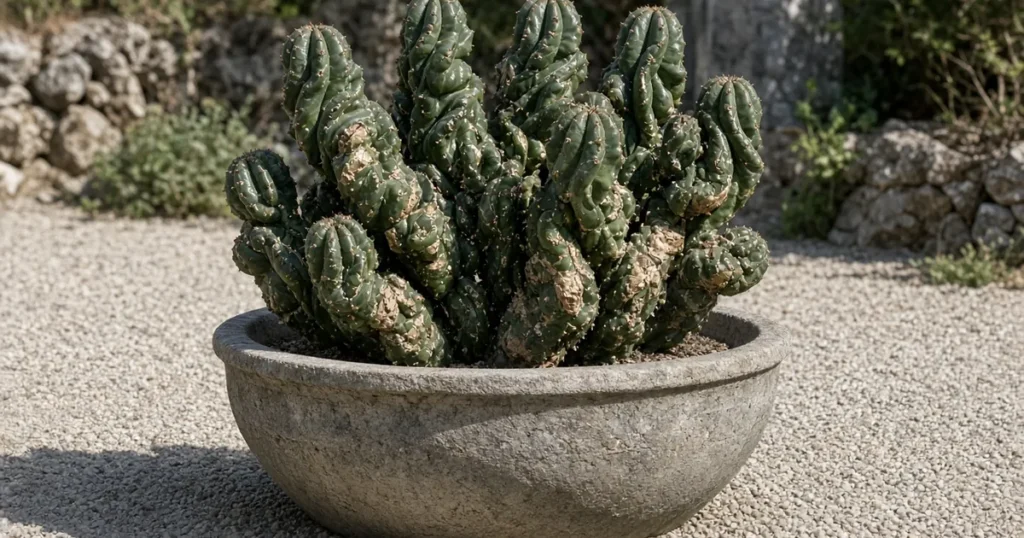
A monstrose form is irregular, odd growth in a cactus or succulent. Penn State Extension notes a disrupted growing point (the apical meristem) causes strange growth plus cultivars named Monstrosa have been developed through propagation. UC IPM notes cacti need full sun plus well drained soil.
The short answer
A monstrose form is irregular cactus or succulent growth tied to a disrupted growing point. Penn State Extension notes cultivars named Monstrosa have been developed through propagation. Grow one like any cactus, with full sun, well drained soil plus water only when the soil is dry, since overwatering causes root rot.

What does monstrose mean?
Monstrose means irregular growth. NC State Extension notes a monstrose mutation causes random growth points that give knobby or contorted growth. Penn State Extension notes disruption to a growing point causes odd growth plus that cultivars named Cristata, Monstrosa plus Tortulosa have come from it.
| Factor | Target | Source |
|---|---|---|
| Light | Full sun, afternoon shade in very hot areas | NC State |
| Soil | Well drained, sandy or cactus mix | NC State |
| Water | Let soil dry completely | UC IPM |
| Fall | Reduce water | UC IPM |
Source: NC State Extension plus UC IPM.
What causes a monstrose form?
Penn State Extension notes a meristem is a site of undifferentiated cells. Mechanical damage can disrupt it, but usually the cause is not apparent. It appears more often in the cactus family.
How do you care for a monstrose cactus?
UC IPM advises full sun, well drained soil plus letting soil dry completely between waterings. UF IFAS advises never letting the pot stand in water.
How to: step by step
- Spot the irregular growth.
- Plant in a gritty, fast draining cactus mix.
- Give full sun, with afternoon shade in hot spots.
- Water only when the mix is dry.
- Reduce water in fall.
- Inspect crevices often for rot.
Troubleshooting
Rot between knobs: trapped water. Water at the soil only.
Soft base: overwatering. Let the mix dry out.
Pale growth: low light. Move to more sun.
For more on leaves see cannabis leaf anatomy, cannabis heat stress plus companion plants when growing marijuana. Kind Seed Co also stocks cannabis seeds.
Sources
- The strange magic of fasciation, Penn State Extension
- Cactus, UC Statewide IPM Program
- Cactus, UF IFAS Gardening Solutions
- Echinopsis (hedgehog cactus), NC State Extension Gardener Plant Toolbox
- Cereus forbesii ‘Ming Thing’, NC State Extension Gardener Plant Toolbox
FAQ
How are monstrose plants propagated?
Penn State Extension notes cultivars named Monstrosa have been developed through propagation, particularly in cactus plus succulent species popular with collectors. Seed rarely carries the trait, since the growth comes from a disrupted growing point. Cuttings or offsets from the odd growth carry the form on to a new plant.
Is monstrose the same as cristate?
They are related but differ. Penn State Extension lists Cristata plus Monstrosa as separate cultivar names that both come from disrupted growing points. A cristate form grows as a flat crest or fan, while NC State notes a monstrose mutation causes random growth points plus knobby or contorted growth rather than a single flat crest.
Which plant families show this growth?
Penn State Extension notes disrupted growth occurs more often in certain families, including the cactus, aster, pea plus rose families. Cactus plus succulent collectors prize the odd forms most, which is why named cultivars such as Monstrosa plus Cristata are common in that group of plants.
How much water does a monstrose cactus need?
Very little. UC IPM advises letting the soil dry completely between waterings plus reducing water in fall. NC State Extension notes overwatering causes root rot. UF IFAS advises never letting a cactus stand in water, so empty the saucer after watering plus use a pot with a drain hole.
How much light does a monstrose cactus need?
UC IPM advises full sun for cacti. NC State Extension notes hedgehog cactus enjoys full sun but benefits from some afternoon shade in very hot climates. Indoors, set the pot in the sunniest window you have plus turn it now plus then so all sides of the irregular growth get light.



