
Staking Perennials in Spring With Grow Through Supports
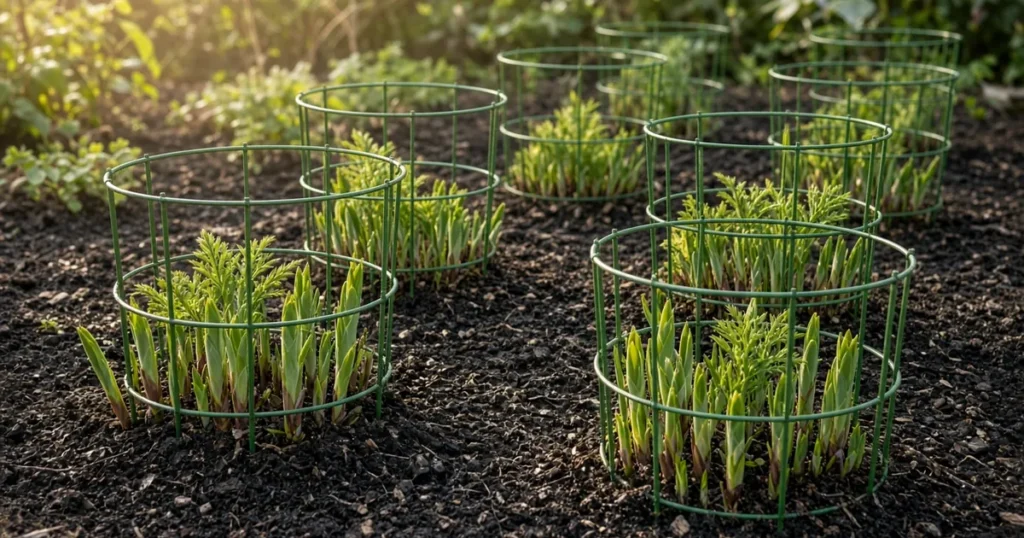
Staking perennials in spring means setting grow through rings, grids or twiggy stakes while shoots are still short, so stems grow up through the support plus hide it. Iowa State University Extension notes timing plus the right support material both matter. Set most supports early plus size them to the mature plant.
The short answer
Staking perennials goes smoothly when supports go in early. Iowa State University Extension advises installing grids when plants are just a few inches tall plus placing rings as the leaves begin to unfurl. Set a ring about half the height of the mature plant. Single stakes go in later, before flower buds open.
When should perennials be staked?
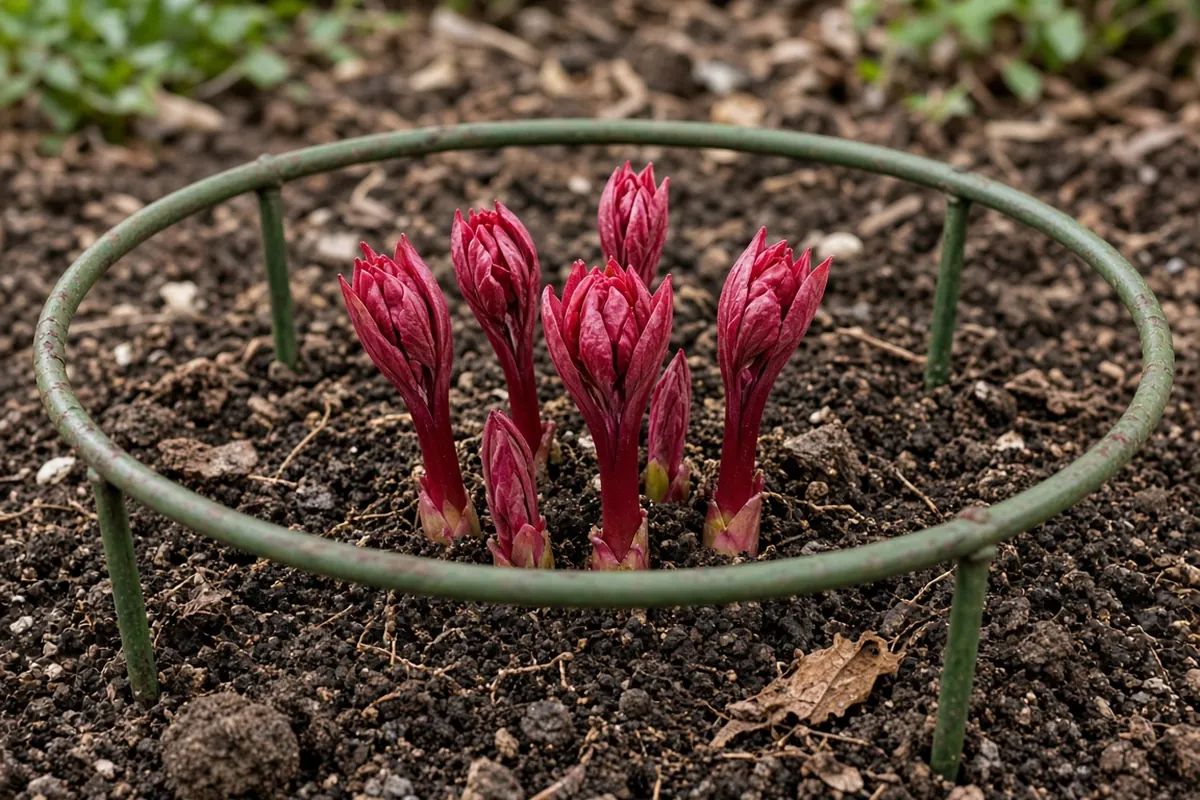
Iowa State University Extension advises setting grids early in the growing season when plants are a few inches tall. Peony rings work well placed early in spring as the leaves begin to unfurl. Single stakes wait until a plant has almost reached full height but before the buds open. In windy spots, stake sooner.
| Factor | Target | Note |
|---|---|---|
| Grid | Large floppy plants such as peonies | Install when shoots are a few inches tall |
| Peony ring | Plants that flop in bloom | Set about half the mature height |
| Chicken wire cylinder | Thin stemmed plants | Make it narrower plus lower than the mature plant |
| Pea stakes | Perennials under 24 inches | Compost them with the stems |
| Single stake | Lilies plus delphiniums | Place it behind the plant |
Source: Iowa State University Extension and Outreach.
What are grow through supports?
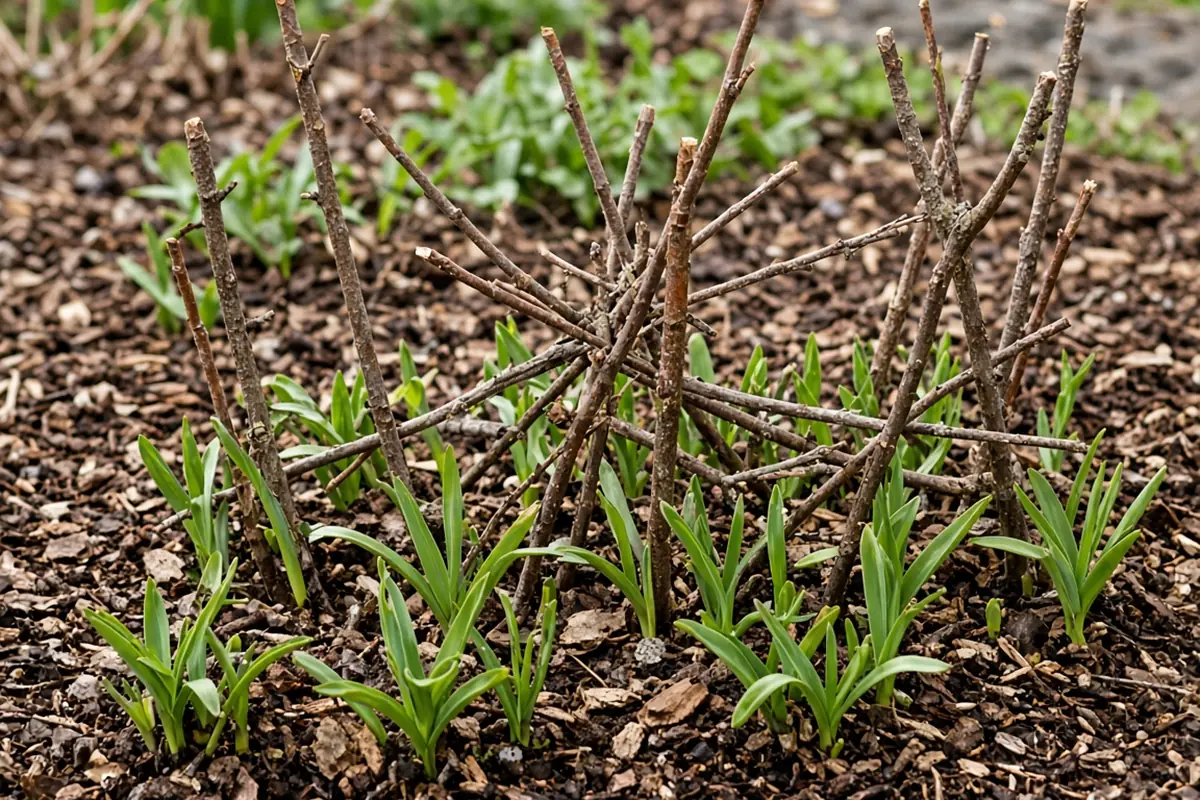
Iowa State Extension describes peony hoops, rings or grow through supports as wire circles, usually in two sections, each with three legs. Metal grids with 3 inch mesh work the same way plus are nearly invisible once the plant leafs out. A cat’s cradle of four to six stakes woven with natural colored twine also hides as plants grow through it.
Which perennials need staking?
Iowa State Extension notes some perennials flop on their neighbors, open in the center or snap from wind or heavy flowers. Peonies take grids or rings. Lilies, delphiniums plus other vertical plants with few side branches suit single stakes. Tomato cages suit taller, narrower plants. Too much fertilizer causes lanky growth that topples more easily.
How to: step by step
- Note the perennials that flopped last year.
- Set grids plus rings when shoots are a few inches tall.
- Choose rings, grids or twiggy stakes sized to the mature plant.
- Push the legs firmly into the soil, clear of bulbs plus roots.
- Guide wayward stems back inside the support as they grow.
- Check after wind plus heavy rain, adding a single stake where a stem leans.
Troubleshooting
Stems flop over the ring: support set too late. Set it earlier next year.
Supports tilt: legs too shallow. Push them in deeper.
Support shows all season: too tall. Pick a shorter size or set it lower.
For more on outdoor growing see garden microclimates for cannabis, planning an outdoor cannabis garden layout plus windbreaks for outdoor cannabis. Kind Seed Co also stocks cannabis seeds.
Sources
- Staking perennials, Iowa State University Extension and Outreach
- Garden cleanup for pollinators: trim perennial stems in their first winter, NC State Extension
- Fall garden tasks, Iowa State University Extension and Outreach
FAQ
Can twigs be used as plant supports?
Yes. Iowa State Extension notes an interwoven gridwork of multi stemmed branches can support perennials plus be composted with the foliage at the end of the season. Forked pea stakes suit shorter perennials under 24 inches. Set either early so the plant grows through plus hides the twigs.
Do short varieties need staking?
Often they need less help. Iowa State Extension notes pea stakes suit shorter perennials under 24 inches that need a boost. For windy spots it advises shorter perennials with basal leaves or sturdy stems, while tall plants go where they are sheltered, such as the east or north side of a building.
Should supports stay in over winter?
Iowa State Extension notes plastic coated steel grids last many years, while nylon grid is hard to save plus should not be composted. Lift supports when you trim stems. NC State Extension found perennial stems are not used by nesting bees in their first winter, so trimming between first fall frost plus last spring frost works.
How do you stake a plant that already flopped?
Iowa State Extension notes linking stakes are used when plants are past the point of other methods. Hook enough together around the clump so it does not look crammed. For a single tall stem, tie it loosely in a figure 8 with soft twine, with the top tie well below the flowers.
What should I tie perennial stems with?
Iowa State Extension advises soft, flexible ties such as strips of cotton fabric, jute or twine. Tie a loose figure 8 with the stake in one loop plus the stem in the other, so the stem does not touch the stake. It notes fishing line can cut stems as they rub against it.



