What Is a Tendril? How Peas and Grapes Climb
The short answer
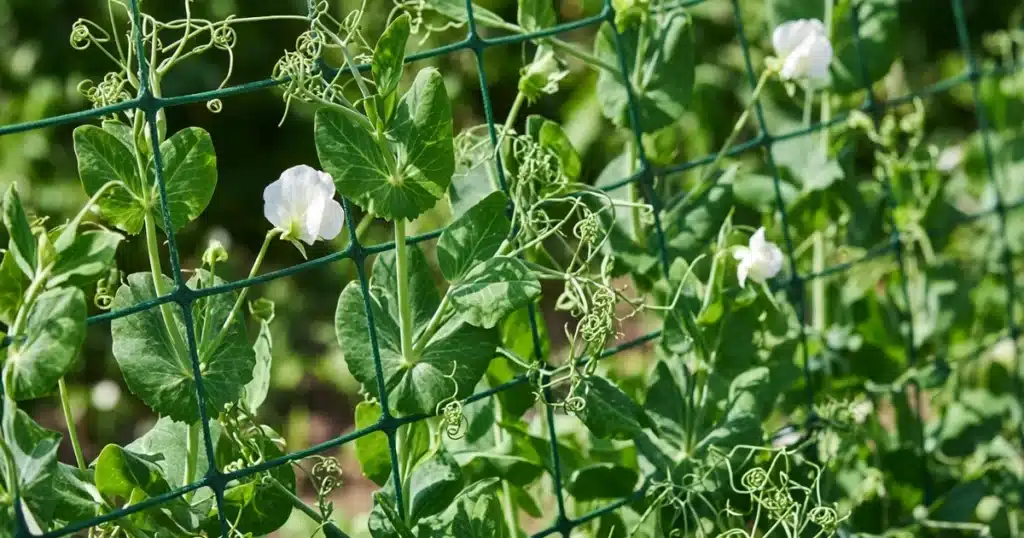
A tendril is a thin, threadlike plant part that coils around supports to help a plant climb. Some tendrils are modified leaves or leaflets, as on peas, while others are modified stems, as on grapes. When a tendril touches something, it curls and grips. Plants with tendrils climb well on thin supports like string, netting or wire.
Knowing how a plant climbs tells you what kind of support to give it.
What is a tendril?
A tendril is a slender organ a plant uses to hold onto things. It doesn’t make much food. Its main job is to find a support, wrap around it and pull the plant upward toward light.
The NC State Extension Gardener Handbook chapter on botany explains that tendrils can form from different plant parts. That’s why tendrils on different plants sit in different spots.
| Plant | Tendril origin | Good support |
|---|---|---|
| Garden pea | Modified leaflets at leaf tip | Netting, twine, brush |
| Sweet pea | Modified leaflets | String or netting |
| Grape | Modified stem opposite a leaf | Wire trellis |
| Cucumber and squash | Variable by species | Netting, cattle panel |
| Passionflower | Modified stem at leaf axil | Wire or lattice |
| Clematis | Twining leaf stalks | Thin wire or string |
Sources: NC State Extension, University of Tennessee Master Gardener Program, Colorado State University Extension.
Where do tendrils come from?
Leaf tendrils grow from a leaf or part of one. On garden peas, the last few leaflets at the tip of each compound leaf become tendrils. Some pea varieties, called semi leafless or afila types, have extra tendrils in place of many leaflets.
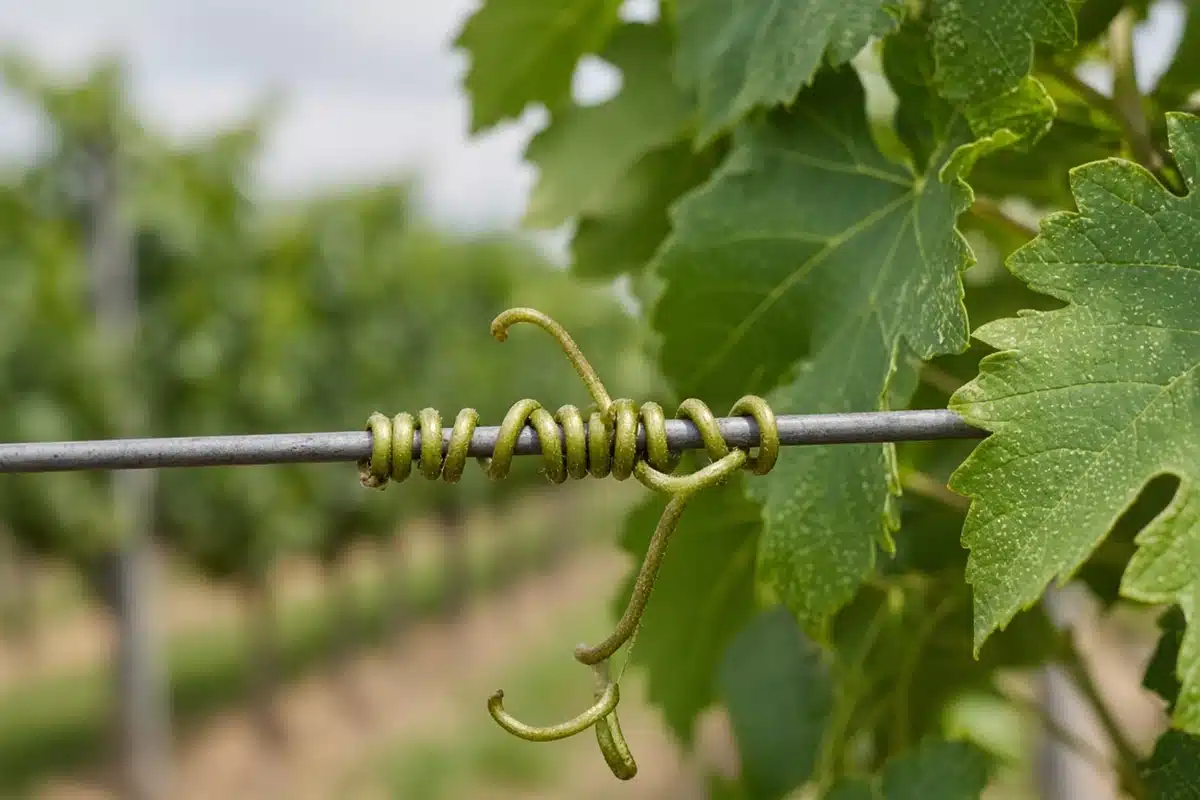
Stem tendrils grow from stem tissue. On grapes, each tendril grows opposite a leaf, in the spot where a flower cluster might form. The University of Tennessee Master Gardener chapter on basic botany, plant physiology and plant classification describes how stems and leaves can change form for climbing.
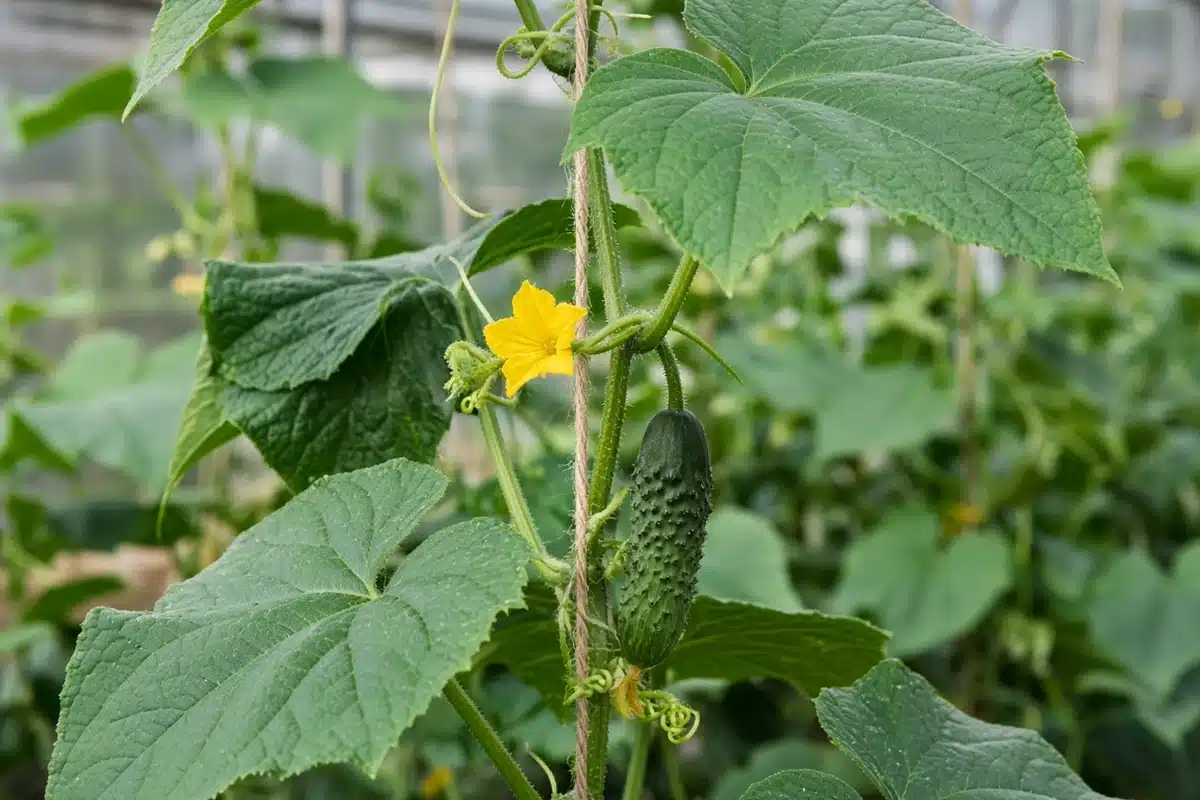
Squash family plants, such as cucumbers and melons, also climb with tendrils.
The Colorado State University Extension botany notes (CMG GardenNotes 120) list tendrils among the plant parts that can be modified leaves or stems. Our post on cannabis leaf anatomy explains the basic leaf parts these structures grow from.
How do tendrils grip?
A tendril slowly sweeps in circles as it grows, searching for something to touch. Contact triggers uneven growth that bends the tendril toward its support. That uneven growth makes the tendril curl around the support.
After it grips, many tendrils coil along their length into a spring shape. The coil pulls the plant closer to the support and gives it some stretch in wind.
What supports work well?
Tendrils only wrap around thin things. String, twine, garden netting, wire and twiggy brush all work well. Thick posts and wide boards don’t, unless you add string or netting.
Set supports at planting, before vines sprawl. Our post on the art of cannabis trellising covers building trellises and netting that suit climbers too.
Peas and beans make good garden partners. Our post on companion plants when growing marijuana explains how plant pairings work in shared beds.
How to: step by step
- Check how your plant climbs: tendrils, twining stems or clinging roots.
- For tendril climbers, pick thin supports such as string or netting.
- Install supports at planting time.
- Guide young vines to the support by hand.
- Let tendrils find and grip on their own.
- Add ties for heavy fruit if needed.
Troubleshooting
Vines sprawl on the ground. No support within reach. Add netting low down.
Tendrils slide off a post. It’s too thick. Wrap it with twine.
Plants fall in wind. Tie main stems loosely to the support.
Tendrils grab neighboring plants. Space supports so vines stay on their own.
Few tendrils on peas. Variety may be leafy. Give brush or netting anyway.
With a thin support nearby, tendrils can help hold climbing vines upright. Kind Seed Co shares more growing tips in outdoor growing.
Sources
- Extension Gardener Handbook chapter 3: botany, NC State Extension, Extension Gardener Handbook chapter 3
- Chapter 3: basic botany, plant physiology, and plant classification, University of Tennessee Master Gardener Program, Chapter 3
- Botany (CMG GardenNotes 120), Colorado State University Extension, Botany (CMG GardenNotes 120)
FAQ
What is a tendril?
A thin coiling plant part that grips supports.
Are tendrils leaves or stems?
Either, depending on the plant.
Which plants use tendrils?
Peas, grapes, cucumbers, squash and passionflower.
What support works well?
Thin supports such as string, netting or wire.
What makes a tendril curl?
Touch, which triggers uneven growth.