Epigeal Germination vs Hypogeal Germination: Where Seed Leaves Grow
The short answer
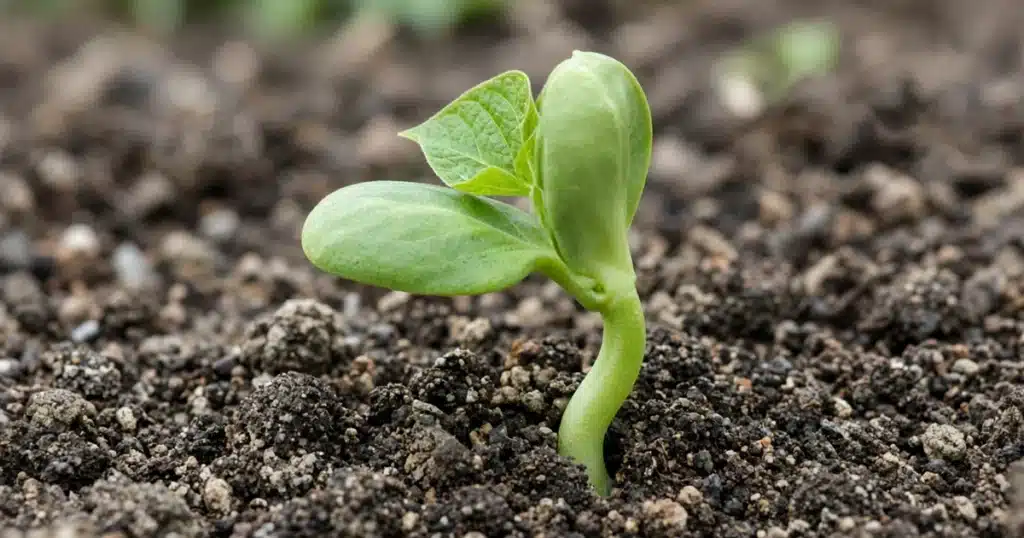
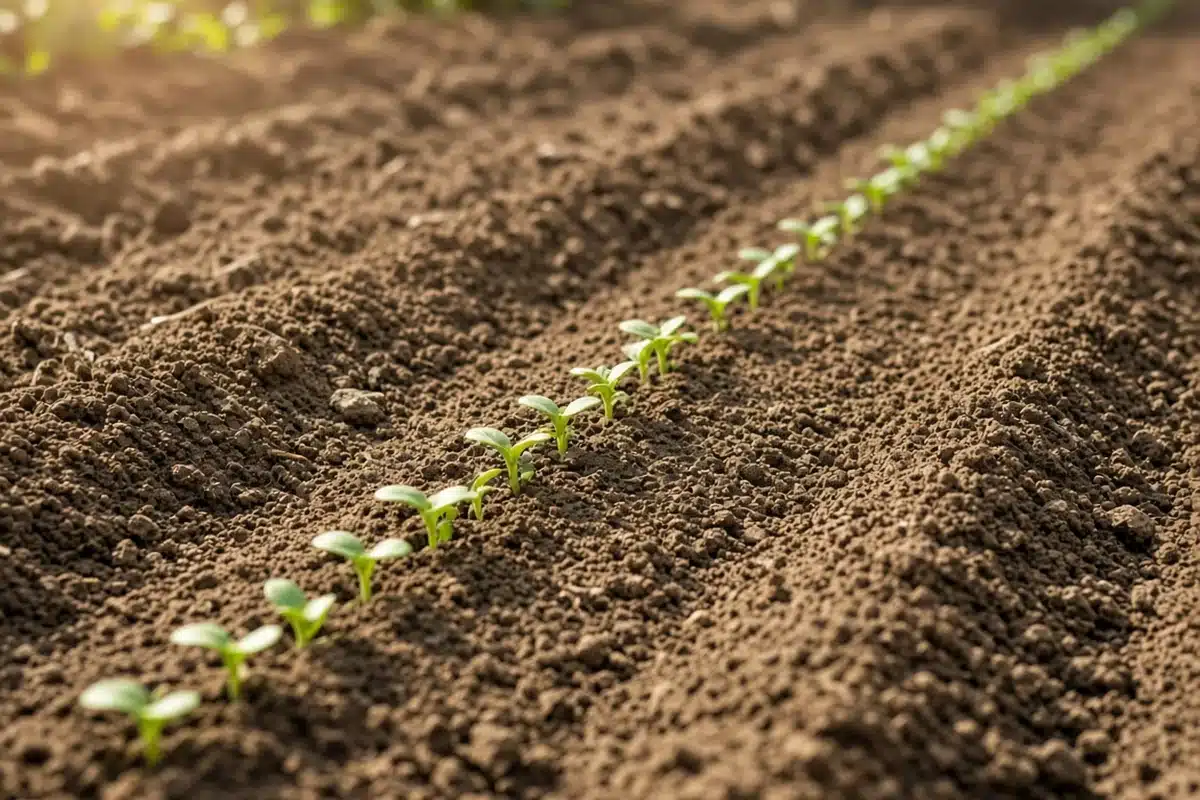
Epigeal germination and hypogeal germination describe where the seed leaves end up when a seed sprouts. In epigeal germination, the seed leaves rise above the soil, as with beans and squash. In hypogeal germination, the seed leaves stay below ground and the shoot pushes up, as with peas and corn. Knowing the type can help explain how seedlings emerge.
It also explains why some seedlings struggle with crusted soil while others push through easily.
What are seed leaves?
Seed leaves, or cotyledons, are the first leaves stored inside a seed. They hold food for the young plant or draw it from the seed. The NC State Extension Gardener Handbook chapter on botany describes the parts of a seed: the seed coat, the embryo and stored food.
Dicots, such as beans, have two seed leaves, while monocots, such as corn, have one.
Our post on cannabis cotyledons explains what seed leaves do in the first days.
| Type | Seed leaves | Examples | Emergence |
|---|---|---|---|
| Epigeal | Rise above soil | Bean, squash | Hooked stem pulls leaves up |
| Hypogeal | Stay underground | Pea, corn | Shoot pushes up alone |
Sources: NC State Extension, Penn State Extension, University of Tennessee Master Gardener Program.
What happens in epigeal germination?
In epigeal germination, the stem below the seed leaves, called the hypocotyl, grows fast. It forms a hook that pushes up through the soil, then straightens and lifts the seed leaves into the air. The seed leaves often turn green and make food for a while before true leaves take over.
Beans and squash are common examples. Our post on cannabis seed anatomy covers the parts inside a seed.
Because the hook lifts the seed leaves, these seedlings need loose soil, and a hard crust can stop them.
What happens in hypogeal germination?
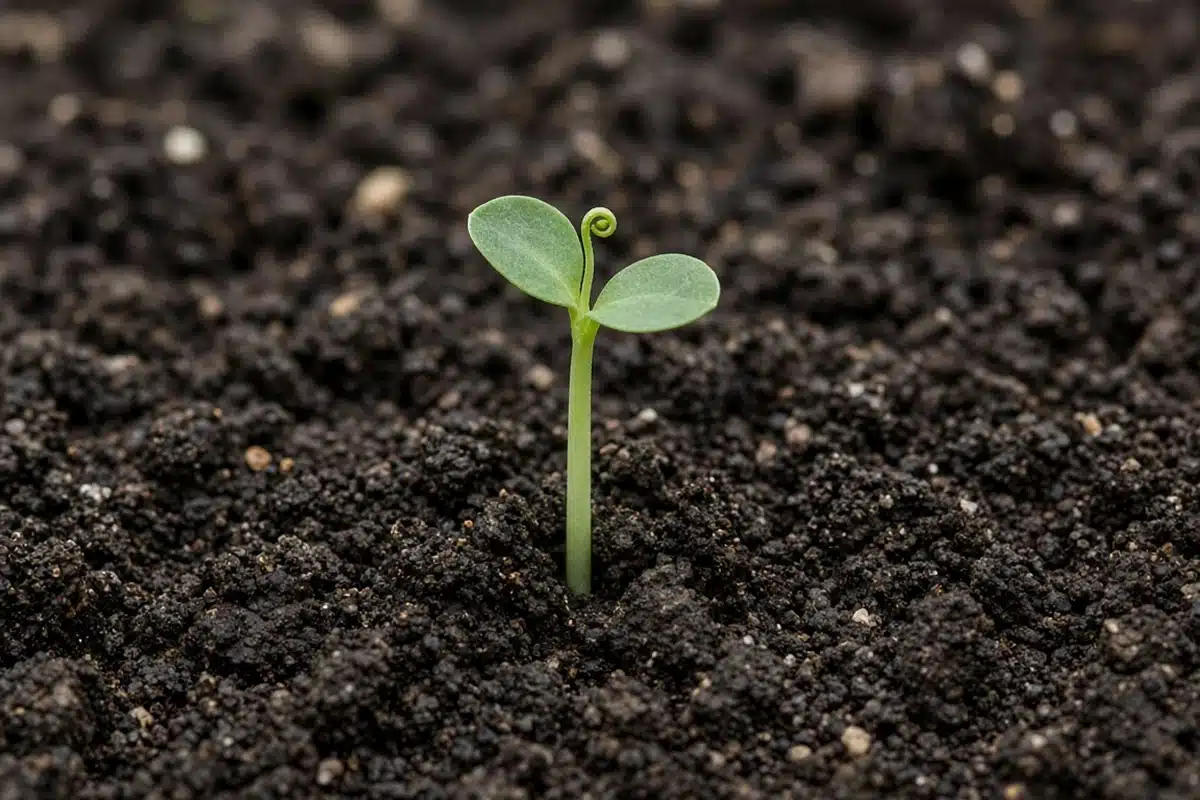
In hypogeal germination, the seed leaves stay below ground inside the seed. The stem above them, called the epicotyl, grows up and carries the shoot tip to the surface. The seed leaves feed the plant from underground until they’re used up.
Peas and corn are common examples. The University of Tennessee Master Gardener chapter on basic botany, plant physiology and plant classification explains how monocots like corn send up a single shoot sheathed in a covering tip.
Why does it matter for planting?
Depth. Epigeal seeds may struggle if planted too deep, since the hook must lift the seed leaves through the soil. Hypogeal seeds, such as peas, may handle deeper planting.
Soil surface. Epigeal seedlings struggle with crusted soil. Our post on soil crusting and cannabis seedlings covers how to hold the surface loose.
Seedling care. The Penn State Extension guide to starting seeds indoors explains planting depth, moisture and light for young seedlings. Follow seed packet depths as a guide.
How to: step by step
- Check whether your seed is epigeal or hypogeal.
- Plant epigeal seeds at shallow depth in loose mix.
- Plant hypogeal seeds at packet depth.
- Hold the soil surface moist and loose.
- Watch for a hooked stem or a straight shoot.
- Give light as soon as seedlings appear.
Troubleshooting
Bean seedlings stuck under soil. Crust or deep planting. Loosen the surface.
Seed leaves never appear on peas. Normal. They stay underground.
Seed coat stuck on seed leaves. Mist it to soften.
Seedlings stretch tall and weak. Too little light. Move lights closer.
Patchy emergence. Uneven depth or moisture. Level and water evenly.
Knowing how seeds sprout helps you plant at the right depth. Kind Seed Co shares more seed starting tips in outdoor growing.
Sources
- Extension Gardener Handbook chapter 3: botany, NC State Extension, Extension Gardener Handbook chapter 3
- Starting seeds indoors, Penn State Extension, Starting seeds indoors
- Chapter 3: basic botany, plant physiology, and plant classification, University of Tennessee Master Gardener Program, Chapter 3
FAQ
What is epigeal germination?
Seed leaves rise above the soil, as with beans.
What is hypogeal germination?
Seed leaves stay underground, as with peas.
Is cannabis epigeal?
It is usually described that way, with seed leaves that rise above the soil.
Why does crusting matter?
Epigeal seedlings must push their seed leaves through it.
Can hypogeal seeds go deeper?
They may. Follow packet depths.