
Coated Seed Label: How to Read What the Seed Packet Says
The short answer
A coated seed label tells you the seed carries a thin applied product, often dyed a bright color, and holds its normal size and shape. The packet names any product used and gives handling and storage directions. Read it before you sow and store leftover seed in its labeled packet.
Seed packets carry lots of fine print. Many gardeners skip the note that seed has a coating. Knowing what it means helps you choose the right seed for your garden.
What is coated seed?
Coated seed gets a thin layer of product before packing. The coating sits on the seed surface.
Common coatings help shield seed from soil fungi or insects while it sprouts. They are most often used on large seeds such as corn, peas, beans and squash.
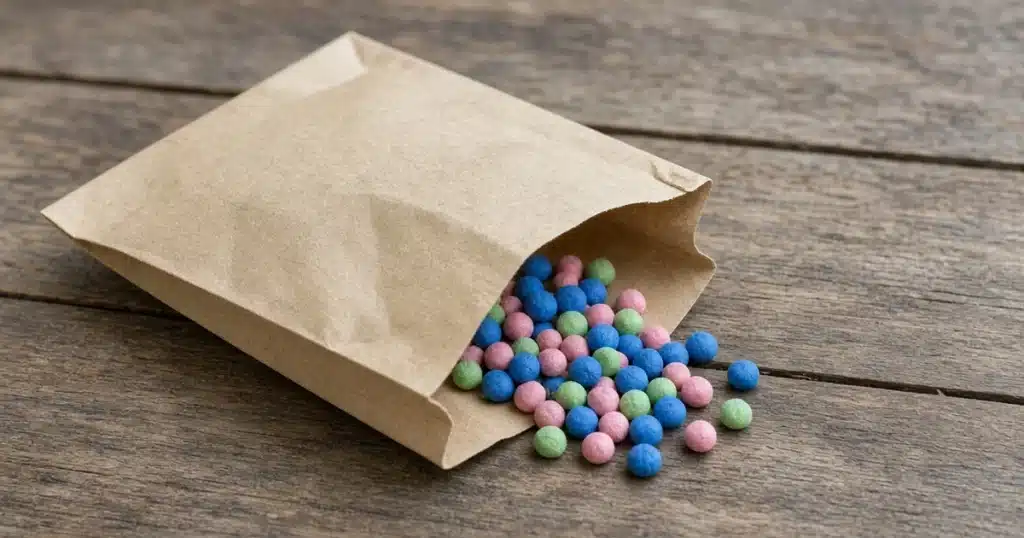
Most coated seed is dyed a bright color such as pink, blue, green or red. The color shows clearly that the seed is not plain seed.
Coated seed sprouts the same way as plain seed. The coating simply sits around it during the first days in the soil.
How do you read a coated seed label?
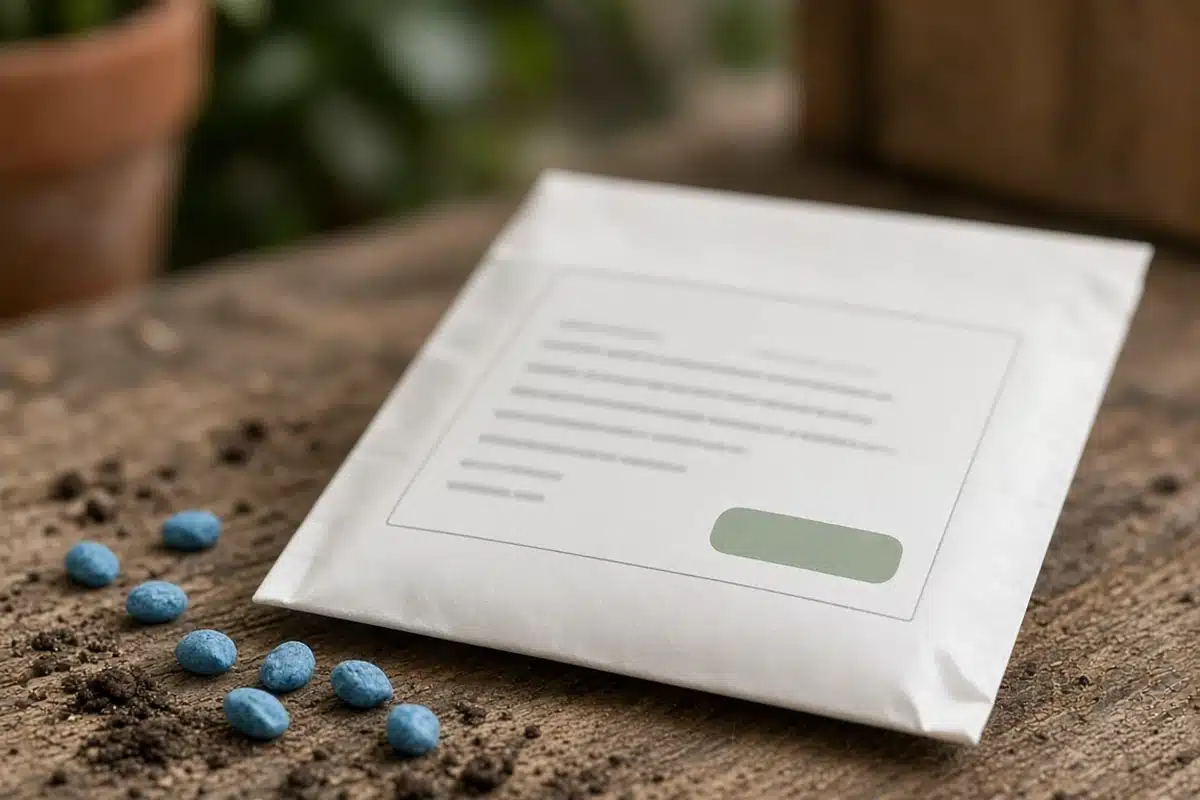
Seed labels state when seed carries a coating.
Look for these details on the packet.
| Label item | What it tells you |
|---|---|
| Coated seed statement | That seed carries an applied product |
| Product name | Which product was used |
| Handling directions | How to store and sow the seed |
| Germination rate | The share of seeds expected to sprout |
| Lot number | The production lot for that seed |
| Packed for date | The season the seed was packed |
Sources: University of Illinois Extension.
The statement is often printed in a box or in bold on the back of the packet.
Our post on how to read seed descriptions explains other common terms on seed listings.
How is coated seed different from pelleted seed?
Both are coated, but for different reasons.
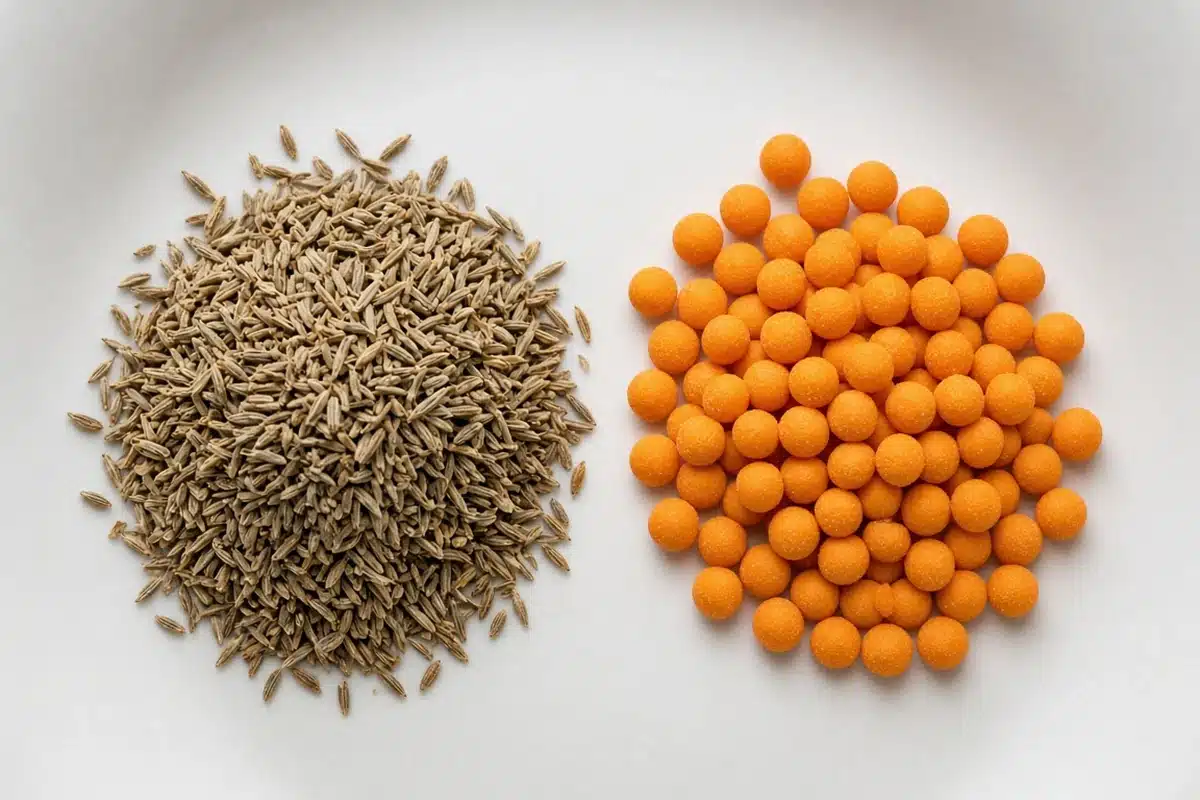
Pelleted seed has a thick clay like layer that makes tiny seeds larger and rounder. The University of Illinois Extension article on pelleted seed explains how pellets make small seeds easy to space.
Coated seed has a thin layer of an applied product and holds its normal size and shape.
Some seed is both pelleted and coated. The label tells you which applies.
How should coated seed be handled?
Sow coated seed straight from the packet.
Sow at the depth listed on the packet. Cover seeds fully with soil.
Our post on seed starting mix covers mixes for starting seeds in trays.
How to: step by step
- Check the packet for the coated seed statement.
- Note the product name on the packet.
- Mark each row as you sow.
- Store seed cool and dry.
- Sow at the label depth.
- Write the sow date on the packet.
How should you store extra seed?
Store leftover seed in its original packet so the label stays with it. Place packets in a sealed container in a cool, dry spot.
Write the year on the packet. Most seed stays good for one to three years.
Our post on seed storage mistakes covers common storage errors.
Save leftover seed for next season.
Can you buy uncoated seed?
Yes. Many seed companies sell uncoated seed, and most home garden packets are uncoated.
Look for the word uncoated in the catalog listing.
Troubleshooting
Not sure if seed is coated. Check the packet for a coated seed statement or bright color.
Seed color looks odd. Bright dye usually means a coating.
Lost the packet. Store seeds in labeled envelopes from now on.
A careful look at the label tells you what is in the packet. Kind Seed Co shares more garden ideas in outdoor growing.
Sources
- Pelleted seed gives gardeners a sown in advantage, University of Illinois Extension, Pelleted seed gives gardeners a sown in advantage
FAQ
Is coated seed the same as pelleted seed?
No. Pellets add size. Coated seed carries a thin applied coating.
Why are coatings used?
Illinois Extension notes coatings can shield seed from birds, rodents and harsh conditions.
Why is coated seed colored?
The dye shows clearly that the seed carries a coating.
Can you buy uncoated seed?
Yes. Many seed companies sell uncoated and organic seed.
Does coated seed sprout differently?
No. It sprouts like plain seed once sown.



