
What Is Fasciation? Flattened plus Fused Plant Stems
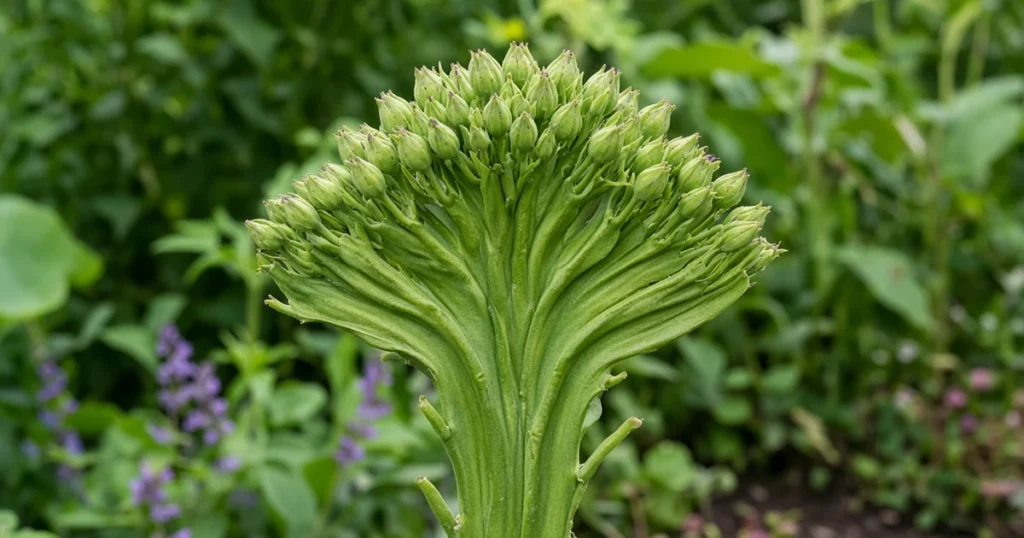
Fasciation is a growth change in which the growing tip spreads out, so stems or flower heads turn flat plus ribbon like. University of Wisconsin Extension notes an elongated growing tip causes it. Penn State Extension notes it most often appears by chance.
The short answer
Fasciation is flat, ribbon like growth from an elongated growing tip. Wisconsin Extension lists infection, insects, chemicals, damage, mutations plus weather as causes, though Penn State notes it most often appears by chance. Cockscomb celosia passes the trait on in seed, while cactus forms are propagated from cuttings.

What does fasciation mean?
University of Wisconsin Extension notes fasciation comes from an elongated apical meristem, which gives flattened, ribbon like growth. Penn State notes the name derives from the Latin fascis, meaning bundle.
| Cause | Note | Source |
|---|---|---|
| Bacterial infection | Rhodococcus fascians can spread by contact | Penn State |
| Injury | A cherry from pruning injury | South Dakota State |
| Insects | Listed among causes | Wisconsin |
| Chance | The most common case | Penn State |
Source: Penn State plus South Dakota State University Extension.
What causes fasciation?
Wisconsin Extension lists infection, insects, chemicals, mechanical damage, mutations, hormones plus extreme weather. Penn State notes the cause is usually not apparent. South Dakota State reports an oxalis that fasciated after cold.
Which plants show fasciation?
South Dakota State notes asparagus, dandelions, coneflower plus rudbeckia. Montana State notes Prunus, Salix plus the rose family show it most often. Wisconsin names cockscomb celosia plus Japanese fantail willow.

How to: step by step
- Look for stems that are flat rather than round.
- Scan flower heads for a crest or fan.
- Note any recent injury or frost nearby.
- Prune out affected stems if they look odd.
- Leave them in place if you like the shape.
- Watch fresh growth next season.
Troubleshooting
Crested cactus for sale: a fasciated form. Wisconsin notes these are sold as Cristata.
Odd growth on many plants: possible bacteria. Remove affected plants.
Crest on a single stem: chance. Prune or enjoy it.
For more on leaves see cannabis leaf anatomy, cannabis nodes and internodes plus companion plants when growing marijuana. Kind Seed Co also stocks cannabis seeds.
Sources
- Fascinating fasciation, University of Wisconsin-Madison Extension
- The strange magic of fasciation, Penn State Extension
- Fasciation: what’s going on with my plant?, South Dakota State University Extension
- Fasciation (ornamental shrubs and trees guide), Montana State University Extension
FAQ
Is fasciation contagious?
Rarely. Penn State Extension notes the bacterium Rhodococcus fascians can spread by contact, but no other cause of fasciation spreads from plant to plant. Most cases appear by chance or after injury. Clean pruners after cutting a plant with odd growth plus watch nearby plants for similar flat stems.
Can fasciated plants be propagated?
Yes. Wisconsin Extension notes fasciated cactus plus succulent forms are perpetuated by vegetative propagation plus sold under names such as Monstrosa or Cristata. Japanese fantail willow Sekka is grown from cuttings. Seed does not carry the trait in most cases, so cuttings or grafts are used.
Do seeds from fasciated plants carry it?
Usually not, but there are exceptions. Wisconsin Extension notes cockscomb celosia, Celosia argentea var. cristata, passes its fasciated heads on in its seeds. Most other fasciated forms are carried on by cuttings or grafts rather than seed, since the trait often comes from a random change at one growing tip.
Is cockscomb celosia fasciated?
Yes. University of Wisconsin Extension notes cockscomb celosia, Celosia argentea var. cristata, has fasciated flower heads. Unlike most fasciated plants, it passes the trait on in its seeds, which is why gardeners can grow the crested flowers each year from a seed packet rather than from cuttings.
Should I prune fasciated stems?
It is up to you. Montana State University Extension notes affected parts can be pruned out if the shape is not wanted. Many gardeners leave the stems as a curiosity. If bacteria may be involved, Penn State notes Rhodococcus fascians spreads by contact, so clean pruners between plants.



