
Winter Compost Care: Insulating and Feeding Piles in Cold Months
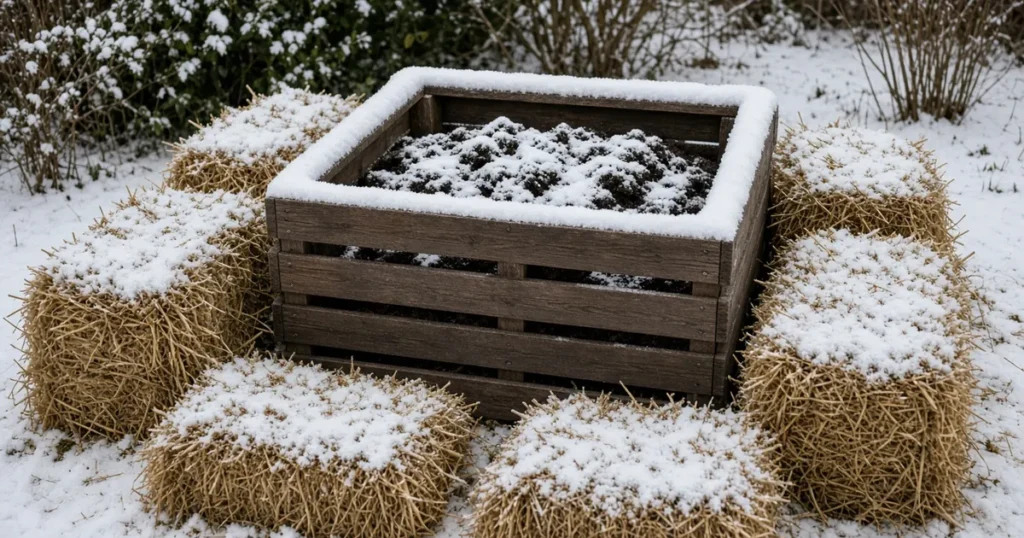
Winter compost care helps a pile hold heat and be ready for spring. University of Illinois Extension says cold slows rather than halts composting, and larger piles generate and hold more heat.
The short answer
Build the pile large before cold sets in and insulate it with leaves, straw or woodchips. Cover it against excess moisture. Go on adding greens layered with browns, but don’t turn the pile until it thaws. Harvest finished compost in fall to make room for winter scraps.
Does compost work in winter?
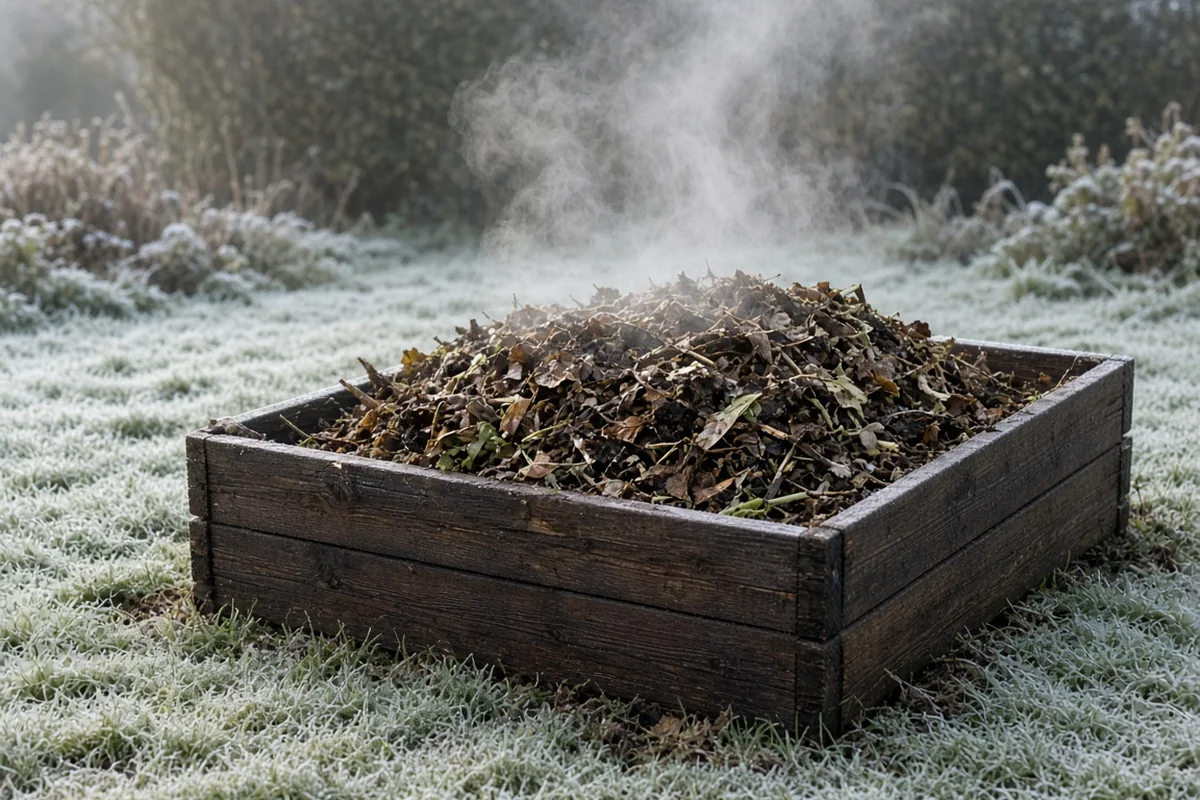
Illinois Extension says thermophilic bacteria work between 113 and 167°F, and below 68°F psychrophilic bacteria take over more slowly. Decomposition stops only when the pile is fully frozen, UNH Extension says. NC State Extension suggests a pile of 27 cubic feet, 3 feet each way. See composting cannabis garden waste.
How do you insulate a pile?
UNH Extension suggests surrounding bins with bags of leaves or straw bales, or lining the inside with 6 to 12 inches of leaves, sawdust or woodchips. Illinois adds a top layer of finished compost, woodchips or straw. Fall cleanup leaves feed this, as in fall garden cleanup after cannabis harvest.
What can you add in cold months?
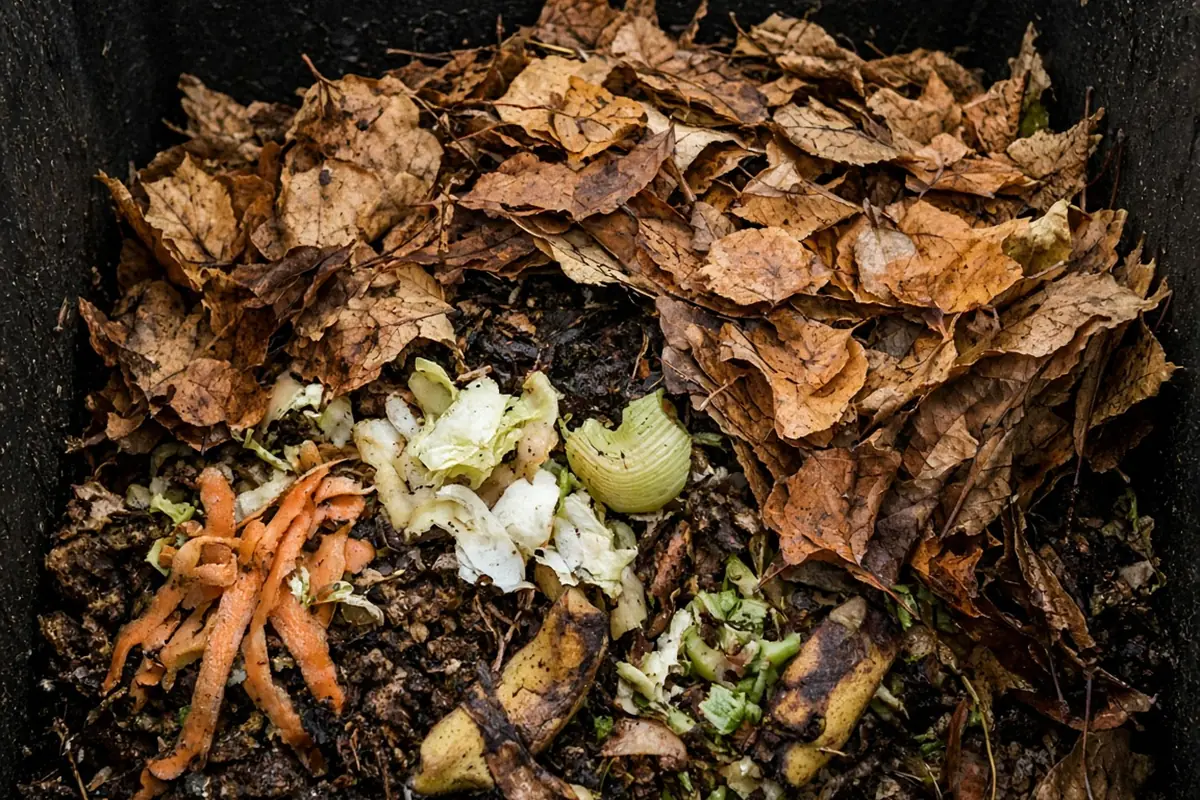
UNH Extension says to layer greens with browns, since only greens makes a wet mess by spring. Gather fall leaves as browns and chop materials smaller. UVM Extension mentions indoor worm bins and Bokashi as other options. Use finished compost on beds, per fertilizer and compost for growing outdoors.
Winter compost guide
| Task | Guide | Source |
|---|---|---|
| Pile size | 27 cubic feet | NC State |
| Insulation | Leaves or bales | UNH |
| Cover | Allow air flow | Illinois |
| Turning | Wait for spring | UNH |
| Wood ash | Skip it | UNH |
Sources: University of Illinois Extension, UNH Cooperative Extension, UVM Extension, NC State Extension.
How to: step by step
- Build the pile large before the cold sets in.
- Insulate with leaves, straw or bales.
- Stockpile dry leaves for browns.
- Add scraps in layers with browns.
- Store finished compost in a lidded bin.
- Turn and check moisture in spring.
Troubleshooting
Pile frozen solid: too small. Build larger and insulate.
Smell in spring: too many greens. Mix in browns.
Soggy pile: uncovered. Add a cover that allows air flow.
Kind Seed Co shares more compost notes on the blog.
Sources
- Winter composting info sheet, University of Illinois Extension
- Can you compost in winter?, UNH Cooperative Extension
- Active composting in winter, UVM Extension
- Extension Gardener Handbook, chapter 2: Composting, NC State Extension
FAQ
Should I turn compost in winter?
UNH Extension says there's no need, since turning loses heat from the center. Illinois Extension advises reducing or stopping turning during sustained freezes.
Can I add snow to compost?
Extension sources don't cover adding snow. UVM Extension only notes you may need to dig snow out of a bin to make room for scraps.
Will a frozen pile thaw and restart?
Yes. UNH Extension says microbes and decomposers survive year round and start working again as soon as it warms.
Should I cover my pile?
Illinois Extension says to cover the bin or pile against excess moisture while still allowing air flow.
Can I add wood ashes?
UNH Extension advises skipping them, since large amounts can raise the pH and slow microbes.



