
Winterizing Drip Irrigation: Draining Lines and Storing Parts
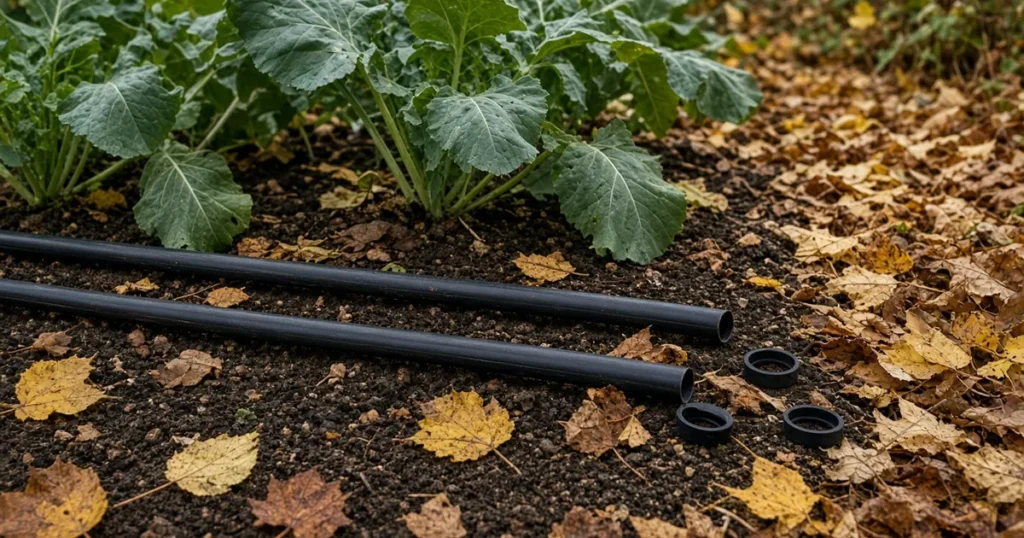
Winterizing drip irrigation comes down to two jobs: get the water out and bring the fragile parts indoors. Iowa State University Extension says to drain the system before winter and to store pressure regulators, timers and backflow devices inside.
The short answer
Turn off and disconnect the water. Bring timers, filters, pressure regulators and backflow preventers indoors. Pull end caps and lift lines so water drains, checking low spots. Iowa State says an air compressor at 20 to 30 psi can clear lines, but more than 30 psi can damage emitters. Refit caps loosely.
Why winterize drip lines?
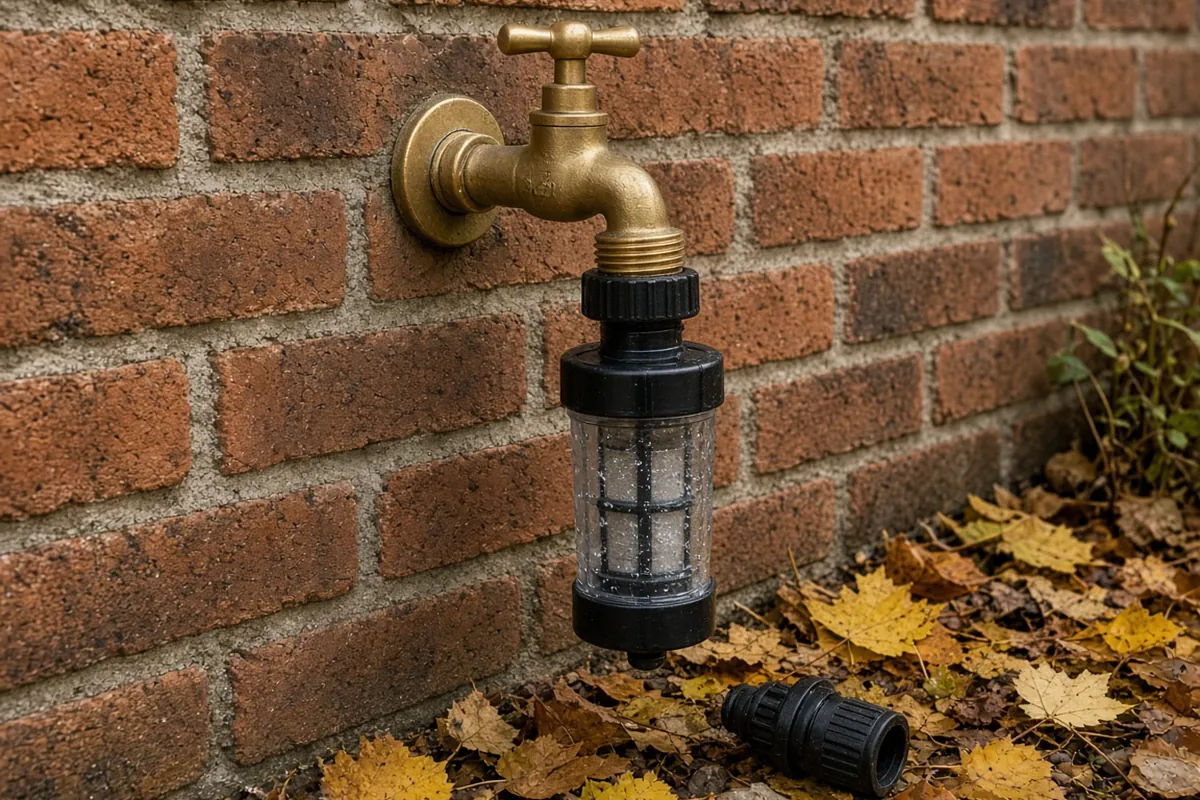
Illinois Extension notes that freezing water expands and can split fittings and rigid plastic parts. WSU Extension says timers, filters and regulators can be damaged by hard freezes. Draining heads off that damage.
Step by step
| Step | Action | Source |
|---|---|---|
| 1 | Turn off and disconnect water | Iowa State |
| 2 | Remove timer, filter, regulator, backflow preventer | Iowa State, WSU |
| 3 | Pull end caps and lift lines to drain | Iowa State, WSU |
| 4 | Check low spots, which can take hours | Iowa State |
| 5 | Optional air blowout at 20 to 30 psi | Iowa State |
| 6 | Refit end caps loosely | Iowa State |
Colorado State Extension suggests building an emitter or valve into the lowest point so the system drains on its own. Setup choices like that are in drip irrigation for cannabis.
What can stay outside?
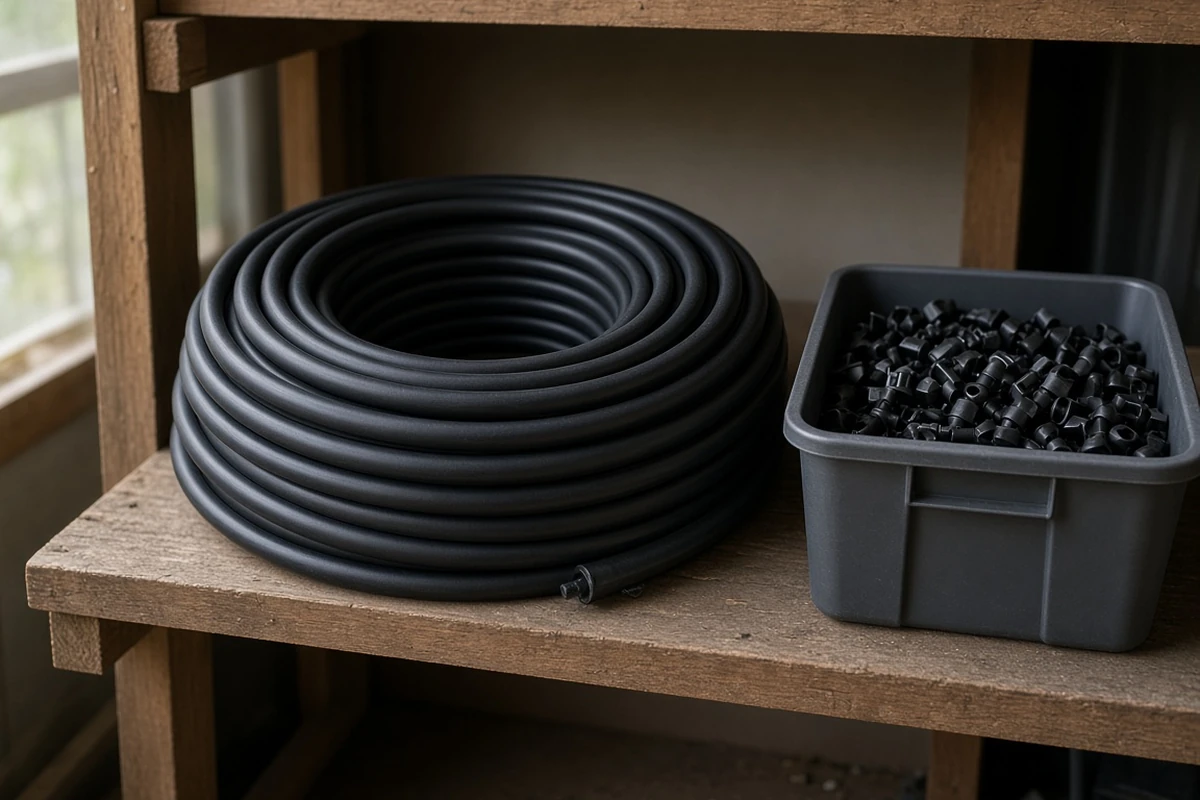
Colorado State says poly mainline is not damaged by freezing and most emitters store well outdoors. The head assembly with the filter and regulator comes indoors. Illinois Extension adds that hoses should be drained and stored in a sheltered spot, and rigid plastic fittings removed.
Spring startup
Colorado State suggests flushing the mainline in spring before reattaching emitters. Then reinstall the head assembly that wintered indoors. Collecting rain for the garden? See rainwater for cannabis.
Fit it into fall chores
Winterizing fits well with bed cleanup, covered in fall garden cleanup after cannabis harvest. While the beds are open, plan next season’s soil building with the Kind Seed Co guide to fertilizer and compost for growing outdoors.
Sources
- Using drip irrigation in the garden, Iowa State University Extension and Outreach
- Drip irrigation for home gardens, Colorado State University Extension
- How to winterize outdoor plumbing: irrigation, hoses, spigots, University of Illinois Extension
- Drip irrigation: design, installation and maintenance, WSU Extension
FAQ
Do I need to blow out drip irrigation lines?
Not always. Iowa State says draining by gravity works, with an air compressor at 20 to 30 psi as an option.
What psi should I use to blow out drip lines?
Iowa State suggests 20 to 30 psi and warns that more than 30 psi can damage emitters.
Can poly drip tubing stay outside in winter?
Colorado State says poly mainline is not damaged by freezing and most emitters store well outdoors.
Which drip parts should come indoors?
Iowa State lists pressure regulators, timers and backflow preventers. WSU adds filters.
What should I do to drip irrigation in spring?
Colorado State suggests flushing the mainline before running the system for the season.



