
Zucchini Leaves Silver? Normal Leaf Pattern or Powdery Mildew
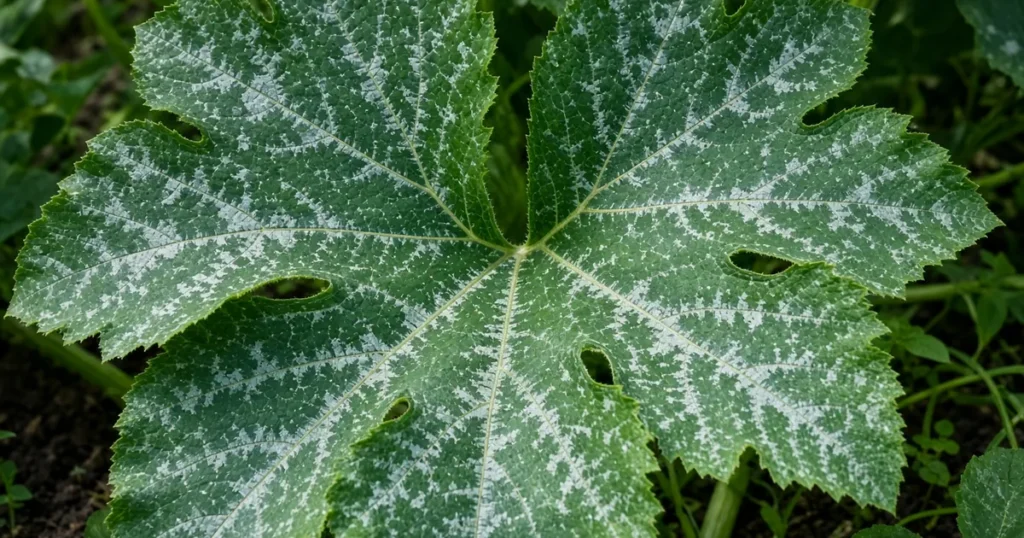
Zucchini leaves silver in places can look alarming, yet the pattern is often normal. University of Maryland Extension says smooth gray, white or silvery angular blotches with no visible powder are normal color variation in some types of zucchini. Powdery mildew looks different once you know the signs.
The short answer
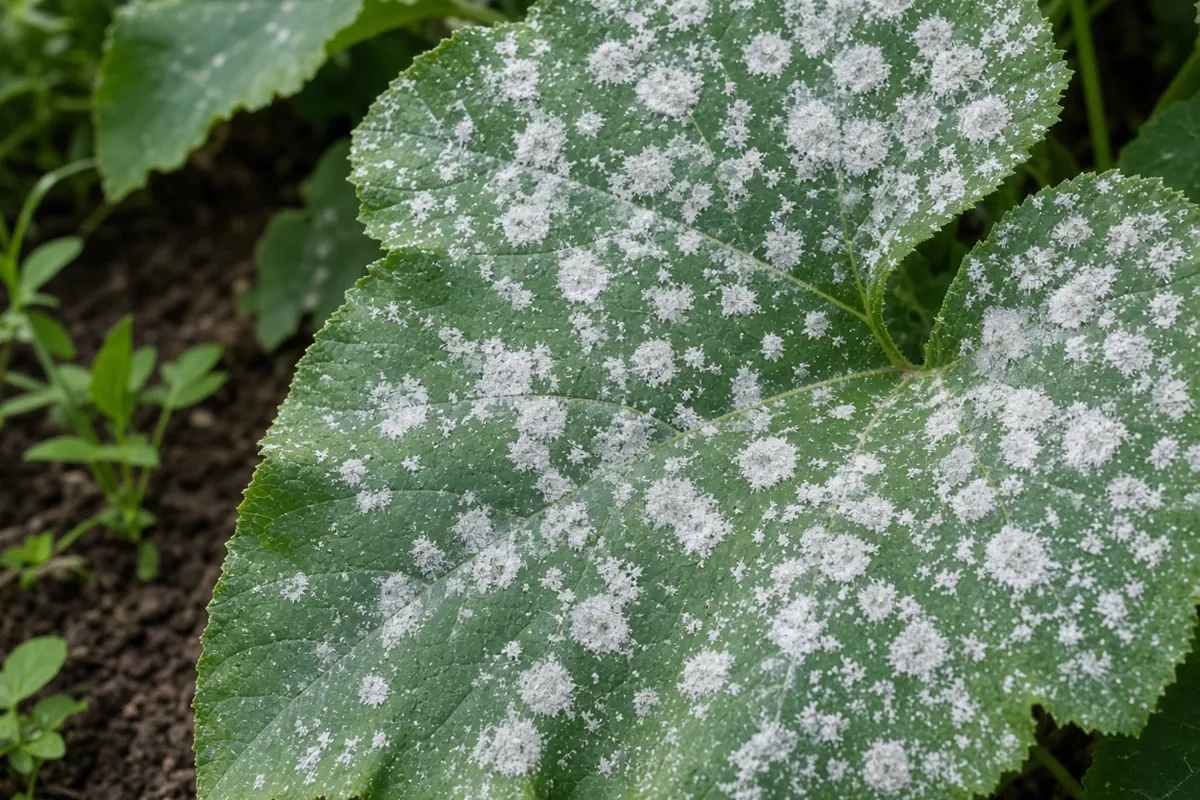
Smooth silver or gray blotches with clear borders and no powder are a normal leaf pattern. Maryland Extension says no action is needed. Powdery mildew forms white, powdery spots on both leaf surfaces that spread unevenly. Grow resistant varieties in full sun and water soil, not leaves.
Is silver mottling on zucchini normal?
Yes, in many plants. Maryland Extension lists smooth gray or silver blotches with no powdery substance or fungal residue as normal leaf variation and rates it as common. SDSU Extension shows a leaf with distinct borders on its pale spots and calls it a natural variegation of the leaf pattern. Stress from heat or water can cause other leaf changes, which environmental stresses on weed plants covers.
How do you tell mottling from powdery mildew?
Check shape and texture. SDSU Extension notes that powdery mildew has an irregular look on the leaf, while natural variegation has distinct borders. The UC Statewide IPM Program says powdery mildew first appears as white, powdery spots on both surfaces of leaves, on shoots and sometimes on flowers and fruit.
| Sign | Normal silver pattern | Powdery mildew |
|---|---|---|
| Texture | Smooth, no powder | White, powdery |
| Edges | Distinct borders | Irregular |
| Leaf sides | Leaf surface | Both surfaces |
| Later | No change noted | Leaves may yellow and drop |
Sources: University of Maryland Extension, SDSU Extension, UC Statewide IPM Program, University of Minnesota Extension.
What helps when mildew shows up?
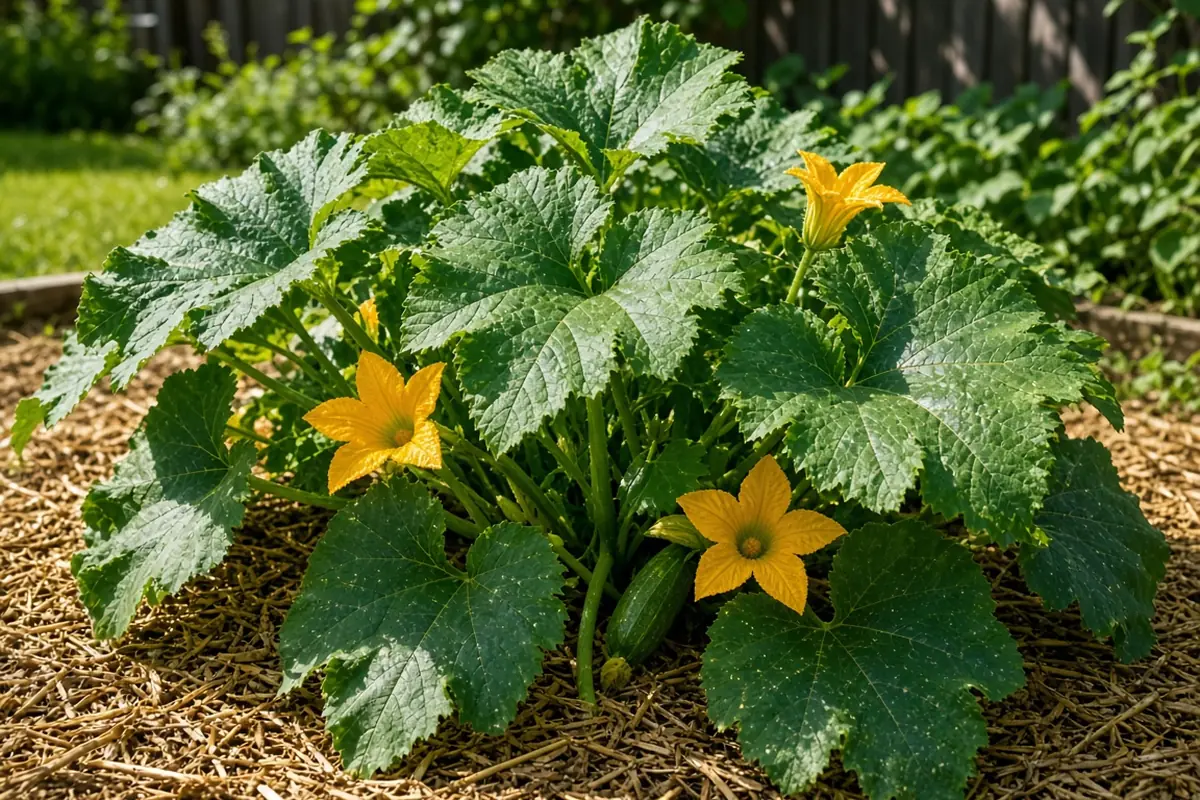
UC IPM says powdery mildew is managed by growing resistant varieties and improving growing conditions. Grow plants in sunny spots, since moderate temperatures of 60 to 80°F and shade encourage the fungus. Fertilize with care, as too much nitrogen gives lush, shady foliage. The University of Minnesota Extension suggests drip hose, soaker hose or careful watering of the soil so leaves stay dry. Watering basics are in underwatering cannabis and overwatering and cannabis growth. Mulch notes are in mulch for cannabis.
How to: step by step
- Check new silver patches on a few leaves.
- Look closely for white powder.
- Look at both sides of the leaf.
- If the patch is smooth with clear borders, leave it.
- If white powder spreads, note it and improve sun and spacing.
- Water at the soil line.
Troubleshooting
Smooth silver blotches: normal leaf variation. No action needed.
White powdery spots on both sides: powdery mildew. Improve sun and grow resistant varieties next season.
Yellowing, dropping leaves: advanced mildew. UC IPM notes that leaf loss can expose fruit to sunburn.
Kind Seed Co shares these garden notes for growers of all kinds.
Sources
- Key to common problems of squash, University of Maryland Extension
- Summer squash: how to grow it, SDSU Extension
- Powdery mildew on vegetables, UC Statewide IPM Program
- Growing summer squash and zucchini, University of Minnesota Extension
FAQ
Is a silver pattern on new zucchini leaves a problem?
Rarely. University of Maryland Extension says smooth silvery blotches with no powder are normal color variation in some zucchini.
Does powdery mildew hurt the fruit?
It can indirectly. UC IPM says infected leaves may yellow, die and fall off, which can expose fruit to sunburn.
Does full sun help against powdery mildew?
Yes. UC IPM advises growing plants in sunny spots because shade and moderate temperatures encourage mildew.
Does watering leaves cause mildew?
Not directly. UC IPM says powdery mildew can infect without free water and water on leaves can even kill some spores. Minnesota still suggests watering the soil.
When does powdery mildew show up?
UC IPM says moderate temperatures of 60 to 80°F and shade encourage it. Too much nitrogen adds lush, shaded foliage.



