
African Violet Leaves Drooping? Water Plus Temperature
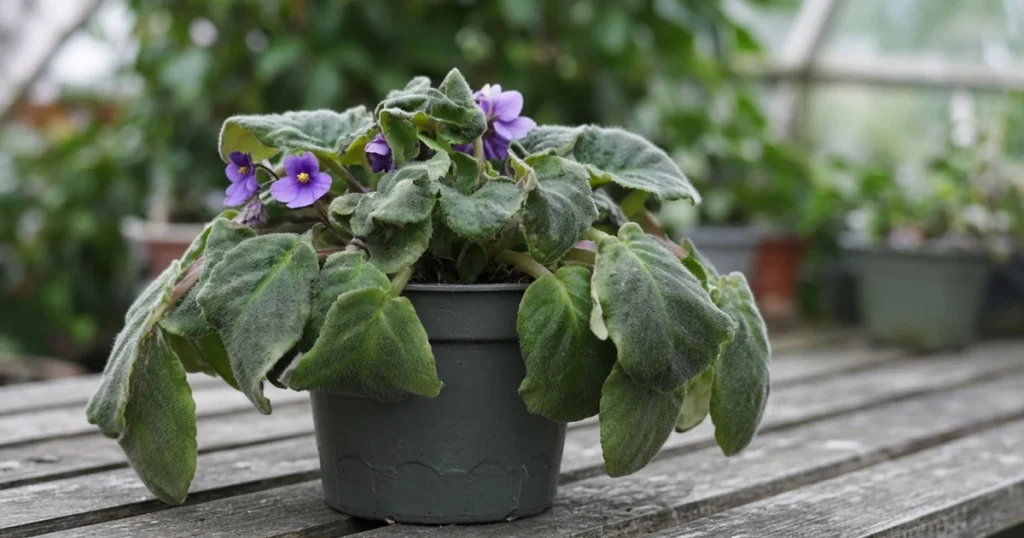
African violet leaves drooping on moist soil usually point to overwatering plus root rot, while droopy leaves on dry soil simply need water. University of Minnesota Extension notes a limp, wilted plant on moist soil comes from overwatering, poor drainage plus roots that stay wet. Check the soil first.
The short answer
Drooping leaves on an African violet come from too much water, too little water or a cold room. UMN Extension notes a limp plant on moist soil points to overwatering plus root rot. Water when the surface feels dry, use room temperature water plus hold the room near 70°F.
Is it too much or too little water?
Check the soil. UF/IFAS Extension advises watering when the soil surface feels dry but before the soil becomes hard or the plant wilts. If the plant is limp while the soil is moist, UMN Extension points to overwatering, poor drainage plus root rot. UF/IFAS notes the first sign of root disease is usually a limp, unthrifty plant.
| Soil | Leaf sign | Likely cause |
|---|---|---|
| Moist or soggy | Limp, wilted leaves | Overwatering plus root rot |
| Dry plus hard | Droopy leaves | Underwatering |
| Any | Yellow spots or streaks on top of leaves | Cold water on warm leaves |
| Any | Long, narrow leaves plus few flowers | Low light plus a cool room |
| Any | Small, crinkled yellow leaves | Too much light |
Source: UMN Extension, UF/IFAS Extension plus Iowa State University Extension.
Can a violet with root rot recover?
Sometimes. UMN Extension advises repotting in a container that drains well plus never letting the plant sit in water. If roots are mushy, brown plus slimy, it notes the plant is not likely to survive due to the loss of roots. UF/IFAS Extension notes that in most cases a plant with root disease should be discarded, so begin leaf cuttings early.
What temperature do African violets like?
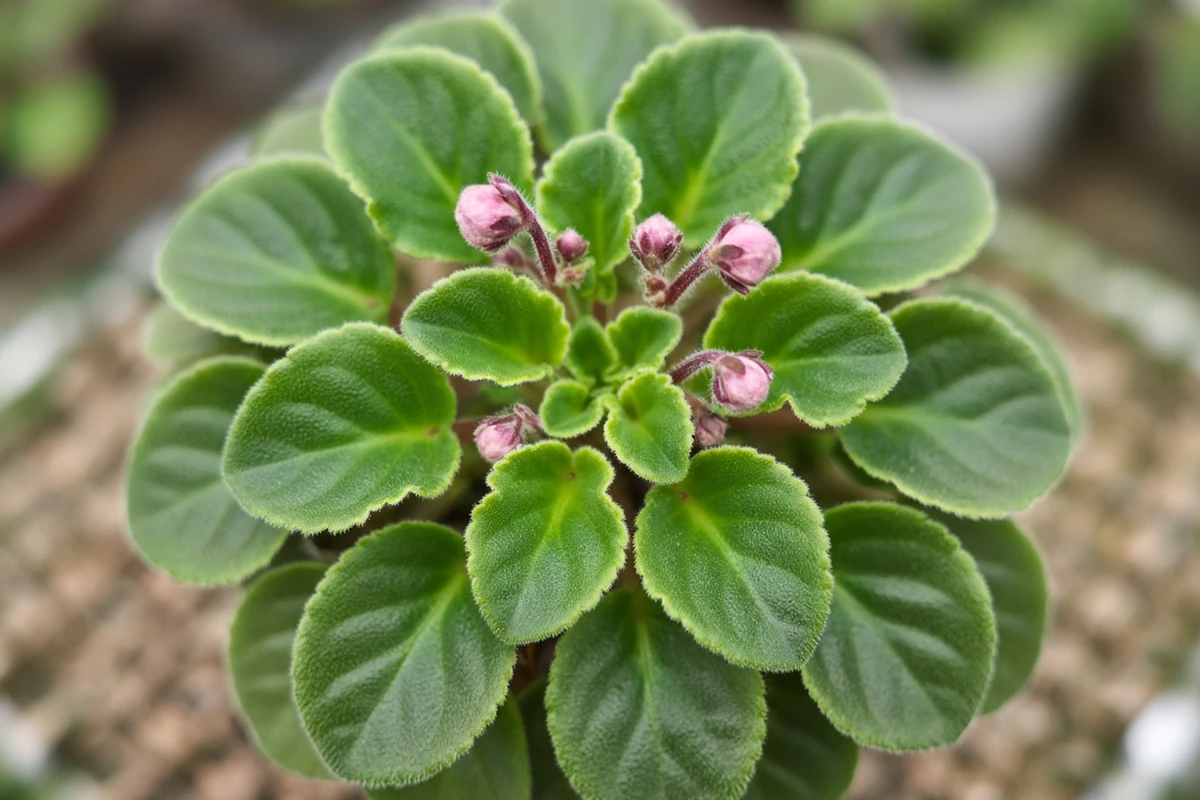
UMN Extension lists 60 to 80°F with 70°F as ideal, plus humidity at 40 to 60 percent. UF/IFAS Extension notes African violets prefer nights of 65 to 70°F plus that long periods of heat reduce growth plus flowering. UMN notes long, narrow leaves plus few flowers mean low light plus a room that is too cool.
How to: step by step
- Touch the soil surface before watering.
- Water when the surface feels dry but before the plant wilts.
- Use water at room temperature or slightly warmer.
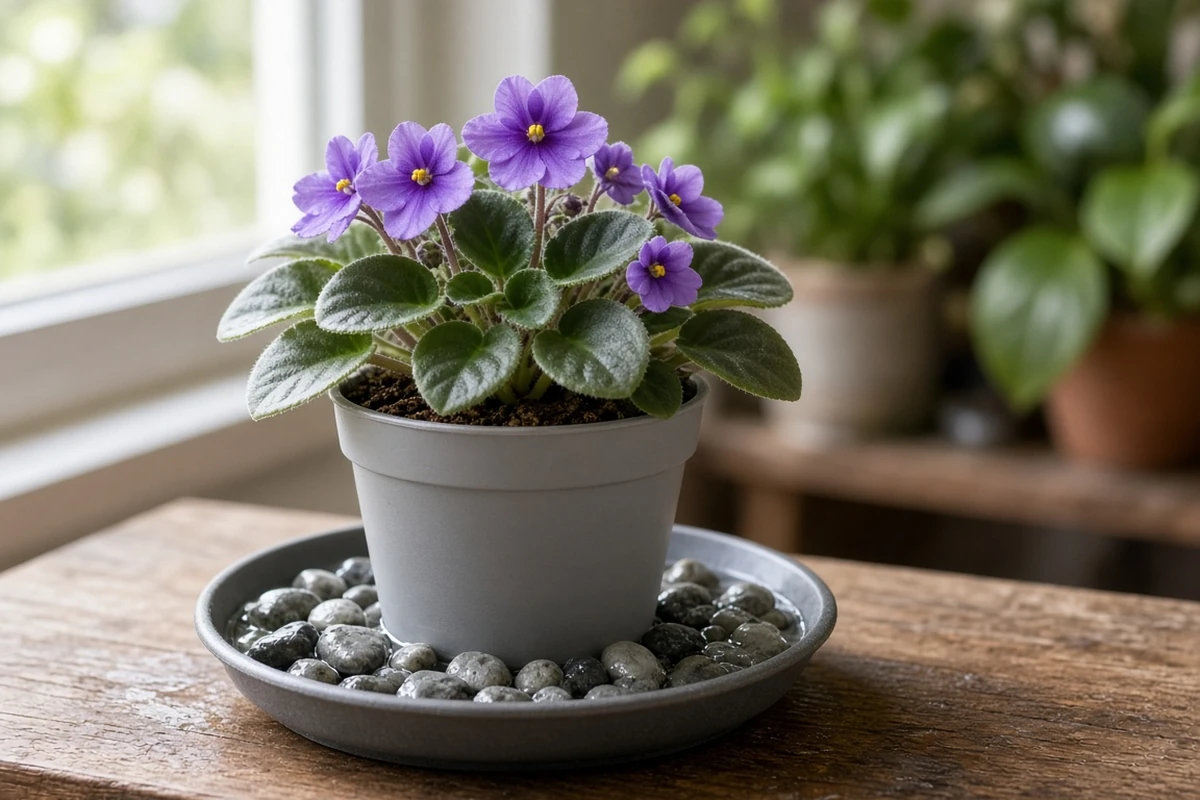
- Bottom water in a bowl with 1 inch of water, then let the pot drain.
- Never leave the pot sitting in water.
- Hold the room near 70°F by day plus 65 to 70°F at night.
Troubleshooting
Limp leaves on wet soil: overwatering plus root rot. Repot into a container that drains well plus water less.
Yellow spots on foliage: cold water on warm leaves. Water with room temperature water plus water the mix, not the leaves.
Brown, sunken spots on leaf stems at the pot rim: petiole rot. UF/IFAS Extension notes it comes from fertilizer salts on the pot rim.
For related reading see bottom watering cannabis, a guide to overwatering and cannabis growth plus what cannabis leaves can tell you. Kind Seed Co also stocks cannabis seeds.
Sources
- African violets, UMN Extension
- African violets, UF/IFAS Gardening Solutions
- How much light does an African violet need?, Iowa State University Extension
- African violets (MG028), UF IFAS Extension
FAQ
Should I water from the top or bottom?
Either works. UMN Extension describes top watering with a narrow spout aimed at the mix, plus bottom watering by setting the pot in a bowl of room temperature water 1 inch deep. When the surface feels moist, lift the pot plus let excess water drain. Avoid water on the leaves, which can cause spots.
How much light do African violets need?
Iowa State University Extension notes plants with too little light have thin, blue green leaves with long petioles plus bloom poorly. Too much light gives small, crinkled, yellow leaves. North or east windows usually suit them, or a fluorescent fixture 8 to 10 inches above plants for 12 to 16 hours a day.
How often should an African violet be repotted?
UF/IFAS Gardening Solutions notes African violets like to be somewhat crowded but need repotting about once a year. They prefer a lightweight potting mix. A pot that drains well matters, since UMN Extension lists poor drainage plus roots that stay wet as a cause of limp, wilted plants with root rot.
Can I start a new plant from a leaf?
Yes. UF/IFAS Extension notes African violets are propagated easily by leaf cuttings. Select a firm leaf from the middle of the plant, cut it with the leaf stem intact plus trim the stem to about 1 to 1.5 inches. Insert it into a mix of vermiculite plus sand or vermiculite plus potting mix.
Does humidity affect drooping?
Humidity mainly affects growth. UMN Extension notes humidity of 40 to 60 percent helps African violets thrive. Group plants together or set them on trays of pebbles plus water, making sure the pot sits just above the water. Drooping itself is more often tied to water in the root zone or to temperature.



