
Philodendron Leaves Turning Yellow? Watering Plus Light
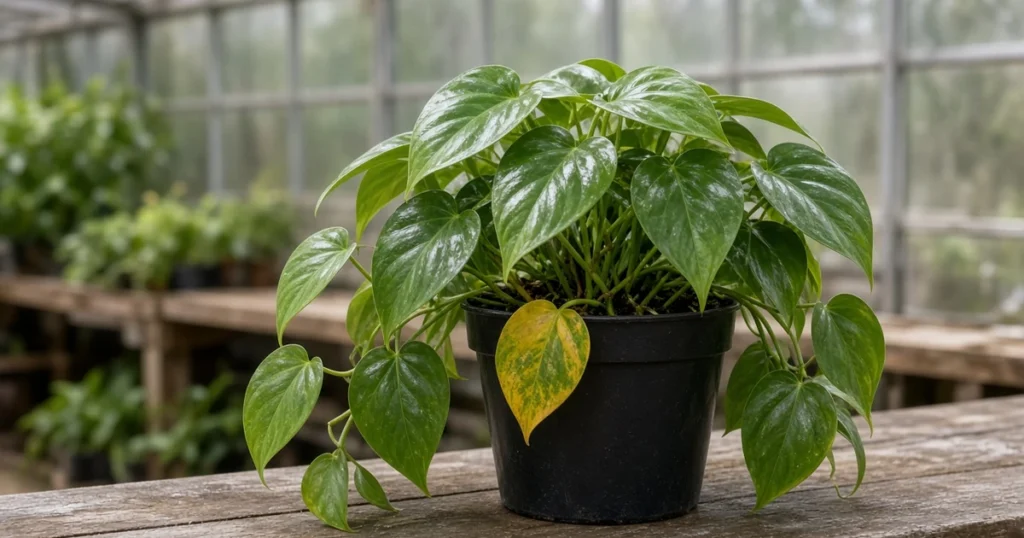
Philodendron leaves turning yellow usually point to watering or light. Clemson Extension notes that yellowing of lower leaves plus the death of growing tips can be caused by too little light or overwatering. Check the soil, adjust your watering plus move the plant to bright, indirect light.
The short answer
Yellow philodendron leaves most often come from too much water or too little light. Clemson Extension names both as causes of yellow lower leaves. Water when the top of the soil is dry, never let the pot sit in water plus give bright, indirect light with no direct sun.
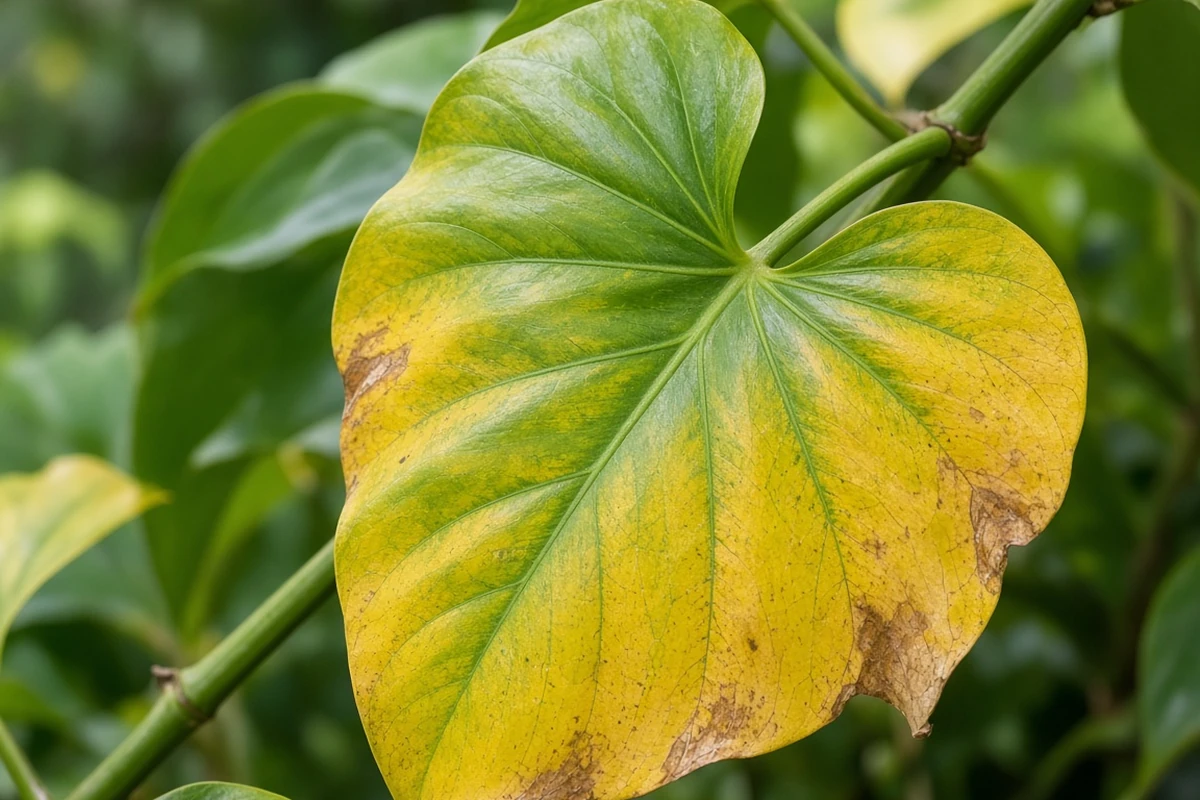
Why do lower leaves turn yellow?
Clemson Extension notes that yellowing of lower leaves plus dying growing tips can be caused by too little light or overwatering. It adds that root rot usually results from a soil mix that does not drain quickly or from overly frequent watering. Too much fertilizer can cause leaf tips to curl plus brown.
| Cause | Sign | Fix |
|---|---|---|
| Overwatering | Yellow lower leaves on wet soil | Water when the top of the soil is dry |
| Poor drainage | Root rot | Use a mix plus pot that drain quickly |
| Too little light | Yellow lower leaves plus dying tips | Move to bright, indirect light |
| Direct sun | Scorched leaves | Shift out of direct sun |
| Too much fertilizer | Leaf tips curl plus brown | Feed lightly in spring plus summer only |
Source: Clemson Extension, NC State Extension plus Iowa State University Extension.
How wet should philodendron soil be?
Iowa State University Extension notes philodendrons prefer to stay evenly moist but not wet. Water when the top of the soil is dry plus never let plants sit in soggy soil or saucers of water. University of Illinois Extension describes the soil as minimally moist, which suits a light hand with the watering can.
How much light does a philodendron need?
NC State Extension notes philodendrons prefer bright, indirect sunlight plus advises avoiding direct sun because it can scorch the leaves. Clemson Extension notes most prefer indirect or curtain filtered sunlight but tolerate low light. Since too little light can also yellow lower leaves, shift a plant in a dim corner closer to a window.
How to: step by step
- Push a finger into the top of the soil before watering.
- Water only when the top of the soil is dry.
- Empty the saucer so the pot never sits in water.
- Move the plant to bright, indirect light.
- Pull it out of direct sun if leaves look scorched.
- Feed lightly once or twice a month in spring plus summer only.
Troubleshooting
Yellow lower leaves with wet soil: overwatering. Wait for the top soil to dry before watering again.
Yellow leaves in a shady spot: too little light. Move closer to a bright window with no direct sun.
Mushy roots plus a sour smell: root rot. Clemson Extension ties it to a slow draining mix or overly frequent watering, so repot into a fresh, quick draining mix.
For related reading see a guide to overwatering and cannabis growth, what cannabis leaves can tell you plus how to spot 8 common cannabis plant deficiencies by leaf symptoms. Kind Seed Co also stocks cannabis seeds.
Sources
- Philodendron, University of Illinois Extension
- Philodendron, Clemson Cooperative Extension, HGIC
- Growing philodendrons at home, Iowa State University Extension plus Outreach
- Philodendron, NC State Extension Gardener Plant Toolbox
FAQ
Should yellow philodendron leaves be removed?
The listed sources do not say yellow leaves must come off, but a yellow leaf will not turn green again. Focus on the cause first. Clemson Extension ties yellow lower leaves to too little light or overwatering, so fix the water plus light before trimming leaves for looks.
What temperature suits philodendrons?
NC State Extension lists 65 to 85°F as the ideal range plus notes philodendrons are very sensitive to cold, so drafts should be avoided. Clemson Extension lists nights of 65 to 70°F plus days of 75 to 85°F as ideal. Iowa State University Extension notes typical home temperatures of 65 to 80°F suit them well.
How often should a philodendron be fertilized?
Iowa State University Extension advises fertilizing lightly, once or twice a month, while the plant is actively growing in spring plus summer, using a balanced all purpose fertilizer. Clemson Extension notes too much fertilizer can cause leaf tips to curl plus brown, so skip feeding when growth slows in fall plus winter.
When should a philodendron be repotted?
Iowa State University Extension notes philodendrons do well when slightly pot bound, since the soil dries more quickly between waterings. Repot with fresh potting soil into a container one size larger when the plant becomes overcrowded or when the soil dries out too fast to match a regular watering schedule.
Can a philodendron be propagated?
Yes. Iowa State University Extension notes trailing types root easily from stem cuttings 3 to 6 inches long with the lower leaves removed. They root in water or in a medium such as perlite or well drained potting soil. If rooting in water, change the water often until new roots several inches long form.



