
Apple Scab: Leaf and Fruit Scab and Sanitation
The short answer
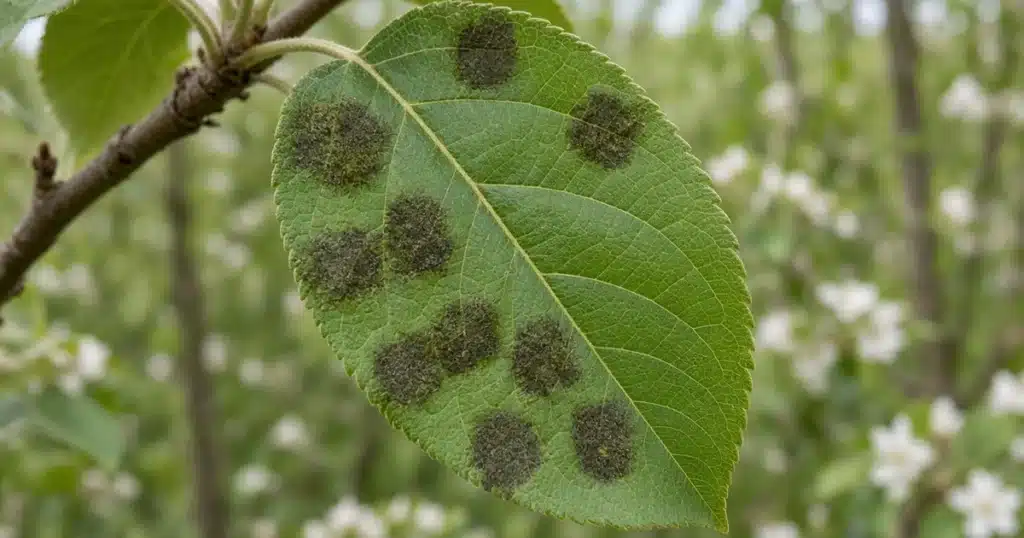
Apple scab is a fungal disease that causes olive green to black spots on apple and crabapple leaves and corky scabs on fruit. It survives winter on fallen leaves and spreads in wet spring weather. Raking leaves in fall, pruning for airflow and planting scab resistant varieties are the main home orchard steps.
Scab is the most common apple disease in many parts of the US. It rarely kills trees, but it can cost you clean fruit and a full canopy of leaves.
What does apple scab look like?
Spots often begin on young leaves in spring. They start velvety and olive green, then darken to brown or black. Edges look feathery. Spots often cluster along the main leaf vein.
Badly spotted leaves curl, yellow and drop early. A tree can lose much of its canopy by midsummer in a wet year.
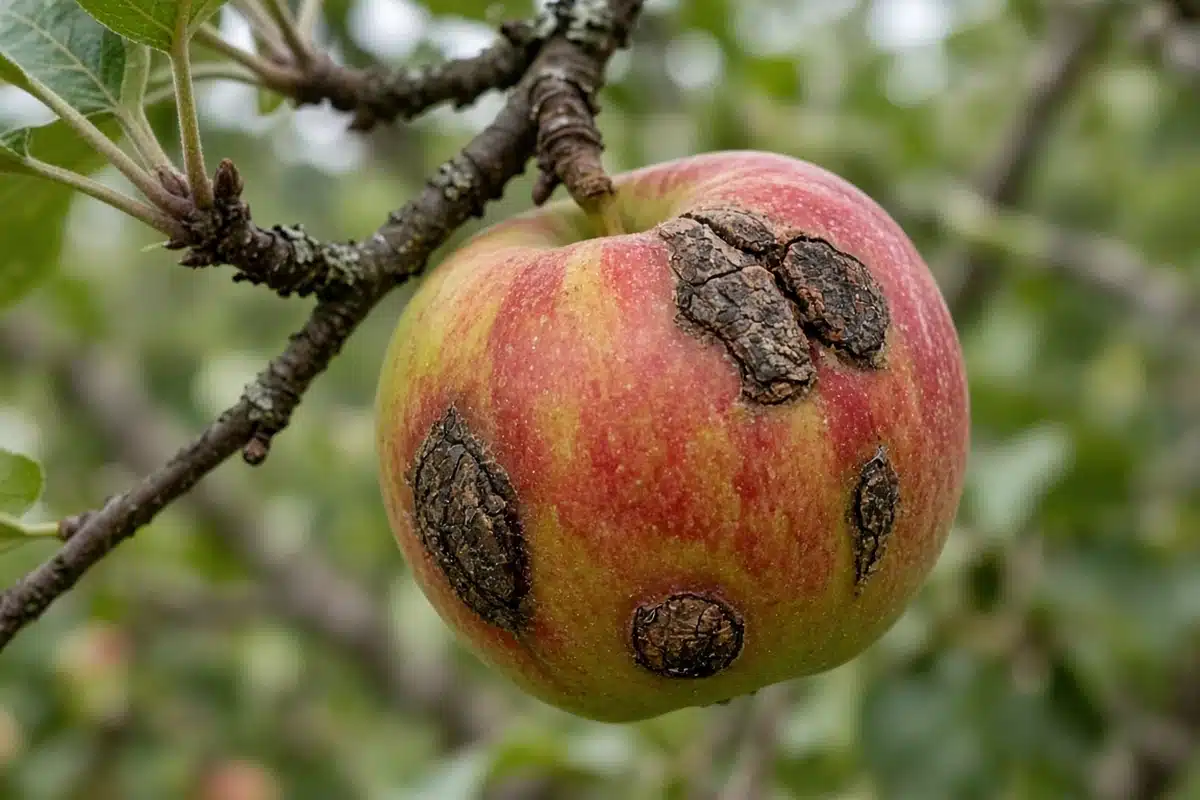
On fruit, scab makes dark, rough spots. As fruit grows, spots turn corky and can crack, and fruit infected early may be lopsided.
The University of Minnesota Extension page on apple scab shows leaf and fruit symptoms and explains how crabapples are affected too.
How does the disease cycle work?
The fungus spends winter in fallen apple leaves. In spring, spores mature in fallen leaves and spread during rain. Wind and splashing carry spores up to new leaves and fruit.
Spores need leaves to stay wet for several hours to infect. Cool, rainy springs bring the worst outbreaks.
Spots on infected leaves then make a second spore type. Rain spreads those spores to other leaves and fruit all season.
In fall, infected leaves drop and the cycle starts again.
The UC Statewide IPM page on apple and pear scab explains this cycle and why removing leaf litter breaks it.
| Season | Stage | Action |
|---|---|---|
| Fall | Infected leaves drop | Rake and remove leaves |
| Winter | Fungus survives in leaf litter | Clear the ground |
| Spring | Spores released in rain | Prune for airflow |
| Summer | Spots spread to leaves and fruit | Remove badly spotted fruit |
Sources: UC Statewide IPM, University of Minnesota Extension.
How do sanitation and resistant varieties help?
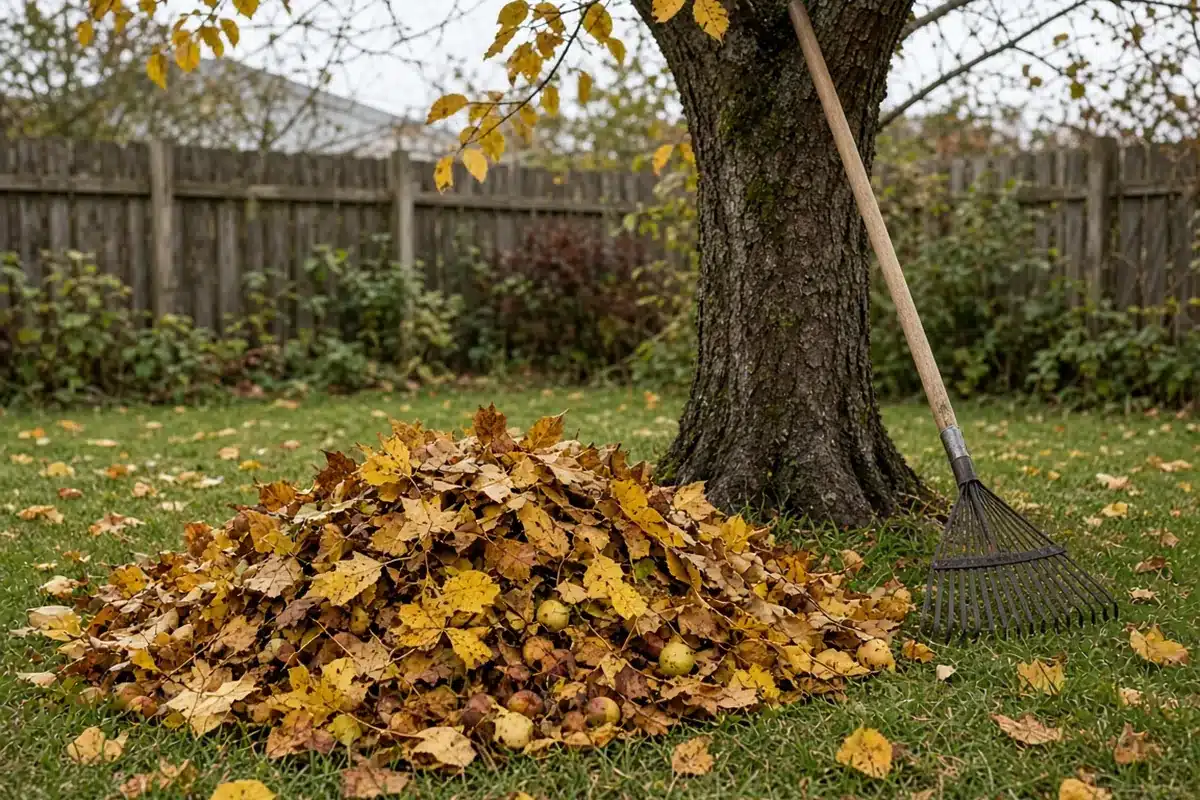
Sanitation means removing the leaves where the fungus spends winter. Rake fallen leaves in fall and bag them or compost them thoroughly. Mowing leaves into small pieces speeds their breakdown, so fewer spores form in spring.
Our post on fall garden cleanup after cannabis harvest covers end of season steps.
Shredded leaves can become useful leaf mold once broken down in a hot pile. Our post on leaf mold for cannabis beds explains how to make it.
Resistant varieties are the most reliable step. The Penn State Extension guide to scab resistant apple varieties lists varieties bred to resist scab. Many resist cedar apple rust and fire blight to some degree.
How does pruning help?
An open canopy dries faster after rain. Fewer hours of leaf wetness mean fewer infections.
Prune in late winter. Remove crossing branches, water sprouts and crowded growth in the center. Aim for a canopy where light reaches inner branches.
Our post on pruning marijuana plants covers basic cutting technique that applies to many plants.
How does weather change the risk?
Cool, wet springs favor scab. Dry springs see much less.
Some states run scab forecasting tools based on temperature and leaf wetness. Extension offices share alerts so growers know when infection periods are likely.
What should you do with scabby fruit?
Scabby fruit is fine to eat once you peel or cut away the rough spots. It looks rough and may not store as long, since cracks let rot organisms in.
Thin heavily scabbed fruit early in summer. That leaves more energy for clean fruit on the tree.
How do you plan a new orchard?
Pick scab resistant varieties from the start. Place trees in full sun with good air movement. Space them so canopies don’t touch.
Plan to rake leaves every fall. A small habit pays off over many years.
How does scab affect crabapples?
Crabapples get the same disease as eating apples. On ornamental trees, early leaf drop is the main concern, since bare trees in midsummer look poor.
Older crabapple varieties are often susceptible. Many newer ones were bred for scab resistance and hold clean leaves all season.
If you have an old crabapple that drops leaves every year, consider replacing it with a resistant type. The same fall cleanup and pruning steps apply in the meantime.
How to: step by step
- Check leaves for olive spots in spring.
- Look for scabby spots on fruit.
- Rake and remove fallen leaves in fall.
- Prune for open canopy airflow.
- Choose scab resistant varieties.
- Take notes on which trees show the most scab.
Walk trees weekly in spring. Early spots are small and easy to miss.
Troubleshooting
Early leaf drop. Scab is heavy. Rake leaves and improve airflow.
Scabby fruit. A wet spring helped it. Plan sanitation and resistant trees.
Returns yearly. Leaf litter was left. Clean up each fall.
Crabapples spotted. The variety is susceptible. Pick resistant crabapples.
Dense canopy. Leaves stay wet. Prune in late winter.
Clean ground in fall and resistant trees in the ground make apple scab a small concern. Kind Seed Co shares more garden projects in outdoor growing.
Sources
- Apple scab of apples and crabapples, UMN Extension, Apple scab of apples and crabapples
- Apple and pear scab, UC Statewide IPM Program, Apple and pear scab
- Scab resistant apple varieties for home orchards, Penn State Extension, Scab resistant apple varieties for home orchards
FAQ
Can you eat scabby fruit?
Remove fruit with extensive cracking or rot. Cut away small damaged spots.
Can apple scab kill trees?
Rarely. Repeated early leaf drop can weaken trees over years.
Which apples resist scab?
Several varieties were bred to resist it. Extension lists and nurseries mark them.
Does mulching leaves help?
Mowing leaves into small pieces speeds breakdown and lowers spring spores.
Do crabapples get scab?
Yes. Many crabapples do, but resistant types are common.



