
No Mow Lawn Alternatives: Fine Fescue and Low Growers for US Regions
The short answer
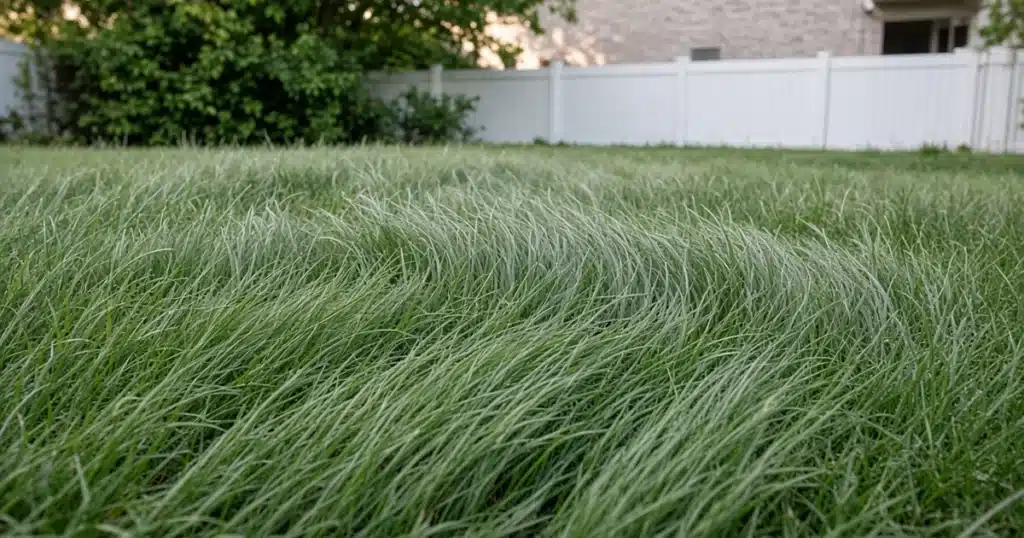
A no mow lawn uses grasses such as fine fescues that stay low and need cutting only a few times a year. Fine fescue mixes suit cool season regions and handle shade and low fertility well. They do not hold up to heavy traffic. Warm regions need other low growing options suited to the local climate.
The idea appeals to anyone tired of weekly mowing. The right grass for the right place makes it work.
What is a no mow lawn?
A no mow lawn is a planting of grasses that grow slowly and stay fairly short. Instead of mowing every week, you mow once or twice a year, or leave the grass uncut for a taller, less formal appearance.
Most no mow mixes in the US are blends of fine fescues. These include hard fescue, sheep fescue, chewings fescue and creeping red fescue. They have thin, wiry leaves and a natural low height.
The University of Minnesota Extension guide to planting and maintaining a fine fescue lawn explains that fine fescues need less water, less fertilizer and less mowing than Kentucky bluegrass.
Where do fine fescues fit in the US?
Fine fescues are cool season grasses. They grow well in the northern half of the country and at higher elevations, where summers are mild.
They handle shade better than other cool season lawn grasses, and they also tolerate poor, sandy soils.
They struggle in hot, humid summers and often thin out or die in the South.
The Purdue Extension publication on fine fescues in minimal to no mow areas explains where fine fescues work well and how to manage them in low maintenance areas.
| Region | Option | Notes |
|---|---|---|
| Northern US, cool summers | Fine fescue mixes | Handle shade and low fertility |
| Higher elevations | Fine fescue mixes | Mild summers suit them |
| Hot, humid South | Local low growers | Fine fescues struggle in heat |
| Any region, heavy use | Regular lawn grass or paths | Fine fescue does not handle traffic |
Sources: University of Minnesota Extension, Purdue Extension.
How do you plant and care for one?
Prepare a clean seedbed. Remove existing grass and weeds, loosen the top few inches of soil and rake smooth.
Seed in late summer or early fall in cool season regions. Cooler air and warm soil help fine fescues establish before winter, with less weed pressure than spring.
Spread seed at the rate the mix or local guides suggest. Rake lightly so seed contacts soil.
Hold seed moist until it sprouts and grows. Light, frequent watering works well at first.
After establishment, cut back on water and fertilizer. Fine fescues do well with little of either.
How often should you mow?
Even a no mow lawn benefits from an occasional cut. The University of Minnesota Turfgrass Science article on mowing no mow grass explains that no mow fine fescues are typically mowed in fall. Some people also mow in late spring or early summer once seedheads appear.
For a shorter look, mow monthly at a high setting.
Can you convert an existing lawn?
Yes, but it takes work. Overseeding fine fescue into a thick bluegrass lawn rarely works well, since the existing grass outcompetes seedlings.
The strongest results come from removing the old lawn and starting fresh. Smother it with cardboard or a tarp for several weeks, then prepare the soil and seed.
Our post on planning an outdoor cannabis garden layout covers how to map sun, shade and paths, which helps decide where a no mow area fits.
How do paths and traffic fit in?
Fine fescues don’t handle heavy foot traffic. Busy play areas will thin out.
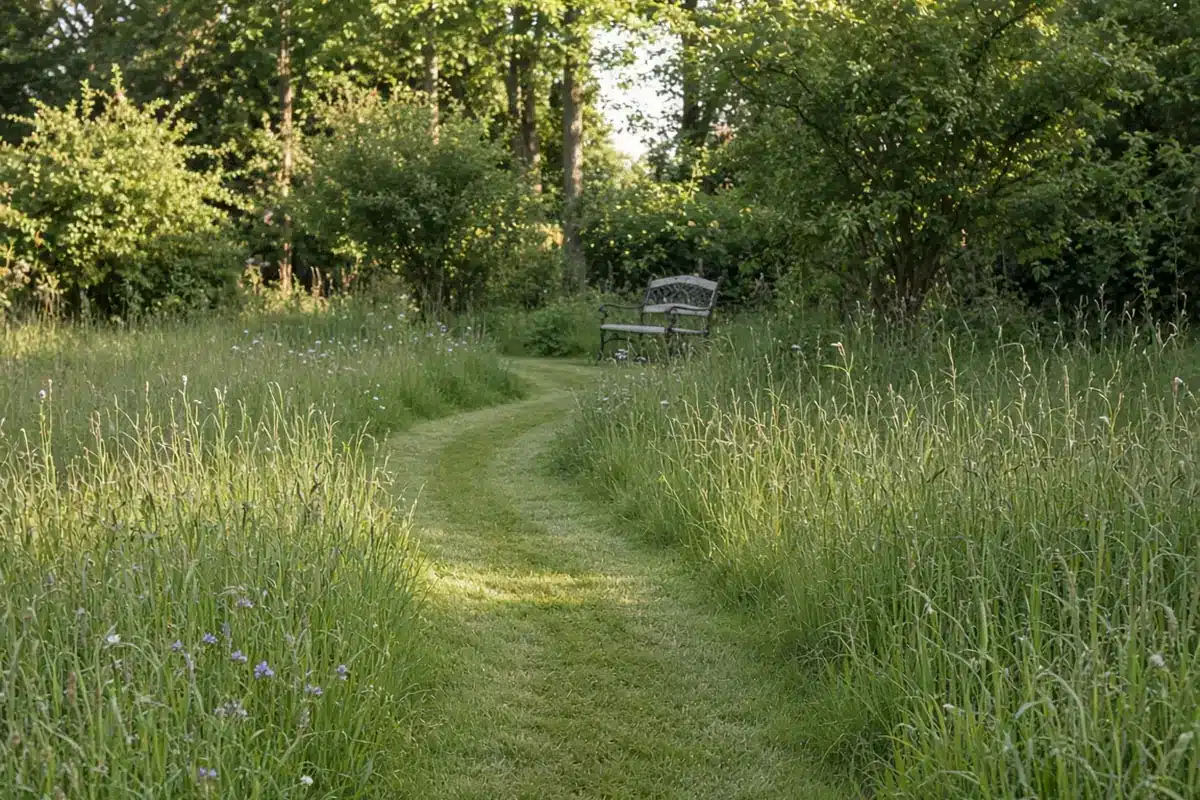
Add stepping stones, mulch paths or a strip of regular lawn where people walk most. Save the no mow area for spaces with lighter use.
Are no mow lawns good for pollinators?
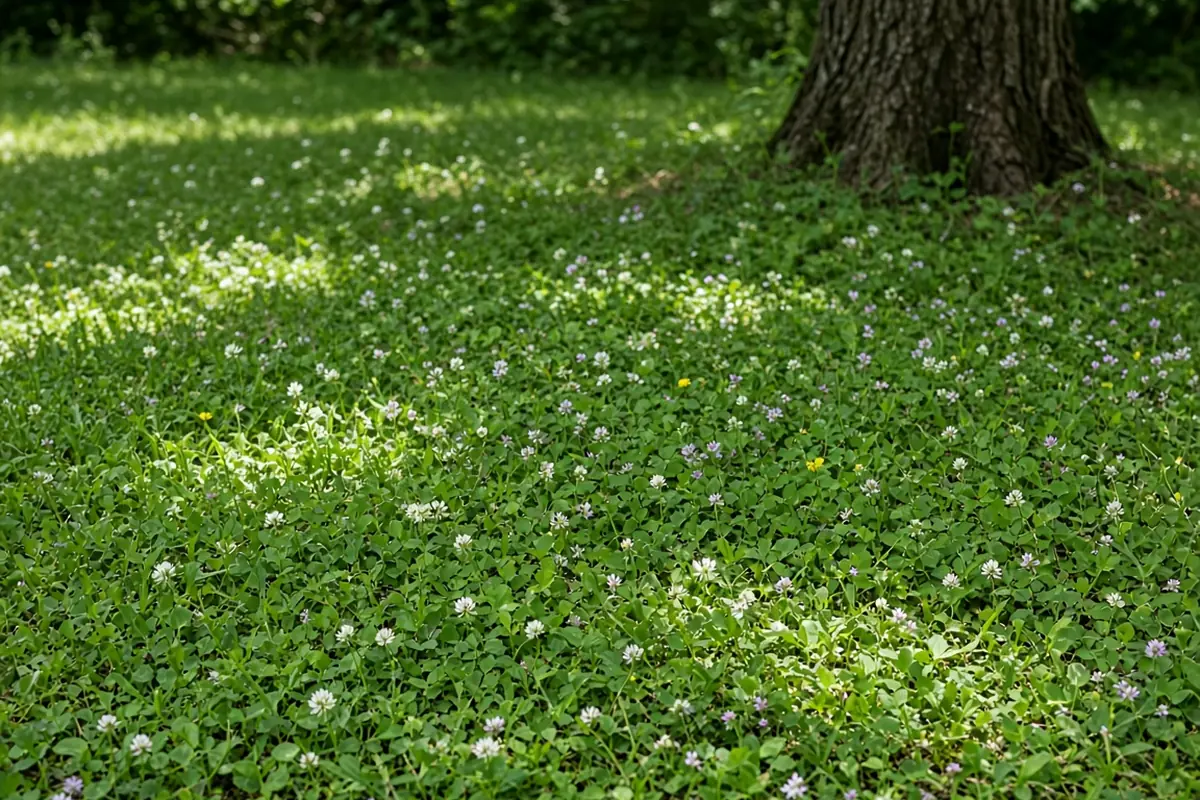
Fine fescues themselves are wind pollinated. Still, a no mow lawn can host low flowers such as clover or creeping thyme if you allow them. Those flowers help bees.
Our post on what roles bees play in outdoor cannabis explains how bees use garden flowers.
How do microclimates matter?
Shady corners, slopes and dry spots often suit fine fescue better than open, irrigated lawns. Our post on garden microclimates for cannabis explains how to read those spots in your yard.
How to: step by step
- Check your region and sun levels.
- Choose a fine fescue mix for cool season areas.
- Prepare a clean, loosened seedbed.
- Seed at the rate local guides suggest.
- Hold seed moist until established.
- Mow once or twice a year as guides suggest.
Mark the area with stakes or string so it stays clear of foot traffic while seedlings grow.
Troubleshooting
Thin stand. Traffic is heavy. Add paths.
Weedy patches. Establishment was poor. Overseed in fall.
Floppy look. There was no mowing. Mow in spring or fall.
Grass dies in summer. Heat is too high. Pick a local low grower.
Slow start. Seed dried out. Water lightly and often until established.
A no mow lawn trades weekly chores for a softer, wilder look. Kind Seed Co shares more garden projects in outdoor growing.
Sources
- Planting and maintaining a fine fescue lawn, UMN Extension, Planting and maintaining a fine fescue lawn
- TURF-67: Fine fescues in minimal to no mow areas, Purdue Extension, TURF-67
- Mow the no mow?, University of Minnesota Turfgrass Science, Mow the no mow?
FAQ
Does a no mow lawn ever need mowing?
Usually once or twice a year. A fall cut is most common.
Can I convert an existing lawn?
Yes, but it works well when you remove the old grass and start fresh.
Does no mow work in the South?
Fine fescues struggle in heat. Southern yards need local low growing options.
Are no mow lawns good for pollinators?
They can be if you allow low flowers like clover to grow in them.
When should I seed?
Late summer or early fall works well in cool season regions.



