
Grow Light for Melocactus: Bright Light for Turk’s Cap Cacti
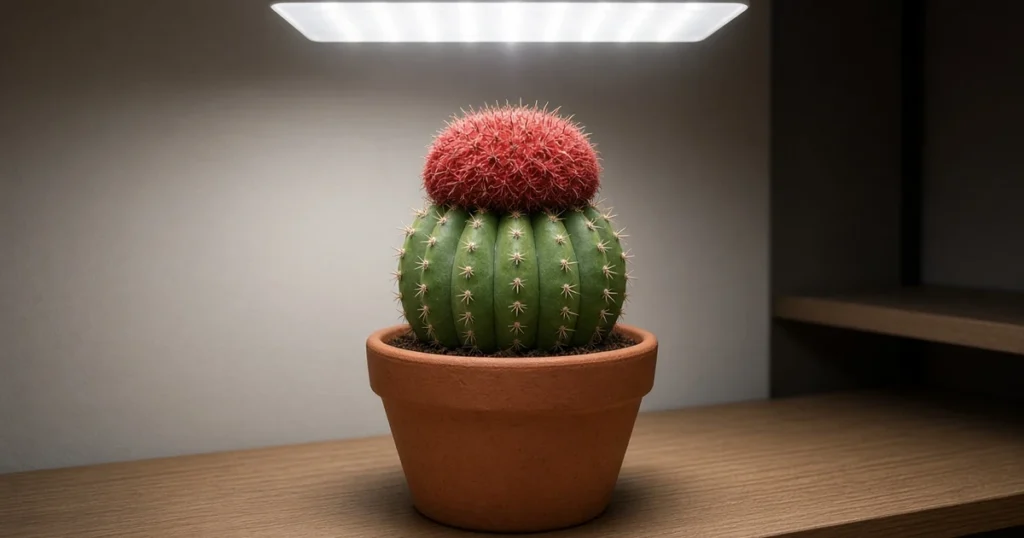
A grow light for melocactus fills in when a window cannot give a cactus enough sun. Turk’s cap (Melocactus intortus) is native to Puerto Rico and the US Virgin Islands per the USDA PLANTS Database. Its light needs follow general cactus advice from US Extension services.
The short answer
Give a melocactus a bright sunny window first. Minnesota Extension suggests fluorescent tubes 6 to 12 inches above cacti for 14 to 16 hours a day. Iowa State suggests grow lights within 12 inches for 12 to 16 hours. Pale stretched growth means more light is needed.
How much light does a melocactus need?
Minnesota Extension says cacti need abundant light and a bright sunny window. Iowa State notes pale lanky new growth signals low light. Minnesota lighting advice adds that excess light can scorch and bleach leaves.
A sunny window is the main light source and a grow light adds light when the window falls short.
How close should the grow light be?
Minnesota Extension suggests fluorescent tubes 6 to 12 inches above cacti. Iowa State says to set plants within 12 inches of full spectrum fluorescent or LED grow lights. Shift plants to brighter light slowly, as Iowa State links sudden change to sun scald.
| Option | What it does | Source |
|---|---|---|
| 6 to 12 inches | Distance for fluorescent tubes | Cacti and succulents (houseplants), University of Minnesota Extension |
| Within 12 inches | Distance for LED or fluorescent | Common problems and issues of succulents, Iowa State University Extension |
| Slow change | Avoids sun scald | Common problems and issues of succulents, Iowa State University Extension |
What is the cephalium?
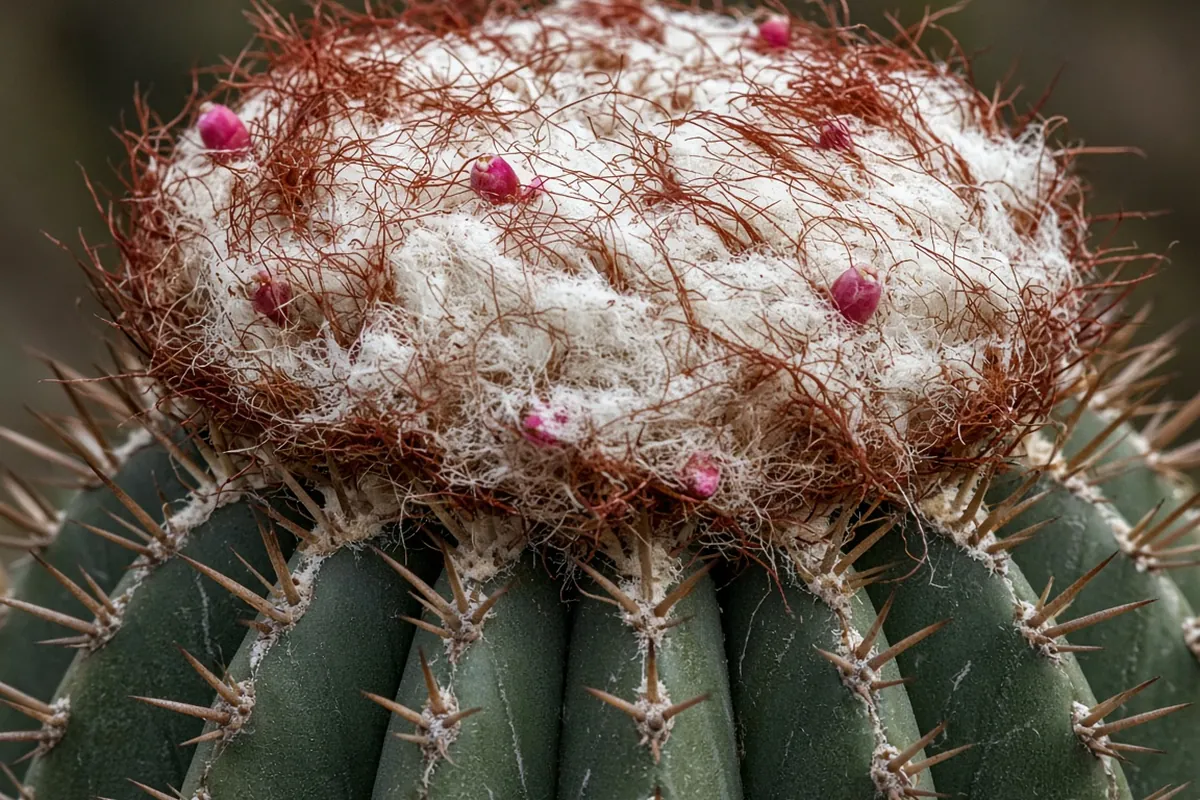
Mauseth at the University of Texas at Austin describes Melocactus intortus as green and photosynthetic for several years. It then forms a cephalium, a woolly cap that carries the flowers but does not photosynthesize. The green body below it makes food from light.
The green body is the juvenile phase and the cephalium is the flowering cap of the adult.
How to: step by step
- Place the cactus in a bright sunny window.
- Add a fluorescent or LED grow light if growth turns pale.
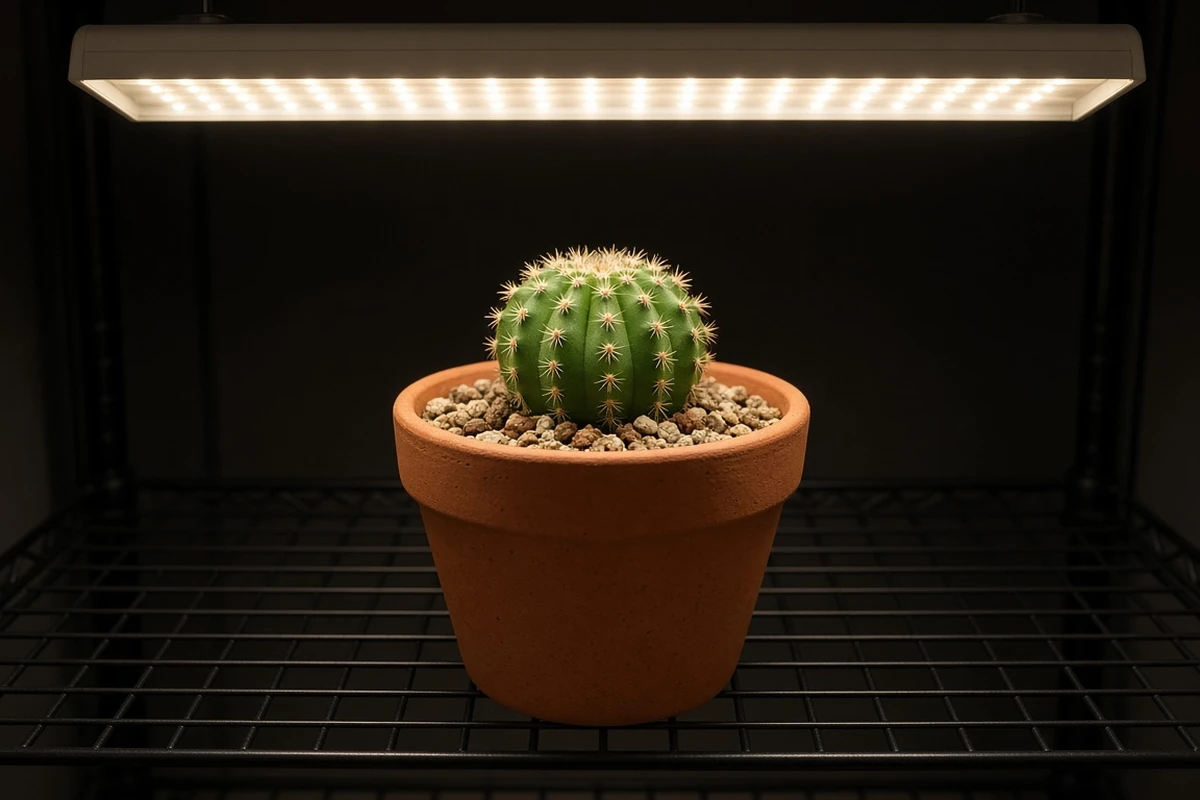
- Hang the light 6 to 12 inches above the plant.
- Run it 14 to 16 hours a day on a timer.
- Pot in 1 part potting soil and 1 part coarse sand with drainage holes.
- Let the soil dry out completely between waterings, as Minnesota Extension advises.
Troubleshooting
Pale stretched growth: low light, so lower the light or add hours.
Bleached or scorched patches: too much light too fast, so raise the light and adjust slowly.
Soft yellow growth: overwatering, so let the soil dry between waterings.
Kind Seed Co shares these plant notes for growers of all kinds. For more on lighting see grow lights for cannabis and led light distance cannabis. Read grow light timers for timer setups. Browse cannabis seeds for our seed range.
Sources
- Cacti and succulents (houseplants), University of Minnesota Extension
- Lighting for indoor plants and starting seeds, University of Minnesota Extension
- Common problems and issues of succulents, Iowa State University Extension
- Cactus, UF IFAS Gardening Solutions
- Melocactus intortus (Turk’s cap), USDA NRCS PLANTS Database
- Comparative structure-function studies within a strongly dimorphic plant, Melocactus intortus (Cactaceae) (Mauseth, Bradleya 1989)
FAQ
Can melocactus grow on a windowsill?
Minnesota Extension suggests a bright sunny window for cacti. UF/IFAS also suggests a sunny spot indoors.
How many hours of light?
Minnesota Extension suggests 14 to 16 hours a day under fluorescent tubes. Iowa State suggests 12 to 16 hours for succulents under grow lights.
What is the cephalium on a melocactus?
Mauseth at UT Austin describes it as the flowering cap that forms after several years of green growth. It is not photosynthetic.
Does melocactus need a winter rest?
Minnesota Extension advice for cacti in general is to water sparingly in low light winter months. Good light and cool nights help bring bloom indoors.
How fast does melocactus grow?
UF/IFAS notes that cacti grow slowly, often only a few inches a year.



