
Bacterial Wilt Cucumber Guide: Beetle Spread and Prevention
The short answer
Bacterial wilt makes cucumber and melon vines wilt and collapse, and infected plants do not recover. Striped and spotted cucumber beetles spread the bacteria as they feed. For bacterial wilt cucumber problems, prevention is the only real answer. Hold beetles off young plants with row covers, check often and pull wilted plants quickly.
Once you know how the beetle and the bacteria work together, prevention becomes simple.
What does bacterial wilt look like?
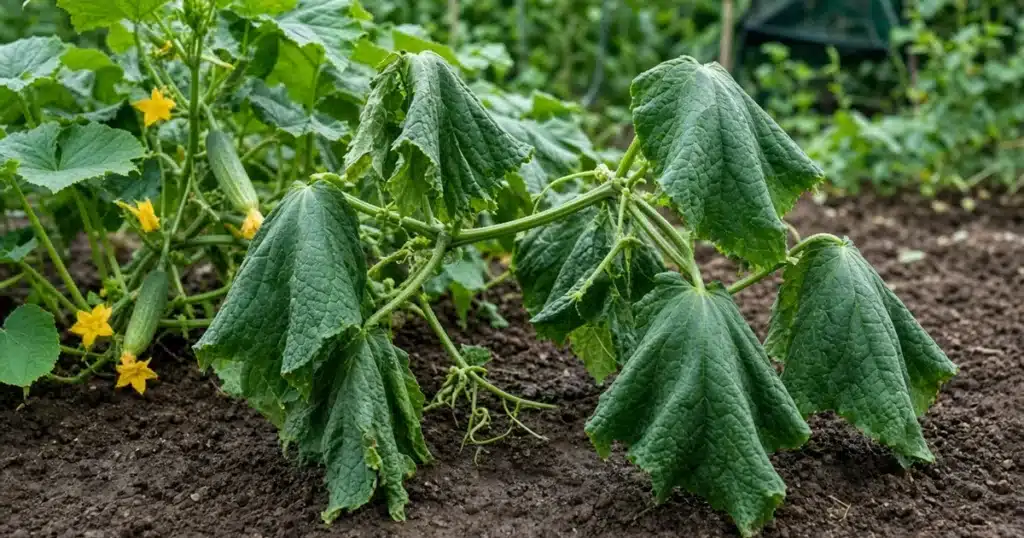
A single leaf or vine wilts first, often in the heat of the day. At first it may perk up overnight. Within days, the wilt spreads to the whole plant, and it no longer recovers.
Leaves stay green as they wilt, then dry and turn brown.
The University of Minnesota Extension page on bacterial wilt describes this pattern on cucumbers, melons and some squash. It notes that cucumbers and muskmelons are hit hardest.
A simple field check helps. Cut a wilted stem near the base. Press the cut ends together, then pull them apart slowly. Sticky threads that stretch between the ends point to bacterial wilt.
How do cucumber beetles spread it?
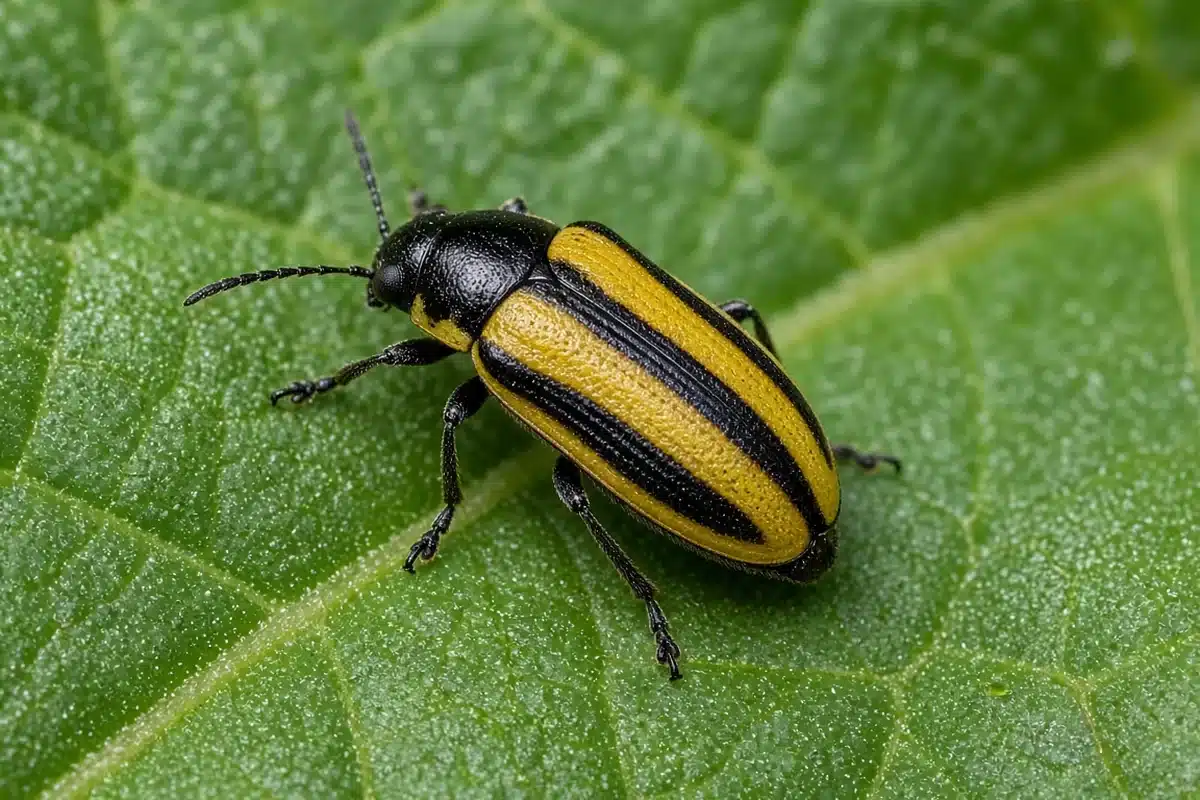
The bacteria spend winter inside the bodies of adult cucumber beetles. In spring, beetles feed on young cucurbit plants. Bacteria in beetle droppings can enter through feeding wounds.
Once inside, the bacteria multiply in the plant’s water carrying tissue and block it. Water can’t reach the leaves, so the plant wilts.
The University of Maryland Extension page on striped cucumber beetles and bacterial wilt explains this link. Beetles that feed on an infected plant pick up bacteria and carry them to healthy plants.
| Factor | Detail | Source |
|---|---|---|
| Cause | Bacteria that block water tissue | University of Minnesota Extension |
| Spread | Striped and spotted cucumber beetles | University of Maryland Extension |
| Most affected | Cucumbers and muskmelons | University of Wisconsin Extension |
| Recovery | Infected plants do not recover | University of Minnesota Extension |
Sources: University of Minnesota Extension, University of Maryland Extension, University of Wisconsin Extension.
Our post on cucumber beetles on cannabis shows what the beetles look like and how they feed on other plants.
How can you prevent bacterial wilt?
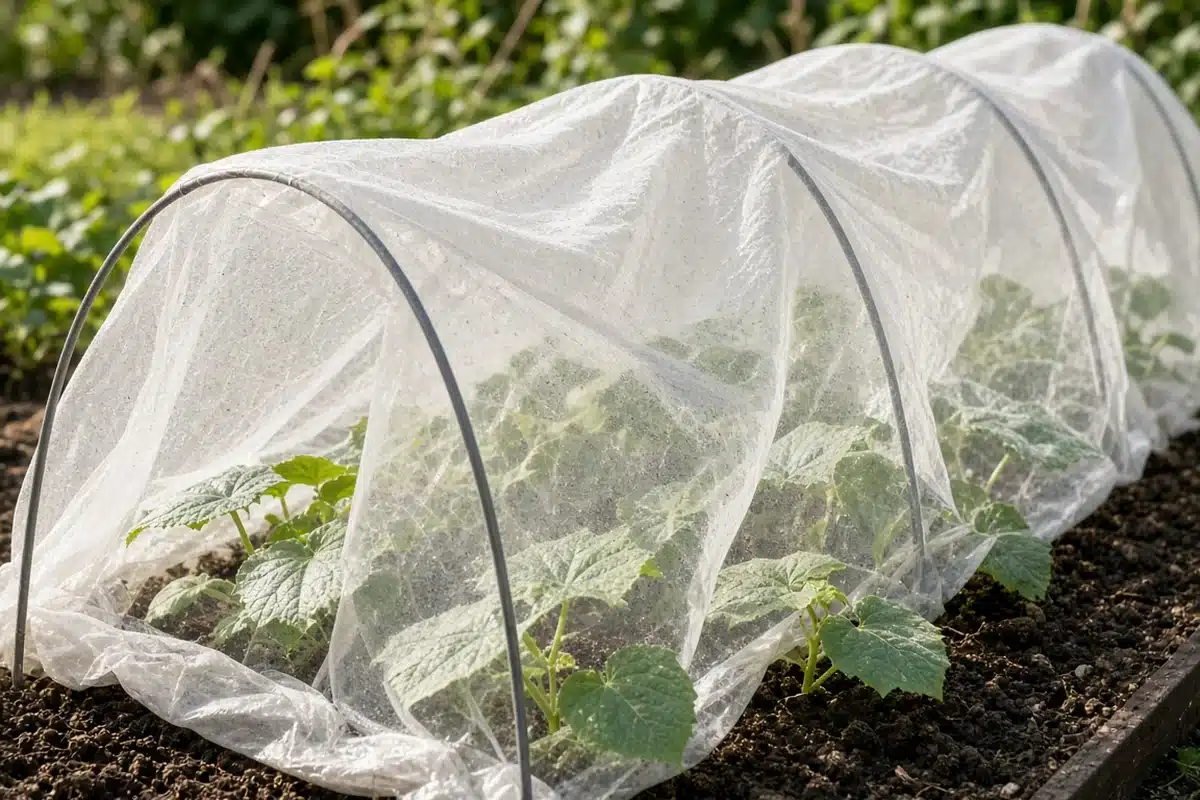
Row covers are the first step. Lightweight fabric holds beetles off seedlings and young plants, which are most at risk. Seal the edges with soil or pins so beetles can’t crawl under.
Remove covers when female flowers open so bees can pollinate. By then plants are bigger and handle some feeding better.
Check plants every day or two for beetles. Hand pick them into soapy water in the morning, when they move slowly.
The University of Wisconsin Extension article on bacterial wilt of cucurbits suggests delaying planting a little in some areas, since early beetle waves arrive before plants need to be out.
Our post on 7 ways to stop pests on plants shares more physical pest barriers.
Can companion plants help?
Some gardeners plant trap crops, such as a few early squash plants, at the edge of a bed. Beetles gather there, and gardeners remove them.
Flowering plants that draw beneficial insects can help by supporting natural beetle predators. Our post on companion plants when growing marijuana covers options that suit many gardens.
Which crops get bacterial wilt?
Cucumbers and muskmelons get it most often. Some squash and pumpkins can get it, though they often show it less. Watermelons rarely show it.
Pick varieties marked as less attractive to beetles where you can.
How do you time planting around beetles?
Cucumber beetles come out in spring as soil warms. The first wave often arrives as early seedlings emerge.
Where beetles arrive early, some gardeners plant later. Plants then grow fast in warm soil and spend less time small and tender while beetles are most active.
Transplants can help too. A sturdy transplant set out under a row cover gets past the most fragile stage faster than a seed sown in cool soil.
Take notes on when beetles show up each year. Patterns repeat, and notes help you plan.
What should you do after harvest?
Pull vines once harvest ends. Beetles feed on old vines and build up before winter. Removing vines takes away food and shelter.
Clear weeds and plant debris around the bed. Adult beetles spend winter in sheltered spots near the garden.
Rotate cucurbits to a different bed next year. Beetles still find them, but rotation helps with other cucurbit diseases.
How to: step by step
- Cover young plants with row covers.
- Remove covers at bloom for pollination.
- Check plants for beetles often.
- Remove wilted plants promptly.
- Rotate cucurbit crops.
- Clean up vines after harvest.
Bag and remove wilted plants. Beetles feeding on them pick up more bacteria.
Troubleshooting
Vines wilt at midday then die. Bacterial wilt is the cause. Remove the plant.
Beetles on seedlings. There is no cover. Use row covers.
Wilt returns. Beetle pressure is high. Scout daily.
Plants wilt but recover overnight. It may be heat. Check soil moisture and the stem thread sign.
Beetles under the cover. Edges are open. Seal them.
Shielding young vines from beetles is the key to a full cucumber harvest. Kind Seed Co shares more garden projects in outdoor growing.
Sources
- Bacterial wilt of cucurbits, UMN Extension, Bacterial wilt of cucurbits
- Bacterial wilt of cucurbits, University of Wisconsin Extension Horticulture, Bacterial wilt of cucurbits
- Striped cucumber beetles and bacterial wilt, University of Maryland Extension, Striped cucumber beetles and bacterial wilt
FAQ
Can wilted cucumbers recover?
No. Once bacteria block the vine, the plant does not recover. Remove it so beetles do not spread the bacteria.
Does squash get bacterial wilt?
Some squash and pumpkins can, though less often than cucumbers and melons.
How do I check for bacterial wilt?
Cut a wilted stem, press the ends together and pull apart slowly. Sticky threads suggest bacterial wilt.
Are any cucumbers resistant?
Some varieties attract fewer beetles. Check seed catalogs for notes.
When should row covers come off?
When female flowers open, so bees can pollinate.



