
Late Blight: How It Spreads, Reporting and Removing Infected Plants
The short answer
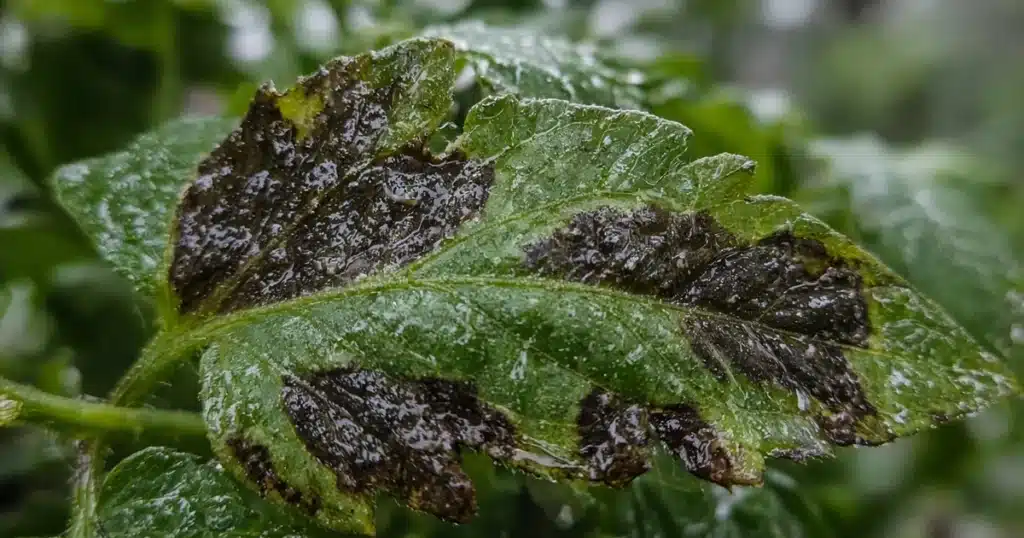
Late blight is a fast moving disease of tomatoes and potatoes that thrives in cool, wet weather. It causes large greasy gray green spots, white fuzzy growth under leaves and firm brown rot on fruit. Spores ride the wind, so it can move between gardens. Remove and bag infected plants and let your local Extension office know.
Late blight can take down a tomato patch in days. Knowing the signs helps you act early.
How do you identify late blight?
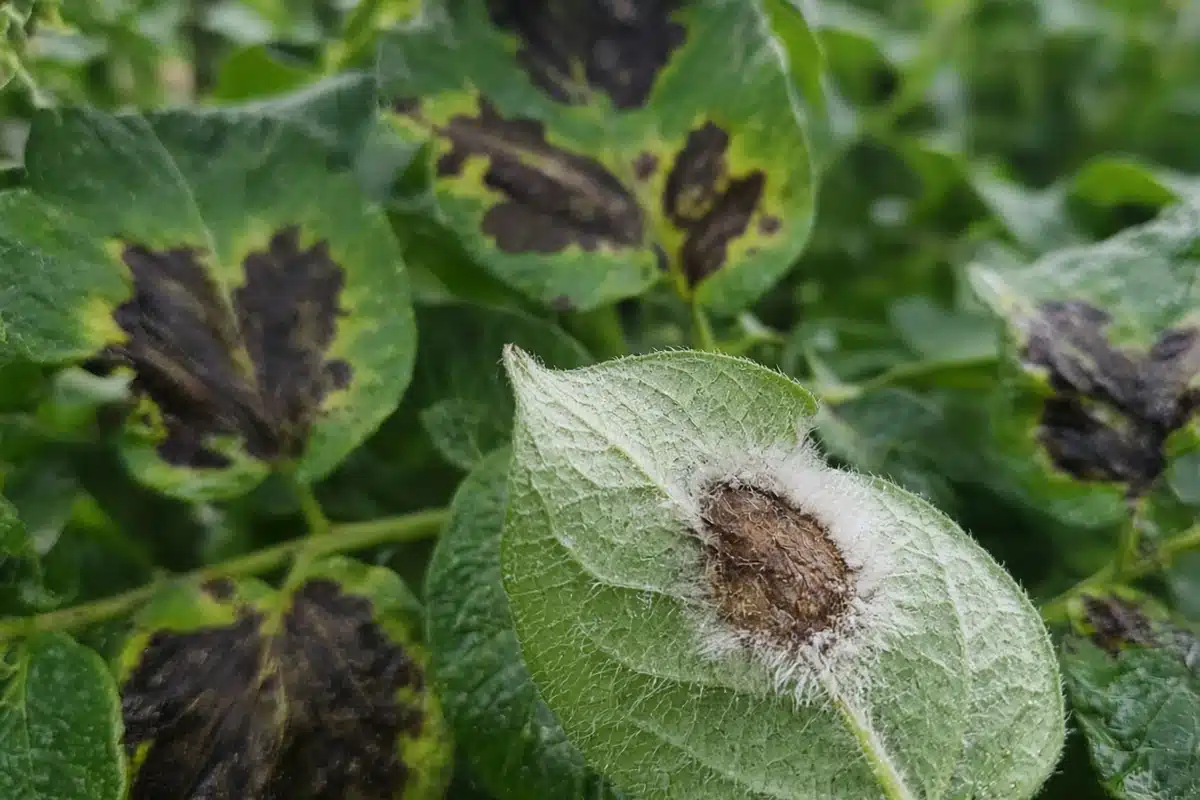
Leaves show large, irregular spots that look water soaked or greasy, and they start pale or gray green and turn dark brown. They are not limited to lower leaves, and they don’t have the rings that early blight spots have.
In damp weather, a white, downy growth appears on the underside of leaves at the edge of spots. That growth is where spores form.
Stems show dark brown to black patches that can girdle the stem.
Tomato fruit develops firm, greasy brown patches, often on the upper side. Potato tubers show firm brown to reddish brown areas under the skin.
The University of Minnesota Extension page on late blight shows each sign with photos and explains how it differs from other tomato diseases.
| Plant part | Sign | Action |
|---|---|---|
| Leaves | Large greasy gray green to brown spots | Bag and remove plant |
| Leaf undersides | White downy growth in damp weather | Confirms the diagnosis |
| Stems | Dark brown to black patches | Remove the plant |
| Tomato fruit | Firm greasy brown patches | Discard fruit |
| Potato tubers | Firm brown areas under the skin | Discard tubers |
Sources: University of Minnesota Extension, University of Wisconsin Extension.
How does late blight spread?
Late blight produces massive amounts of spores on infected plants. Wind carries them long distances. Rain splashes them onto nearby plants.
Cool nights, mild days and long periods of leaf wetness are ideal for it. Under those conditions, whole plants can collapse in seven to 10 days.
According to the University of Wisconsin Extension, the disease cannot survive in soil alone in cold climates. It needs living tissue to survive winter, such as infected potato tubers left in the ground or in cull piles.
What should you do if you find it?
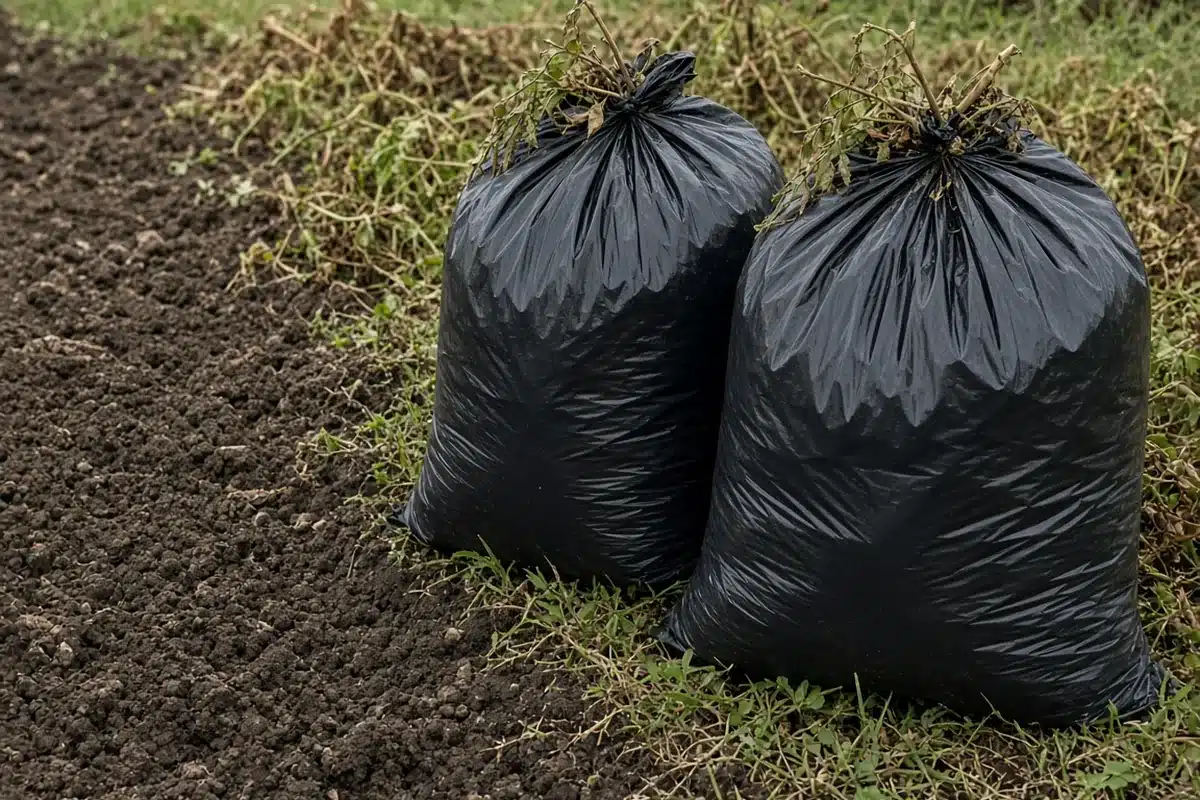
Act fast. Pull infected plants, place them in plastic bags and put the bags in the trash. Don’t compost them. The organism can survive in a pile and send spores into the air.
Let your local Extension office know. Because spores travel on the wind, Extension staff use reports to alert nearby gardeners and farms. Many offices help confirm a diagnosis from photos or samples.
Check nearby tomato and potato plants daily for a few weeks.
How do potatoes carry it over?
Potatoes play a big role. Infected tubers left in the ground can sprout the next spring as volunteer plants. Those volunteers carry the disease into a new season.
The UW Vegetable Pathology page on potato late blight explains how infected seed potatoes and cull piles start new outbreaks. Planting certified seed potatoes and removing volunteers break that cycle.
Our post on fall garden cleanup after cannabis harvest covers end of season steps that remove debris from beds.
How can you lower the chances next year?
Plant certified seed potatoes. They are inspected for disease.
Pick tomato varieties with late blight resistance. Several are available and seed catalogs mark them.
Space plants for airflow and water at the base. Leaves that dry quickly give spores less time.
Pull volunteer potatoes and tomatoes as they appear.
Clean greenhouses and starting areas often. Our post on greenhouse sanitation for cannabis covers cleaning routines that apply to any crop.
How does wet weather affect harvest?
Cool, wet weather favors late blight, so check plants after rain. If plants are still healthy, pick ripe and nearly ripe fruit before a long wet spell.
Let harvested fruit dry fully before storing. Our post on harvesting cannabis in the rain shares tips for picking during wet weather that apply to many crops.
How is it different from other tomato problems?
Early blight makes small ringed spots that start on the lowest leaves and climb slowly. Septoria leaf spot makes many tiny spots with gray centers. Both take weeks to do serious damage.
Late blight spots are larger, greasy and have no rings. They can appear anywhere on the plant, and the whole plant can collapse in seven to 10 days in cool, wet weather. The white growth on leaf undersides is the clearest sign.
If you’re unsure, photos of the top and underside of a leaf help Extension staff confirm it.
How to: step by step
- Check leaves for large, greasy dark spots.
- Look for white growth on leaf undersides in damp weather.
- Bag and remove infected plants.
- Do not compost infected material.
- Contact your local Extension office.
- Plant certified seed potatoes and resistant tomatoes next year.
Wash hands and tools after handling infected plants.
Troubleshooting
Whole plant collapses fast. Late blight may be the cause. Look for greasy spots. Remove at once.
Potatoes rot in storage. Tubers were infected. Discard them.
Returns each year. Volunteer potatoes carry it. Pull volunteers.
Spots on many neighbors’ plants. Spores are on the wind. Check daily and remove plants early.
Unsure of diagnosis. Signs overlap with other diseases. Send photos to Extension.
Fast action and good sanitation stop late blight from taking more than a few plants. Kind Seed Co shares more garden projects in outdoor growing.
Sources
- Late blight of tomato and potato, UMN Extension, Late blight of tomato and potato
- Late blight, University of Wisconsin Extension Horticulture, Late blight
- Potato late blight, UW Vegetable Pathology, Potato late blight
FAQ
Is late blight the same as early blight?
No. Late blight spreads fast and makes large greasy spots. Early blight moves slowly and makes ringed spots on lower leaves.
Why report late blight?
Spores travel on the wind. Reports help Extension warn nearby gardens and farms.
Can late blight survive winter?
In cold climates, mostly in infected potato tubers. Removing volunteers and cull piles helps.
Are there resistant tomatoes?
Yes. Several varieties show resistance. Check seed catalogs.
Can I save seed from infected tomatoes?
It is better not to. Start next year with clean seed.



