
Bean Rust: Rust Pustules on Beans and How Spacing Helps
The short answer
Bean rust is a fungal disease that forms small rusty brown pustules on bean leaves. Badly infected leaves yellow and drop early, which cuts the harvest. Spores rub off like powder and spread in humid weather. Space plants for airflow, water at the base, clean up old debris and rotate beans to new beds.
Rust shows up most in late summer, when warm days and dewy nights hold leaves damp. Spacing, careful watering and cleanup limit rust.
How do you identify bean rust?
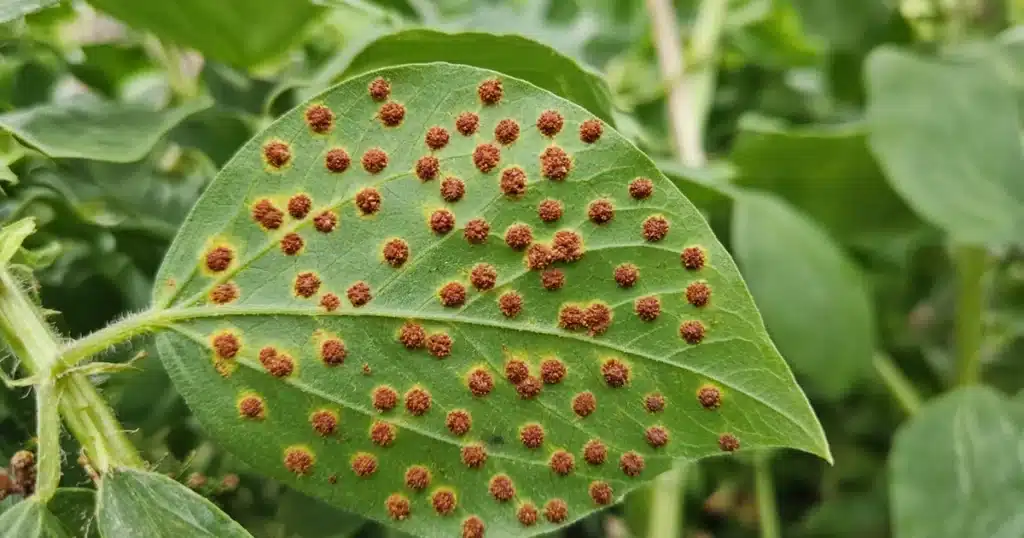
Start on the undersides of leaves. Rust starts as tiny pale or yellow flecks. Within days, each fleck opens into a raised, reddish brown pustule. Rub one with a finger and a rusty powder comes off. That powder contains spores.
Pustules can appear on upper leaf surfaces too, often with a yellow ring around each one. Heavily infected leaves turn yellow, dry out and fall.
Late in the season, some pustules turn dark brown to black. Those darker spores are the stage that survives winter on plant debris.
The WSU Hortsense fact sheet on bean rust shows the pustules at each stage and lists the cultural steps that limit the disease in home gardens.
Pods can show pustules too. Spotted pods are still edible, though they look rough.
How does it spread?
Wind carries rust spores from plant to plant and from garden to garden. Spores land on leaves and need moisture to infect. Dew, rain and overhead watering all provide it.
Warm days and cool, damp nights are ideal. Under those conditions, new pustules form every week or two, each releasing fresh spores.
The Colorado State University Extension page on rust of dry beans explains that the fungus survives winter on infected bean debris. In spring, those spores restart the cycle. This is why beds with old bean debris often see rust year after year.
| Step | Why | Source |
|---|---|---|
| Space plants | Moving air dries leaves faster | WSU Hortsense |
| Water at the base | Dry leaves give spores no time to infect | UMass Extension |
| Clean up debris | Removes the stage that survives winter | Colorado State University Extension |
| Rotate beds | Moves beans away from leftover spores | Colorado State University Extension |
| Choose resistant varieties | Fewer pustules form | UMass Extension |
Sources: WSU Hortsense, Colorado State University Extension, UMass Extension.
How do spacing and cleanup help?
Crowded bean rows hold humid air. Leaves inside the canopy stay wet long after the sun comes up. That gives spores the hours they need.
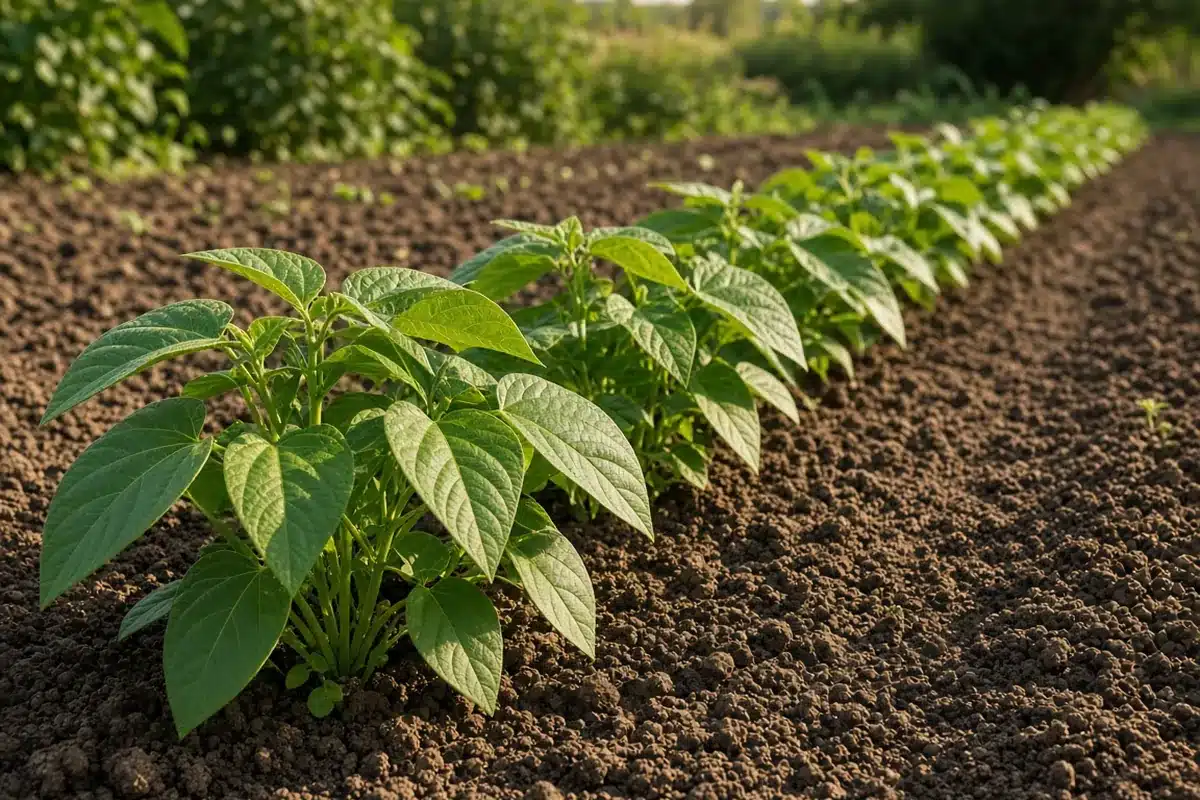
Spacing plants a little wider lets air move. Leaves dry faster, and fewer spores take hold. Thinning seedlings to the spacing on the seed packet is a simple first step. For pole beans, a trellis that holds vines in a single layer helps even more.
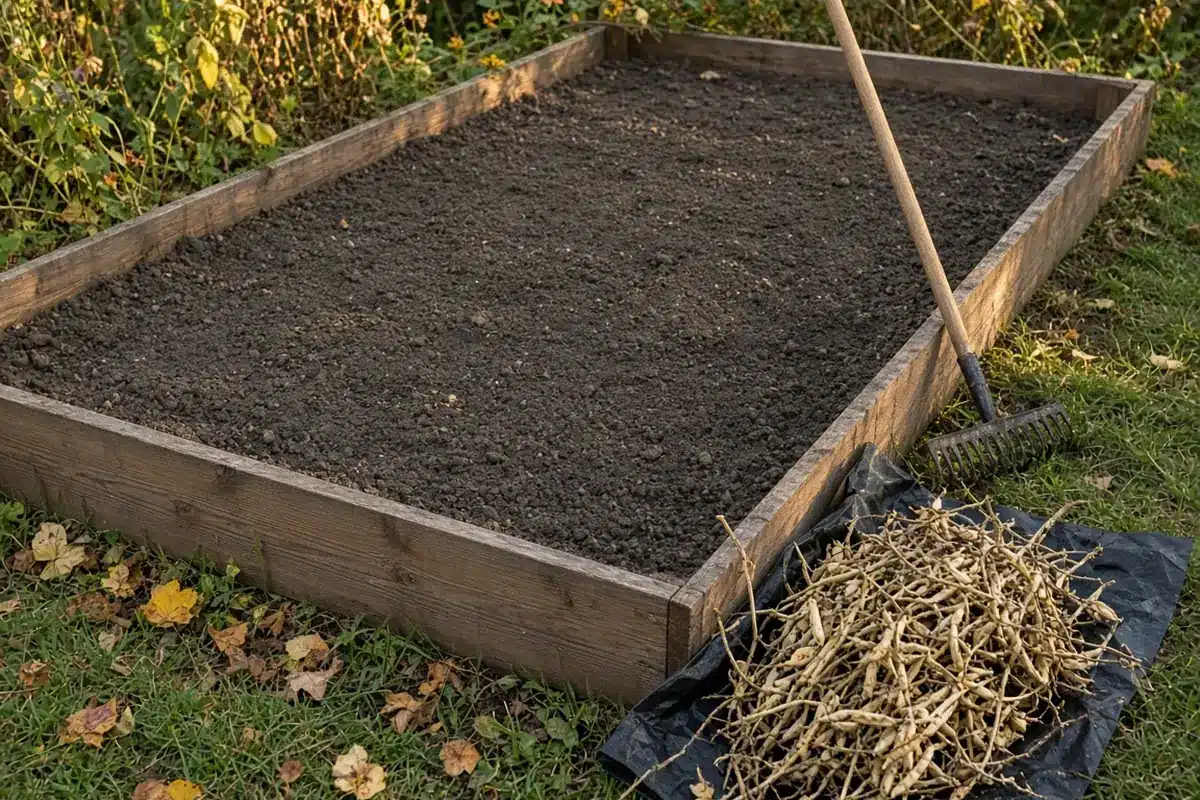
Cleanup matters at both ends of the season. During the season, pick off badly rusted leaves and bag them. After harvest, pull plants and remove fallen leaves. Our post on fall garden cleanup after cannabis harvest covers end of season steps that work for any bed.
How does watering change rust?
Water at the base of plants rather than over the top. A drip line or soaker hose holds leaves dry. Our post on drip irrigation for cannabis explains how to lay out drip lines that work just as well in a bean row.
If you hand water, do it early in the day. Any splashed leaves dry in the morning sun.
Avoid working among wet plants. Brushing past dewy leaves moves spores from plant to plant on clothes and hands.
Which beans are most at risk?
Snap beans, dry beans and pole beans all get rust, and some varieties resist it far better than others.
The UMass Amherst Extension fact sheet on bean rust notes that resistant varieties are the most practical answer for many growers. Seed catalogs often mark them. Bear in mind that the fungus has many races, so a variety that resists rust in one region may show some in another.
Lima beans and runner beans have their own rust types. Bean rust from snap beans doesn’t spread to most other crops.
Can companion plants help?
Mixed plantings can slow the spread of wind borne spores by breaking up long rows of beans. Taller crops nearby can act as a partial windbreak, though they shouldn’t crowd beans or block airflow.
Our post on companion plants when growing marijuana covers how mixed plantings work in a garden and which pairings suit each other.
How do you plan next season?
Rotate beans to a bed that has not grown beans for a year or two. Rust spores on old debris have less chance of reaching new plants.
Pick a resistant variety, plan spacing on paper before planting and set up drip lines early.
Take a short note of when rust appeared and how bad it got. That helps you judge whether changes worked.
How to: step by step
- Check leaf undersides for rusty pustules.
- Space plants for airflow.
- Water at the base early in the day.
- Remove badly infected leaves.
- Clean up debris after harvest.
- Rotate beans and choose resistant varieties.
Start checking plants weekly once they flower. Rust often shows up around then.
Bag infected leaves. Don’t leave them on the ground.
Troubleshooting
Rust on many plants. Plants are crowded. Space wider.
Spreads after rain. Leaves stay wet. Avoid overhead watering.
Returns yearly. Old debris carries spores. Clean up and rotate.
Rust on a resistant variety. A different race is present. Try another variety next year.
Leaves drop before pods fill. Rust took hold early. Remove infected leaves sooner next time.
With airflow, dry leaves and clean beds, bean rust stays a minor problem. Kind Seed Co shares more garden projects in outdoor growing.
Sources
- Bean: rust, WSU Hortsense, Bean
- Rust of dry beans, Colorado State University Extension, Rust of dry beans
- Bean, rust, UMass Amherst Extension Vegetable Program, Bean
FAQ
Can I eat beans from rusted plants?
Yes. Rust affects leaves and pod surfaces. Pods are still fine to eat, though spotted ones look rough.
Do all beans get rust?
Snap, dry and pole beans can all get it. Some varieties resist it much better than others.
Can I save seed from rusted plants?
Rust usually does not travel inside seed, but use clean seed from healthy plants.
Does rust spread to other crops?
Bean rust affects beans. Most other garden crops get their own rust types.
When does rust usually show up?
Often around flowering in mid to late summer, when dew holds leaves wet.



