
Bermudagrass in Cannabis Beds: Runners, Smothering and Solarizing
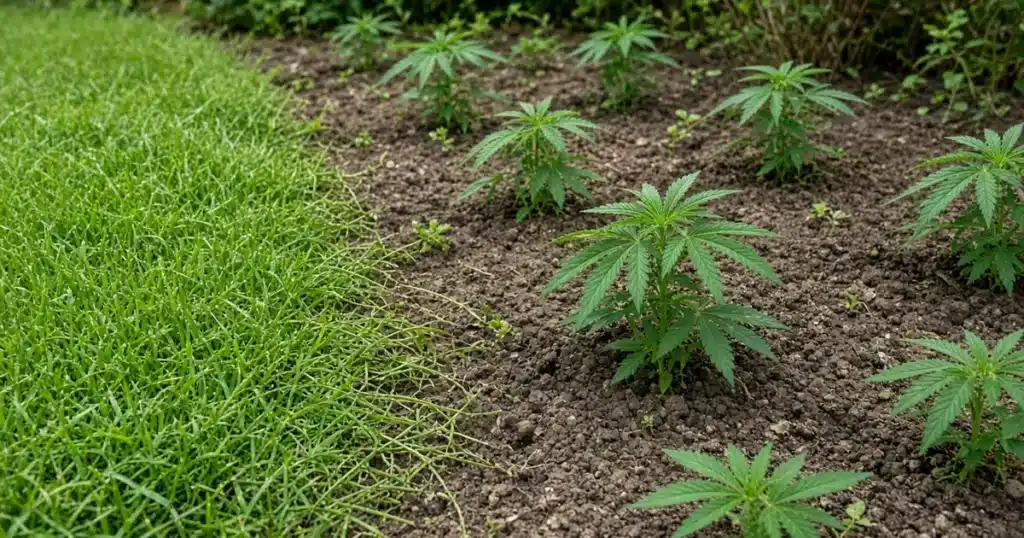
Quick answer: Bermudagrass is a wiry, warm season perennial grass that spreads by runners above ground and rhizomes below. UC IPM plus Extension services in Georgia and Arkansas all describe it as a tough weed once it escapes a lawn into beds. Pulling rarely gets every piece. The tools that work are a buffer strip between lawn and bed, shade, thick mulch over cardboard or fabric left in place for a long time, and summer solarization with clear plastic.
What Is Bermudagrass?
A lawn grass that turns into a weed in the wrong place. The UC bermudagrass guide says bermudagrass can be grown as turf but can also become an invasive weed, and that it grows across a wide range of conditions, including drought. Arkansas calls it a welcome lawn grass that turns into a stubborn weed once it gets loose in flower and vegetable beds.
The UC bermudagrass guide notes that despite its name, bermudagrass came from Africa, arriving in 1751. Other names include devilgrass, wiregrass and dogtooth grass.
What Are the Signs of Bermudagrass?
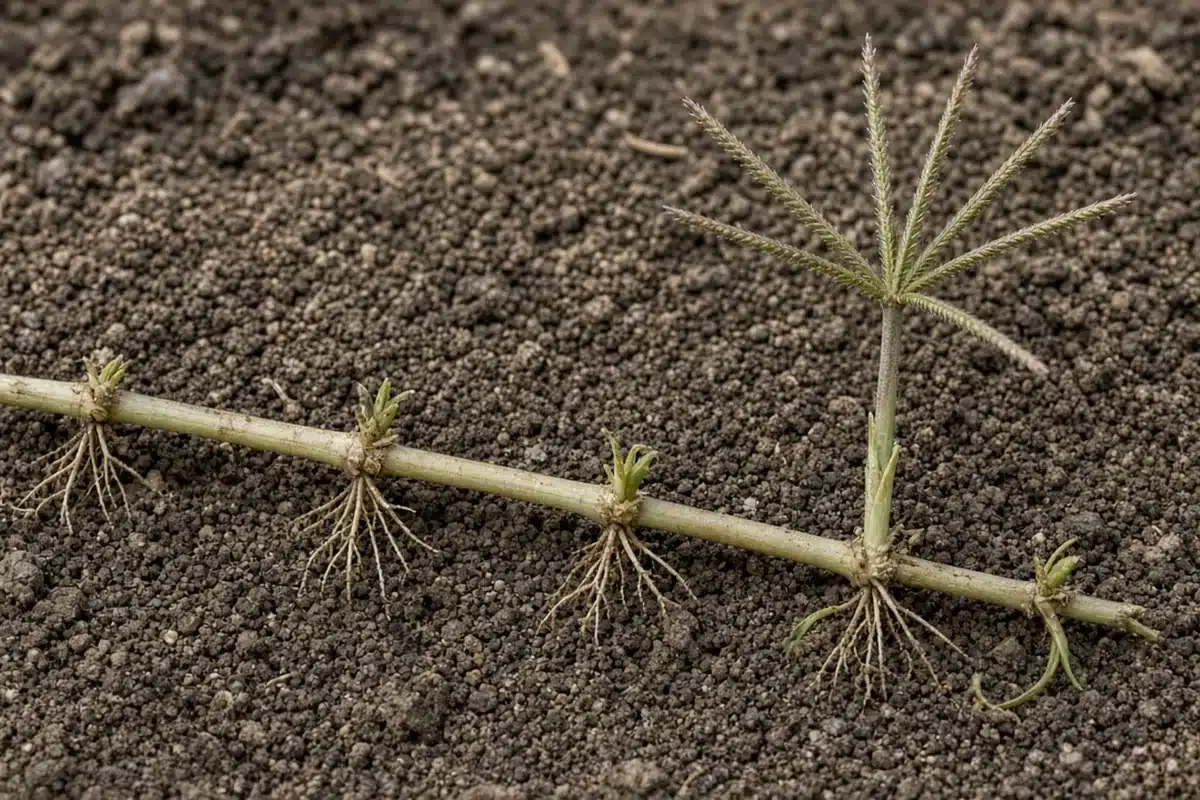
Look for runners and a ring of white hairs. The UC bermudagrass guide says leaves are smooth and pointed, with an obvious ring of white hairs where the blade meets the sheath. Each node on a surface runner carries a thin, papery sheath, and those nodes root in moist soil.
The UC bermudagrass guide describes flowering stems that stand upright and end in three to seven fingerlike spikes, 1 to 2 inches long, that all start from one point. It notes that crabgrass looks similar, but its spikes start a short distance apart along the stem tip.
Where Does Bermudagrass Grow?
Mostly in warm, sunny regions. The UC bermudagrass guide says it is widespread across the southwest and southern United States and in most of California below about 3,000 feet. It turns up in gardens, landscapes, orchards, vineyards and along roadsides.
Tennessee describes bermudagrass as a warm season grass that turns brown during winter dormancy and needs sunlight to grow well. The UC bermudagrass guide notes that the fall browning makes it stand out in cool season lawns. That seasonal pattern matters for control, since the same guide says covering it in winter does not work.
How Does Bermudagrass Spread Into Beds?
Through creeping stems above and below ground. The UC bermudagrass guide explains that bermudagrass has stolons on the surface and rhizomes under it, and both can root at their nodes and form new plants. Cut pieces left on or in moist soil can also root and regrow.
University of Tennessee Extension notes that runners from a bermudagrass lawn can creep into a plant bed, making it a weed in one spot and a lawn grass in the next. Georgia adds that pulling by hand leaves root bits that regrow. The UC guide also notes that rhizomes are usually 1 to 6 inches deep in undisturbed soil but run deeper in tilled or sandy soil and under sidewalks and foundations. It also warns that lawn clippings can carry seeds and pieces, so compost them thoroughly before using them in the garden.
Why Is It So Hard to Pull Out?
Every fragment can grow back. Georgia says hand digging or pulling almost never gets every piece, and the grass quickly regrows from bits of root left in the soil. The UC bermudagrass guide agrees that the aggressive runners and rhizomes make it extremely hard to control among desired plants.
The UC bermudagrass guide also warns against cultivating moist soil, since chopping the stems into pieces can start new plants. Our post on tilling vs no till cannabis beds covers other tradeoffs of turning soil.
How to Keep Bermudagrass Out of Cannabis Beds
- Leave a buffer zone. Arkansas recommends 6 to 12 inches between the edge of the lawn and your garden beds.
- Use shade where you can. Arkansas says bermudagrass thrives in hot, dry, sunny spots and competes poorly in shade. The UC bermudagrass guide says trees and tall shrubs reduce it, but short ground covers do not.
- Smother small patches. Georgia suggests covering the patch with several inches of mulch such as wood chips or pine straw, ideally over a layer of cardboard.
- Leave the mulch in place. Georgia says to leave the mulch for two growing seasons or longer to kill hardy perennial grasses.
- Skip hay and grass clippings as mulch. Georgia warns these may carry weed seeds.
- Add fabric under organic mulch. The UC bermudagrass guide says landscape fabric under mulch can give control.
- Keep plastic intact. UC IPM warns bermudagrass grows through holes, and control drops when plants go into holes cut in plastic.
- Compost lawn clippings well. The UC bermudagrass guide advises thorough composting to kill seeds, rhizomes and runners. See our guide to composting cannabis garden waste.
Bermudagrass Cover Methods Compared
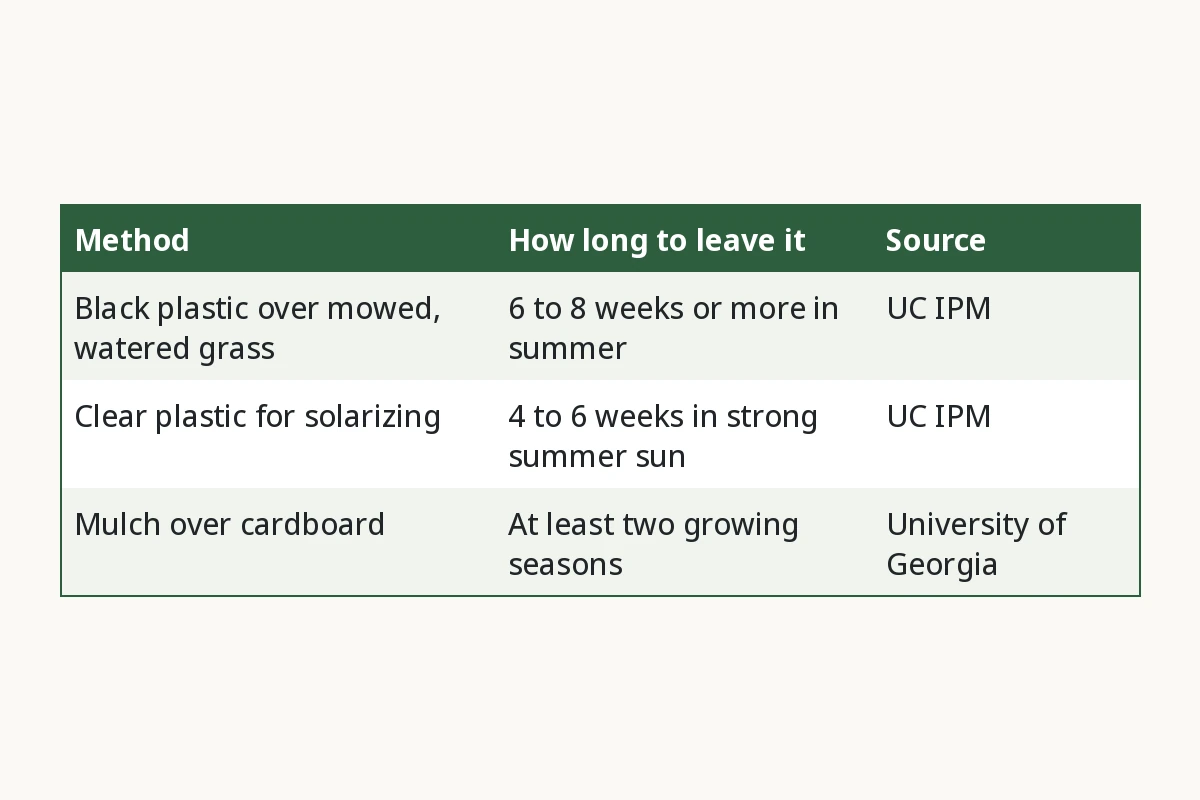
| Method | How long to leave it | Source |
|---|---|---|
| Black plastic over mowed, watered grass | 6 to 8 weeks or more in summer | UC IPM |
| Clear plastic for solarizing | 4 to 6 weeks in strong summer sun | UC IPM |
| Mulch over cardboard | At least two growing seasons | University of Georgia |
Does Solarizing Kill Bermudagrass?
Yes, in strong summer sun. The UC bermudagrass guide says clear plastic mulching can wipe out bermudagrass plants and seed when applied during high solar radiation. In California’s Central Valley that means June to August, and on the coast it may mean May to June or August to September when fog and wind are lowest.
The UC bermudagrass guide gives these steps. Mow closely, remove clippings and water well. Lay clear, UV protected plastic so it runs about 2 feet past the runners, and keep it intact for 4 to 6 weeks. Shade and north facing slopes reduce the heat. After solarizing, do not cultivate deeper than 3 inches. The UC bermudagrass guide warns that weak, early spring attempts in cool weather can actually promote bermudagrass growth. Our guide to soil solarization for cannabis beds covers the method in detail.

Does Black Plastic Work?
It can, in summer. The UC bermudagrass guide says black plastic laid over bermudagrass blocks the light and can control established plants. Mow and water the grass first, then keep it covered through summer for 6 to 8 weeks or more. Covering it in winter fails because the grass is dormant.
Can Drying Out the Soil Help?
Yes, where you can dry the area without hurting nearby plants. The UC bermudagrass guide says bermudagrass grows best with water. Where nearby plants will not suffer, it suggests withholding water and tilling or spading two or three times in summer to bring rhizomes up to dry. Raking them out helps. Rain or watering during the process lets fragments regrow, and drying does not kill seeds in the soil.
Troubleshooting Bermudagrass Problems
Grass came back after pulling. Georgia says root pieces left behind regrow. Switch to smothering with cardboard and mulch.
Runners keep crossing from the lawn. Arkansas recommends a 6 to 12 inch buffer between lawn and bed. Check the gap often.
It grew through the plastic. The UC bermudagrass guide says holes let bermudagrass through. Patch or replace the plastic.
Solarizing did not work. The UC bermudagrass guide says shade, slopes facing north and cool spring weather reduce results. Try again in midsummer sun.
New grass sprouted after tilling. The UC bermudagrass guide warns that cultivating moist soil spreads stem pieces. Wait for dry soil or use mulch instead.
Sources
- UC Statewide IPM Program, University of California, Pest Notes: Bermudagrass: https://ipm.ucanr.edu/home-and-landscape/bermudagrass/
- University of Georgia Cooperative Extension, Bartow County, How to Kill Weedy Grasses: https://site.extension.uga.edu/bartow/how-to-kill-weedy-grasses/
- University of Tennessee Extension, Lawn and Landscape Weed Control for Homeowners (W1068): https://uthort.tennessee.edu/wp-content/uploads/sites/228/2024/02/W1068-Lawn-Landscape-Weed-Control-for-Homeowners.pdf
- University of Arkansas Cooperative Extension, Weeds: https://www.uaex.uada.edu/yard-garden/home-landscape/summer-landscaping/pest-control/weeds.aspx
FAQ
Is bermudagrass from Bermuda?
No. The UC bermudagrass guide says it was introduced from Africa in 1751.
How deep are bermudagrass rhizomes?
Usually 1 to 6 inches in undisturbed soil, the UC bermudagrass guide says, and deeper in tilled or sandy soil.
Does bermudagrass grow in shade?
Poorly. Arkansas and the UC bermudagrass guide both say shade reduces its growth.
Can I mulch over bermudagrass?
Yes. Georgia suggests several inches of mulch over cardboard for at least two growing seasons.
When should I solarize?
In midsummer. The UC bermudagrass guide says to solarize during periods of high solar radiation.


