
Black Eyed Susan Leaf Spots: Septoria plus Other Fungi
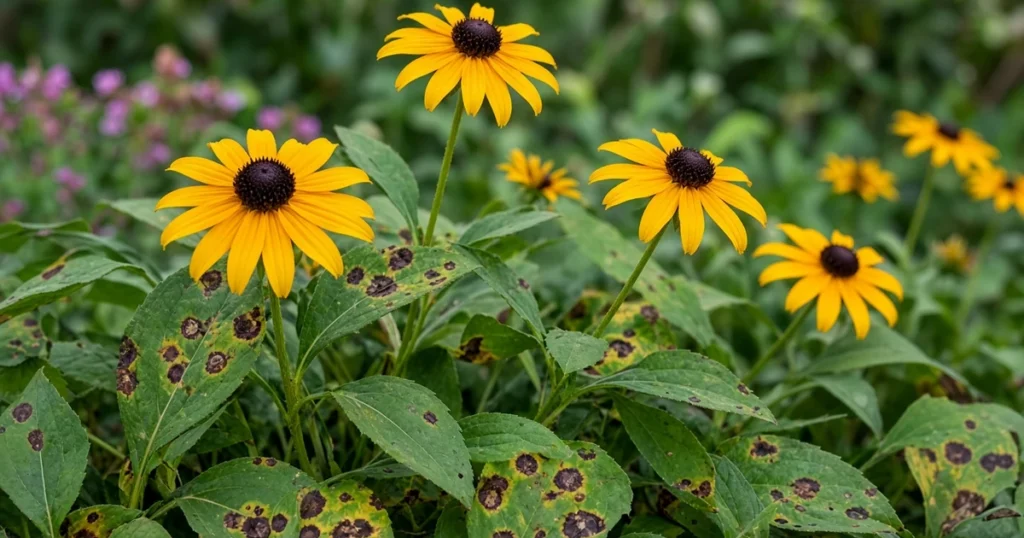
Black eyed susan leaf spots are most often Septoria leaf spot, a fungal disease of Rudbeckia. University of Minnesota Extension notes the spots start on lower leaves plus can spread to the whole plant, while Penn State Extension notes thinning plants plus avoiding overhead watering may help.
The short answer
Black eyed susan leaf spots are usually Septoria, which Minnesota describes as irregular purplish black spots that start low plus spread upward. Powdery mildew plus southern blight cause other symptoms. Penn State advises thinning plants plus avoiding overhead watering, plus notes ‘American Gold Rush’ resists Septoria.
What causes leaf spots on black eyed susan?
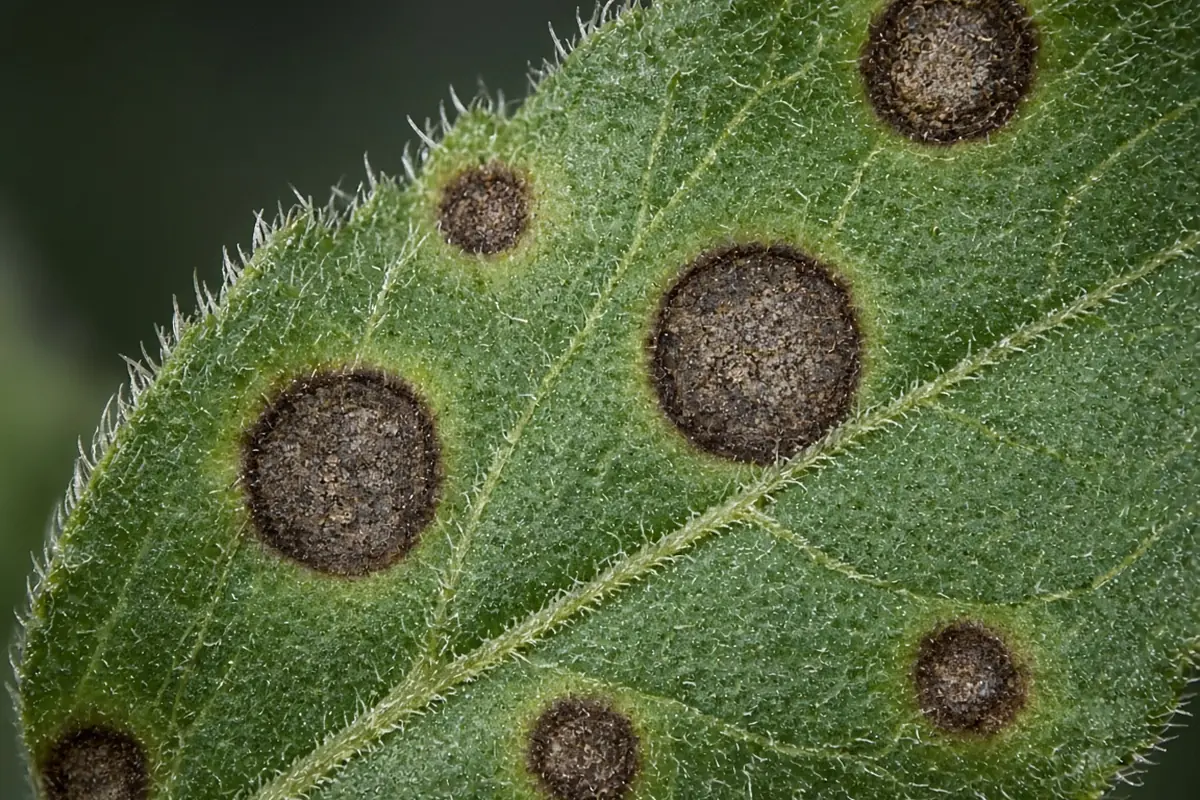
University of Minnesota Extension lists three common causes, each with its own pattern. Septoria is the common source of dark spots.
| Problem | What you see | Source |
|---|---|---|
| Septoria leaf spot | Purplish black spots, often flat along a vein, gray centers | Minnesota |
| Powdery mildew | Fluffy white spots on leaves plus stems | Minnesota |
| Southern blight | Yellow then brown leaves, brown stem base | Minnesota |
| Angular leaf spot | Bacterial spots, common on ‘Goldsturm’ | Penn State |
Source: University of Minnesota, Penn State plus NC State Extension.
Are leaf spots harmful to black eyed susan?
Mostly they spoil the plant’s looks. Minnesota notes leaves with many spots turn black, dried up plus tattered. Heavy infections blacken every leaf. Penn State notes Septoria plus angular leaf spot can leave foliage unsightly by season end.
How do I stop leaf spots spreading?
Penn State notes thinning plants plus avoiding overhead watering may help ease the symptoms. Remove spotted lower leaves early, water at the soil plus give clumps room for air to move between them.

How to: step by step
- Check lower leaves for dark spots.
- Remove spotted leaves early.
- Water at the soil, not overhead.
- Thin dense clumps.
- Remove old foliage at season end.
- Choose a resistant cultivar next time.
Troubleshooting
Dark spots climbing the plant: Septoria. Remove low leaves plus thin.
White dust on leaves: powdery mildew. Boost air flow.
Wilting with a brown stem base: possible southern blight. Remove the plant.
For more on outdoor growing see the effects of environmental stresses on weed plants, 7 ways to shield marijuana plants from pests plus the guide to overwatering and cannabis growth. Kind Seed Co also stocks cannabis seeds.
Sources
- Rudbeckia leaves with spots (diagnostic), University of Minnesota Extension
- Black-eyed Susan: beautiful and beneficial, Penn State Extension
- Rudbeckia hirta (black-eyed Susan), NC State Extension Gardener Plant Toolbox
FAQ
Are some black eyed susans resistant to leaf spot?
Yes. Penn State Extension notes 'American Gold Rush' stands out for its ability to resist Septoria leaf spot. It also notes the popular 'Goldsturm' is prone to angular leaf spot, a bacterial disease. Choosing a resistant cultivar is a simple way to cut spotting in beds with a history of the problem.
Does overhead watering cause leaf spots?
It helps them spread. Penn State Extension notes avoiding overhead watering may help ease Septoria leaf spot plus powdery mildew. Water at the base of the plant in the morning so foliage stays dry. Wet leaves let fungal spores splash from lower leaves up to new growth.
How can I tell Septoria from powdery mildew?
University of Minnesota Extension notes Septoria causes irregular purplish black spots, often with one side flat along a leaf vein plus gray centers. Powdery mildew instead leaves powdery, fluffy white spots on leaves, stems plus flower parts. Both usually start on lower leaves before spreading upward.
What is southern blight on black eyed susan?
University of Minnesota Extension notes southern blight turns leaves yellow then brown from the edges inward, with wilting plus a brown stem base. It is often seen after warm, wet weather, with white cottony growth plus small tan spheres at the base. Remove affected plants plus the soil around them.
Does fertilizer affect black eyed susan?
NC State Extension notes moderate fertility gives the finest flower show plus advises against planting near lawn edges where lawn fertilizer adds excess nitrogen. Soft, lush growth from extra feeding stays crowded plus damp. Feed lightly, thin clumps plus water at the soil to limit leaf spots.



