
Black Eyed Susan Wilting: Dry Spells Plus Southern Blight
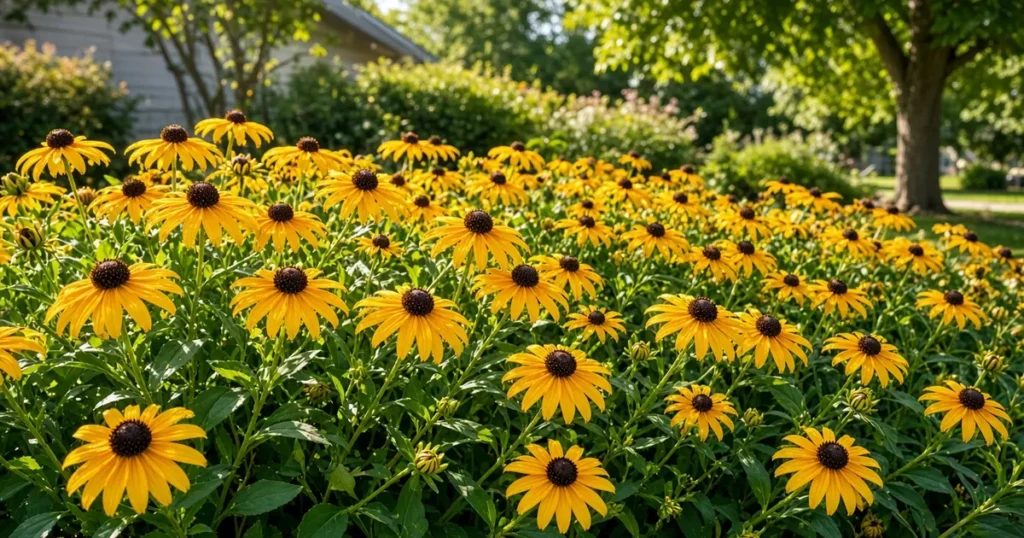
Black eyed susan wilting usually traces to long dry spells, southern blight at the stem base or leaf spot disease. NC State Extension notes the plant is moderately drought resistant and grows in moist, well drained soil. University of Minnesota Extension links wilting with a brown stem base to southern blight.
The short answer
Check the soil plus the stem base. NC State Extension says black eyed Susan grows in moist, well drained soil in full sun to partial shade. University of Minnesota Extension notes that southern blight makes leaves yellow, brown plus wilt, often after warm wet weather. Septoria leaf spot can wither lower leaves.
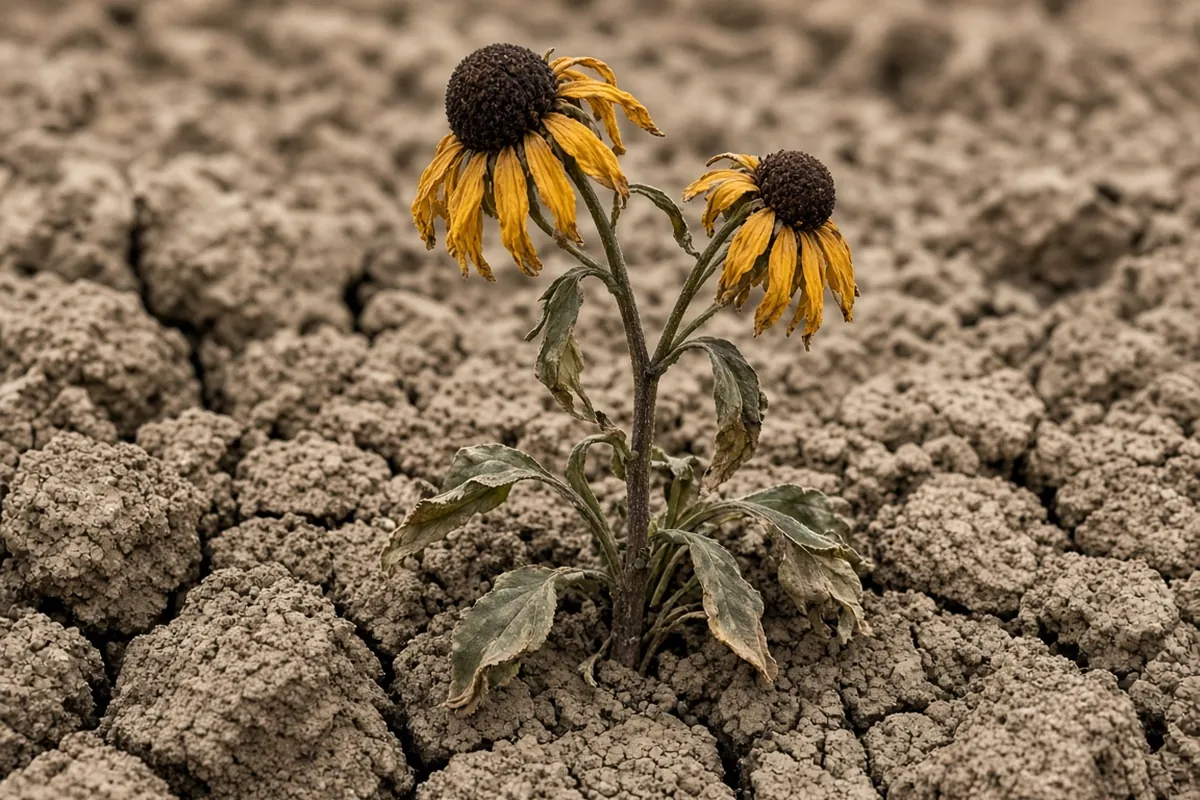
How do dry spells cause wilting?
NC State Extension notes that black eyed Susan is moderately resistant to drought. Moderately resistant still means a long dry spell can outpace the roots.
University of Missouri Extension lists black eyed Susan as a plant for well drained soil. It calls the species very heat tolerant.
Missouri also notes that plants needing moist but well drained soil need regular watering during dry periods. Water deeply when the soil is dry plus the leaves droop.
What does southern blight look like?
University of Minnesota Extension describes southern blight on Rudbeckia. Leaves turn yellow then brown from the edges inward plus wilt, and the base of the stem may be brown or discolored.
It is often seen after warm wet weather, the same source notes. Tiny tan to reddish brown hard spheres plus white cottony growth can show at the stem base or in the soil.
University of Missouri Extension notes that periods of standing water on the soil are damaging to perennials. In heavy soils, add organic matter or consider raised beds to improve drainage.
| Symptom | Likely cause | Source note |
|---|---|---|
| Wilting in dry soil | Dry spell | Moderately drought resistant |
| Wilting with brown stem base | Southern blight | After warm wet weather |
| Lower leaves black plus withered | Septoria leaf spot | Starts on lower leaves |
| White powder on leaves | Powdery mildew | Can curl leaves |
Source: University of Minnesota Extension plus NC State Extension.
Can leaf spots cause wilting?
Pacific Northwest Plant Disease Management Handbook notes that Septoria causes vein bounded dark purple to brown spots beginning in late spring. Lower leaves may become completely covered plus wither.
University of Minnesota Extension adds that leaves with many spots can appear black, dried up plus tattered. Spots typically start on lower leaves but can spread to the entire plant.
The Pacific Northwest handbook suggests growing resistant cultivars such as American Gold Rush. That choice reduces Septoria problems in future plantings.
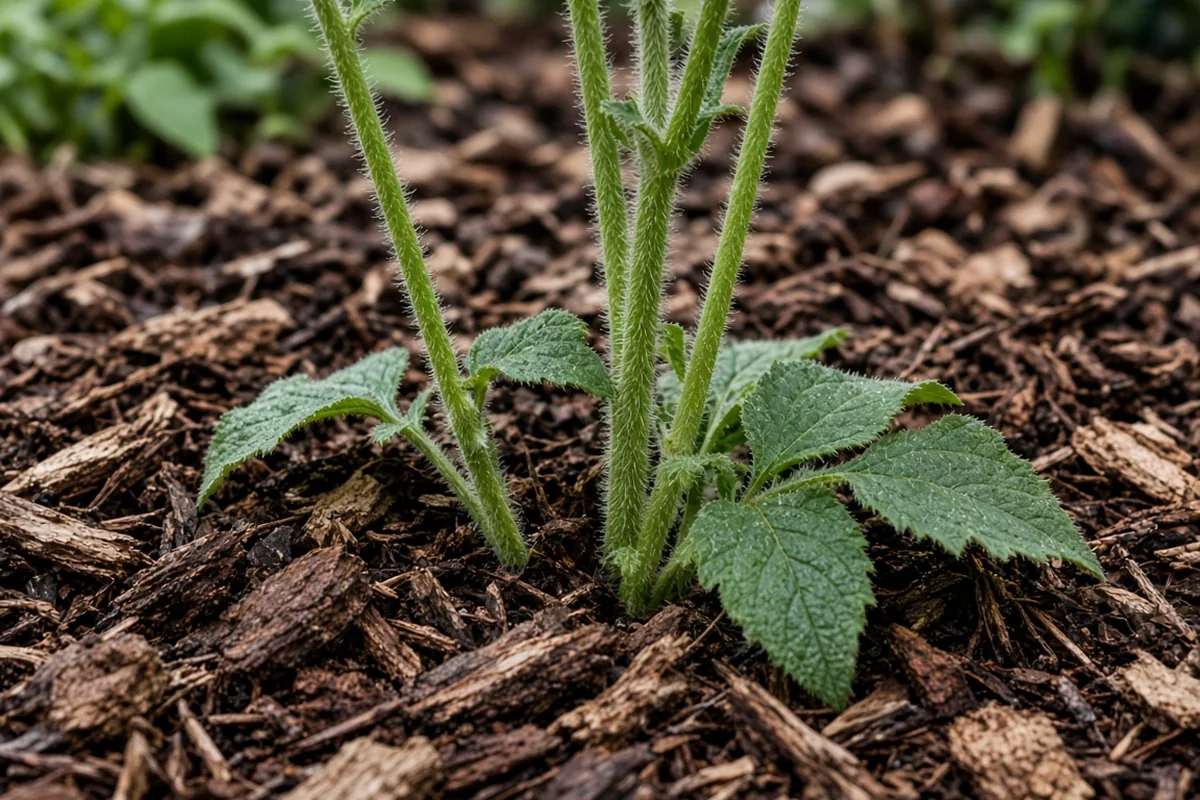
How to: step by step
- Feel the soil a few inches down.
- Inspect the base of each wilting stem.
- Examine lower leaves for dark spots.
- If the soil is dry, water deeply.
- Where water stands, improve drainage.
- Next time, plant resistant cultivars.
Troubleshooting
Wilting in dry soil: dry spell. Water deeply.
Wilting with dark stem base: southern blight. Improve drainage.
Lower leaves black plus dry: Septoria. Choose resistant cultivars.
For related reading see underwatering cannabis, soil drainage check for cannabis beds plus cannabis heat stress. Kind Seed Co also stocks cannabis seeds.
Sources
- Rudbeckia hirta, NC State Extension Gardener Plant Toolbox
- Rudbeckia leaves with spots (diagnostic), University of Minnesota Extension
- Rudbeckia leaf spots, Pacific Northwest Plant Disease Management Handbook
- Flowering perennials: characteristics plus culture (G6650), University of Missouri Extension
FAQ
Do black eyed Susans need much water?
Not much once settled. NC State Extension notes the plant is moderately resistant to drought plus grows in moist, well drained soil. University of Missouri Extension calls black eyed Susan very heat tolerant and lists it for well drained soil. Water during long dry spells rather than on a fixed schedule.
Are black eyed Susans short lived?
Often, yes. NC State Extension describes Rudbeckia hirta as a biennial or short lived perennial. Because it blooms in the first year from seed, it is often mistaken for an annual. It freely self seeds plus usually remains in the garden, so new plants replace old ones.
Should spent flowers be cut?
Deadheading extends the show. NC State Extension notes that flowers first mature in midsummer and, with deadheading, continue into the middle of fall. Leaving some seed heads lets the plant self seed, which NC State says it does freely. Choose based on whether you want new seedlings.
Why are the leaves spotted?
University of Minnesota Extension lists powdery mildew, Septoria leaf spot plus southern blight as causes of spotted leaves. Septoria spots are irregular purplish black, often flat along one side of a leaf vein. Powdery mildew shows as fluffy white spots on leaves, stems plus flower parts.
Does too much fertilizer cause problems?
NC State Extension notes that moderate fertility gives a good flower show. It advises against planting on lawn edges where lawn fertilizer will provide excess nitrogen. Feed lightly, then focus on full sun, drainage plus watering during dry spells instead.



