
White Hard Water Spots on Leaves: Causes and How to Wipe Them Off
The short answer
White residue that appears after sprinkling, and that wipes away with a damp cloth, is usually mineral left behind by hard water. Water at the base of plants when possible, run overhead sprinklers at night or on cloudy days and water longer but less often. If the marks do not wipe off, look for another cause.
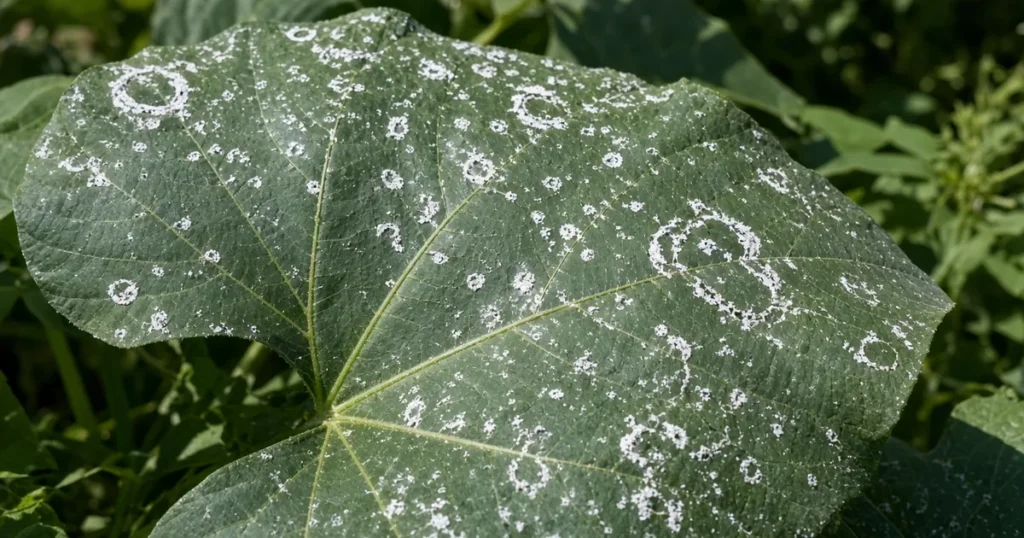
Hard water spots on leaves are chalky white marks left when water rich in dissolved minerals such as calcium and magnesium carbonate dries on foliage. They’re common under overhead sprinklers. Extension guides suggest watering under the plant canopy where you can to prevent them, and having your water analyzed if spots return.
What causes white spots on leaves after watering?
Hard water carries dissolved minerals. When droplets sit on a leaf and evaporate, the water leaves but the minerals stay. Washington State University Extension explains that lime, meaning calcium or magnesium carbonate, leaves a white residue on leaves as the water evaporates. Penn State Extension notes that hardness above 150 mg/L can cause scale deposits on foliage.
Oregon State University Extension groups water by hardness, measured as calcium carbonate.
| Sign | Likely cause | Next step |
|---|---|---|
| White film after sprinkling | Lime (calcium or magnesium carbonate) left as water dries | Water under the canopy (WSU) |
| Scale deposits on foliage | Hardness above 150 mg/L | Have the water analyzed (Penn State) |
| Spots under overhead watering | Iron above 1.0 mg/L | Reduce overhead watering (WSU) |
| White spots with no overhead watering | Powdery mildew, scale, pesticide residue or salts from transpiration | Look closer at the leaf (Oregon State) |
Sources: Oregon State University Extension, Penn State Extension, Washington State University Extension.
Oregon State University Extension also classes water by hardness as calcium carbonate: 0 to 60 mg/L is soft, 61 to 120 moderately hard, 121 to 180 hard and over 180 very hard. Your water supplier can tell you where your water falls, and well owners can have a sample analyzed.
Sprinkler setup matters too. Our article on sprinklers for cannabis gardens covers how to place heads and plan coverage.
How can you tell hard water spots from other problems?
Start with a damp cloth. Mineral residue sits on the surface and usually wipes away. Oregon State University Extension lists other causes of white spots that look similar, including powdery mildew, scale insects, pesticide residue and salts released by the plant itself. Powdery mildew and scale need a closer look, and spots that return without any overhead watering point away from hard water.
Penn State Extension adds another clue. Water high in iron, above 1.0 mg/L, can cause spotting on foliage when used for overhead watering, though those marks tend to be rusty rather than white. Plants under general stress can also show odd leaf marks, which our post on the effects of environmental stresses on weed plants explores.
How do you remove and prevent mineral spots?
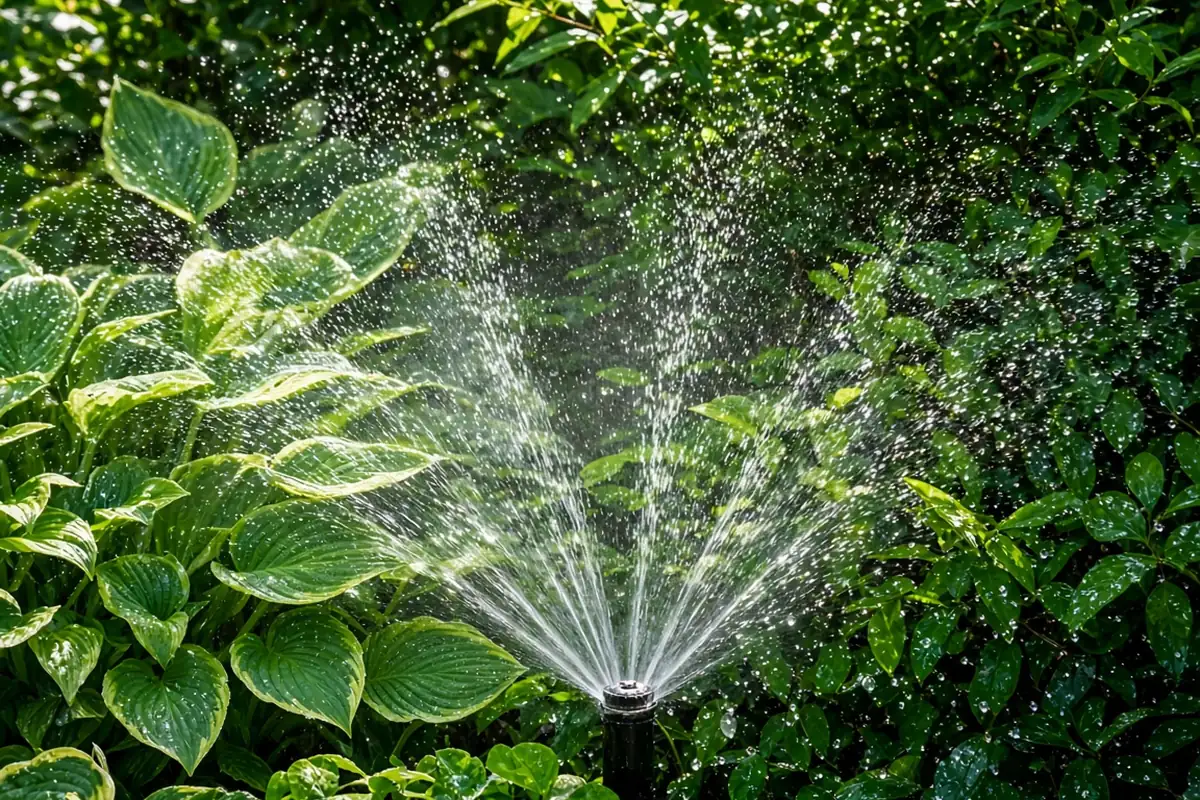
Washington State University Extension suggests three ways to cut residue. Water under the canopy instead of over it, run overhead sprinklers at night or on cloudy days so leaves dry slowly and water longer per session but less often. Fewer wet and dry cycles give minerals fewer chances to build up.
Be careful with softening. Penn State Extension warns that softening water with sodium can lead to sodium problems for plants. Collected rain is another option for pots, and rainwater for cannabis explains how to store and use it.

How to: step by step
- Check whether spots wipe off with a damp cloth.
- Wipe leaves gently with soft water or rainwater.
- Support each leaf from below as you wipe.
- Switch to watering at the soil line.
- Adjust sprinklers so they miss foliage.
- Have your water analyzed if spots come back.
Troubleshooting
Spots don’t wipe off: the marks probably aren’t mineral residue. Check for powdery mildew, scale or pesticide residue.
Spots return quickly: overhead watering wets the leaves again. Water the soil instead or water longer and less often.
Crust on pots too: the water is likely very hard. Consider rainwater for containers and have the water analyzed.
Make watering simple
Good hose habits prevent most of these marks. The Kind Seed Co blog covers more water topics in the water quality section.
Sources
- White spots from watering with hard water?, Oregon State University Extension Service
- Irrigation water quality interpretation, Penn State Extension
- Managing irrigation water quality for crop production in the Pacific Northwest (PNW 597), Washington State University Extension
FAQ
Do hard water spots harm plants?
Light mineral marks are mostly cosmetic. Penn State Extension notes that very hard water, above 150 mg/L, causes scale deposits on foliage, and heavy buildup can coat leaves. Cutting overhead watering and wiping off existing marks leaves foliage clean. Spots that do not wipe away may have a different cause entirely.
Can you use vinegar on leaves?
Extension sources do not recommend vinegar for leaves. They focus on prevention through watering habits. Wiping marks gently with a soft damp cloth, using rainwater or other soft water, is a simple option. Support each leaf from below as you wipe so you do not tear it.
Is a water softener a fix?
Not for plants. Penn State Extension warns that softening water with sodium can create sodium problems for plants. Use rainwater or an unsoftened tap, and change watering habits so less water dries on the leaves.
Do misting systems cause spots?
Any system that wets leaves with hard water can leave residue as droplets dry. Washington State University Extension notes that lime leaves a white deposit as water evaporates from foliage. Watering at the soil line, watering at night or on cloudy days and watering less often all reduce the marks.
How hard is hard water?
Oregon State University Extension classes water at 121 to 180 mg/L as hard and over 180 mg/L as very hard, measured as calcium carbonate. Your water supplier can tell you where your water falls.



