
Bioswales for Yards: Planted Channels to Move Runoff
The short answer
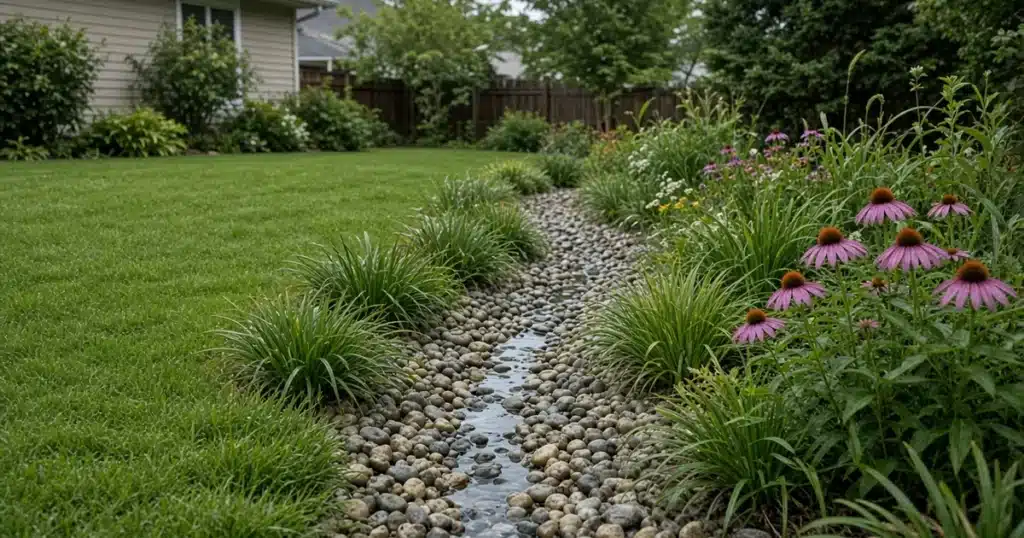
A bioswale is a shallow, planted channel that slows stormwater and guides it across a yard, letting some soak in along the way. It works like a long rain garden built to move water. Place it to catch runoff from roofs or paved areas, set it away from foundations, slope it gently and plant deep rooted natives.
If water rushes across your lawn after every storm, a bioswale can turn that flow into a feature.
What is a bioswale?
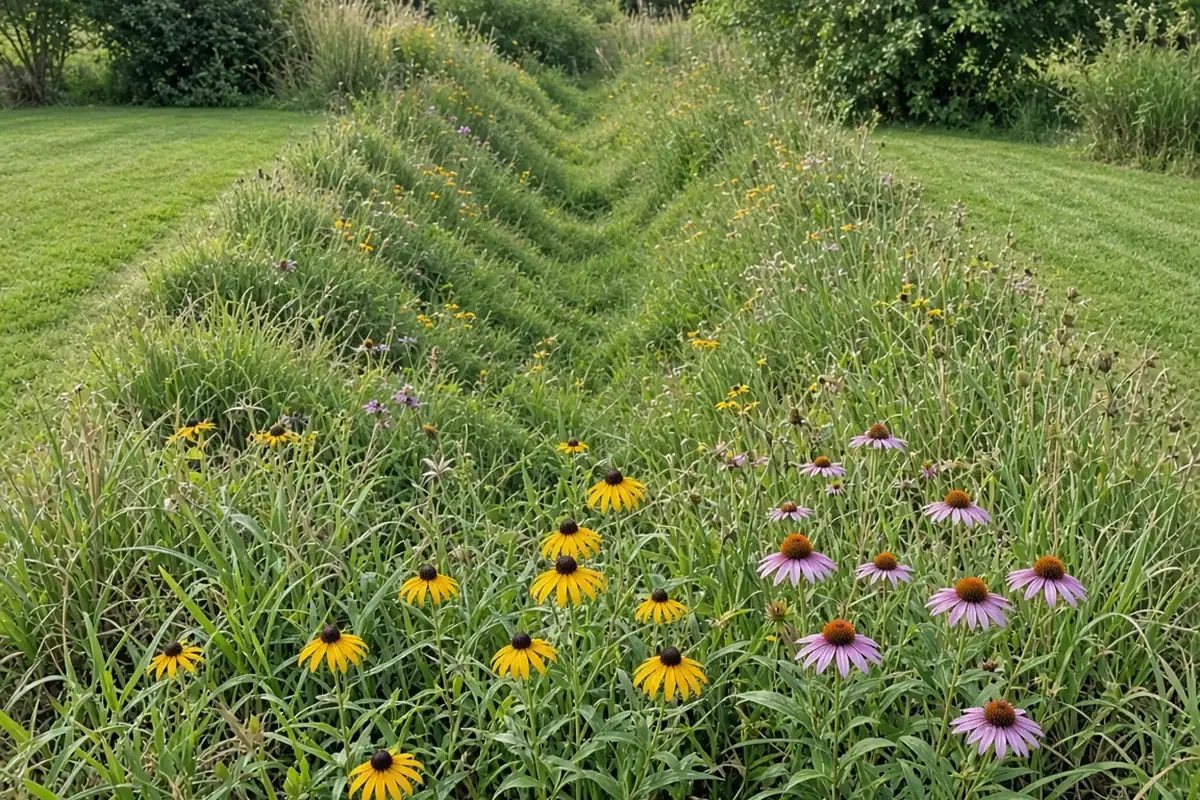
A bioswale is a wide, shallow ditch lined with plants instead of bare soil or concrete. Water flows slowly along it rather than racing off. Plants and soil catch sediment and give water more time to soak in where soil allows.
Bioswales share a lot with rain gardens. The UConn CT NEMO Program rain gardens page explains that rain gardens accept runoff from roofs and other hard surfaces and let it soak in. A rain garden holds water in one spot. A bioswale moves water along a path, often ending at a rain garden, a dry well or a lawn area that can absorb it.
| Feature | Bioswale | Rain garden |
|---|---|---|
| Shape | Long, shallow channel | Bowl shaped basin |
| Main job | Slow and move water | Hold and soak in water |
| Slope | Gentle fall along its length | Level bottom |
| Plants | Deep rooted natives and grasses | Deep rooted natives |
| Typical place | Along a slope or property edge | Low spot fed by a downspout |
Sources: UConn CT NEMO Program.
Where should a bioswale go?
Start by watching your yard during a heavy rain. Note where water comes from and where it collects or runs off. Roof downspouts, driveways and patios are the usual sources.
Site a bioswale well away from house foundations so water doesn’t seep toward basements. Route the channel away from the house and toward an area where water can spread out.
Avoid spots over septic systems and wells. Our post on garden microclimates for cannabis explains how slope and low spots change conditions across a yard, which helps when you pick a route.
Check how fast your soil drains. Dig a hole about a foot deep, fill it with water and see how long it takes to empty. Our post on soil drainage checks for cannabis beds walks through the method.
How do you build a bioswale?
Lay out the path with a hose or rope. Gentle curves slow water better than a straight line. Make the channel wide and shallow, with sloped sides rather than steep walls.
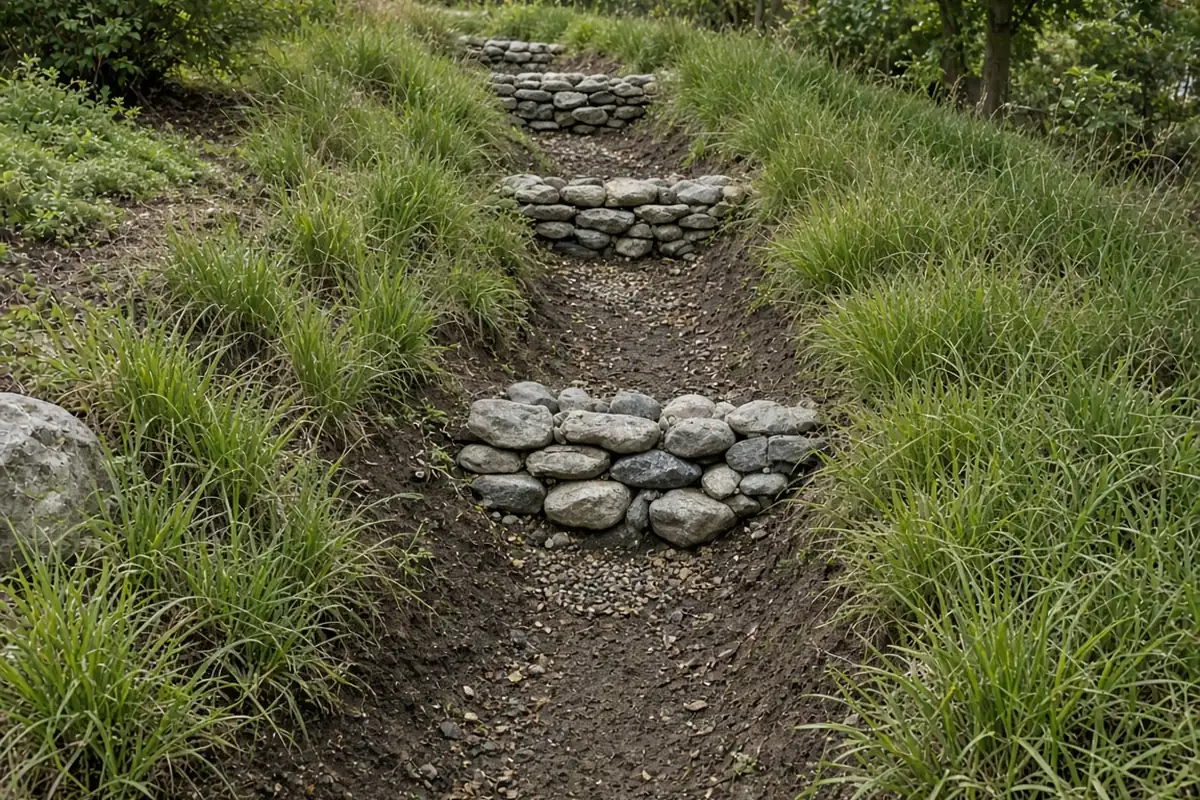
Give the bottom a slight, steady fall so water continues moving without cutting into the soil. On steeper ground, add small check dams of stone across the channel to slow the flow. Pile excavated soil on the downhill side as a low berm.
Lay rock where water enters, such as below a downspout, so the force of the water doesn’t wash out soil. Mulch bare areas until plants fill in.
What should you plant?
Deep rooted native plants hold soil and soak up water. The University of Arkansas Cooperative Extension list of plants for the rain garden groups plants by how much water they can take. Plants that tolerate brief flooding go in the bottom. Plants that like drier soil go on the sides and the berm.
Native grasses, sedges and rushes are a good fit for the channel floor. Flowering perennials such as swamp milkweed, blue flag iris and joe pye weed add color. Shrubs can anchor the ends.
If you collect rain in barrels, the overflow can feed the bioswale. Our post on rainwater for cannabis covers using collected rain in the garden.
How do you care for it?
Water new plants during dry spells for the first season. Pull weeds while plants fill in. Remove sediment and debris that build up at inlets after big storms. Cut back dead stems in late winter or early spring.
How to: step by step
- Watch where runoff flows in a heavy rain.
- Pick a route well away from the house.
- Check soil drainage.
- Dig a shallow channel with gentle sides and a slight fall.
- Add rock at inlets and check dams on slopes.
- Plant natives by water need and mulch bare soil.
Troubleshooting
Water cuts a gully. The slope is too steep. Add check dams.
Water pools for days. Check the outlet and soil drainage, then reassess the route or design.
Plants wash out. Rock the inlet and plant more densely.
Sediment piles up. Clear inlets after storms.
Weeds take over. Mulch and pull weeds until plants fill in.
A bioswale turns runoff into a planted path through your yard. Kind Seed Co shares more yard projects in outdoor growing.
Sources
- Rain gardens, UConn CT NEMO Program, Rain gardens
- Plants for the rain garden, University of Arkansas Cooperative Extension, Plants for the rain garden
FAQ
How is a bioswale different from a ditch?
It is planted and shallow, so water slows and soaks in.
How deep should a bioswale be?
Shallow, with gently sloped sides.
Does a bioswale breed mosquitoes?
Water should drain within a day or two, too fast for mosquitoes.
Can you mow a bioswale?
Grass swales can be mowed. Planted ones are cut back once a year.
Which plants suit a bioswale?
Deep rooted natives, grasses and sedges.


