
Bull Thistle in Cannabis Gardens: Rosettes and Removal
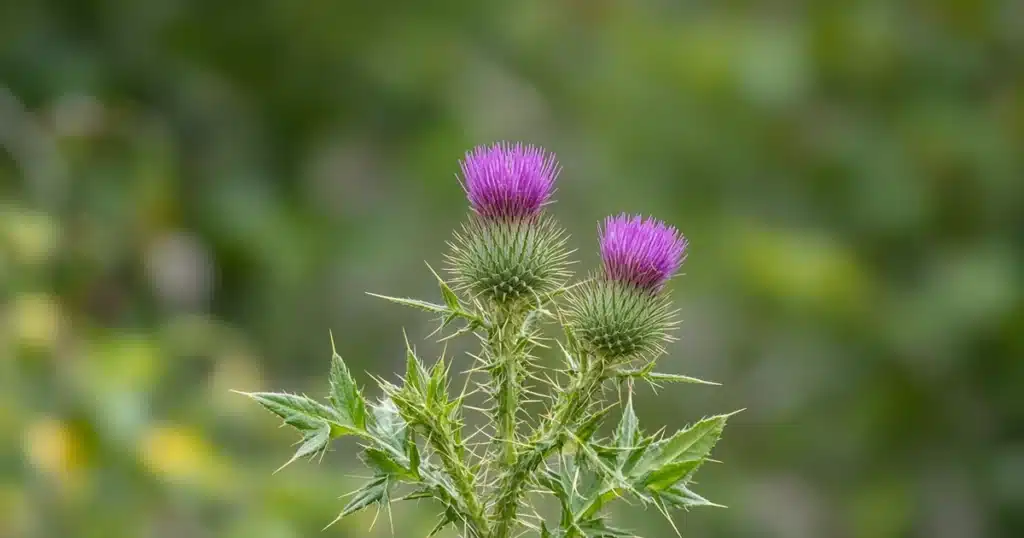
Quick answer: Bull thistle is a spiny biennial that forms a flat rosette in its first year, then bolts to about 5 feet with pinkish purple flowers in its second. WSU says it spreads only by seed, and NC State says one plant can make 4,000 seeds or more. Dig or hoe out rosettes before the flower stalk forms.
What Is Bull Thistle?
A two year thistle that reproduces only by seed. NC State Extension describes bull thistle as an upright, branching biennial in the daisy family, native to Europe, Siberia and the Arabian Peninsula. It grows in meadows, pastures, forest openings and roadside ditches and can invade almost any disturbed area.
Washington State University (WSU) Hortsense says bull thistle grows in pastures, fields, waste areas and roadsides on fairly rich, moist soils. WSU adds that it spreads only by seeds, unlike some creeping perennial thistles. Our overview of weed control in outdoor cannabis covers the general plan.
How Do You Identify Bull Thistle?
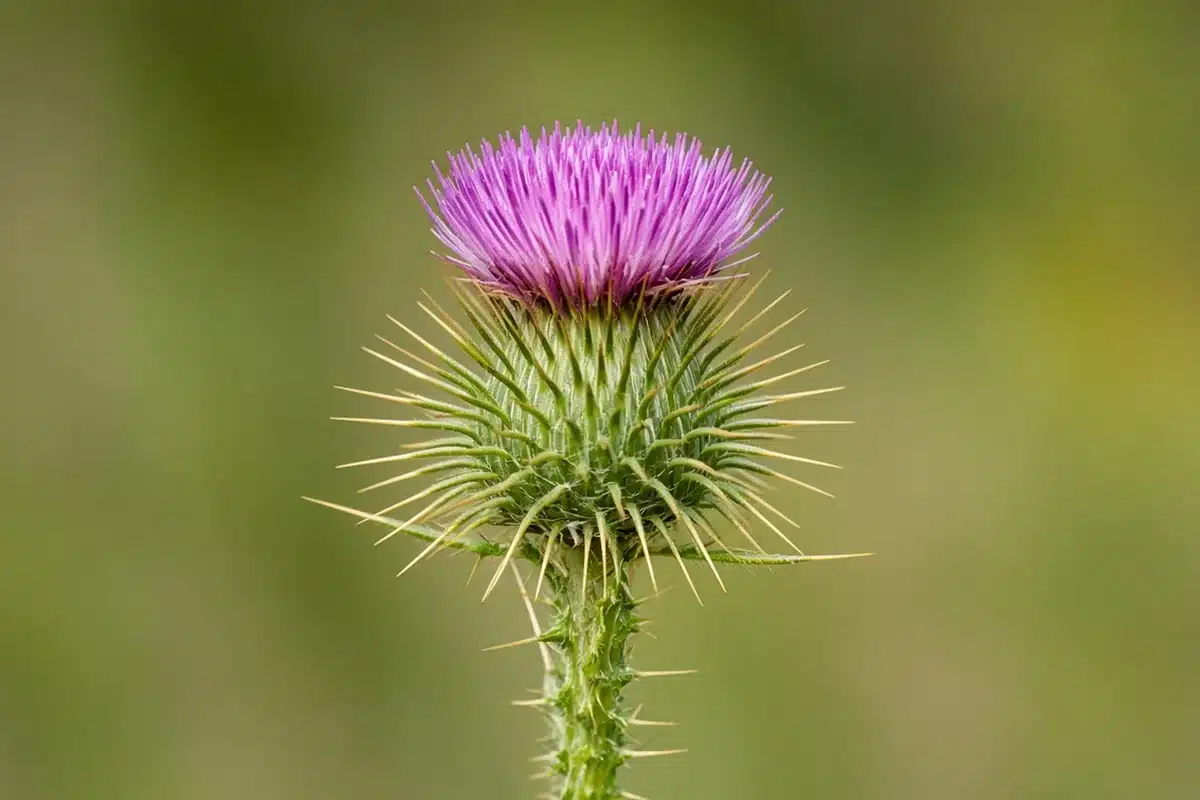
First, check the leaf surface. NC State says that to tell this species from other thistles, look for fine, bristle like spines on the upper surface of the leaves. Other features from NC State and WSU:
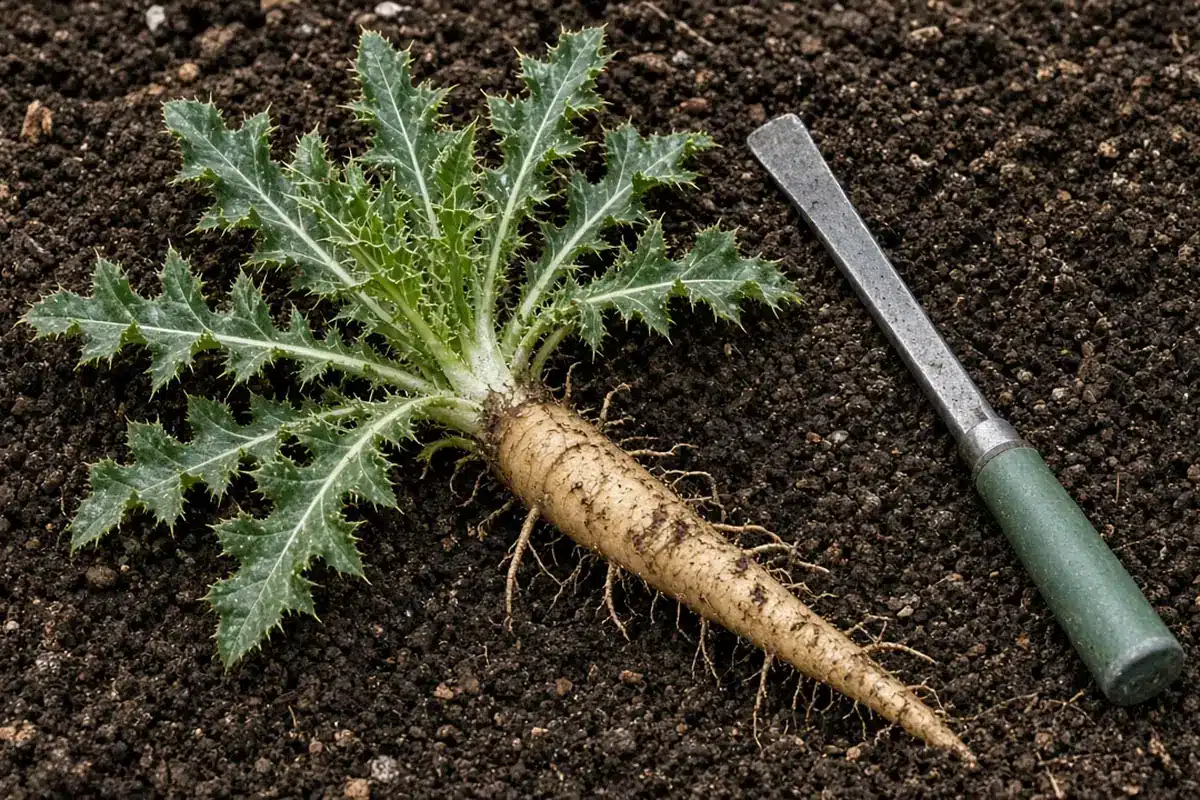
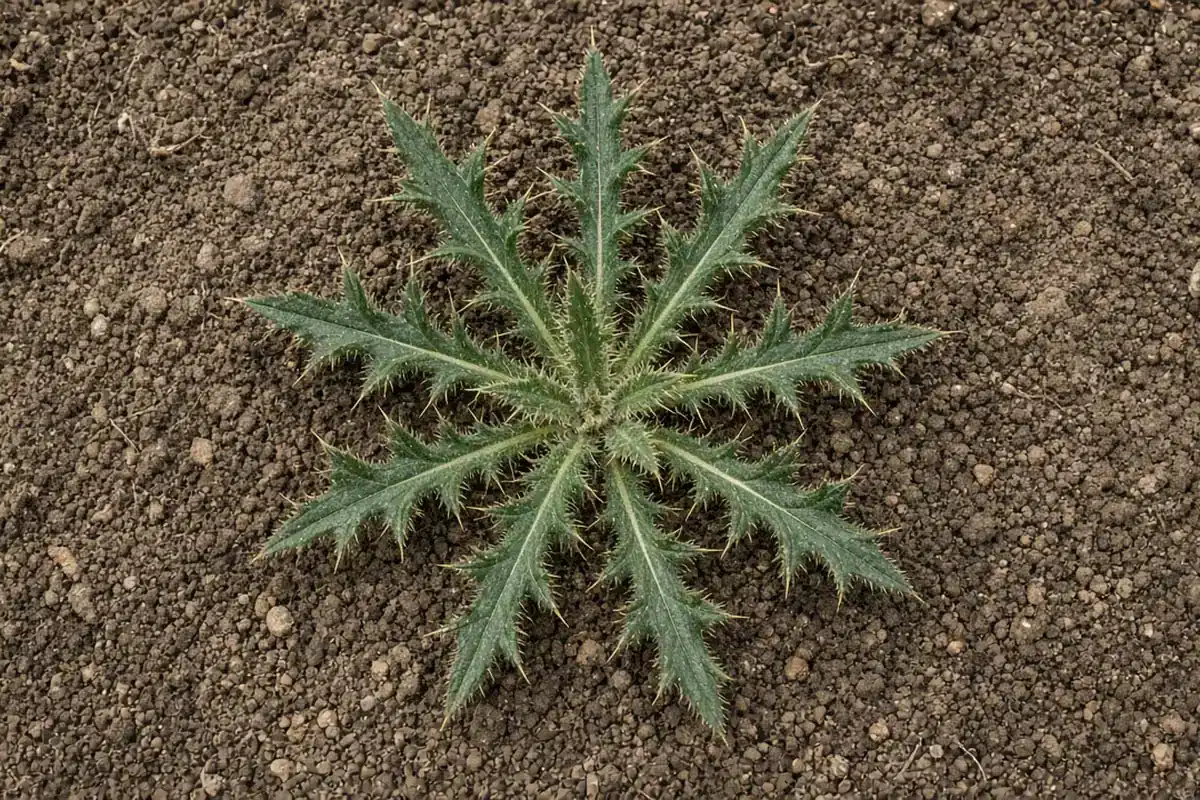
- First year. WSU says the plant is a rosette of deeply lobed, wavy edged leaves, prickly and hairy above and cottony below.
- Rosette size. NC State says rosette leaves can grow 8 to 24 inches long and are deeply cut and very spiny.
- Second year. WSU says mature plants may reach up to 5 feet tall and almost as wide.
- Stems. NC State says the leaf bases form spiny wings along the stem.
- Flowers. Pinkish purple heads about 1 1/2 to 2 inches across, alone or in groups of two or three, with spiny bracts beneath.
NC State says each seed carries a feathery tuft, similar to a dandelion seed, that helps it travel.
How Does Bull Thistle Spread?
By seed on the wind. NC State says each plant can produce 4,000 seeds or more, dispersed by wind, water, farm machinery and animals. The feathery tuft on each seed lets it drift into gardens from nearby fields and roadsides.
The same kind of drifting seed is what brings dandelions into beds, and our guide to dandelions in cannabis beds covers that pattern. With bull thistle, the fix is simple. Remove the plant before it flowers, and the next generation never starts.
Why Does Bull Thistle Matter Near Cannabis?
It is big and spiny. WSU says a second year plant can reach about 5 feet tall and almost as wide, with spiny, winged stems. A single plant at a bed edge takes space and makes the area unpleasant to work in.
The good news is that it is beatable. NC State says bull thistle populations tend to be short lived, settling after disturbance, dominating for a few years and then declining as other plants recover. NC State says that pattern may make it easier to control than other thistles. Removing rosettes before they flower stops their seed production.
When Does Bull Thistle Grow?
It happens over two seasons. WSU says the first year plant is a rosette. In the second year, it sends up a branching, spiny stem and flowers. NC State says it blooms from June to September, and WSU says the flowers appear in midsummer at the ends of branches.
UC IPM’s landscape guide says perennials and summer annuals are easiest to identify in mid to late summer. We use that same window to look for thistle rosettes. Mark them and dig them out before the next season, when they would bolt.
Should You Dig or Hoe Bull Thistle?
Both work, with a caution. WSU says cultivation, such as hoeing, will effectively eliminate plants, and that careful digging is useful. WSU warns that digging can carry weed seed to the surface and foster new germination.
Hoe or dig rosettes when the soil is moist, slicing below the crown. Our own habit is to fill and mulch the hole afterward, since WSU warns that digging can bring weed seed to the surface. Our guide to tilling vs no till cannabis beds explains more about how soil disturbance affects weeds.
How to Control Bull Thistle in a Cannabis Garden
- Wear thick gloves. NC State says the plant is spiny all over.
- Find first year rosettes. WSU says the first year plant is a rosette of deeply lobed, prickly leaves.
- Hoe or dig below the crown. WSU says cultivation will effectively eliminate plants.
- Remove plants before they flower. UC IPM’s landscape guide says to remove weeds before they flower and set seed.
- Bag flower heads. NC State says each plant can produce 4,000 seeds or more.
- Cover the soil you disturbed. WSU warns that digging can bring weed seed to the surface.
- Mulch the area. UC IPM recommends a medium mulch kept 3 to 4 inches deep. Our guide to mulch for cannabis compares materials.
Bull Thistle at a Glance
| Subject | Extension finding | Attribution |
|---|---|---|
| Life cycle | Biennial | NC State, WSU |
| Height | 2 to 5 feet | NC State, WSU |
| Key trait | Bristle like spines on upper leaf surface | NC State |
| Flowers | Pinkish purple, June to September | NC State |
| Seed | 4,000 or more per plant | NC State |
| Spread | Seed only | WSU |
Should You Use Herbicides Near Cannabis?
No. Pull, hoe shallowly and mulch. Remember that EPA has not registered any herbicide for use on marijuana, and state rules vary, so check with your state agriculture department. UC IPM says home gardeners who hand weed and mulch should not need herbicides. Before you plant cannabis outdoors, check your state’s home grow law.
Troubleshooting Bull Thistle
New rosettes appear after digging. WSU says digging can bring weed seed to the surface. Mulch disturbed soil.
You missed the rosette stage. WSU says second year plants bolt and flower. Cut and bag flower heads, then dig the root.
Hands and arms get scratched. NC State says the plant is spiny all over. Wear gloves and long sleeves.
Seedlings blow in each year. NC State says seed travels on wind and water. Clear nearby edges too.
You are not sure which thistle it is. NC State points to bristle like spines on the upper leaf surface.
At Kind Seed Co, we flag every thistle rosette we find in late summer and dig them before they can bolt.
Frequently Asked Questions
Is bull thistle a biennial?
Yes. NC State and WSU both describe bull thistle as a biennial. WSU says the first year plant is a rosette of deeply lobed leaves, and in the second year it sends up a spiny, branching stem up to about 5 feet tall and flowers. Removing rosettes in the first year stops it before seed.
How can I identify bull thistle?
Look for fine, bristle like spines on the upper surface of the leaves, which NC State says sets it apart from other thistles. NC State also notes spiny wings along the stem. WSU says the leaves are prickly and hairy on top and cottony underneath, and the flowers are dark pink to purple.
Does bull thistle spread by roots?
No. WSU says bull thistle spreads only by seeds, unlike some creeping perennial thistles. NC State says each plant can produce 4,000 seeds or more, carried by wind, water, machinery and animals. That makes removal before flowering the most important step, since stopping seed stops the next generation.
How do I get rid of bull thistle?
Hoe or dig it. WSU says cultivation such as hoeing will effectively eliminate plants and that careful digging is useful, though digging can bring weed seed to the surface. Remove rosettes before they bolt, wear thick gloves and mulch the disturbed soil afterward so buried seed has less light.
When does bull thistle bloom?
NC State says bull thistle blooms from June to September, and WSU says the flowers appear in midsummer at the ends of branches. Because it flowers in its second year, the best time to remove it is while it is still a first year rosette, before any flower stalk rises.
Sources
- NC State Extension Gardener Plant Toolbox, Cirsium vulgare: https://plants.ces.ncsu.edu/plants/cirsium-vulgare/
- Washington State University Hortsense, Weeds: Bull thistle: https://hortsense.cahnrs.wsu.edu/fact-sheet/weeds-bull-thistle-cirsium-vulgare/
- UC Statewide IPM Program, Weed Management in Landscapes: https://ipm.ucanr.edu/home-and-landscape/weed-management-in-landscapes/


