
Red Sorrel in Cannabis Beds: An Acid Soil Weed Guide
Quick answer: Red sorrel, also called sheep sorrel, is a low perennial with arrowhead shaped leaves and slender stalks of tiny flowers that turn reddish. UC IPM says it spreads from creeping roots and by seed. NC State says it favors acidic soil and suggests raising soil pH, hand pulling and digging out roots. Test your soil first.
What Is Red Sorrel?
A creeping perennial in the knotweed family (Polygonaceae). The University of California Statewide IPM Program (UC IPM) calls red sorrel a perennial broadleaf of agricultural land and other disturbed areas. Its habitat list includes pastures, crop fields, landscaped areas, gardens and roadsides.
NC State Extension calls the same plant sheep sorrel and says it is native to Eurasia. It prefers full or partial sun, mesic to dry conditions and acid, sandy soil, though it also thrives in loam or clay loam at disturbed sites. Our overview of weed control in outdoor cannabis covers the general plan.
How Do You Identify Red Sorrel?
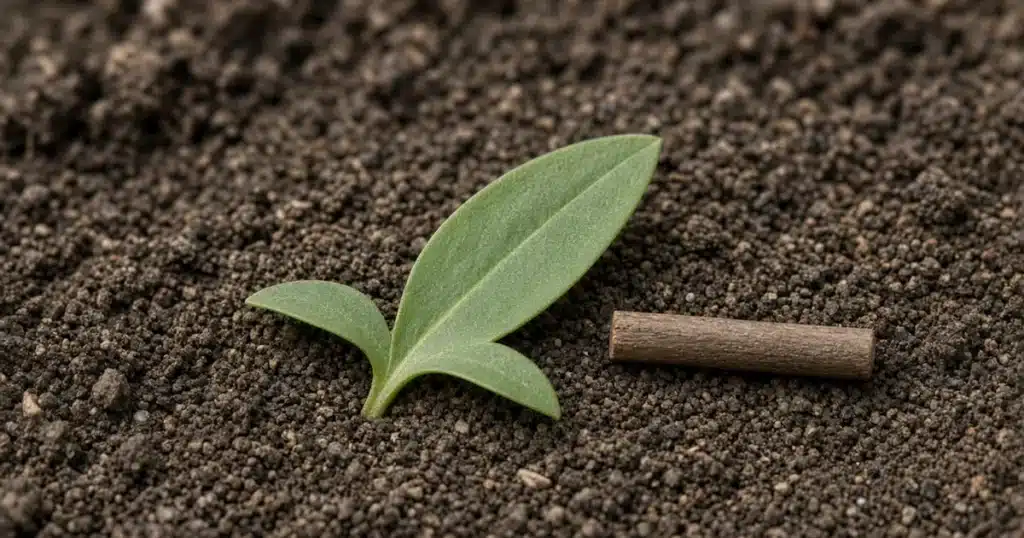
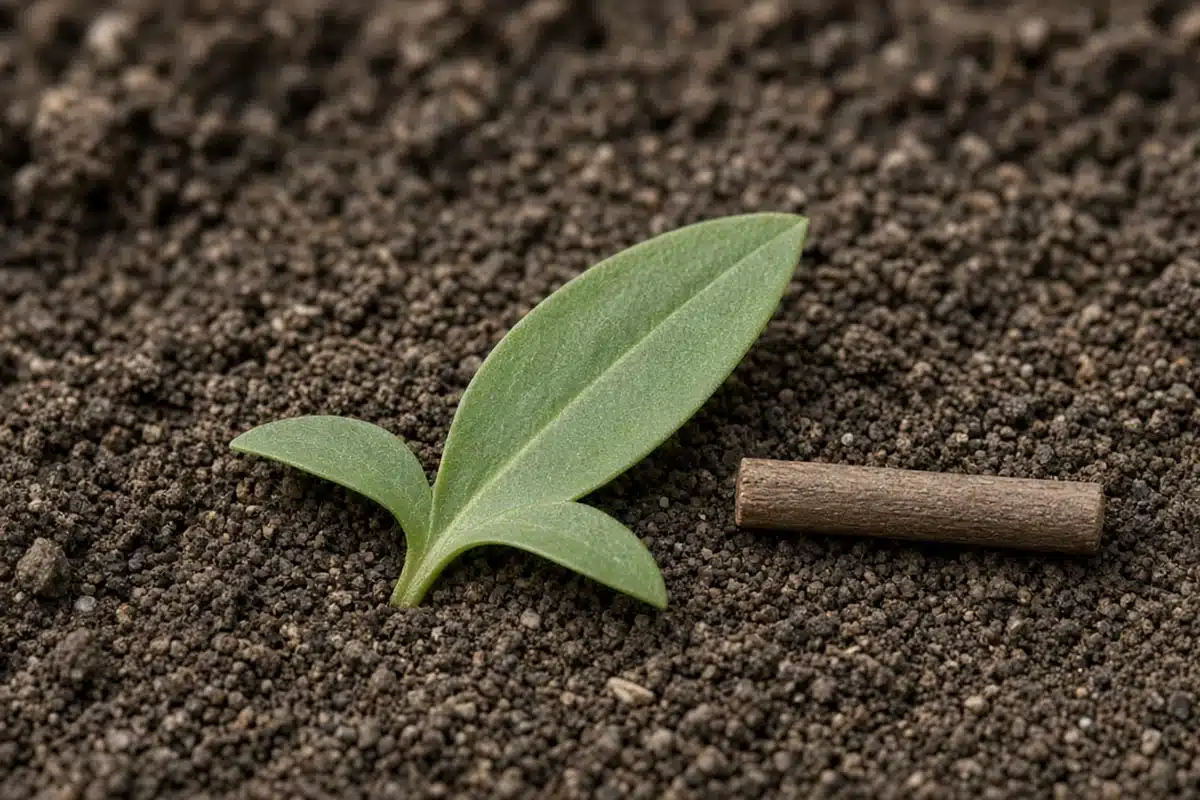
Start by looking at the leaf shape. UC IPM says the lower leaves develop basal lobes that give them an arrowhead shape. Other features from UC IPM and NC State:
- Height. UC IPM says one or a few slender stems grow up to 1 1/3 feet. NC State gives up to 18 inches.
- Leaves. Hairless and mostly near the base. Lower leaves are about 4/5 to 4 inches long, sometimes on stalks longer than the leaf.
- Sheath. A membranous sheath circles the stem at the base of each leaf.
- Stalks. NC State says the flowering stalks are slender, upright and ridged in red.
- Flowers. Small clusters along branching stalks, yellowish green at first, then reddish.
- Plants. NC State says plants carry either red female flowers or yellowish green male flowers.
UC IPM says the first few leaves are egg shaped, and later leaves take on the arrowhead form.
How Is Red Sorrel Different From Curly Dock?
Both are in the same family, but UC IPM lists clear differences. Red sorrel has creeping roots, arrowhead shaped leaves, and no teeth or projections on the flower parts that stay attached to the fruit.
Size is another clue. Red sorrel stays low, up to about 1 1/3 feet tall in UC IPM’s description, with leaves only a few inches long. If the plant forms a small patch of arrowhead leaves joined by creeping roots, red sorrel is the likely match.
Why Does Red Sorrel Matter Near Cannabis?
It creeps and it hints at your soil. NC State says sheep sorrel is aggressive and difficult to manage or eradicate because of its creeping rhizome roots. UC IPM says it reproduces from creeping roots and by seed, so a small patch can spread.
NC State also says the plant prefers acidic conditions and thrives where blueberries do. A patch near your beds may be a sign of acidic soil. Before you change anything, run a test. Our guide to soil testing for cannabis walks through the process.
When Does Red Sorrel Grow?
For most of the year, in fact. UC IPM says flowering takes place from March through November, and NC State gives the same March to November window. As a perennial, it can regrow from its creeping roots.
That long season means you will see it during every garden visit. Dig out patches and their creeping roots before they set seed, and check again after your cannabis is planted. Remove any flowering stalks before the reddish fruit forms.
Will Raising Soil pH Help?
It can, if the test calls for it. NC State lists increasing the soil’s pH as one control method, along with hand pulling and digging out roots. That fits a plant that, in NC State’s words, prefers acidic conditions.
Only lime soil that a test shows is too acidic. Our guide to garden lime for cannabis explains how to read the results and when lime makes sense. Liming alone will not remove an established patch, so dig out the creeping roots as well.
How to Control Red Sorrel in a Cannabis Bed
- Learn the arrowhead leaf. UC IPM describes basal lobes that give lower leaves an arrowhead shape.
- Test your soil. NC State says red sorrel prefers acidic conditions.
- Dig out the roots. NC State lists digging out roots as a control method.
- Follow the runners. UC IPM says it reproduces from creeping roots.
- Pull flowering stalks. UC IPM says it flowers from March through November.
- Adjust pH only if needed. NC State lists increasing soil pH as one control step.
- Mulch the cleared area. UC IPM recommends a medium mulch kept 3 to 4 inches deep. Our guide to mulch for cannabis compares materials.
Red Sorrel at a Glance
| Subject | Extension finding | Attribution |
|---|---|---|
| Life cycle | Perennial | UC IPM, NC State |
| Height | About 1 1/3 feet (UC IPM), 18 inches (NC State) | UC IPM, NC State |
| Leaves | Arrowhead shaped, hairless | UC IPM, NC State |
| Bloom | March through November | UC IPM, NC State |
| Spread | Creeping roots and seed | UC IPM |
| Soil | Acidic, sandy, mesic to dry | NC State |
Should You Use Herbicides Near Cannabis?
No. Pull, hoe shallowly and mulch. Remember that EPA has not registered any herbicide for use on marijuana, and state rules vary, so check with your state agriculture department. UC IPM says home gardeners who hand weed and mulch should not need herbicides. Before you plant cannabis outdoors, check your state’s home grow law.
Troubleshooting Red Sorrel
Patches return after pulling. UC IPM says it spreads from creeping roots. Dig out the root system, not just the top.
It keeps spreading in one bed. NC State says it favors acidic soil. Test that bed’s pH.
You cannot tell it from curly dock. UC IPM points to creeping roots and arrowhead leaves on red sorrel.
Flowering stalks turned red. UC IPM says the flowers turn reddish as they age. Remove stalks before fruit forms.
Lime did not clear it. NC State pairs pH changes with pulling and digging. Remove the roots too.
At Kind Seed Co, we read a patch of red sorrel as a nudge to check soil pH before the next planting.
Frequently Asked Questions
Is red sorrel the same as sheep sorrel?
Yes. UC IPM uses the name red sorrel and NC State uses sheep sorrel for Rumex acetosella. It is a low perennial with arrowhead shaped leaves, slender stalks of small flowers that turn reddish and creeping roots. Both sources describe a weed of disturbed ground that spreads from its roots as well as by seed.
Does red sorrel mean my soil is acidic?
It can be a hint. NC State says sheep sorrel prefers acidic conditions and thrives where blueberries are grown. It also grows in loam or clay loam at disturbed sites, so it is not proof on its own. Test the soil before adding lime, and change pH only if the results call for it.
How do I get rid of red sorrel?
NC State lists increasing the soil’s pH, hand pulling and digging out roots as control methods. UC IPM says it reproduces from creeping roots and by seed, so digging out the root system matters. Remove flowering stalks before fruit forms, and mulch the cleared area to slow new seedlings.
How can I identify red sorrel?
Look for hairless, arrowhead shaped lower leaves with spreading basal lobes, as UC IPM describes, and a thin papery sheath around the stem at each leaf base. NC State says the slender flowering stalks have reddish ridges and carry red female or yellowish green male flowers. Plants stay under about 18 inches.
When does red sorrel flower?
UC IPM and NC State both say red sorrel flowers from March through November. The small flowers start yellowish green and turn reddish, according to UC IPM. That long season means you can spot it on almost every visit, so dig patches early in spring before the roots spread further.
Sources
- UC Statewide IPM Program, Red Sorrel, Weed Gallery: https://ipm.ucanr.edu/weeds-identification-gallery/red-sorrel/
- NC State Extension Gardener Plant Toolbox, Rumex acetosella: https://plants.ces.ncsu.edu/plants/rumex-acetosella/
- UC Statewide IPM Program, Weed Management in Landscapes: https://ipm.ucanr.edu/home-and-landscape/weed-management-in-landscapes/


