Cannabis nute burn vs light burn
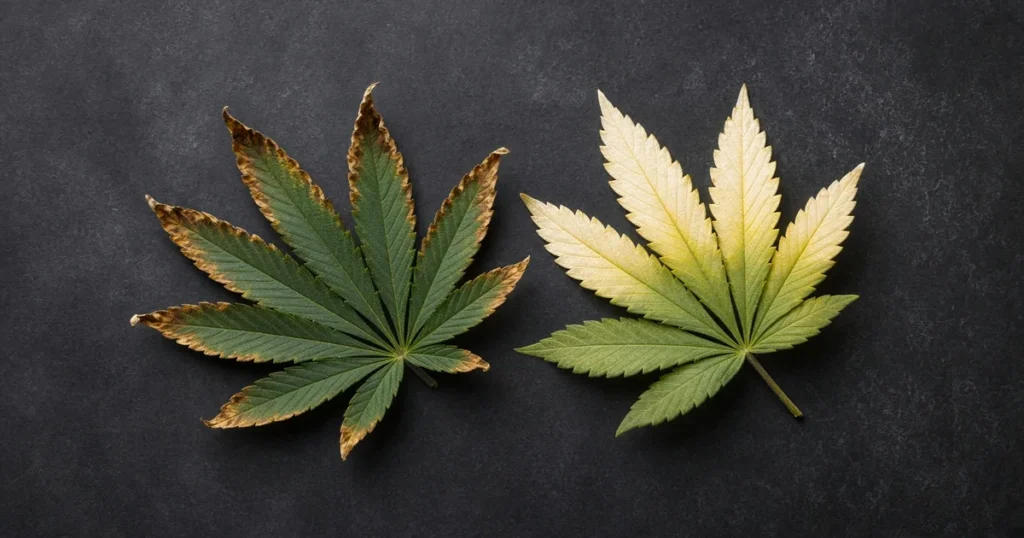
Nutrient burn and light burn both leave leaves looking damaged, and both are caused by giving the plant too much of a good thing. But they show up in different places, look different up close and need different fixes. Mix them up and you might cut feed when the problem is your light, or raise the light when roots are drowning in salts. This side by side guide shows how to tell them apart quickly. It is for adults 21 and older growing where home cultivation is legal.
The 30 second test
Ask two questions.
- Where is the damage? Light burn hits the top of the plant, closest to the light. Nutrient burn shows on leaves all over the plant, often starting at the tips.
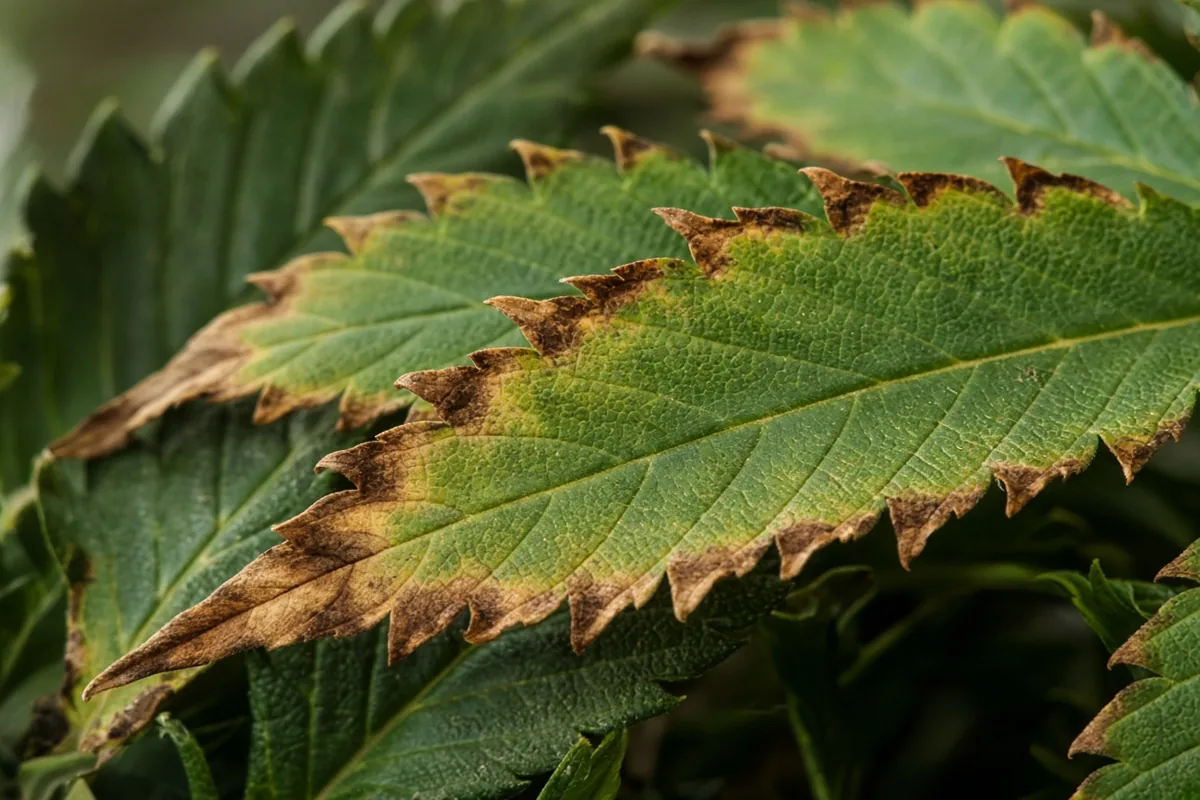
- What color is it? Light burn bleaches leaves pale yellow or white. Nutrient burn turns tips brown and crispy, often with a yellow edge.
Side by side
| Feature | Nutrient burn | Light burn |
|---|---|---|
| Where | Throughout the plant, tips first | Top leaves and colas nearest the light |
| Color | Brown or bronze crispy tips | Pale yellow to white bleaching |
| Leaf veins | Usually stay normal | Veins may stay green while leaf bleaches |
| Spread | Tips first, moving inward | Center of canopy first |
| Lower leaves | Often affected | Usually fine |
| Bud impact | Burnt sugar leaves | Bleached buds, possible loss of quality |
| Main fix | Lower feed strength, flush if needed | Raise or dim light |
Nutrient burn in detail
Nutrient burn happens when roots take up more salts than leaves can use. Excess builds at the leaf tips, and the tissue dies. It often starts as a slight yellow tip that turns brown and crispy, and the burn moves inward along the edges if feeding stays high.
Common triggers:
- Feeding at full label strength without testing
- Adding boosters on top of a complete feed
- Letting a medium dry out too much, which concentrates salts
- Hot soil mixes with strong amendments
Fix: Lower feed strength. In coco or hydro, mix a weaker solution and check runoff strength. In soil, water with plain water for a cycle or two. If runoff is very strong, flush with pH balanced water. Then feed at a lower level. Our pH guide explains why pH matters for uptake.
Light burn in detail
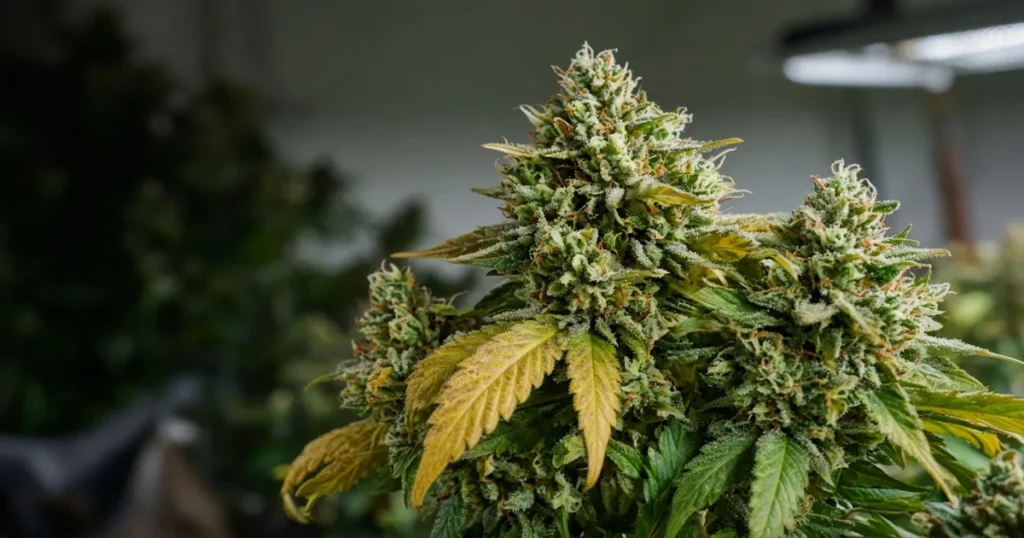
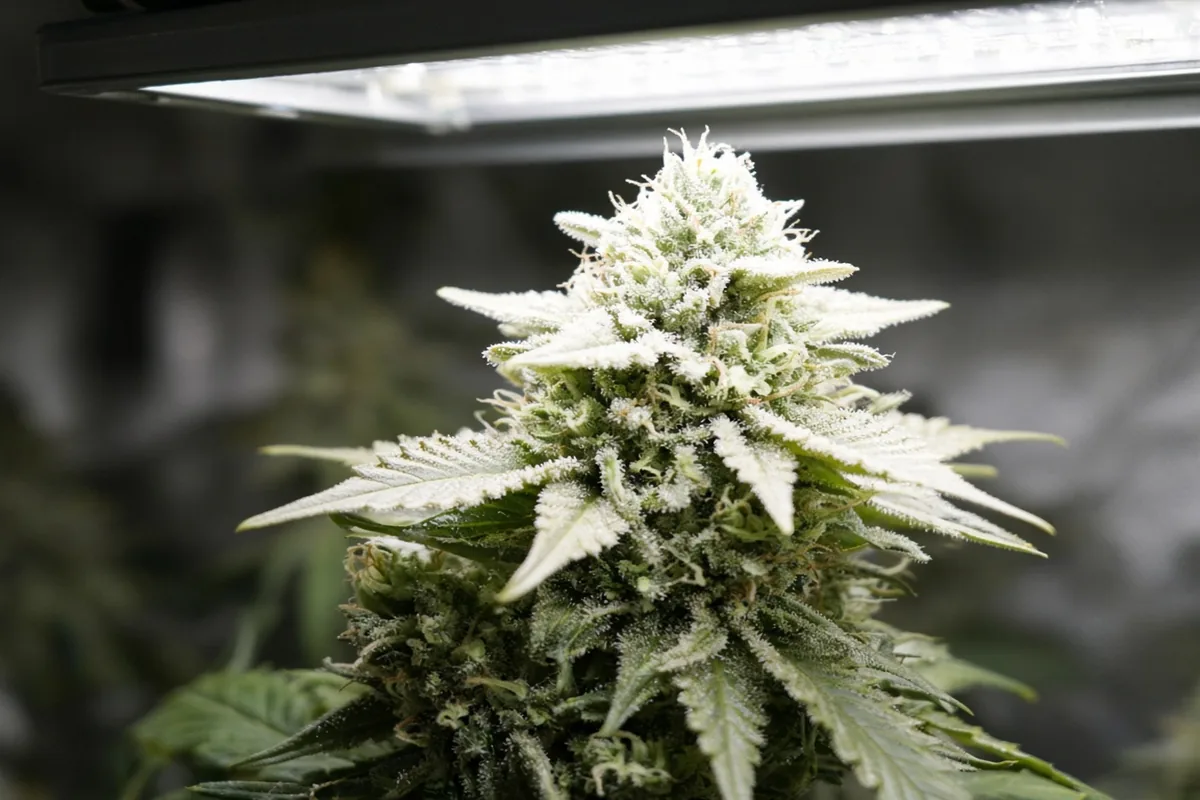
Light burn happens when light intensity is more than the leaves can process. Modern LEDs can bleach leaves without feeling hot, so growers are often surprised. The top colas and the leaves just under the light turn pale yellow, then white, while lower leaves stay green.
Common triggers:
- Light too close to the canopy
- Dimmer set too high for the stage
- A plant stretching into the light in early flower
- Heat adding to the stress
Fix: Raise the light or lower its power. Keep the canopy even by training plants so no cola sits much closer than the rest. Our grow light heat management guide covers distance and heat, and heat stress guide explains temperature targets.
When you see both
It is common to see both kinds of damage at once, especially in flower when growers raise both light and feed. Fix light first, because it is quick and the plant responds fast. Then lower feed. Changing both at once is fine if damage is serious, but you lose the ability to tell which change helped.
Look alikes
- Tacoing folds leaves up near the light. It often comes before light burn. See our tacoing post.
- Claw shows dark green leaves with tips bent down and points to nitrogen excess. See our claw leaves post.
- Potassium deficiency also browns leaf edges but usually starts mid leaf with rusty spots.
- Late flower fade yellows leaves from the bottom up and is normal.
Our post on how to spot 8 common deficiencies by leaf symptoms helps sort out deficiency patterns.
Two quick case studies
Case one. A grower in coco notices brown tips on most leaves, top to bottom, about a week after adding a bloom booster on top of a full feed. The canopy color is otherwise normal and the light has not moved. That is nutrient burn. Dropping the booster and lowering feed strength stops new tips from browning within a few days.
Case two. Another grower raises a dimmer to full power at the start of flower. Two weeks later the tallest colas are pale and the leaves right under the center of the light look almost white, while lower leaves are deep green. Tips are not crispy. That is light burn. Raising the fixture and lowering power brings new growth back to normal color.
Measuring helps
A simple meter for feed strength and a light meter or phone app give you numbers to compare over time. You do not need lab tools. The goal is to notice changes before the leaves do, and to have a record when something goes wrong.
Do damaged leaves recover?
Burnt tips and bleached leaves will not turn green again. Remove leaves only if they are fully dead. Judge your fix by new growth over the next week. Bleached buds will not regain color, so harvest them normally if they are otherwise healthy.
Preventing both
- Start new feeds weaker than the label and increase slowly.
- Measure runoff strength now and then if you grow in coco or hydro.
- Ramp up light intensity over a week when moving to flower.
- Keep the canopy level with training so no tops get too close.
- Keep a log of feed, light setting and distance.
For more help, use our Fix My Plant page. Steady feeding, sensible light levels and healthy genetics make both kinds of burn rare.
Grow legally and responsibly
Home cultivation is only legal in some states, and each state sets its own plant limits, locking rules and rules about whether plants can be visible from a public place. You must be 21 or older to buy seeds from Kind Seed Co, and you should grow only where your state and city allow it. Check your state rules in our guide to the legal requirements for growing weed plants in your state before you plant. Federal treatment of cannabis seeds is also changing, so read our December 11 2026 seed rule explainer before you order. Keep plants and harvested flower locked away from children, pets and visitors, and never drive after using cannabis. This article is general information. It is not legal advice and it is not medical advice.
Frequently asked questions
How can I tell nute burn from light burn?
Look at where and what color. Light burn bleaches top leaves near the light pale yellow or white. Nutrient burn turns tips brown and crispy throughout the plant.
Can LED lights burn cannabis?
Yes. LEDs can bleach leaves through intensity alone, even if they do not feel hot.
How do I fix nutrient burn?
Lower feed strength, water with plain or weaker solution and flush if runoff is very strong.
Will burnt leaves recover?
No. Damaged tissue stays damaged, but new growth should be healthy once the cause is fixed.
Final thoughts
Nutrient burn browns tips across the plant, while light burn bleaches the tops nearest the light. Check where and what color, fix the light first if both appear and lower feed strength next. Watch new growth to confirm the fix.
Ready to start
Browse the full range in the Kind Seed Co shop or go straight to fix my plant. Kind Seed Co sells only to adults 21 and older. Always follow the cannabis laws where you live.