IPM plan for an indoor cannabis grow
Most indoor pest disasters start small. A single clone brings in a few mites, a bag of soil carries gnat eggs or a pet brings thrips in from the garden. By the time you see damage, the population may be in the thousands. Integrated pest management, or IPM, is a plan to stop that from happening. Instead of reaching for a spray once pests show up, IPM layers prevention, regular scouting and gentle responses so problems stay small. This guide lays out a simple IPM plan for an indoor home grow. It is for adults 21 and older growing where home cultivation is legal.
The four layers of IPM
- Exclusion. Keep pests out.
- Monitoring. Find problems early.
- Cultural controls. Make your grow a bad home for pests.
- Targeted response. Act quickly and gently when something shows up.
Layer 1. Exclusion
Most pests arrive with you, your plants or your supplies.
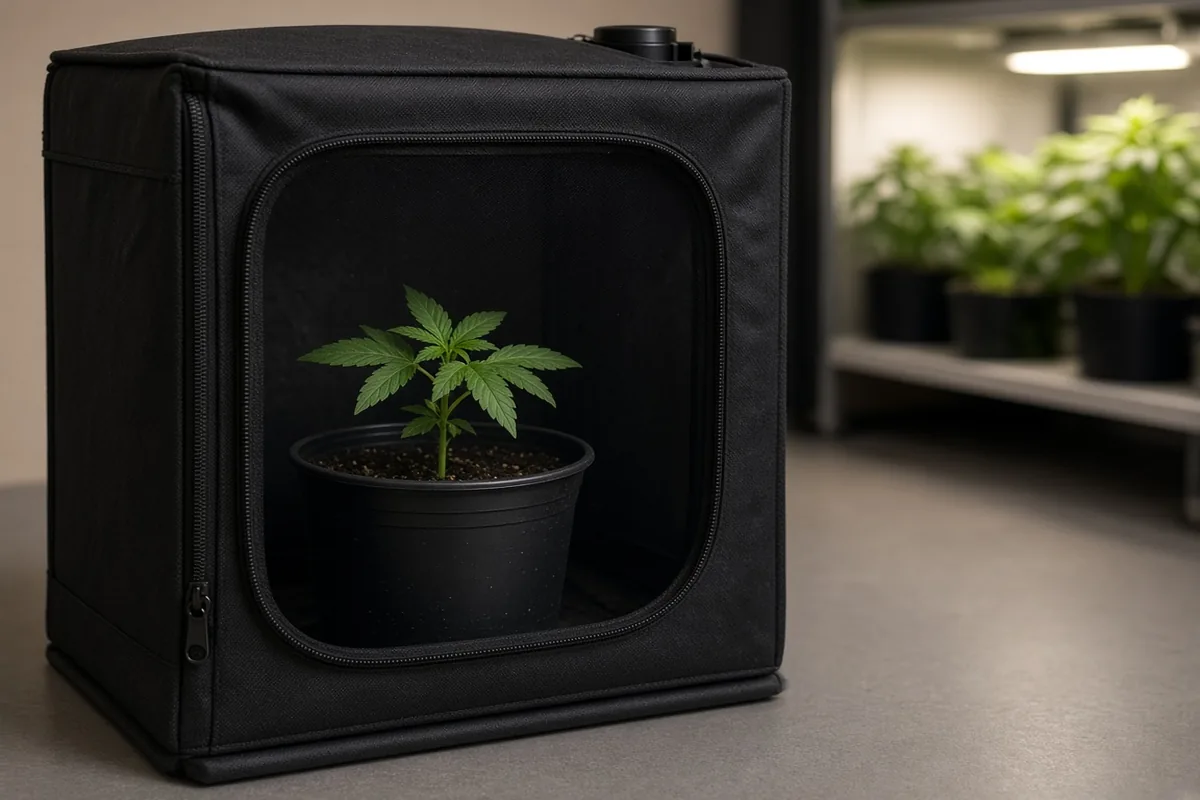
- Quarantine new plants. Keep clones or gifted plants in a separate space for one to two weeks and inspect them before they join the main grow.
- Start from seed when you can. Seeds do not carry mites or insects, which makes them the cleanest way to start.
- Change clothes after gardening outside. Thrips, aphids and mites hitch rides on clothing.
- Keep pets out of the grow room.
- Use clean media. Store soil and coco sealed, and let bagged soil dry a bit before use to reduce gnats.
- Filter intake air. A simple intake filter keeps out many flying insects.
Layer 2. Monitoring
Scouting is the heart of IPM. Pick one day a week and stick to it.
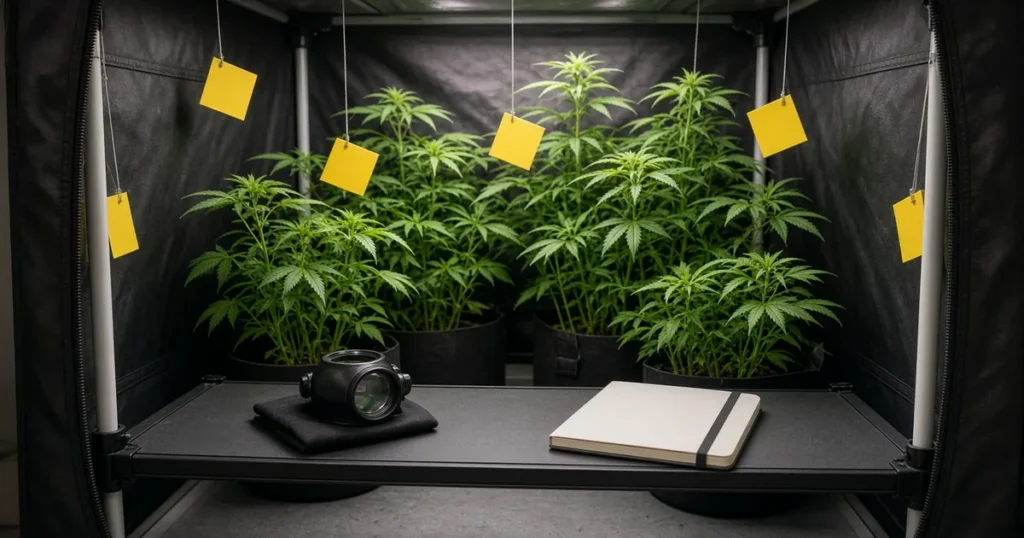
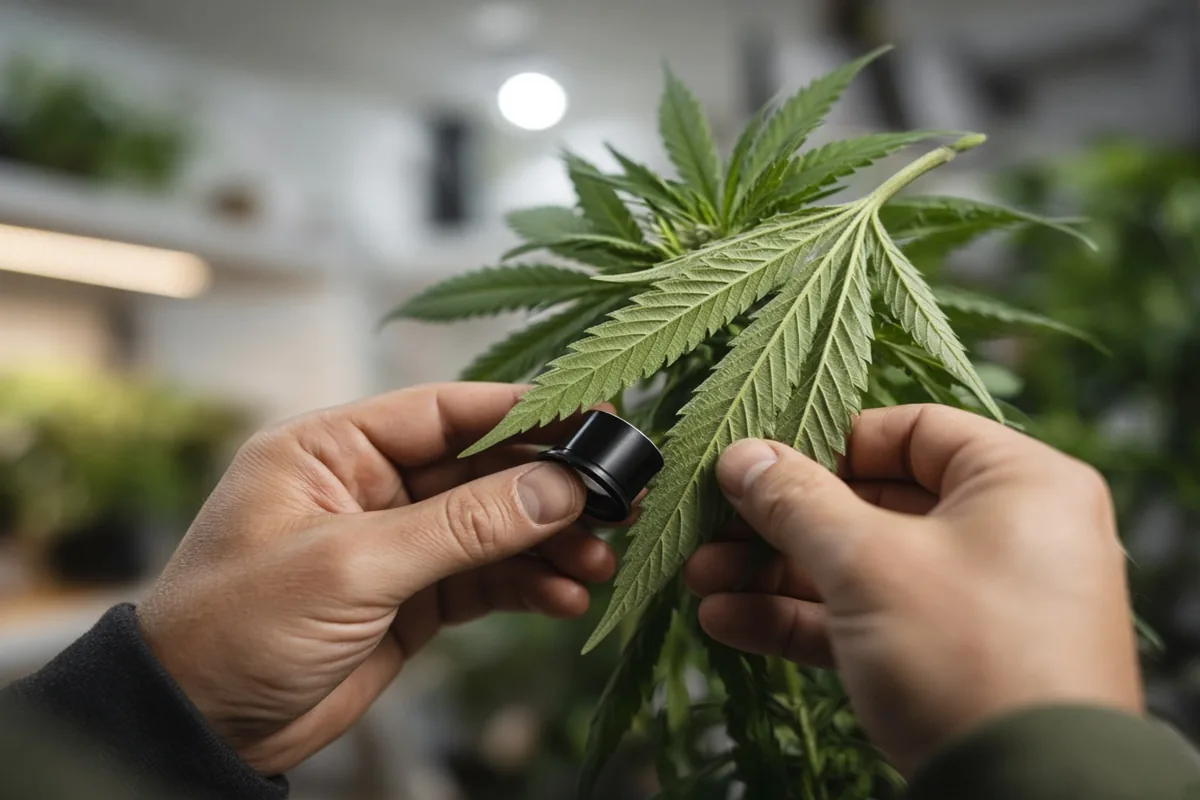
- Check leaf undersides with a loupe or phone macro lens, especially on lower and middle leaves.
- Hang yellow sticky traps near the canopy and the soil line. Count catches each week.
- Look for stippling, tiny pale dots that signal sucking pests.
- Check stems and new growth for curled or twisted leaves.
- Lift pots and look at the soil for gnats or root pests.
Write down what you see. A notebook makes it clear when numbers rise.
Layer 3. Cultural controls
Healthy plants in a stable environment resist pests better.
- Airflow. Fans that move air across and under the canopy discourage gnats and mites.
- Humidity. Very dry air favors spider mites, while wet soil favors gnats. Keep both in reasonable ranges.
- Watering. Let the top of the medium dry between waterings to break the gnat cycle. Our overwatering guide guide helps.
- Cleanliness. Sweep up dead leaves, wipe surfaces and clean tools between grows.
- Spacing and pruning. Remove lower growth that sits in shade and touches soil.
Layer 4. Targeted response
When you find pests, act fast, start gentle and escalate only as needed.
| Pest | Early signs | Gentle first steps | Learn more |
|---|---|---|---|
| Spider mites | Stippling, fine webbing | Rinse leaves, raise humidity in veg, predatory mites | spider mite strategies |
| Thrips | Silver streaks, black specks | Sticky traps, predatory mites, remove affected leaves | thrips guide |
| Fungus gnats | Small flies at soil | Dry topsoil, sticky traps, beneficial nematodes | fungus gnats guide |
| Aphids | Clusters on new growth, sticky residue | Hand removal, water spray, beneficial insects | aphids guide |
| Root aphids | Stunted plant, no obvious cause | Inspect roots, beneficial nematodes | root aphids guide |
| Russet mites | Bronzing, curled edges, hard to see | Magnification, early action | russet mites guide |
Beneficial insects, such as predatory mites and nematodes, are popular in IPM because they keep hunting after you release them. They work best when pest numbers are still low.
Using sprays wisely
If you use any spray, read and follow the label, and only use products allowed on consumable crops where you live. Spray in veg, not on flowers, because residue can end up in the harvest. Test on one leaf first and spray when lights are off or dim to avoid leaf burn. Our guide on protecting plants from pests and bugs covers more options.
A sample weekly routine
- Monday. Scout leaves, count sticky traps, note findings.
- Wednesday. Water check, clean floor, empty trash.
- Friday. Inspect new growth and roots on one random pot.
- Every two to four weeks in veg. Release beneficials as a preventive step if you use them.
Between grows
The best time to break a pest cycle is between runs. Remove all plant material, wash the tent or room, clean fans and ducting, and let the space sit empty and dry for a few days if possible. Replace sticky traps and intake filters.
Setting action thresholds
IPM works best when you decide ahead of time what will trigger action. A home grower might write: one or two gnats on a trap is fine, but ten or more in a week means letting the topsoil dry longer and adding nematodes. Any sign of mites on a leaf means isolating that plant and inspecting every plant nearby. Any webbing means an immediate response. Writing thresholds down keeps you from overreacting to a single bug or ignoring a growing problem.
Keeping records
A simple table in your notebook with columns for date, trap counts, pests seen, actions taken and results is enough. Over a few grows, you will notice patterns, such as gnats always appearing after a new bag of soil, or mites showing up when the room gets dry in winter. Those patterns tell you where to focus prevention next time.
Mistakes to avoid
- Bringing in untested clones straight into flower
- Spraying buds in flower
- Using the same product over and over, which can lead to resistance
- Ignoring low trap counts until they spike
For more pest help, visit our pests and animals page or the Fix My Plant page. A clean start from seed and a weekly habit of scouting go a long way.
Grow legally and responsibly
Home cultivation is only legal in some states, and each state sets its own plant limits, locking rules and rules about whether plants can be visible from a public place. You must be 21 or older to buy seeds from Kind Seed Co, and you should grow only where your state and city allow it. Check your state rules in our guide to the legal requirements for growing weed plants in your state before you plant. Federal treatment of cannabis seeds is also changing, so read our December 11 2026 seed rule explainer before you order. Keep plants and harvested flower locked away from children, pets and visitors, and never drive after using cannabis. This article is general information. It is not legal advice and it is not medical advice.
Frequently asked questions
What is IPM in cannabis growing?
Integrated pest management is a plan that combines exclusion, regular scouting, good growing conditions and targeted, gentle responses to keep pests at low levels.
How often should I scout for pests?
At least once a week. Check leaf undersides, sticky traps, new growth and soil.
Should I spray my plants in flower?
No. Avoid spraying buds. Use sprays in veg only and follow the label.
Are beneficial insects worth it indoors?
Yes for many growers. Predatory mites and nematodes work best when released early and pest numbers are low.
Final thoughts
An indoor IPM plan is a habit, not a product. Keep pests out, scout weekly, run a clean and stable grow and respond early with the gentlest effective step. Small, regular effort prevents the big infestations that ruin harvests.
Ready to start
Browse the full range in the Kind Seed Co shop or go straight to pests and animals. Kind Seed Co sells only to adults 21 and older. Always follow the cannabis laws where you live.