
Catchweed Bedstraw in Cannabis Gardens: Sticky Weed Guide
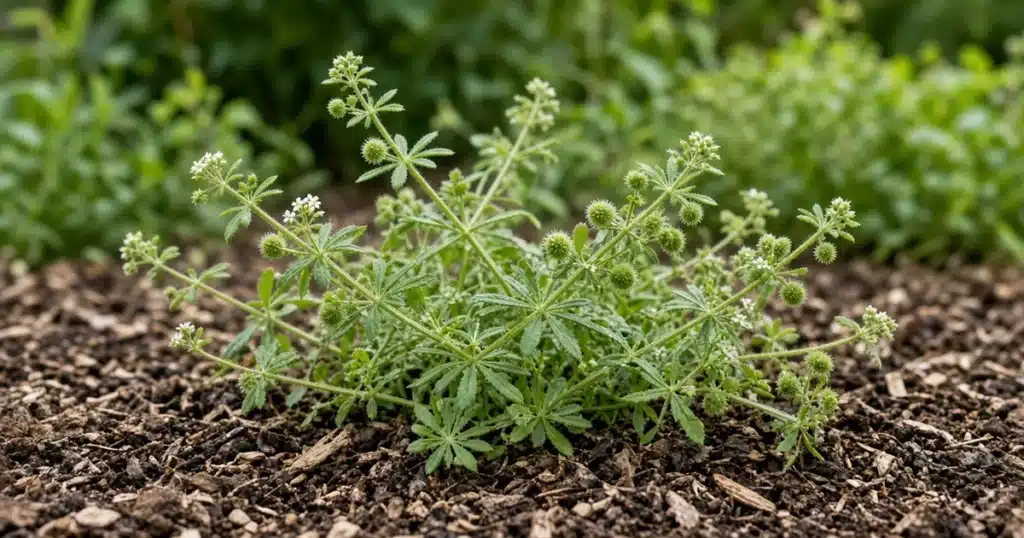
Quick answer: Catchweed bedstraw, also called cleavers or sticky willy, is an annual with weak square stems, whorls of six to eight leaves and tiny hooked prickles that cling to anything they touch. UC IPM says it reproduces by seed. Pull it while small, before the bristly fruits form, and mulch bare soil so new seedlings have less room.
What Is Catchweed Bedstraw?
A clinging annual in the madder family. The University of California Statewide IPM Program (UC IPM) calls catchweed bedstraw a winter or summer annual broadleaf that usually needs a disturbance to establish. It is common in gardens, yards, orchards, crop fields and other disturbed habitats.
NC State Extension calls the same plant sticky willy and says it is found in most of North America. It grows in meadows, woodlands, flood plains, abandoned fields and cultivated crops. Our overview of weed control in outdoor cannabis covers the basics, and this guide focuses on a weed that you often notice first on your sleeves.
How Do You Identify Catchweed Bedstraw?
Run a stem through your fingers. UC IPM says the stems are square in cross section, weak and covered in tiny down curved prickles. Other features from UC IPM and NC State:
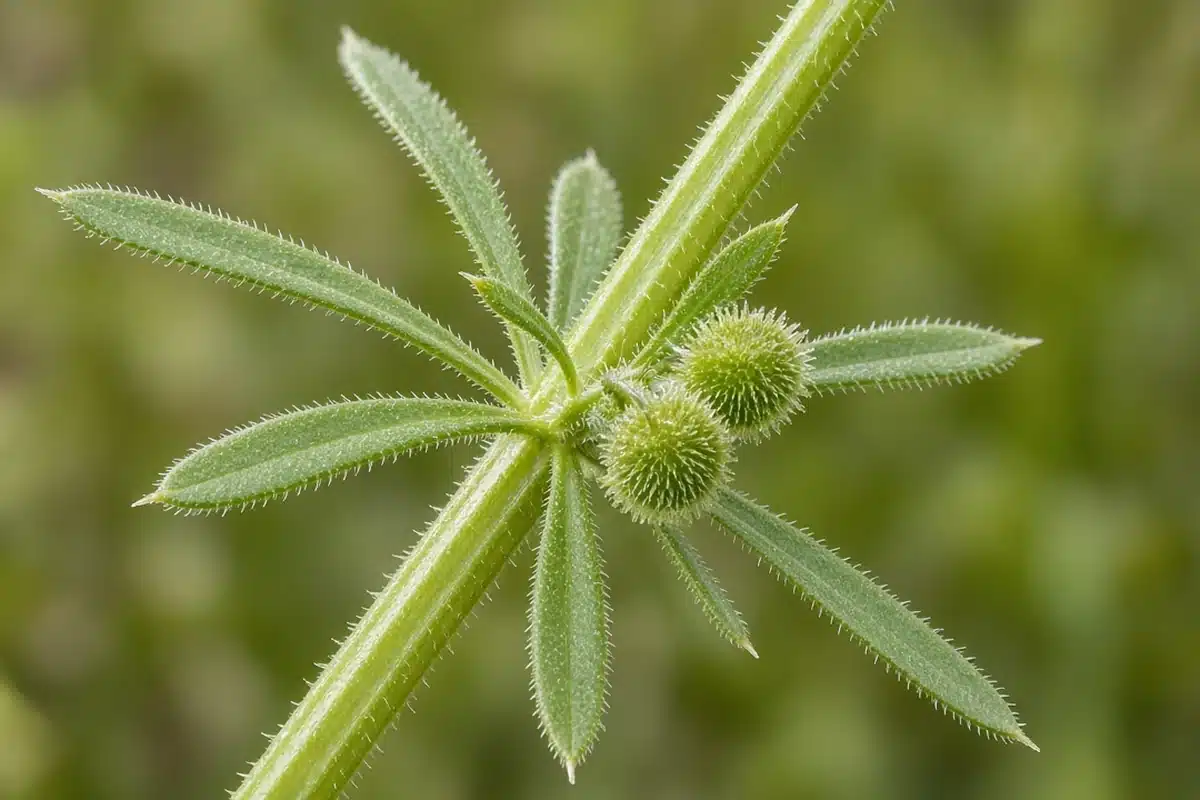
- Leaves. Whorls of six to eight around the stem. UC IPM gives a length of about 3/5 to 1 2/5 inches, with bristled tips.
- Touch. Tiny curved prickles on the leaf edges and midveins give the leaves a raspy or sticky feel.
- Length. UC IPM says plants reach up to 3 1/3 feet long. NC State says it can grow up to 6 feet but cannot stand on its own.
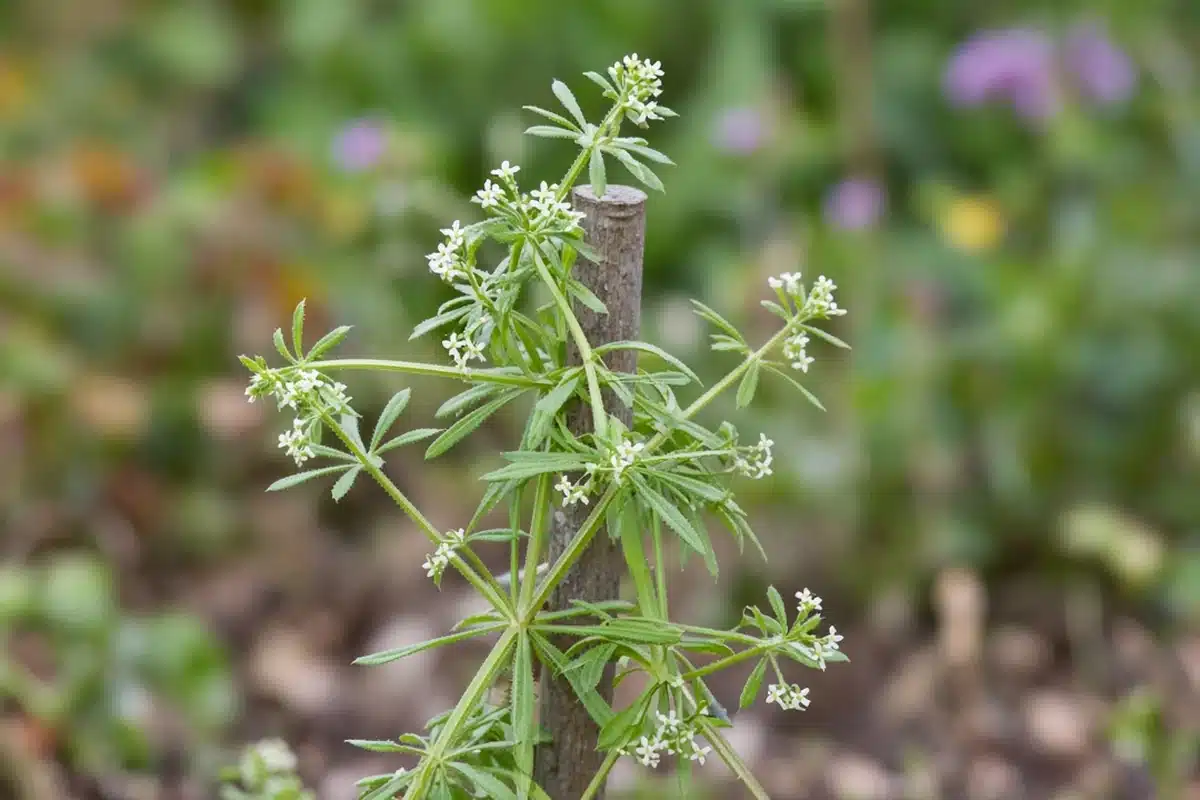
- Flowers. Two to nine tiny greenish to white flowers with four petals, on stalks above the leaf whorls.
- Fruit. Paired, bristly balls covered with stiff, hook tipped hairs.
NC State notes that the hooked hairs on the stem and leaves help it climb over other vegetation.
Why Does It Stick to Everything?
That is exactly how it travels. UC IPM says the bristles attach to clothing and to the hair or wool of animals, which helps the plant spread. NC State describes the fruit as a bur that readily clings to fur and clothes.
UC IPM adds that the two lobed fruit separates into two nutlets at maturity. A walk through a patch with mature fruit can carry those nutlets to the next bed. Brush off your clothes and gloves before you move from a weedy edge into your cannabis rows.
Why Does Catchweed Bedstraw Matter Near Cannabis?
It climbs and tangles. NC State says the weak stem clambers over other vegetation, using its hooked hairs to hold on. In a garden, that means bedstraw can drape over young cannabis plants and fence lines, shading low leaves and making the bed harder to work.
UC IPM says catchweed bedstraw is a host for some problematic nematode species and for overwintering aphids. It also notes that the flowers feed some beneficial insects. Removing it from the bed and its edges takes away one more host plant from the space right around your cannabis.
When Does Catchweed Bedstraw Grow?
Often in the cool part of the year. UC IPM calls it a winter or summer annual and says flowers bloom from March through July. NC State says the tiny flowers appear in spring and that in some areas the plant can grow through winter.
That timing means the worst patches often show up well before you plant. UC IPM’s landscape guide says the best time to look for winter annual weeds is mid to late winter. Walk your beds then, and again in early spring, and pull plants before their bristly fruits form. Our guide to fall garden cleanup after cannabis harvest is a good time for the first check.
Why Does Pulling Sometimes Fail?
The stem breaks. NC State says the weed is not difficult to control if pulled or hoed while small, before flowering and seed production. It warns that removing the whole plant can be difficult because the weak stems break off and leave the root to regrow.
Pull slowly from the base, and not from the tangled top. Loosen moist soil beside the plant first, then lift the root with the stem attached. If a stem snaps, check the spot again for missed pieces or new seedlings.
How to Control Catchweed Bedstraw in a Cannabis Garden
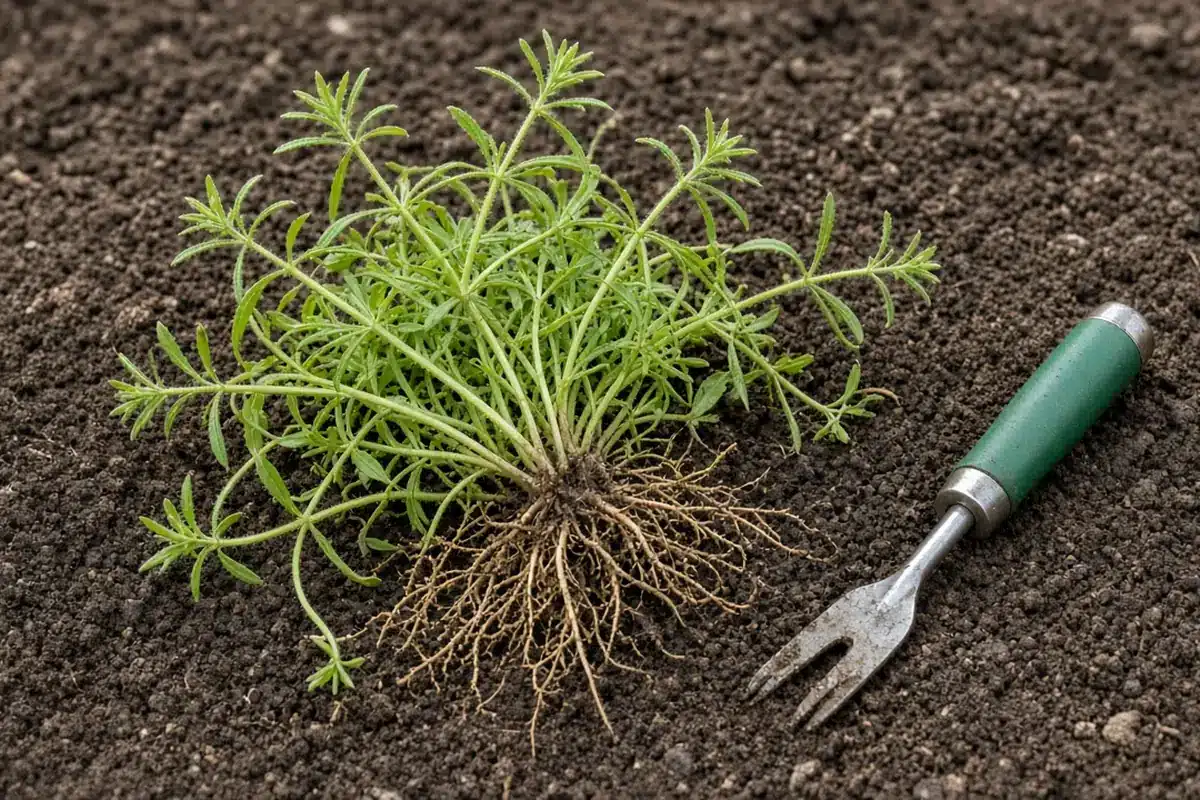
- Learn the leaf whorls. Six to eight leaves circle the square stem, as UC IPM and NC State describe.
- Pull while it is small. NC State says control is not difficult if plants are removed before flowering.
- Grip at the base. NC State warns that weak stems break and leave the root to regrow.
- Hoe shallowly between plants. UC IPM’s landscape guide recommends shallow cultivation or hoeing for annual weeds.
- Bag plants with fruit. Remove them from the garden rather than leaving them on the bed. Our guide to composting cannabis garden waste covers what to keep out of the pile.
- Brush off clothes and gloves. UC IPM says the bristles attach to clothing and animal hair, aiding dispersal.
- Mulch bare soil. UC IPM recommends a medium mulch kept 3 to 4 inches deep. Our guide to mulch for cannabis compares materials.
Catchweed Bedstraw at a Glance
| Subject | Extension finding | Attribution |
|---|---|---|
| Life cycle | Winter or summer annual | UC IPM, NC State |
| Leaves | Whorls of six to eight | UC IPM, NC State |
| Stem | Square, weak, with down curved prickles | UC IPM |
| Bloom | March through July | UC IPM |
| Spread | Bristly fruit on clothing and animals | UC IPM, NC State |
| Reproduction | By seed | UC IPM |
Should You Use Herbicides Near Cannabis?
No. Pull, hoe shallowly and mulch. Remember that EPA has not registered any herbicide for use on marijuana, and state rules vary, so check with your state agriculture department. UC IPM says home gardeners who hand weed and mulch should not need herbicides. Before you plant cannabis outdoors, check your state’s home grow law.
Troubleshooting Catchweed Bedstraw
Stems snap when you pull. NC State says weak stems break and leave the root. Loosen the soil and lift from the base.
Burs on your clothes after weeding. UC IPM says the bristles cling to clothing. Brush off before moving to the next bed.
It is draped over young plants. NC State says it clambers over other vegetation. Untangle it gently and pull from the root.
Patches appear before planting. UC IPM calls it a winter or summer annual. Check beds in mid to late winter.
Aphids show up early in spring. UC IPM says bedstraw can host overwintering aphids. Clear it from beds and edges.
At Kind Seed Co, we check our sleeves after every weeding pass, because this is the weed that rides along.
Frequently Asked Questions
Is catchweed bedstraw the same as cleavers?
Yes. Catchweed bedstraw, Galium aparine, is often called cleavers or sticky willy. UC IPM uses the name catchweed bedstraw, and NC State lists it as sticky willy. Whatever the name, the plant has square stems, whorls of six to eight leaves and tiny hooked prickles that make it cling to clothing, fur and other plants.
Why does catchweed bedstraw feel sticky?
It is covered in tiny curved prickles. UC IPM says the stems carry down curved prickles and the leaf edges and midveins have prickles pointing toward the leaf base, giving a raspy or sticky feel. NC State says the stem and leaves have hooked hairs that help the plant climb over other vegetation and hold on.
When should I pull catchweed bedstraw?
Pull it while it is small and before it flowers. NC State says the weed is not difficult to control if pulled or hoed out before flowering and seed production begin. UC IPM says it blooms from March through July, so check beds in late winter and early spring, well before your cannabis goes outside.
How does catchweed bedstraw spread?
By seed carried on its bristly fruit. UC IPM says the bristles attach to clothing and to the hair or wool of animals, aiding dispersal. NC State describes the fruit as a bur that readily clings to fur and clothes. Brushing off clothing and gloves after weeding helps keep the seed out of clean beds.
Where does catchweed bedstraw grow?
UC IPM says it usually needs a disturbance to establish and is common in gardens, yards, orchards, crop fields and other disturbed habitats. NC State adds meadows, woodlands, flood plains, abandoned fields and cultivated crops. In a home garden, look for it along fences, woodland edges and any freshly worked soil.
Sources
- UC Statewide IPM Program, Catchweed Bedstraw, Weed Gallery: https://ipm.ucanr.edu/weeds-identification-gallery/catchweed-bedstraw/
- NC State Extension Gardener Plant Toolbox, Galium aparine: https://plants.ces.ncsu.edu/plants/galium-aparine/
- UC Statewide IPM Program, Weed Management in Landscapes: https://ipm.ucanr.edu/home-and-landscape/weed-management-in-landscapes/


